
When parental rights are terminated in Florida, the path to adoption becomes clearer but also more complex. The adoption process after termination of parental rights involves specific legal steps that differ from standard adoptions.
At Juliana Gaita, P.A., we guide families through this process with clarity and practical support. This guide walks you through what happens next and how to move forward with confidence.
What Termination of Parental Rights Means in Florida
The Legal Definition and Immediate Impact
Termination of parental rights in Florida is a court-ordered decision that severs the legal relationship between a parent and child. When a judge terminates parental rights, the parent loses all legal authority over the child and has no further say in decisions about the child’s upbringing, medical care, or education. Under Florida Statutes 63.089, termination can happen through several grounds including abandonment, neglect, voluntary surrender by the parent, or failure to respond to proper notice. A finding of abandonment requires clear and convincing evidence that the parent willfully disregarded the child’s welfare, failed to provide support or medical care, or failed to establish contact. The court must prove these grounds beyond doubt before termination becomes final.
Why Termination Does Not Automatically Mean Adoption
After termination is ordered, the child becomes legally available for adoption, but termination itself does not automatically place the child into the adoption process. The adoption petition must be filed separately, typically within a few months after the termination judgment. This distinction matters because many families assume that once the court terminates parental rights, adoption paperwork begins immediately. That assumption leads to confusion and delays. Termination is step one; adoption is step two.
Timeline Expectations From Termination to Finalization
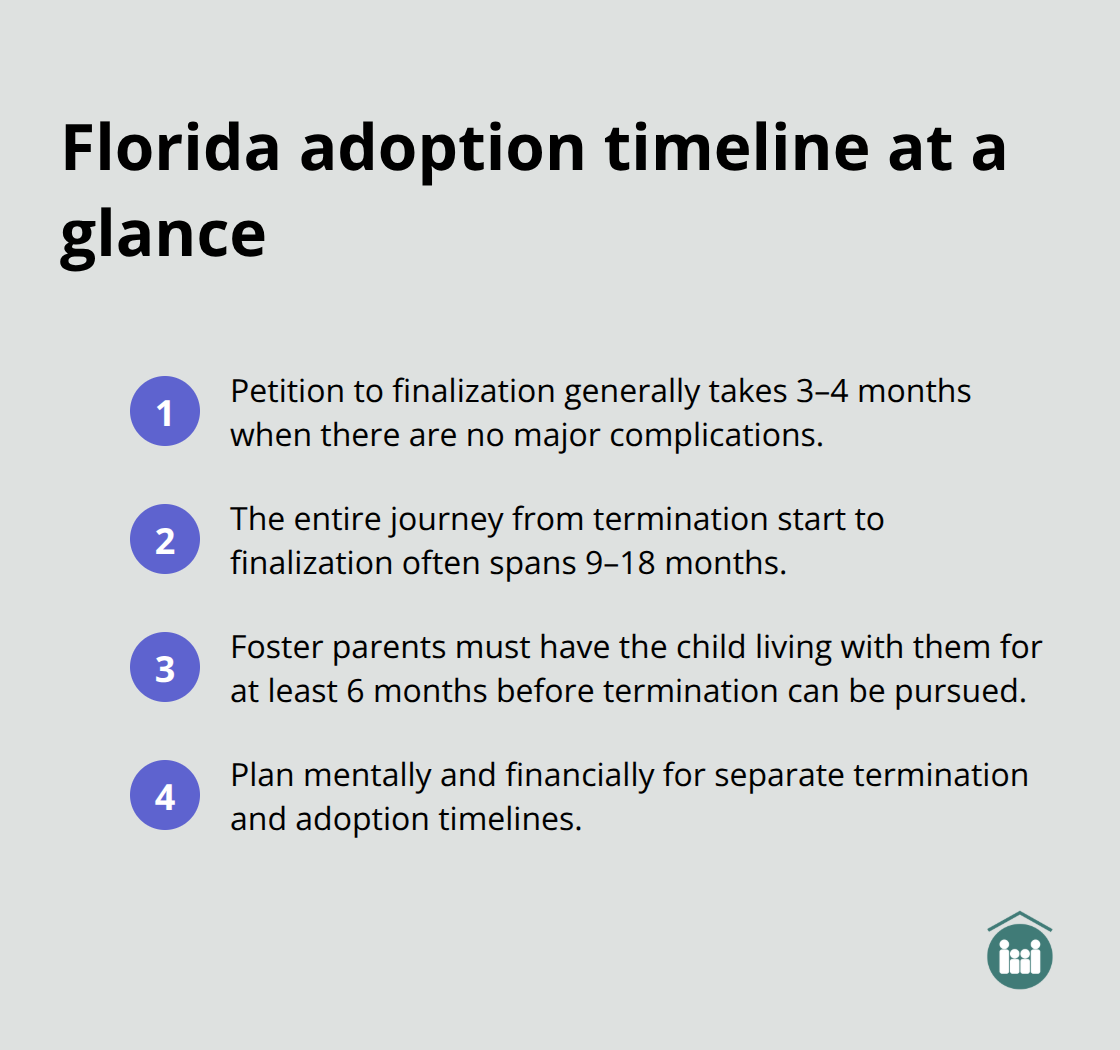
From the filing of the adoption petition through finalization, Florida families generally experience a 3-4 month timeline according to 2024 data, assuming no major complications. However, the total journey from the start of termination proceedings to finalization can span 9-18 months depending on case complexity and how quickly documentation is gathered. For foster parents already caring for the child, the law requires the child to have lived with them for at least 6 months before termination can be pursued, which often means the child is already settled in the home when adoption paperwork begins. Understanding these separate timelines helps families prepare mentally and financially for what comes next.
Moving Forward With Your Adoption Plan
The distinction between termination and adoption shapes everything that follows. Once you understand that termination opens the door to adoption but does not complete the adoption itself, you can prepare for the specific steps required to finalize your family. The next phase involves determining your eligibility and gathering the documentation that Florida law requires before you can proceed with the adoption petition.
Eligibility and Requirements for Adoption After Termination
Foster Parents and Relatives Lead the Way
Foster parents caring for the child occupy the strongest position to adopt after termination of parental rights in Florida. If you have provided care for at least six months before termination, Florida law recognizes your established relationship and typically streamlines your path forward. Relatives of the child-including grandparents, aunts, uncles, and siblings-also qualify with clear eligibility to adopt. Non-relatives who do not currently have custody can petition to adopt, though the court will scrutinize whether adoption serves the child’s best interests more carefully than it would for someone already providing care. The child’s age shapes eligibility too: children aged 12 and older must consent to adoption, which transforms their willingness into a legal requirement rather than merely a preference. This consent requirement protects older children’s autonomy and can actually strengthen your case if the child actively wants to join your family.
The Stepparent Advantage
Stepparents enjoy simplified eligibility compared to other non-relative adoptions because Florida law recognizes the existing family relationship. The state often waives the home study requirement entirely for stepparent adoptions, making this path considerably faster and less expensive than other adoption routes. This distinction matters significantly when you are planning your timeline and budget.
Gather Financial Documentation First
Start collecting financial documentation immediately because delays here create bottlenecks throughout the entire process. Florida requires tax returns from the past two or three years, proof of income, and bank statements showing financial stability. The FBI background check and the Florida Department of Law Enforcement check are mandatory; these typically take two to four weeks but can stretch longer if processing delays occur. You will also need a Child Abuse and Neglect Registry check through the Florida Department of Children and Families, which usually processes within one to two weeks.
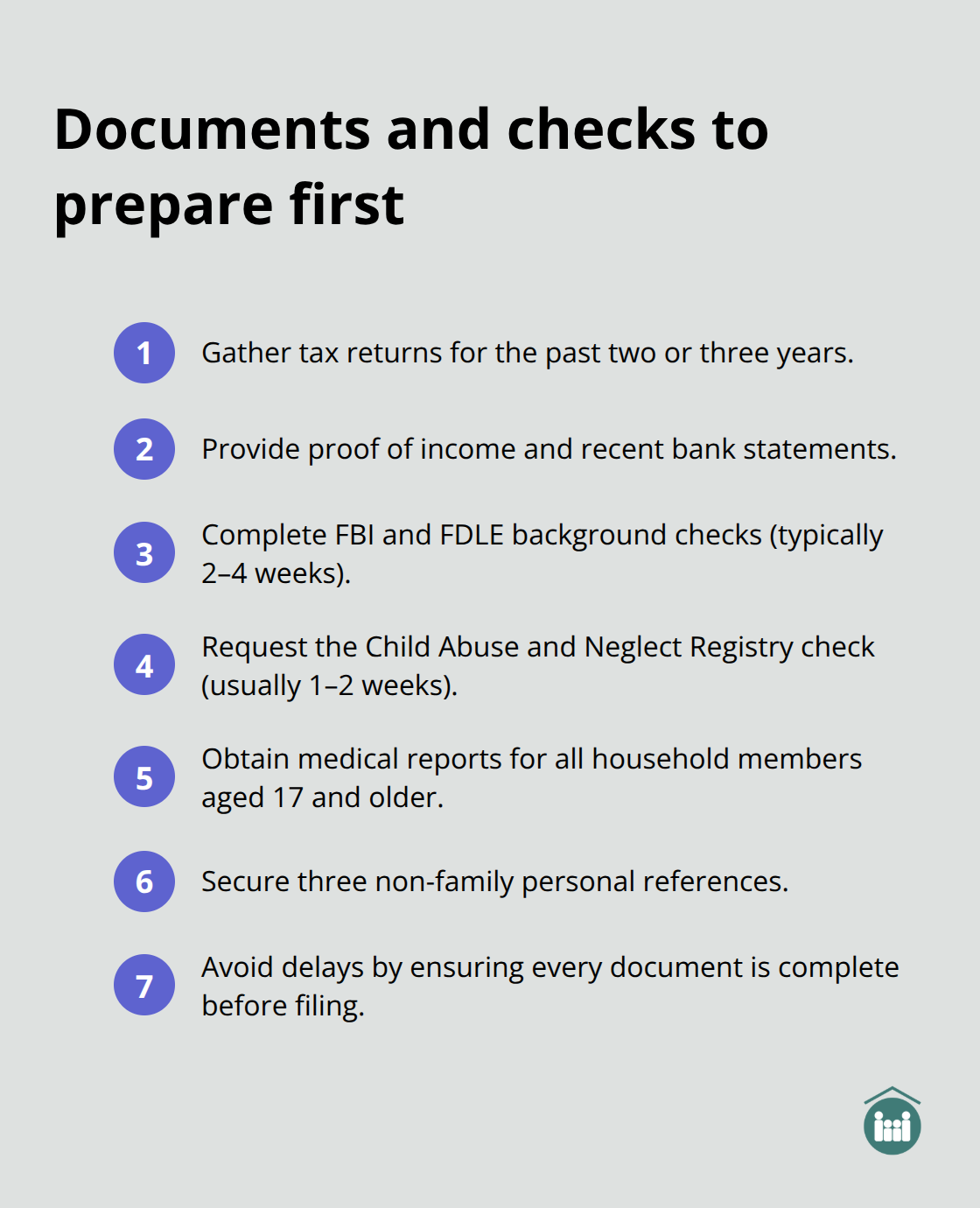
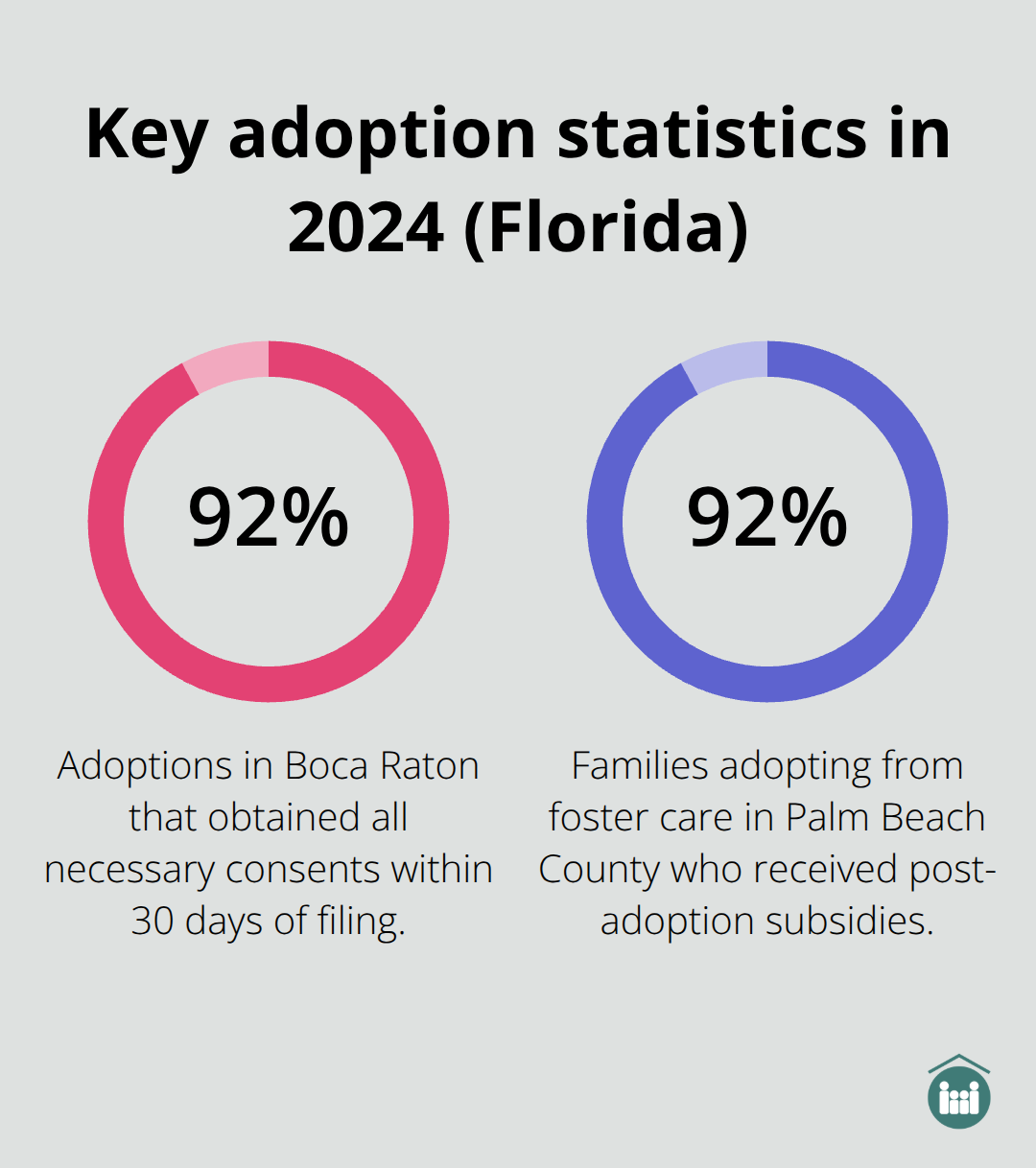
Medical reports from your family physician confirming good health are required for all household members aged 17 and older. Personal references-typically three people who know you well but are not family members-must attest to your character and suitability to parent. Gather these references early because people sometimes delay providing written statements, and you cannot move forward without them. The 2024 data from Florida shows that 92% of adoptions in Boca Raton obtained all necessary consents within 30 days of filing, but this speed depends entirely on having complete documentation ready before you file. Missing even one piece of paperwork can delay your petition filing by weeks or months.
What the Home Study Involves
The home study typically takes two to three months from start to finish according to Florida Department of Children and Families data, with over 90% of studies completed within this window in 2024. However, this timeline assumes you have all required documents ready when the social worker arrives. The home study is not a test you pass or fail in a binary sense; rather, it is a thorough assessment of your home environment, parenting capacity, financial situation, and ability to meet the child’s specific needs. The social worker will visit your home multiple times, interview household members, and review all the documentation you have gathered. Your home does not need to be perfect or palatial, but it must be safe, clean, and appropriate for a child. If the social worker identifies concerns (such as safety hazards, inadequate sleeping arrangements, or financial instability), you will have the opportunity to address them before the study is finalized. For stepparent adoptions, Florida often waives the home study requirement entirely, which is why this path moves faster. If you are adopting from foster care and the child has been living with you already, the social worker understands the child’s actual living situation and assesses whether it remains suitable for permanent adoption rather than evaluating an unfamiliar environment.
Moving to the Petition Phase
Once your documentation is complete and your home study is finalized, you stand ready to file the adoption petition with the court. This next phase involves specific legal filings and court procedures that formalize your intent to adopt and set the timeline for finalization.
Filing Your Adoption Petition and Moving Through Court
Submitting Your Petition to the Court
After your home study is finalized and documentation is complete, you file the adoption petition with the circuit court in the county where the child lives. This petition formally notifies the court of your intent to adopt and triggers the legal machinery that leads to finalization. Florida Statutes 63.089 requires your petition to name the minor, confirm the minor was born, and include all affidavits of inquiry and diligent search as applicable. The paperwork must be precise because errors or omissions delay processing. Once filed, the court schedules a hearing, which typically occurs within 3-4 months according to 2024 Florida data.
What Happens at the Adoption Hearing
The hearing itself is straightforward if you have completed all prior steps correctly. The judge reviews your documentation, confirms that the child’s consent was obtained (if the child is 12 or older), and verifies that all notice requirements were satisfied. You will testify about your intent to adopt and your commitment to the child. The judge rarely denies adoption petitions when parental rights have already been terminated and all documentation is in order. Most adoptions proceed to finalization without complications.
However, delays do happen when paperwork is incomplete, when the court’s calendar is congested, or when unexpected issues surface during the hearing preparation phase. The 2024 Boca Raton data shows that 92% of adoptions obtained all necessary consents within 30 days of filing, which suggests that most families have their paperwork organized and ready. You should expect the court to require proof that the child has lived with you for at least 6 months if you are a foster parent pursuing adoption. The judge will ask you directly whether you understand your obligations as the child’s permanent legal parent.
Obtaining the New Birth Certificate
After the judge signs the finalization order, your adoption is legally complete. The next step is obtaining a new birth certificate that lists you as the child’s parent instead of the biological parent. This process takes 2-4 weeks through the Florida Department of Vital Statistics, and you can request an expedited copy if needed. Many families also update their wills, insurance beneficiaries, and estate plans to reflect their new legal relationship with the child.
Accessing Post-Adoption Support and Benefits
Post-adoption support becomes available immediately after finalization. In Palm Beach County, 92% of families who adopted from foster care received post-adoption financial subsidies in 2024, with monthly payments typically ranging from $417 to $515 depending on the child’s needs. Medicaid coverage continues through age 18 for most children, or through age 21 if the child was adopted at age 16 or 17 and meets specific criteria.
Post-adoption services counselors can help you access mental health services, support groups, and tuition waiver letters if your child later attends a Florida public college or vocational school. The tuition waiver program covers tuition and fees at public universities and community colleges until age 28 for eligible adopted children, which represents significant long-term financial support. Contact the Florida Department of Children and Families or your local post-adoption services agency to learn about specific benefits available in your county, as availability varies by location.
Final Thoughts
Adoption after termination of parental rights follows a clear path once you understand that termination and adoption are separate legal steps. Termination opens the door; the adoption petition walks you through it. The adoption process after termination of parental rights requires you to gather financial documentation, complete a home study, file your petition, attend a court hearing, and finalize the adoption with a new birth certificate. Most families move from petition to finalization within 3-4 months when documentation is complete and ready.
Foster parents already caring for the child hold the strongest position because the child is settled in their home and the court recognizes the established relationship. Relatives and stepparents also enjoy streamlined paths compared to unrelated adoptions. The financial support available after finalization-including monthly subsidies ranging from $417 to $515, Medicaid coverage through age 18 or 21, and tuition waivers for public colleges-helps families manage the long-term costs of raising an adopted child.
Legal guidance matters because Florida adoption law contains specific requirements, timelines, and procedural steps that vary depending on your relationship to the child and your circumstances. If you are ready to move forward with adoption after termination of parental rights, start by gathering your financial documentation and contacting a family law attorney who understands Florida adoption law. The team at Juliana Gaita, P.A. can discuss your rights and options and guide you through each step of the adoption process.