
Adult adoption offers real benefits that many people overlook. Whether you’re seeking deeper family connections, legal security, or emotional fulfillment, why adopt an adult is a question more Floridians are asking.
At Juliana Gaita, P.A., we guide families through this meaningful process. This guide covers the emotional rewards, legal requirements, and practical considerations you need to know.
Why Adults Choose Adoption
Real Reasons People Pursue Adult Adoption
Adult adoption serves specific, practical purposes that differ from adopting children. Many people pursue it to formalize relationships that have already existed for years. A stepparent wants to remove the step designation and create full legal family status. Former foster parents who raised a child into adulthood often seek adoption to legally recognize decades of caregiving. Others adopt adults to secure automatic inheritance rights under Florida law, equivalent to what biological children receive. These are not sentimental decisions made on impulse; they reflect concrete legal and financial motivations that matter in real life.
The Psychological Shift for Adoptive Parents
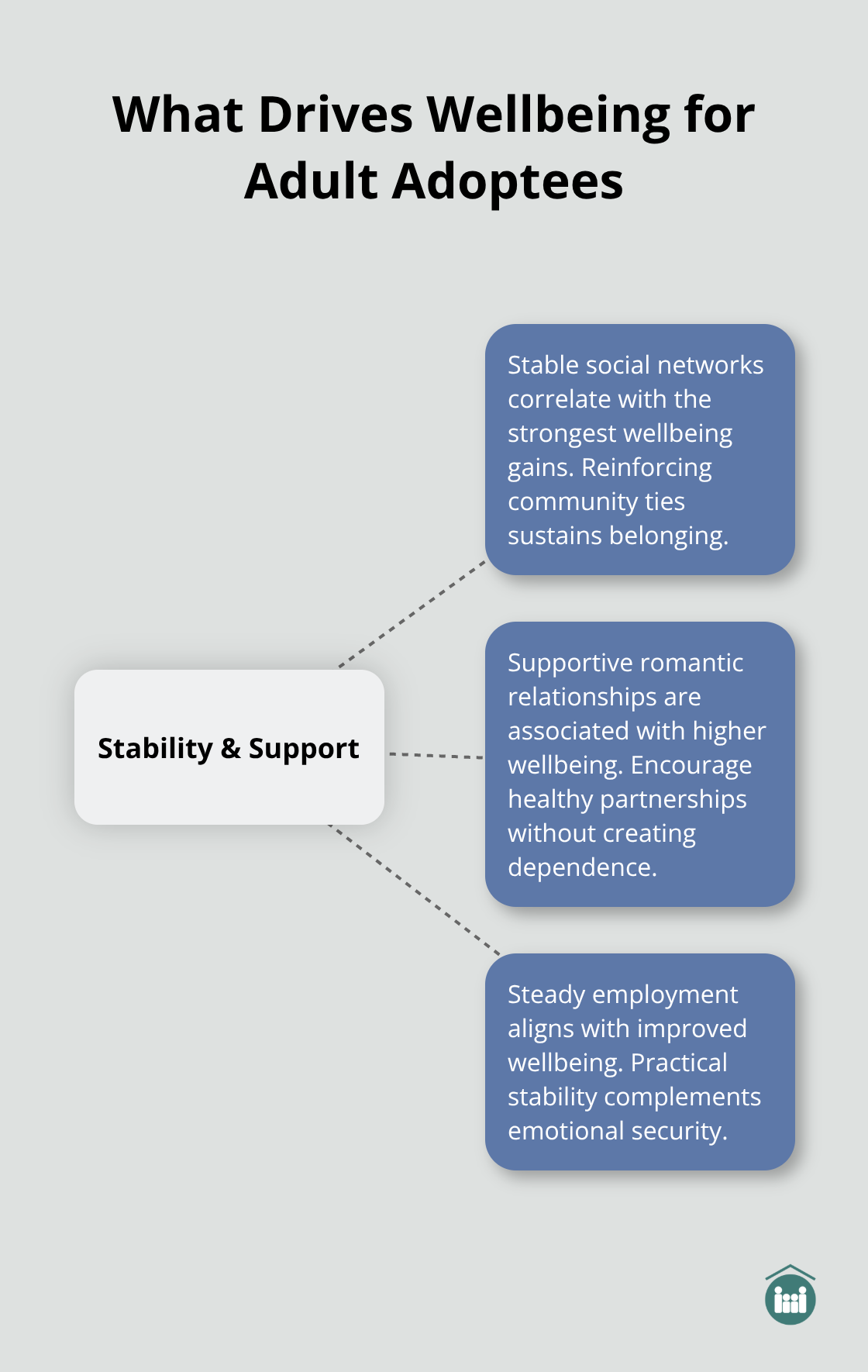
The psychological shift for adoptive parents is significant but often underestimated. Research from Melero, Verdugo, and Sánchez-Sandoval in 2023 found that adoptees who maintained a stable social network showed the strongest wellbeing association, with a substantial effect size of 1.95. This tells us something important: when you formalize a family relationship through adoption, you create stability and belonging that ripples outward. Adoptees with stable romantic relationships scored higher on wellbeing measures, and those with steady employment showed marked improvements.
Legal Authority and Medical Decision-Making
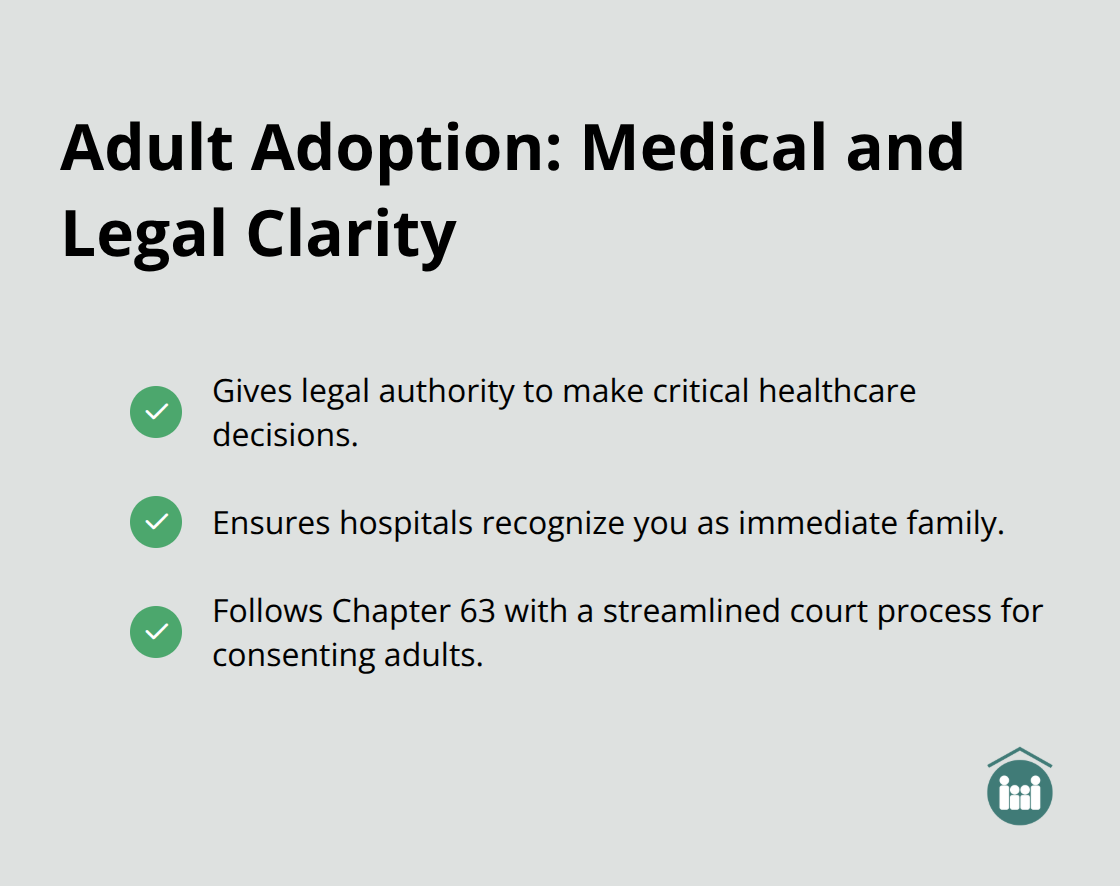
Adult adoption removes ambiguity from medical decision-making and emergency situations. You gain the legal authority to make critical healthcare choices if needed, and hospitals recognize you as immediate family. Florida Statute Chapter 63 governs the process, and courts have streamlined it specifically because the relationship is already established and both parties enter willingly.
Financial Advantages and Timeline
The financial advantages extend beyond inheritance. An adopted adult becomes eligible for the adoptive parent’s Social Security benefits and pension plans, and may qualify for health and life insurance coverage. The adoption process itself costs approximately 3,500 dollars and typically completes within 2 to 3 months, making it faster and more affordable than adopting a minor, which requires home studies and extensive background checks. Understanding these concrete benefits helps you evaluate whether adult adoption aligns with your family’s needs and circumstances-which brings us to the legal requirements you must navigate.
How to Move Forward With Adult Adoption in Florida
Adult adoption in Florida requires consent from the person being adopted, a court petition filed in the correct county circuit court, and proper legal guidance to protect everyone involved. The process moves faster than minor adoption because no home studies or background checks are needed, but the paperwork must be handled correctly to avoid delays or complications. Courts may deny an adoption if the relationship appears disingenuous or designed to evade obligations, so understanding each step matters.
Getting Consent and Confirming Willingness
The adult being adopted must provide written consent, and any living biological parents must receive notification of the petition. This differs from minor adoption, where parental rights transfer against biological parents’ wishes. In adult adoption, both the adopting parent and the adult being adopted appear before a judge to confirm they understand the permanent nature of the relationship and that both parties willingly proceed. The court requires this in-person confirmation to verify that no coercion occurs. If biological parents object or cannot be located, the court may proceed if proper notice was given, but this adds complexity to the timeline.
Filing the Petition and Meeting Court Requirements
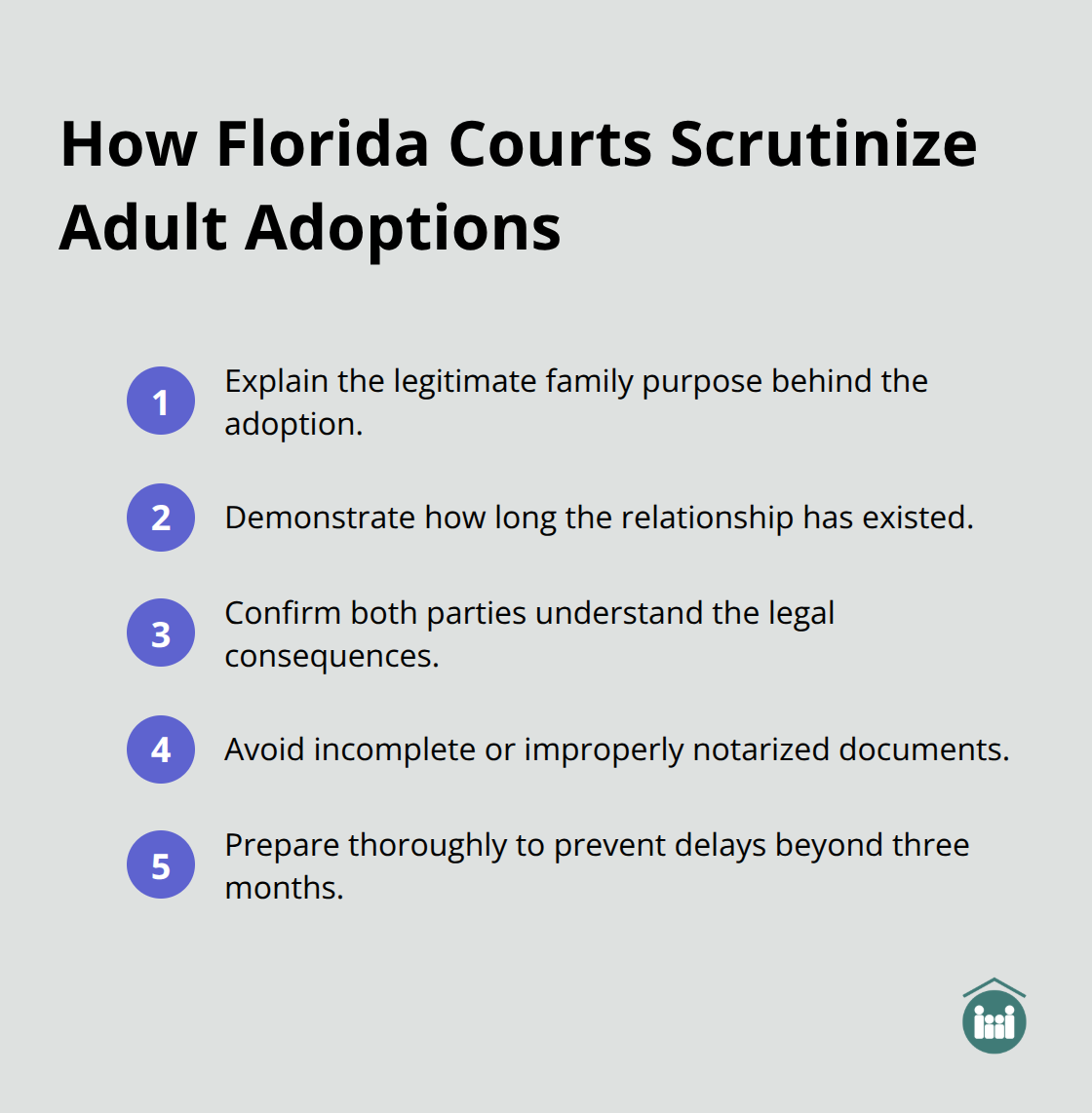
The petition goes to the circuit court in the county where the adopting parent lives. Florida Statute Chapter 63 governs the filing requirements, which include basic identifying information, proof of the relationship, and consent documents. Unlike minor adoptions, adult adoptions do not require a home study, making the process substantially simpler. Most cases complete within 2 to 3 months from filing to final court order. However, courts scrutinize the motivation behind the adoption, particularly in cases involving inheritance or financial benefits. The judge may ask questions about how long the relationship has existed, whether the adoption serves a legitimate family purpose, and whether both parties understand the legal consequences. Incomplete or improperly notarized documents can push timelines beyond three months, which is why precise preparation upfront saves time and frustration.
Why Legal Guidance Protects Your Rights
An adoption attorney handles the documentation, court filings, notification of biological parents, and court appearances on your behalf. The total cost is approximately 3,500 dollars for a straightforward adult adoption, and this investment protects you from costly mistakes. An attorney ensures the petition meets all statutory requirements, properly notifies all required parties, and prepares you for the judge’s questions. Without proper guidance, you risk filing errors that require resubmission, missed deadlines that delay finalization, or incomplete consent documentation that invalidates the entire process. The attorney also advises on whether name changes, will updates, or insurance beneficiary changes should occur simultaneously with the adoption to create a complete legal transition.
Moving From Paperwork to Permanence
Once the court approves your petition and both parties confirm their willingness before the judge, the adoption becomes final and permanent. The judge signs the order, and you receive an amended birth certificate reflecting the new family relationship. This legal finalization opens the door to the practical steps that follow-updating insurance beneficiaries, revising estate plans, and addressing the emotional and relational dimensions of your new family structure.
Health, Social, and Relationship Considerations
Understanding the Adoptee’s Background and History
Adult adoption brings two people with separate life histories into permanent legal relationship, and understanding what that means practically matters far more than pretending the past does not exist. The person you adopt has lived 18, 30, or 50 years before you formalize this bond, and that history shapes who they are and how they navigate family relationships. Research from Melero, Verdugo, and Sánchez-Sandoval in 2023 tracked 117 adult adoptees over time and found that those with stable social networks showed wellbeing scores nearly double those without such support. This tells you something critical: your role is not to erase their past or remake them, but to strengthen the stability and belonging they already possess.
Start by learning about their background deliberately and without judgment. Ask about their birth family, cultural heritage, medical history, and significant relationships. If they experienced foster care, institutionalization, or other disruptions, those experiences may surface as difficulty with trust, independence, or emotional expression. This is not a personal rejection of you; it is a normal response to real loss and separation.
Recognizing and Addressing Adoption Trauma
Adoption trauma is real and can manifest as withdrawal, anxiety, or behavioral changes even in positive adoption experiences. The American Psychological Association defines trauma as an emotional response to a negative event, and for many adoptees, early separation from birth parents disrupts secure attachment in ways that persist into adulthood. Your willingness to learn their story and validate their feelings directly addresses this.
One practical step is to research their birth family together if they wish, or help them maintain cultural connections through community involvement, language learning, or holiday practices that honor their heritage. If they struggle with identity questions or feelings of displacement, counseling becomes necessary, not optional. A family-based approach that includes individual therapy, family counseling, or adoption-competent therapy helps address these dynamics before they calcify into resentment.
Managing Relationship Expectations and Dynamics
Relationship expectations in adult adoption often clash with fantasy because both parties carry assumptions about what family should feel like. You may expect immediate closeness or gratitude, while the adoptee may feel ambivalent about severing biological relationships or worry about losing independence. These tensions are normal and manageable with clear communication and realistic timelines.
Gulf Coast Adoptions offers 24/7 support via call or text for adoption-related questions and concerns, which can help you navigate the emotional terrain as it emerges. The 2023 research showed that adoptees with stable romantic relationships and steady employment reported higher wellbeing, suggesting that your role is to support their achievement of adult milestones, not to create dependency.
Building Stability and Setting Clear Boundaries
Provide consistent emotional attachment, safety, and respect for their boundaries. Allow them to maintain relationships with their birth family if they choose, and avoid language that frames adoption as rescue or as erasing their past. Set expectations about financial support, living arrangements, and inheritance clearly before the adoption finalizes, so no misunderstandings about obligations arise later.
After the adoption is final, practical steps include updating beneficiary information on insurance and retirement accounts, revising your will to reflect the new legal relationship, and establishing clear communication about medical decisions and end-of-life preferences. We at Juliana Gaita, P.A. can guide you through these post-adoption documents as part of comprehensive estate planning that reflects your new family structure.
Final Thoughts
Adult adoption in Florida delivers concrete benefits that extend far beyond emotional satisfaction. You gain automatic inheritance rights equivalent to biological children, access to Social Security and pension benefits, and legal authority in medical emergencies. The process costs approximately $3,500 and completes within 2 to 3 months, making it faster and more affordable than adopting a minor.
Before moving forward, evaluate your motivations honestly. Why you adopt an adult should reflect genuine family commitment, not financial convenience or avoidance of obligations. Courts scrutinize adoptions that appear disingenuous, and judges may deny petitions lacking legitimate family purpose. Consider whether both parties understand the permanent nature of the relationship and whether you are prepared to support the adoptee through the emotional and relational adjustments that follow finalization.
Assess practical factors as well-do you understand the adoptee’s background, trauma history, and cultural identity? Research from 2023 shows that adoptees with stable social networks and strong family support report significantly higher wellbeing, which means your commitment to understanding their needs directly impacts long-term outcomes. If you are considering adoption for your family, contact us to discuss your rights and options with someone who understands Florida adoption law and the families it serves.