
Many people assume adoption only applies to children, but the answer is yes-it’s possible to adopt an adult in Florida. Adult adoption serves real purposes, from formalizing long-term relationships to addressing inheritance concerns.
At Juliana Gaita, P.A., we help families navigate this process. The legal requirements differ significantly from minor adoption, and understanding these differences matters for your situation.
What Are the Legal Steps to Adopt an Adult in Florida
Florida law allows adults to adopt other adults with the adoptee’s consent, and the process is simpler than adopting a minor. In Florida, any single adult can petition to adopt another adult, and married couples must petition jointly. LGBTQ+ couples and stepparents can also pursue adult adoption in Florida without legal barriers. The adoptee must be 18 or older and must consent to the adoption, but biological parents do not need to consent, though they must be notified if still living. There is no residency requirement, meaning you can petition for adult adoption regardless of where you or the adoptee live within or outside Florida.
Obtain Forms and Prepare Your Documents
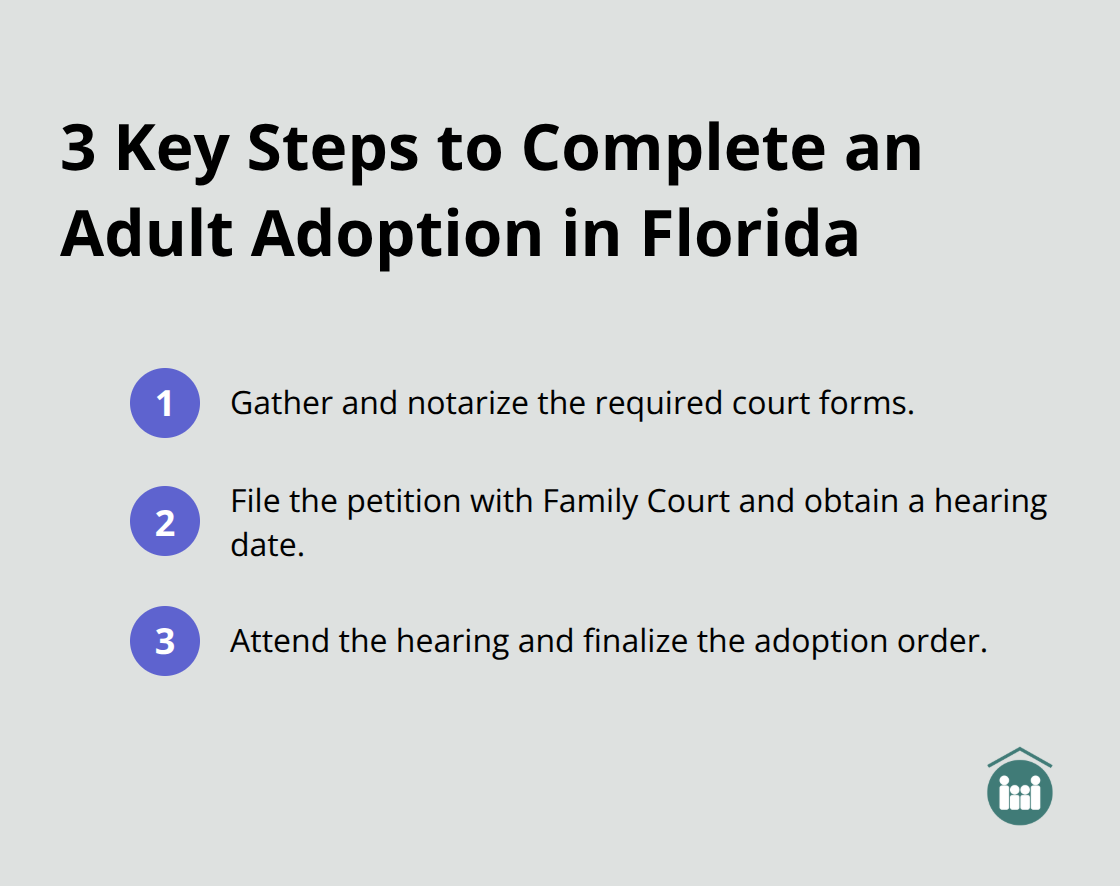
The first practical step requires you to obtain the required forms from your local courthouse or the Florida court system website. Most states require documents to be signed in the presence of a notary, and banks typically offer free notary services, so you can avoid additional costs. You will need to gather information about both the adoptive parent and the adoptee, including full legal names, dates of birth, and current addresses. After you complete the petition and secure notarized signatures, you submit the filings according to your county’s specific instructions. The timeline typically runs a few months from filing to the court hearing, though this varies by county workload.
Submit Your Petition to the Court
Once you have prepared all documents, you submit them to your local Family Court. The court processes your petition and assigns a hearing date (the timeline typically spans a few months, depending on your county’s workload). An adoption attorney can guide you through this stage to avoid delays and help you complete all documents properly. This step moves your case forward and sets the stage for the judge’s review of your petition.
Attend Your Court Hearing and Receive Approval
Once filed, you will receive a hearing date before a Family Court judge. The judge reviews whether all legal requirements are met and focuses on protecting the adoptee’s rights and interests. The judge may deny an adoption if valid legal reasons exist, so transparency about the relationship and motivation matters. After approval, the adoptee becomes your legal child for life, creating a permanent family relationship recognized by Florida law. You can then request an amended birth certificate and update wills and other legal documents to reflect the new relationship. The process does not require termination of the adoptee’s parental rights or a home study, which significantly streamlines adult adoption compared to minor adoption.
With the legal framework in place and your adoption finalized, you may wonder what practical benefits this new relationship actually provides for your family.
Why People Pursue Adult Adoption in Florida
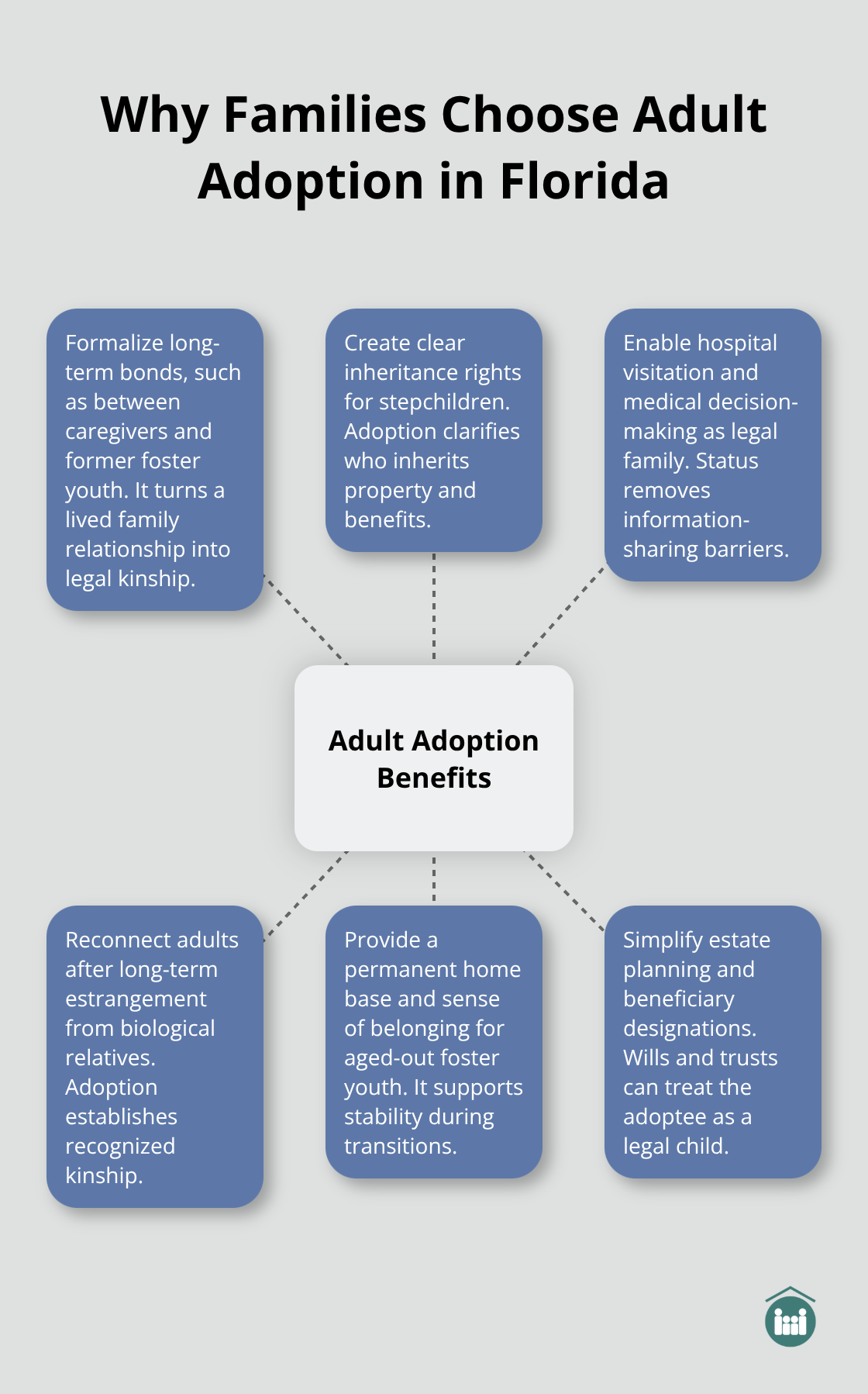
Adult adoption in Florida addresses real family situations that minor adoption cannot solve. Former foster parents adopt adults to formalize bonds built over years of caregiving, turning what was once a temporary arrangement into a permanent legal relationship. Stepparents adopt adult stepchildren to drop the step-prefix and create inheritance rights that would otherwise require complex estate planning. Adults separated from biological family members use adoption to reconnect and establish legal kinship after years of estrangement. These situations share one truth: adult adoption provides legal recognition of relationships that already exist emotionally and practically in people’s lives.
When Inheritance and Legal Rights Matter Most
Adult adoption creates inheritance rights that matter financially. Without adoption, an adult child has no legal claim to a parent’s estate under Florida’s intestacy laws, meaning assets pass to biological relatives instead. An adopted adult becomes a legal heir, simplifying succession planning and eliminating ambiguity about who inherits property, retirement accounts, and other assets. The adoptee gains access to Social Security and pension benefits through the adoptive relationship, which can provide significant long-term financial security. Stepparents who adopt adult stepchildren often do this specifically to ensure their assets flow to the stepchild rather than ex-spouses or other biological relatives. Estate planning becomes far simpler after adoption finalizes, since wills and trusts can treat the adopted adult as a legal child without requiring special language or justification.
Medical Decision-Making and Family Recognition
Adult adoption enables hospital visitation rights and emergency medical decision-making as a legal family member. Without adoption, hospitals may refuse to share medical information or allow an adult to make critical decisions for someone they care for deeply. Adoption eliminates this barrier by creating legal family status. The adoptee and adoptive family can now share medical histories directly, which matters for identifying genetic health risks and treatment options. Beyond the medical practicalities, adoption simply recognizes what is already true in the relationship. Former foster youth who aged out of the system often lack a permanent home base to return to during college breaks or life transitions. Adult adoption provides exactly that: a formal, legal place to belong.
These practical benefits explain why families choose adult adoption, but the legal process itself differs markedly from what most people expect when they think about adoption.
How Adult Adoption Differs from Adopting a Child
Consent and Autonomy Shape the Process
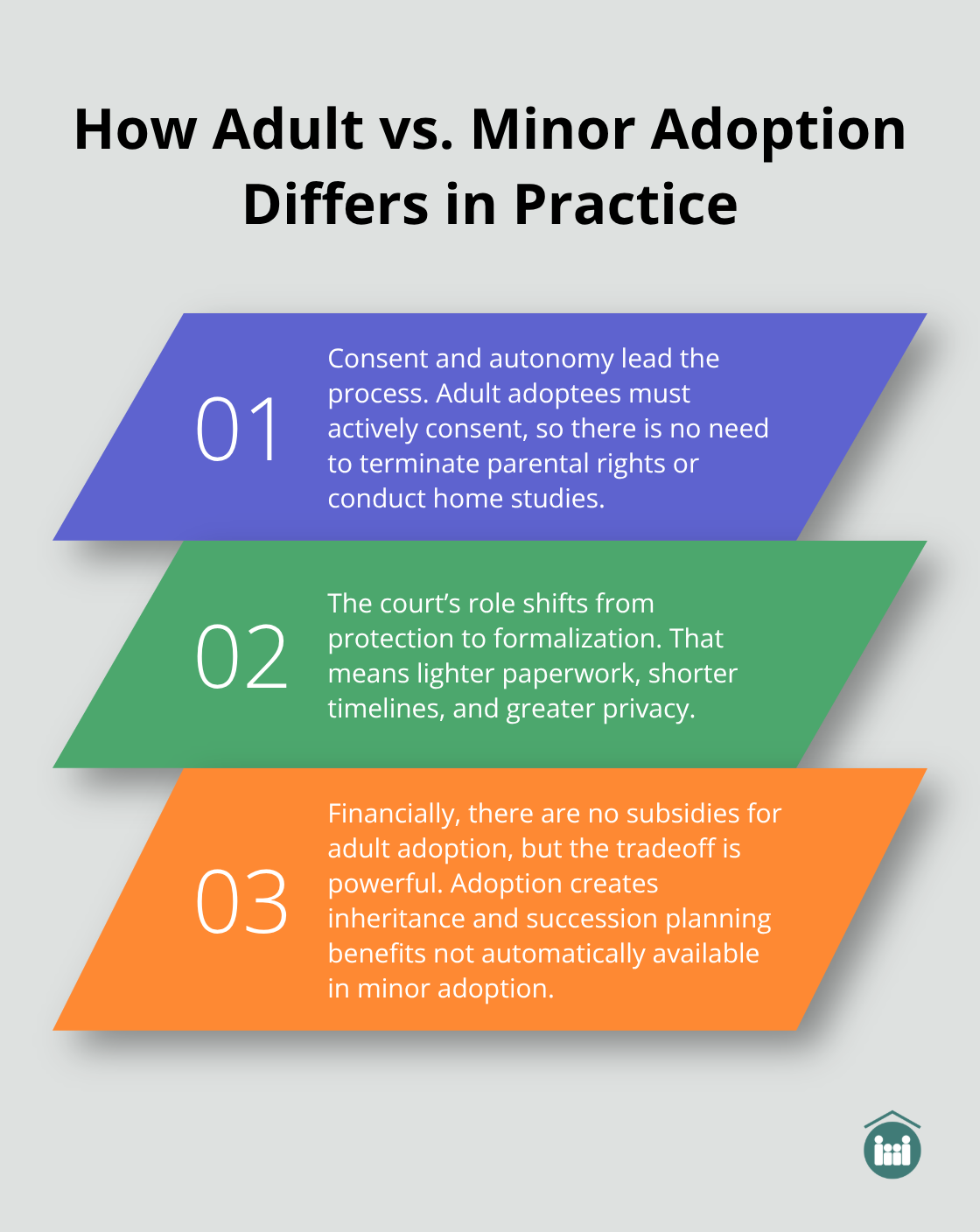
Adult adoption operates under fundamentally different legal rules than minor adoption, and these differences work heavily in your favor. The most obvious distinction centers on consent: when you adopt a minor, the child cannot legally consent, so parental rights must be terminated and the state conducts home studies to assess your fitness as a parent. Adult adoption flips this entirely. The adoptee must actively consent to the arrangement, making the process voluntary and mutual from the start. Florida law recognizes this autonomy by eliminating home studies, background investigations, and the need to terminate parental rights. The adoptee retains their relationship with their biological family if they choose, so adoption does not sever existing bonds.
The Court’s Role Shifts Significantly
This consent-based framework means the court’s role shifts from protecting a vulnerable minor to witnessing and formalizing a relationship between two adults who have chosen each other. The practical result: your paperwork is lighter, your timeline shorter, and your privacy greater. You avoid the intrusive scrutiny that minor adoption requires, which matters significantly if you value discretion or have concerns about personal history.
Financial Benefits and Inheritance Rights
The financial and legal benefits diverge sharply from minor adoption. When you adopt a minor through the state system, you may qualify for adoption subsidies or tax credits designed to offset the costs of raising a child. Adult adoption carries no such subsidies because the adoptee is already self-sufficient. However, this absence of subsidies reflects a significant advantage: adult adoption creates inheritance rights and succession planning benefits that minor adoption does not automatically provide.
An adopted adult becomes your legal heir under Florida intestacy law, meaning they inherit your estate if you die without a will, just as a biological child would. They gain access to your Social Security and pension benefits as a dependent, which can provide long-term financial security worth thousands annually depending on your benefit level. An adult stepchild you adopt can now be named as beneficiary on life insurance, retirement accounts, and investment accounts without qualification or explanation.
Estate Planning Becomes Simpler
Estate planning documents become simpler because the adopted adult has clear legal standing. Minor adoption requires ongoing support until age 18 or 21 in some cases, whereas adult adoption creates permanent legal status with no ongoing financial obligation. For families focused on establishing clear inheritance pathways and formalizing relationships that already exist emotionally, adult adoption delivers faster, cleaner results than the traditional adoption process. If you are considering adult adoption for your family, you should discuss your rights and options with an experienced adoption lawyer in Boca Raton. The trusted legal team at Juliana Gaita, P.A. can help you navigate these distinctions and move forward with confidence.
Final Thoughts
Adult adoption in Florida is legally possible and offers real solutions for families seeking to formalize relationships, secure inheritance rights, and establish legal recognition of bonds that already exist emotionally. The process is simpler than adopting a minor, requires mutual consent rather than home studies, and moves through the court system within a few months. Whether you are a stepparent, former foster parent, or adult reconnecting with biological family, adult adoption provides permanent legal status that addresses practical concerns around medical decision-making, succession planning, and family recognition.
The key takeaway is straightforward: if you want to adopt an adult in Florida, the legal framework supports your decision without the barriers that minor adoption requires. You avoid invasive background investigations, home studies, and parental rights termination. Instead, you file your petition, obtain notarized consent, and attend a court hearing where the judge confirms that both parties have chosen this relationship freely (after approval, the adoptee becomes your legal heir and gains access to your benefits).
Timing matters when you pursue adult adoption. The sooner you file your petition, the sooner you finalize the relationship and update your estate planning documents to reflect the new legal status. We at Juliana Gaita, P.A. help clients throughout Florida navigate adoption cases, and our legal team can discuss your rights and options with you directly-contact us to schedule a consultation today.