Adopting a child in Florida involves multiple stages, and many families wonder how long the adoption process takes. The timeline varies based on your circumstances, the type of adoption, and how prepared you are from the start.
At Juliana Gaita, P.A., we’ve guided families through this journey and know what makes the difference between a smooth process and unnecessary delays. This guide breaks down realistic timeframes and shows you what you can control.
How Long Does Adoption Actually Take in Florida
Domestic infant adoption in Florida typically takes 12 months from start to finalization, though this average masks significant variation depending on your specific situation. The timeline breaks into four distinct phases: completing your home study and adoptive family profile (2–3 months), waiting to match with a birth mother (often exceeding one year), navigating placement and post-placement supervision (3–6 months), and finalizing through the court (30–90 days after placement).
The Home Study Phase: Your First Major Milestone
The home study phase is frequently the longest bottleneck. You need background checks for everyone 12 or older in your home, financial documentation, references, and home visits from a licensed social worker. Collecting these documents early makes a measurable difference. If you wait until the home study is requested to collect birth certificates, marriage licenses, and bank statements, you add weeks to an already lengthy process. Many families underestimate this phase because it feels administrative rather than adoption-related, yet it directly controls when you can be matched with a birth mother.
What You Control Matters Most
What you control matters far more than what you don’t. Families who prepare a compelling adoptive family profile-including professional photos, a written narrative, and ideally an adoption video profile-significantly reduce their wait to match. Agencies with nationwide reach connect you with more birth mothers than local-only agencies, shortening the matching window considerably. Flexibility on the child’s race, gender, medical history, and adoption relationship directly impacts how quickly a match occurs. Being rigid about preferences extends your timeline unnecessarily.
Legal Requirements That Shape Your Timeline
The finalization phase cannot start until 30 days after termination of parental rights or 90 days after placement, whichever is later, according to Florida Statutes 63.087–63.089. Post-placement supervision requires monthly visits for at least 90 days with at least one in-home visit, and this period cannot be compressed. Interstate placements add 10–14 days for ICPC clearance, while Indigenous children require additional ICWA processing that varies by state. An adoption attorney should review your case early to identify which regulatory steps apply to your situation and flag potential delays before they occur. Understanding these legal requirements upfront helps you plan realistically and avoid surprises later in the process.
What Happens During Each Stage of Adoption
The Home Study Phase: Your Foundation
The home study phase demands your immediate attention because it controls access to everything that follows. You’ll need background checks for everyone 12 or older in your home, financial records spanning the past year, references from people who know you well, and at least one in-home visit from a licensed social worker. This phase typically takes 2–3 months, but families who collect documents before the agency requests them cut this timeframe significantly. Start gathering birth certificates, marriage licenses, tax returns, and bank statements now, even if you haven’t formally applied. The Florida Department of Children & Families requires these materials regardless of your adoption type, and delays in producing them directly extend your overall timeline.
Create a folder with copies of every document you think you’ll need. When your social worker asks for something, you hand it over immediately rather than spending weeks hunting for it. This simple step eliminates one of the most common sources of delay in the home study phase.
The Matching Phase: Where Preparation Pays Off
The matching phase is where your preparation either accelerates your timeline or where delays compound. After your home study receives approval, your adoptive family profile enters circulation. Agencies with nationwide reach expose your profile to significantly more birth mothers than local-only agencies, which directly shortens your wait. The average wait to match exceeds one year according to industry data, but this number masks a critical reality: families who build compelling profiles with professional photos, authentic written narratives, and adoption video profiles reduce their matching window considerably.
Flexibility matters enormously here. Families willing to consider different races, both genders, medical histories ranging from healthy to manageable conditions, and various adoption relationships see matches much faster than families with rigid preferences. Once a match occurs, placement timing depends on the birth mother’s due date or the child’s current situation. Some matches happen months away; others happen within weeks.
Legal Timelines You Cannot Compress
Florida law requires that birth mother consent happen at least 48 hours after birth or hospital discharge (Florida Statutes 63.062), which means you cannot finalize immediately. Post-placement supervision then requires monthly visits for at least 90 days with at least one in-home visit. Court finalization cannot occur until 30 days after termination of parental rights or 90 days after placement, whichever is later, per Florida Statutes 63.087–63.089.
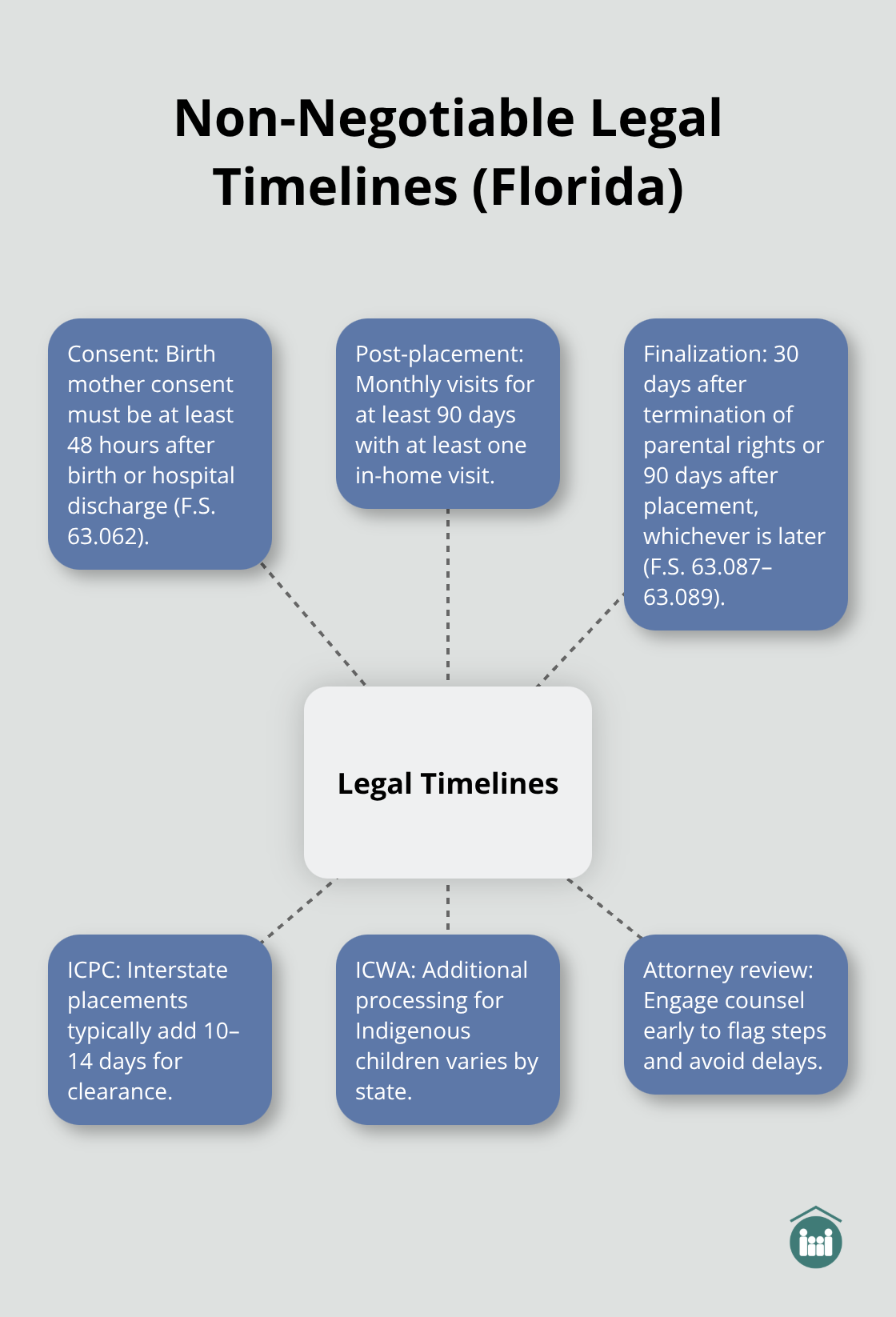
Interstate placements add 10–14 days for ICPC clearance, and Indigenous children require ICWA processing that varies by state. An adoption attorney should review your specific situation early to identify which steps apply and flag potential delays before they materialize. Understanding these legal requirements upfront helps you plan realistically and avoid surprises later in the process.
Accelerate Your Adoption Timeline
The difference between families who move through adoption in 12 months and those who take significantly longer often comes down to three concrete actions taken early. An adoption attorney should review your case during your initial planning phase, not after obstacles appear. Many families contact an attorney only when they hit a problem, but this approach costs time and money. An attorney identifies which Florida Statutes apply to your situation, flags regulatory requirements like ICPC clearance for interstate placements or ICWA processing for Indigenous children, and creates a realistic timeline specific to your circumstances. This early review prevents surprises and ensures you understand exactly which steps you control and which you cannot compress.
Engage Legal Guidance Before You Apply
An adoption attorney should review your case upfront to identify potential delays before they materialize. This conversation clarifies which regulatory steps apply to your situation-whether ICPC clearance for interstate placements, ICWA processing for Indigenous children, or other state-specific requirements. You enter the process with clear expectations and a legal roadmap rather than discovering obstacles months into the adoption journey. If you are considering adoption for your family, you should discuss your rights and options with an adoption lawyer. The trusted legal team at Juliana Gaita, P.A. can help you understand your specific timeline and navigate Florida adoption law.
Assemble Documents Immediately
Document collection is where most families lose weeks unnecessarily. Start assembling birth certificates, marriage licenses, divorce decrees, tax returns, bank statements, and employment verification letters now, even if you have not yet applied. When your social worker requests these materials during the home study phase, you hand them over within days rather than spending weeks locating them. The Florida Department of Children & Families requires these documents regardless of whether you pursue agency adoption, private adoption, or kinship adoption.
Create a digital folder with copies of every required document. This single action eliminates the most common cause of home study delays. Families who complete this step before applying compress the 2–3 month home study phase into the lower end of that range. Background checks for everyone 12 or older in your home cannot be rushed, but having all supporting documents ready means the social worker can submit them immediately and keep the process moving.
Respond Quickly to Matching Opportunities
Communication gaps during matching and post-placement phases create unnecessary delays. Once your profile enters circulation, your adoption agency may receive inquiries from birth mothers at any time. Respond to your agency within 24 hours when they contact you about a potential match or request additional information. Slow responses cost you matches that could have moved forward.
During post-placement supervision, monthly visits are required for at least 90 days with at least one in-home visit (Florida Statutes 63.087–63.089), and you cannot compress this legal requirement. However, you can accelerate it by scheduling visits promptly and maintaining consistent contact with your social worker. If your social worker requests information or documentation for the finalization petition, provide it immediately. Court finalization cannot occur until 30 days after termination of parental rights or 90 days after placement, whichever is later, but delays in paperwork can push your finalization hearing months beyond this minimum.
Maintain Flexibility on Child Preferences
Families who remain flexible on the child’s race, gender, medical history, and adoption relationship see matches much faster than families with rigid preferences. Agencies with nationwide reach expose your profile to significantly more birth mothers than local-only agencies, which directly shortens your wait. A compelling adoptive family profile-including professional photos, an authentic written narrative, and ideally an adoption video profile-significantly reduces your matching window. Families who treat communication as a priority and remain open to different circumstances move through these phases on schedule, while families who respond slowly or maintain narrow preferences watch their timeline extend unnecessarily.
Final Thoughts
Domestic infant adoption in Florida typically takes 12 months from start to finalization, but your decisions early in the process and your actions throughout directly shape how long the adoption process takes for your family. The home study phase, matching period, post-placement supervision, and court finalization each move at their own pace, and understanding what you control versus what Florida law requires helps you plan realistically and avoid surprises. Families who assemble documents before applying, build compelling adoptive profiles, remain flexible on child preferences, and respond quickly to opportunities move through these phases on schedule, while those who delay document collection, maintain rigid preferences, or communicate slowly watch their timeline extend unnecessarily.
Legal guidance throughout your adoption journey prevents costly mistakes and clarifies your rights under Florida Statutes. An adoption attorney should review your case during your initial planning phase to identify which regulatory steps apply to your situation, whether ICPC clearance for interstate placements or ICWA processing for Indigenous children. This early conversation creates a realistic roadmap specific to your circumstances rather than leaving you to discover obstacles months into the process.
If you are considering adoption for your family, contact Juliana Gaita, P.A. to discuss your rights and options with our legal team. The sooner you engage legal guidance and begin preparing your documents, the sooner you can move toward building your forever family.