
Yes, you can adopt an adult in Florida. Many people don’t realize this is possible, but Florida law allows adults to be legally adopted under specific circumstances.
At Juliana Gaita, P.A., we help families navigate this process. Whether you’re looking to formalize a stepparent relationship, establish legal family ties, or plan for inheritance, adult adoption offers real legal benefits.
What Must Be in Place Before an Adult Adoption Happens in Florida
Florida law sets clear requirements that must be met before an adult adoption moves forward. The adoptee must be at least 18 years old, and both the adoptee and the person adopting them must provide written consent. This mutual consent is non-negotiable.

Biological parents do not need to consent, but Florida law requires that they receive notification if they are still living. This notification happens even though their approval is not required-a significant difference from minor adoptions. If the adoptee is married, the spouse must also consent to the adoption. Chapter 63 of the Florida Statutes establishes these consent requirements and forms the foundation of the entire process.
Filing the Petition and Court Requirements
The adoption process starts when you file a Petition for Adoption in the circuit court of the county where the adoptee lives. This petition is the formal document that initiates everything. You will need to gather documentation proving identity and age for both parties, plus any agreements or communications that show the relationship history. The court reviews whether the adoption serves the best interests of the adult adoptee, which may seem unusual since the person is already an adult, but Florida courts take this seriously. Filing fees vary by county, but you should budget for court costs and attorney fees. The timeline typically spans several months depending on your county’s court schedule. Unlike minor adoptions, adult adoptions do not require home studies or background checks, which makes the process faster and less expensive.
Working with an Adoption Attorney
An adoption attorney handles the technical requirements that make the difference between a smooth process and unnecessary delays. The attorney prepares all required paperwork, ensures proper service of notice to biological parents if they are living, and coordinates with the court. The attorney also manages the consent forms that both parties must sign, which must meet specific statutory requirements. At the final hearing, the judge reviews the case, and if everything is in order, issues a final Decree of Adoption. This decree establishes the legal parent-child relationship. You can request a name change for the adoptee as part of the adoption order, which the court can grant at the same hearing. After finalization, you can request an amended birth certificate and handle any updates to wills or other documents.
What Happens Next in Your Adoption Timeline
Once you understand these foundational requirements and have assembled your documentation, the actual court process begins. The steps from petition to final decree follow a specific sequence that your attorney will guide you through.
How the Adult Adoption Process Works in Florida
Filing Your Petition and Initial Court Processing
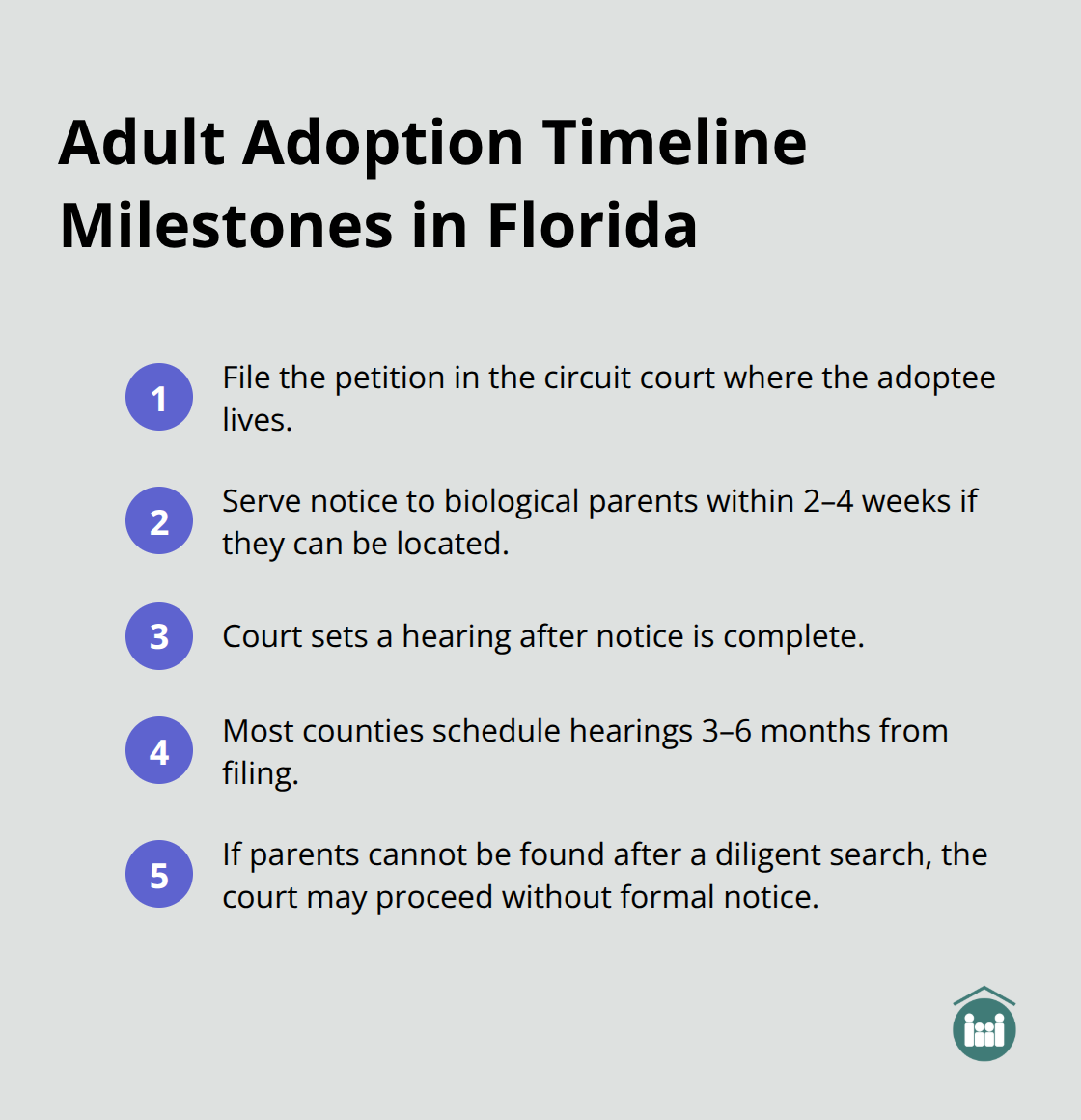
Filing your petition marks the official start of the adult adoption process. The petition goes to the circuit court in your county, and the court clerk processes it and schedules your case. Your attorney serves notice to the adoptee’s biological parents if they’re living, even though their consent isn’t required. This notification step typically takes two to four weeks, depending on how quickly your attorney can locate and serve the parents. If biological parents cannot be found despite reasonable efforts, the court may proceed without their formal notice, though your attorney will document the search efforts thoroughly.
The Hearing Timeline and Court Review
Once notice is complete, the court sets a hearing date. Most Florida counties schedule adult adoption hearings within three to six months from filing, though some busy counties may take longer. The adoptee and the person adopting them must both appear at the final hearing before the judge. The judge reviews the petition, confirms both parties consent in writing, and verifies that the adoption serves the best interests of the adult adoptee. If everything is in order, the judge signs the final Decree of Adoption on the spot or within a few days. This decree creates the legal parent-child relationship.
Updating Your Birth Certificate and Legal Documents
After the decree is signed, you’ll want to request an amended birth certificate that lists the adoptive parents. You can do this through the Florida Department of Health, which typically costs under fifty dollars and takes four to six weeks. If you want the adoptee to change their last name to match the adoptive family, you can file a separate name change petition or request it as part of the adoption order at the final hearing. Many families coordinate the name change with the adoption hearing to handle both at once.
Managing Financial and Beneficiary Updates
You’ll also need to update wills, trusts, and beneficiary designations to reflect the new legal relationship. Life insurance policies, retirement accounts, and employer benefits should all be updated as well, since the adoptee now has inheritance rights and may qualify for survivor benefits. If the adoptee has a spouse, notify their employer and update any joint accounts or documents that list family relationships. These updates protect the adoptee’s interests and prevent complications down the road.
Planning for Inheritance and Special Circumstances
The legal relationship created by the final decree affects how the adoptee inherits from the adoptive parent and how they’re treated under Florida succession law. Some families also need to address whether the adoptee remains eligible for certain benefits from their prior circumstances (such as foster care benefits available to adults in some cases). Understanding these implications helps you make informed decisions about the adoption’s timing and coordination with other estate planning steps.
Why Families Pursue Adult Adoption
Formalizing Stepparent Relationships
Stepparent adoptions represent the most straightforward reason families choose this path. When one parent remarries and the new spouse has actively parented the adult child for years, formalizing that relationship through adoption removes the awkward “step” label and creates actual legal standing. The stepparent gains inheritance rights, hospital visitation authority, and the ability to make medical decisions if needed. The adult child gains security knowing their longtime parent has legal recognition. This matters practically because without adoption, a stepparent holds zero legal rights in an emergency, even after decades of caregiving. Florida law allows this formalization regardless of age, so a stepparent can adopt an adult child who is 30, 40, or older if both parties consent. The process costs significantly less than minor adoptions since no home study or background check is required.
Planning Inheritance and Estate Distribution
Inheritance planning drives many adult adoptions, particularly when families want to ensure their estate passes smoothly to chosen heirs. Adding someone as a legal child through adoption changes how they’re treated under Florida succession law and makes them eligible to inherit as a child rather than relying on will provisions alone. If a parent dies without a will, an adopted adult child stands in the same position as a biological child under Florida’s intestacy laws. This becomes critical for blended families, longtime family friends, or adult children from previous relationships who have been raised by the adoptive parent. Some families coordinate adult adoption with updates to trusts that list children as beneficiaries, since adopted adults gain the same rights as biological children. The adoption also simplifies life insurance beneficiary designations and retirement account succession, reducing confusion and potential legal challenges after death.
Final Thoughts
Adult adoption in Florida creates real legal benefits that protect both the adoptee and the adoptive parent. The adoptee gains inheritance rights, hospital visitation authority, and the ability to receive medical information from the adoptive parent. The adoptive parent gains legal standing to make decisions and pass assets without ambiguity.
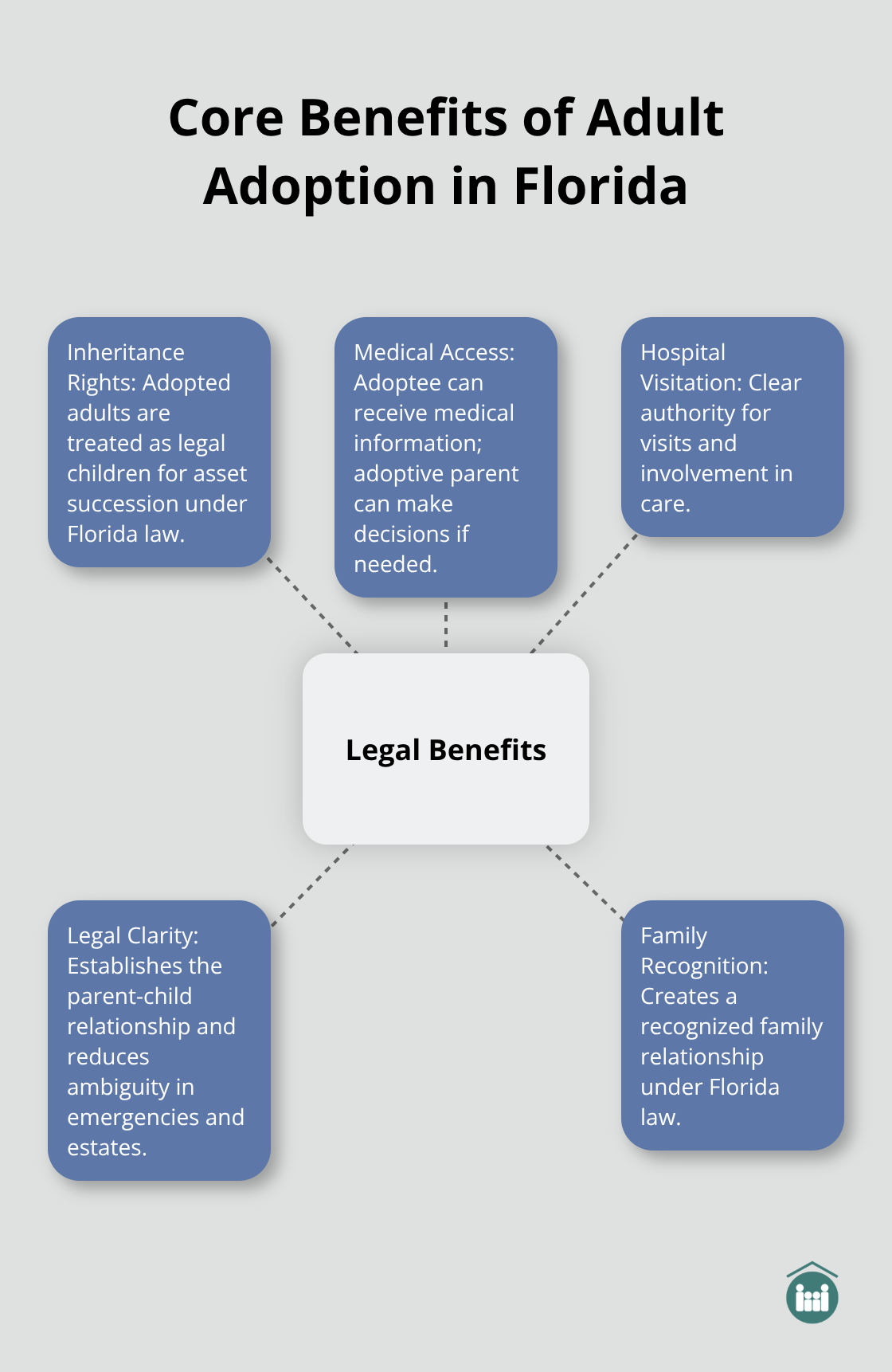
Both parties benefit from establishing a recognized family relationship under Florida law.
Timing matters when you consider whether you can adopt an adult in Florida. If you plan your estate, coordinate the adoption with updates to your will or trust to align everything properly. If you formalize a stepparent relationship, doing so sooner rather than later protects both parties in medical emergencies and simplifies future planning. The process typically takes three to six months from filing to final decree, depending on your county’s court schedule.
We at Juliana Gaita, P.A. help families navigate adult adoption throughout Florida. Proper notice to biological parents, correct consent forms, and accurate court filings make the difference between a smooth process and unnecessary delays. Contact our team for guidance on your specific situation.