
Adopting a child in Florida involves specific legal steps, timelines, and requirements that vary depending on your situation. At Juliana Gaita, P.A., we guide families through the individual adoption process with clarity and support.
This guide walks you through what to expect, from finding a match to finalizing your adoption in court.
Understanding Individual Adoption in Florida
What Types of Individual Adoption Work in Florida
Florida recognizes four distinct adoption pathways, and understanding which one fits your situation matters significantly. Entity adoption involves working with a licensed adoption agency or attorney to place a child, providing access to counseling, home study support, and professional guidance throughout the process. Stepparent adoption allows a spouse to legally adopt their partner’s child, streamlining requirements and timelines considerably. Relative adoption lets grandparents, aunts, uncles, or other family members adopt a child they already know, often with reduced procedural complexity. Adult adoption, less common but legally valid, allows you to adopt someone 18 or older through a simplified court process. The path you choose depends on whether you adopt an infant through a birth mother match, a child from foster care, a relative, or someone already in your life.

Who Can Adopt in Florida
Florida law sets straightforward eligibility rules. You must be at least 21 years old, though some adoption types have higher age requirements. The court examines whether you can be an effective parent physically and financially-homeownership and a specific income threshold are not required, but demonstrating financial stability matters. A criminal history or substantiated abuse or neglect allegations can disqualify you, but having a physical disability does not automatically prevent adoption if you can demonstrate parenting capability. Florida allows single individuals, married couples, and unmarried partners to adopt, meaning there’s no one correct family structure. According to the U.S. Census Bureau, nearly 11 million single-parent households exist in the United States, reflecting a substantial reality that Florida adoption law recognizes.
The Timeline From Start to Court
The adoption timeline varies dramatically based on your chosen path. Private domestic infant adoptions typically move faster than foster care adoptions because the birth mother selects adoptive parents directly, compressing the matching phase. Your home study takes four to eight weeks once you begin-this includes background checks, home inspections, interviews, and financial and medical evaluations. After placement, Florida law requires a mandatory waiting period: the final hearing cannot occur sooner than 30 days after termination of parental rights or 90 days after placement (though these timeframes don’t apply to stepparent, relative, or adult adoptions). From initial inquiry to finalized adoption, private infant adoptions often conclude within 6 to 12 months, while foster care adoptions can take longer due to court involvement in terminating parental rights. The speed depends partly on whether you work with an agency, which typically offers more counseling and support, or an attorney, which sometimes reduces requirements and costs but shifts coordination responsibility to you.
What Happens Next in Your Adoption Journey
Once you understand which adoption type fits your family and confirm your eligibility, the practical work begins. The next steps involve finding a match with a birth mother (if pursuing private infant adoption), completing your home study, and preparing for the legal finalization process. Each of these phases requires specific actions and documentation that move you closer to bringing your child home.
The Role of Legal Representation in Adoption
Why You Need an Adoption Attorney
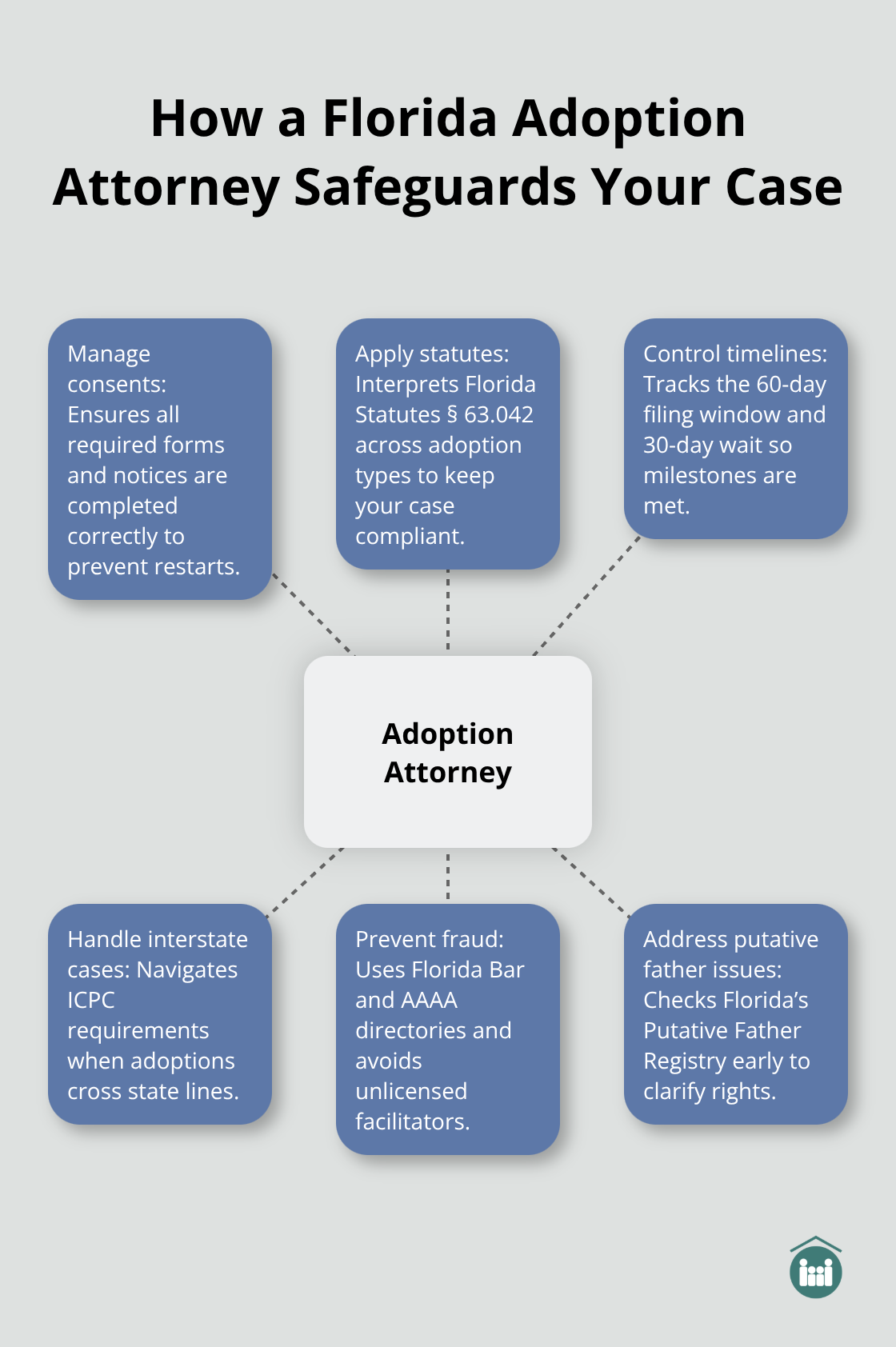
Adoption law in Florida contains procedural requirements that, if missed or handled incorrectly, can delay finalization or jeopardize your case entirely. An adoption attorney manages consent documentation, verifies that all parties sign required forms, confirms that birth parents meet statutory notice requirements, and validates that termination of parental rights follows proper court procedures. Florida Statutes § 63.042 outlines eligibility and consent rules, but the practical application varies significantly depending on whether you pursue private domestic infant adoption, foster care adoption, or another pathway. Working with a licensed attorney prevents costly mistakes-mishandling a birth father’s consent rights, for example, can force the adoption process to restart. The Florida Bar and the Academy of Adoption and Assisted Reproduction Attorneys maintain directories of qualified adoption lawyers; avoiding unlicensed facilitators who illegally advertise adoption services protects you from fraud and ensures your case receives proper legal oversight.
What Your Attorney Handles Throughout the Process
An attorney manages the critical 60-day window after termination of parental rights when your adoption petition must be filed, handles the mandatory 30-day waiting period before your final hearing, and prepares all documentation for court finalization. If your adoption crosses state lines, your attorney navigates Interstate Compact requirements and ensures compliance with multiple jurisdictions’ timelines and reporting obligations. Your attorney also anticipates problems-unmarried biological fathers who fail to register with Florida’s Putative Father Registry, for instance, may lose certain consent rights, but your attorney confirms these details upfront rather than discovering complications mid-process.
Structuring Open Adoption Agreements
Your attorney structures open adoption agreements if you plan ongoing contact with the birth family, clarifying expectations about communication frequency, information sharing, and privacy standards before placement occurs. This prevents misunderstandings later when, for example, a birth parent shares photos on social media contrary to your agreement or uses a different name for your child. An attorney helps you understand financial assistance available to you-the federal Adoption Tax Credit reached $16,810 in 2024 according to IRS guidance, many employers offer adoption benefits, and state employees and veterans may access additional subsidies-ensuring you maximize available resources.
Protecting Your Rights Throughout Adoption
Your attorney protects your rights during the home study phase, helps you prepare for the matching process, and represents your interests if disputes arise with birth parents or adoption agencies. These protections matter most when complications emerge-a birth parent changes their mind about openness, an agency mishandles your paperwork, or unexpected legal questions surface during the finalization phase. With proper legal guidance in place, you move forward with confidence that someone qualified handles the technical and procedural aspects of your adoption.
Once you understand the legal framework and have secured representation, the practical work of finding a match and completing your home study begins.
Practical Steps to Move Forward with Adoption
Finding a Match with a Birth Mother
The practical phase of adoption begins once you understand the legal framework and have secured representation. If you pursue a private domestic infant adoption, you find a match with a birth mother through profiles you create and share with adoption agencies or attorneys. Birth mothers typically review multiple family profiles and select the adoptive parents themselves, which gives you some control over how you present your family but no guarantee of a quick match. The matching process can take anywhere from a few weeks to several months, depending on how many birth mothers review your profile and whether your family circumstances align with what they seek. During this phase, your attorney or agency handles all contact with the birth mother, manages any living expenses she incurs before birth, and coordinates childbirth expenses-all legally permissible in Florida private adoptions. Some families increase visibility to more birth mothers by working with multiple agencies simultaneously, though this requires managing communication across different organizations. Once a birth mother selects your family, she must provide informed consent to termination of parental rights, and your attorney verifies this consent meets all statutory requirements before moving forward.
Completing Your Home Study
Your home study runs parallel to or follows the matching process, and this evaluation determines whether the court will approve your adoption. The home study typically takes four to eight weeks and includes background checks examining your criminal history, home inspections assessing safety and living space, interviews exploring your parenting philosophy and family dynamics, and financial and medical evaluations confirming stability. Prepare your home before the home study begins-ensure adequate sleeping space for the child, remove hazards, and document financial stability through recent tax returns and bank statements. A licensed clinical social worker or mental health professional conducts this evaluation and produces a report that carries significant weight in court.
Navigating the Finalization Process
After the home study concludes, finalization requires you to file your adoption petition within 60 days of termination of parental rights, then wait a mandatory 30 days before your final hearing can occur. The final hearing takes place in Florida court, and many judges now permit telepresence participation if travel presents difficulty.
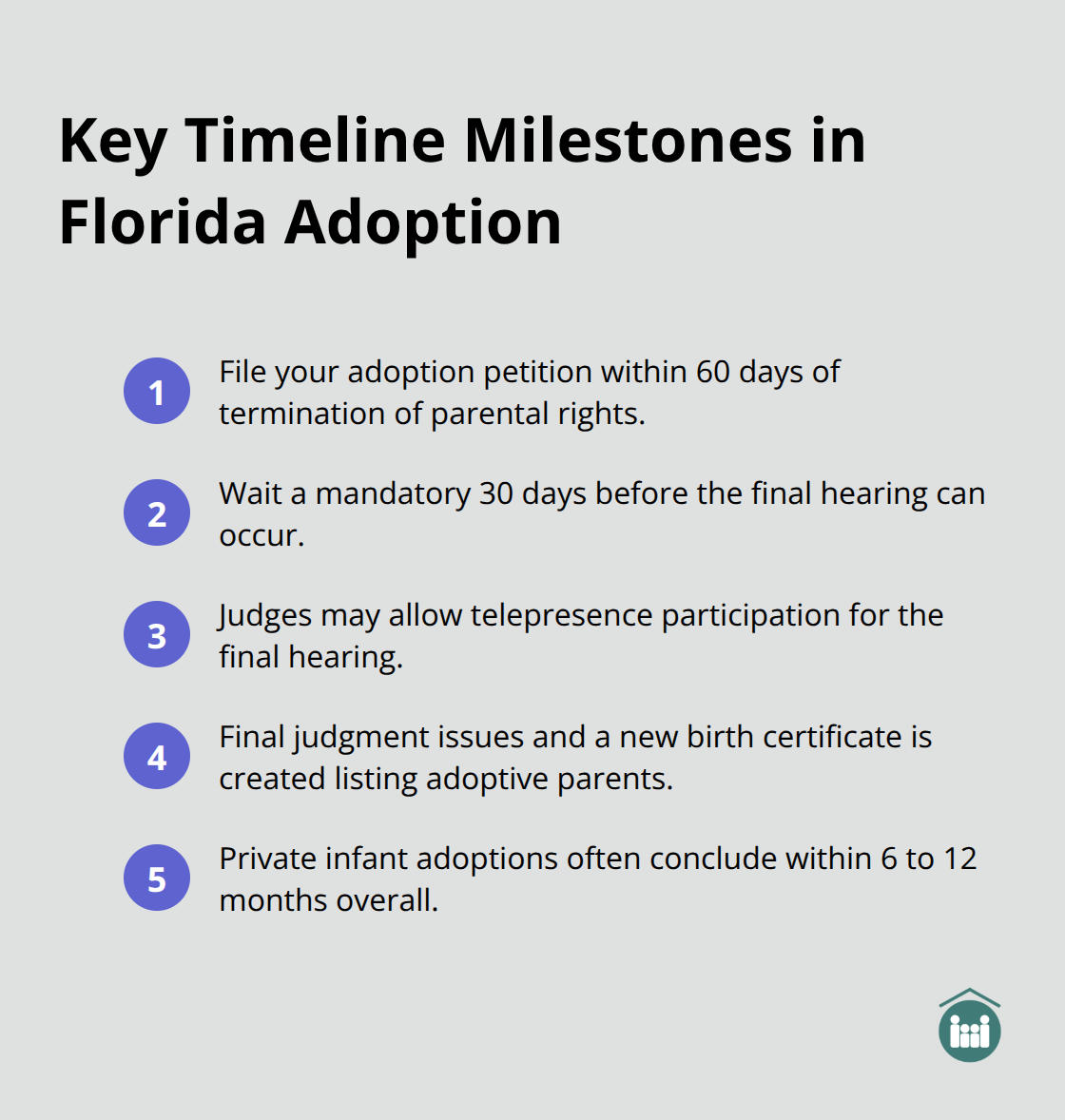
At this hearing, the judge reviews your petition, confirms all consents are valid, and issues a final judgment of adoption that transfers parental rights, changes the child’s legal status, and triggers issuance of a new birth certificate listing you as parents. The entire process from initial inquiry to finalized adoption typically concludes within 6 to 12 months for private infant adoptions, though timelines compress or extend based on how quickly you find a match and complete required documentation.
Final Thoughts
Adopting a child in Florida requires understanding the legal framework, securing proper representation, and completing practical steps in the right order. The individual adoption process moves faster when you work with a qualified attorney who manages consent documentation, verifies statutory requirements, and handles court procedures correctly. Missing deadlines or mishandling birth parent consent forces your case to restart, making legal guidance essential rather than optional.
Common mistakes derail adoptions unnecessarily. Failing to register with Florida’s Putative Father Registry creates unexpected complications if an unmarried biological father surfaces later, and working with unlicensed facilitators exposes you to fraud and leaves your case without proper oversight. Neglecting to clarify open adoption expectations upfront leads to conflict when birth parents share photos on social media or use different names for your child, while skipping home study preparation wastes time during an already lengthy evaluation. Not maximizing available financial assistance means leaving money on the table-the federal Adoption Tax Credit reached $16,810 in 2024, and many employers offer adoption benefits you may not know about.
Starting your adoption journey begins with a conversation about your rights and options. Whether you pursue private domestic infant adoption, stepparent adoption, relative adoption, or another pathway, the timeline and requirements differ significantly. Contact us at Juliana Gaita, P.A. to discuss your situation and take the first step toward bringing your child home.