
Step-parent adoption offers families a legal way to formalize relationships and create stability for children. The step-parent adoption process in Florida involves specific requirements, court procedures, and documentation that vary from other adoption types.
At Juliana Gaita, P.A., we guide families through each stage, from initial consent matters to final court approval. This guide walks you through what to expect and how to protect your family’s interests.
What Step-Parent Adoption Actually Does
The Legal Reality of Step-Parent Adoption
Step-parent adoption creates a legal parent-child relationship between your spouse and your child. This is not a symbolic gesture or a way to formalize an emotional bond. It fundamentally changes your child’s legal status. After finalization, your spouse becomes a legal parent with the same rights and responsibilities as a biological parent.
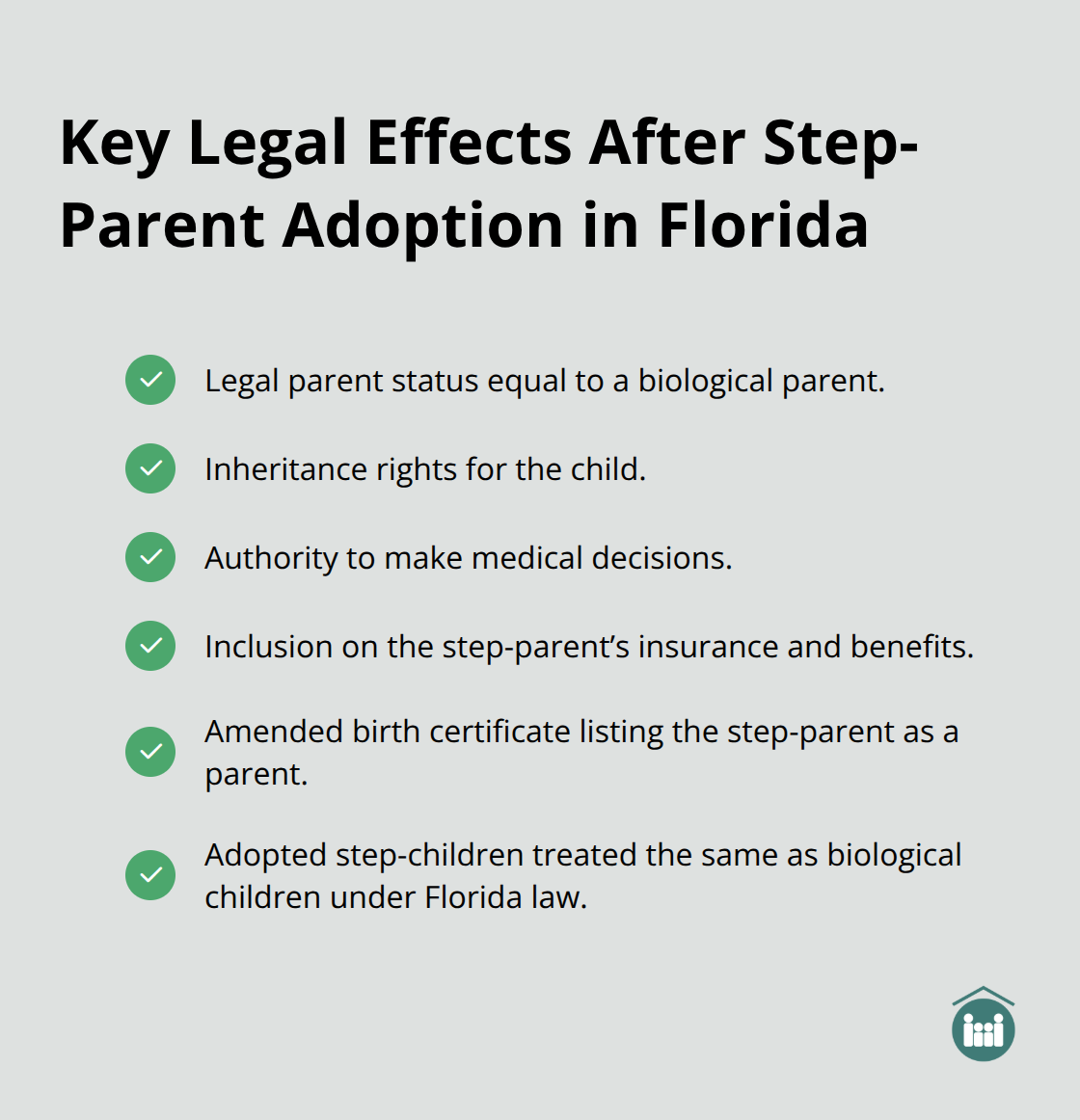
Your child gains inheritance rights, can make medical decisions through your spouse, and appears on your spouse’s insurance and benefits. The birth certificate is amended to list your spouse as a parent. This matters enormously if something happens to you. Without step-parent adoption, your spouse has no legal authority to make decisions for your child in a medical emergency, cannot claim your child as a dependent, and cannot leave assets to your child through a will with the same protections a biological parent would have. Florida law treats adopted step-children identically to biological children once the adoption is final.
Why Families Pursue Step-Parent Adoption
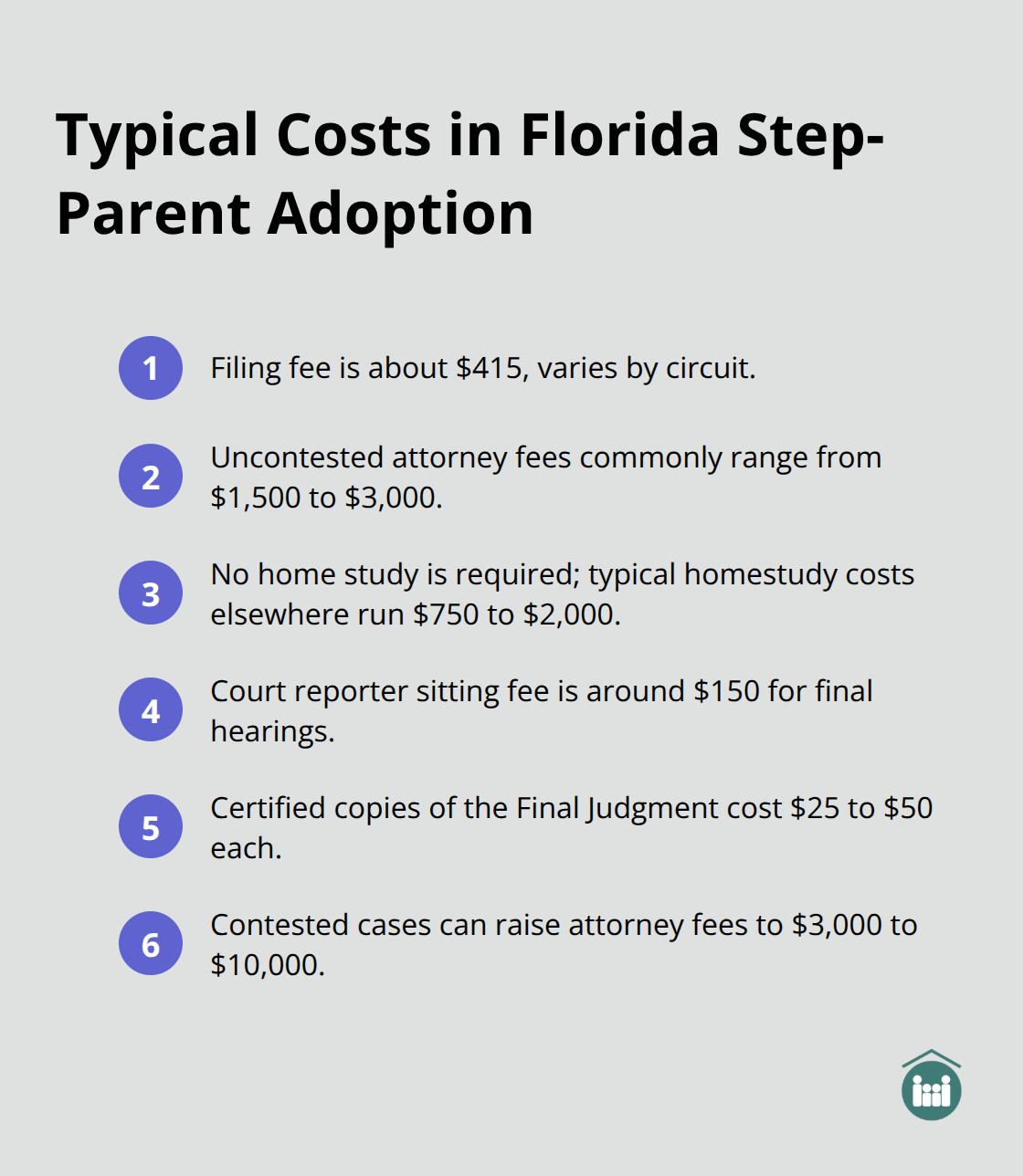
Families pursue step-parent adoption for concrete reasons, not sentimental ones. The process is straightforward compared to other adoption types because it typically avoids home studies and lengthy waiting periods. You already live together, the biological parent consents in most cases, and the court knows your family structure. The filing fee in Florida runs about $415, though costs vary by circuit. Attorney fees for uncontested cases range from $1,500 to $3,000, with simpler cases at the lower end. You can file the petition yourself using Florida’s pre-printed forms if the case is uncontested, though contested matters require legal representation to navigate terminating the other biological parent’s rights.
What Sets Step-Parent Adoption Apart
The biggest difference from infant or international adoption is that no home study is required for step-parent adoption in Florida. A homestudy typically costs $750 to $2,000 and involves home visits and background checks, so skipping this step saves time and money. Your case moves faster because the child already lives in your home, both parents’ identities are known, and the family structure is established. The entire process can take several months to finalization, far shorter than most other adoption paths. These advantages mean your family can move forward without the delays and expenses that characterize other adoption types. Understanding these cost and timeline differences helps you plan your next steps with realistic expectations about what lies ahead.
Consent and Termination of Parental Rights
How Consent Works in Florida Step-Parent Adoption
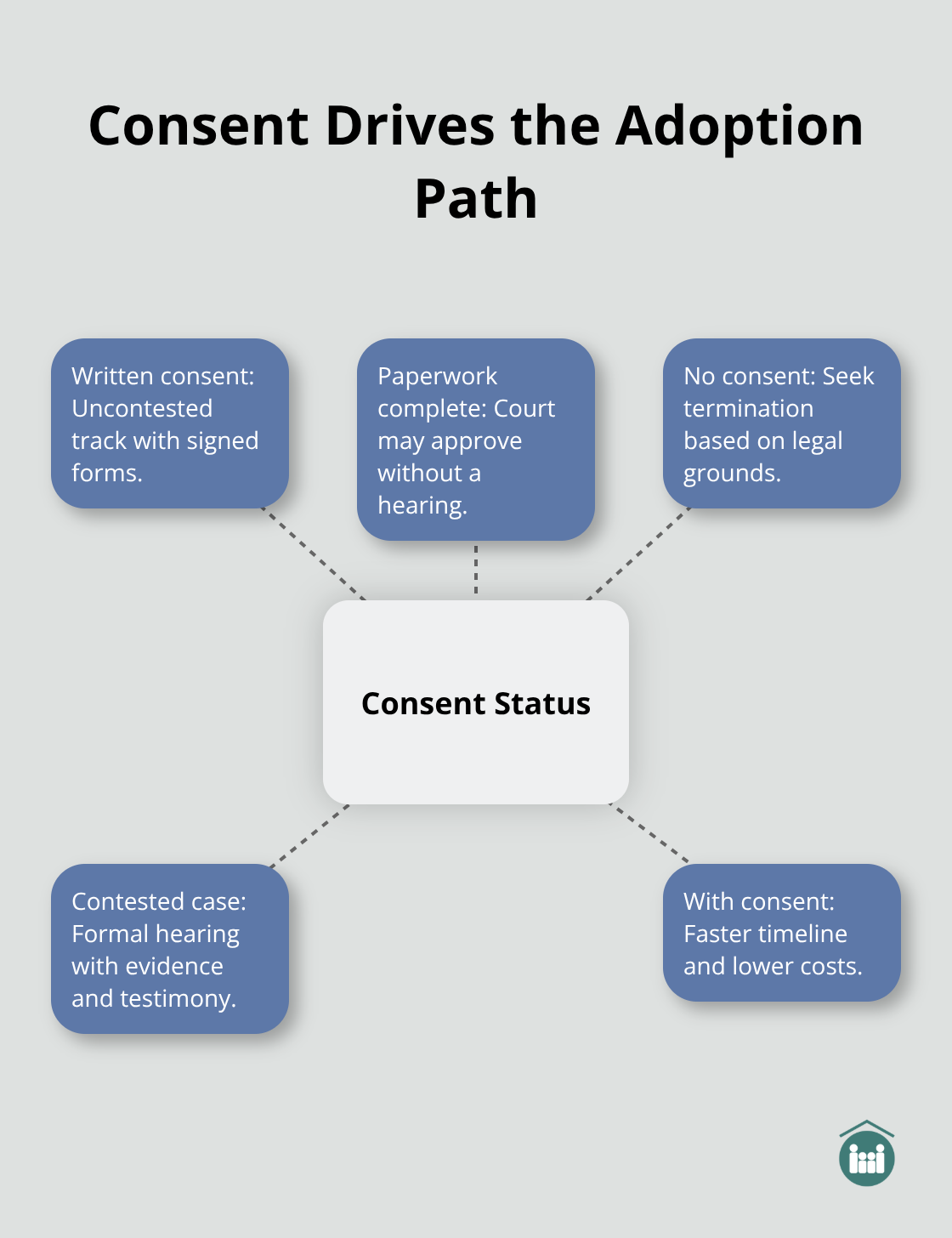
The consent process determines whether your step-parent adoption moves forward smoothly or becomes contested. Florida law requires either the noncustodial biological parent’s written consent or a court termination of their parental rights. If the noncustodial parent agrees to the adoption, they sign consent documents and the process typically stays uncontested. The court approves the adoption without a formal hearing if all paperwork is complete. This straightforward path saves months and thousands in legal costs.
When the Other Parent Refuses Consent
If the noncustodial parent refuses consent, the court can terminate their rights if they abandoned the child, are unfit due to abuse or neglect, or have failed to uphold parental responsibilities. Proving abandonment requires demonstrating that the parent had no meaningful contact with the child and showed no interest in their welfare. Courts scrutinize these cases heavily because terminating someone’s parental rights is irreversible. You must file the petition in the circuit court in the county where your family resides, and the petition includes the step-parent relationship, both biological parents’ information, and a statement explaining why the adoption serves the child’s best interests. If the noncustodial parent contests the adoption, a court hearing becomes necessary where evidence and testimony determine the outcome.
Filing Requirements and Court Procedures
The filing fee in Florida runs approximately $415, though this varies by circuit. One filing fee covers the adoption action, any termination of parental rights petition, and a declaratory statement about fees if needed. Court reporters are required for final hearings in uncontested cases, charging around $150 for the sitting fee. After the Final Judgment is entered, obtain three to five certified copies to update your child’s birth certificate, Social Security records, and school files, costing roughly $25 to $50 per copy.
Timeline and Representation Options
The entire process from petition filing to final judgment typically takes several months if uncontested, though contested cases involving termination of parental rights can extend significantly longer. Many families complete uncontested adoptions without an attorney using Florida’s pre-printed forms, but contested matters require legal representation to navigate proving abandonment or unfitness and locating an absent parent. Understanding these requirements helps you prepare for what comes next-the actual filing process and documentation that moves your adoption forward.
Common Challenges and How to Overcome Them
The Consent Barrier
The noncustodial parent’s refusal to consent creates the largest barrier in step-parent adoption cases. Florida courts can terminate their rights only if abandonment, abuse, neglect, or failure to uphold parental responsibilities is proven. Abandonment requires concrete evidence: no phone calls, no visits, no financial support, and no attempts to maintain a relationship over a sustained period. If the parent has occasional contact or pays child support sporadically, proving abandonment becomes significantly harder. Courts demand this evidence before they will terminate parental rights irreversibly.
Locating an Absent Parent
Locating an absent parent adds another layer of complexity when they have disappeared entirely. You must still serve them notice of the adoption petition, and if you cannot locate them after reasonable efforts, the court may appoint a guardian ad litem to represent the child’s interests. This process extends timelines and increases legal costs substantially. Contested adoptions involving termination of parental rights cost far more than uncontested cases, with attorney fees ranging from $3,000 to $10,000 depending on how aggressively the other parent fights the adoption.
Financial Realities Beyond the Filing Fee
The financial reality of step-parent adoption extends beyond the initial $415 filing fee. Court reporters must be present at final hearings, charging approximately $150 for a sitting fee. If the case becomes contested and requires multiple hearings, those costs accumulate quickly. Certified copies of the Final Judgment cost $25 to $50 each, and you need several to update birth certificates, Social Security records, and school documentation.
Emotional Strain and the Child’s Perspective
Emotional strain affects families throughout the process, particularly when the other biological parent contests the adoption or when the child questions loyalty to their biological parent. Children aged 12 and older must consent to the adoption unless the court determines it is not in their best interests, and that consent must be genuine rather than coerced. Some children feel conflicted about the adoption even when they understand its benefits, fearing they betray their biological parent by accepting the step-parent legally. The adoption does not erase the child’s relationship with their biological parent or their right to that relationship; it simply adds another legal parent to their life. Open conversations about what the adoption means help address these concerns directly. Families who navigate these conversations thoughtfully and honestly find the process less destabilizing than those who avoid discussing the child’s feelings throughout the journey.
Final Thoughts
Step-parent adoption in Florida involves specific legal requirements that vary from case to case, and Florida courts prioritize the child’s best interests at every stage. Missing documentation, procedural errors, or incomplete consent filings can delay your case by months or derail it entirely. An attorney familiar with Florida family law knows exactly what the courts in your county require and how judges in your circuit typically rule on contested matters.
We at Juliana Gaita, P.A. help families navigate the step-parent adoption process from start to finish. We handle consent negotiations with the other biological parent, file petitions correctly the first time, and represent you in court if the case becomes contested. We also manage the post-finalization steps, updating your child’s birth certificate and Social Security records properly.
The financial investment in legal representation pays for itself when you avoid costly mistakes or unnecessary delays. Uncontested cases with proper legal guidance move faster and cost less than cases that stumble through procedural errors, while contested cases require aggressive representation to protect your family’s interests and prove your case to the court.