Stepparent adoptions are meant to be permanent, but Florida law does allow for reversals under specific circumstances. Can a stepparent adoption be reversed? Yes, but only when serious legal grounds exist, such as fraud or failure to follow proper procedures.
At Juliana Gaita, P.A., we understand that adoption reversals are exceptionally rare and difficult to achieve. The courts prioritize family stability, which means the burden of proof is high for anyone seeking to undo an adoption.
What Grounds Allow You to Reverse a Stepparent Adoption in Florida?
Florida law recognizes only narrow pathways to reverse a stepparent adoption, and the grounds must be substantial.
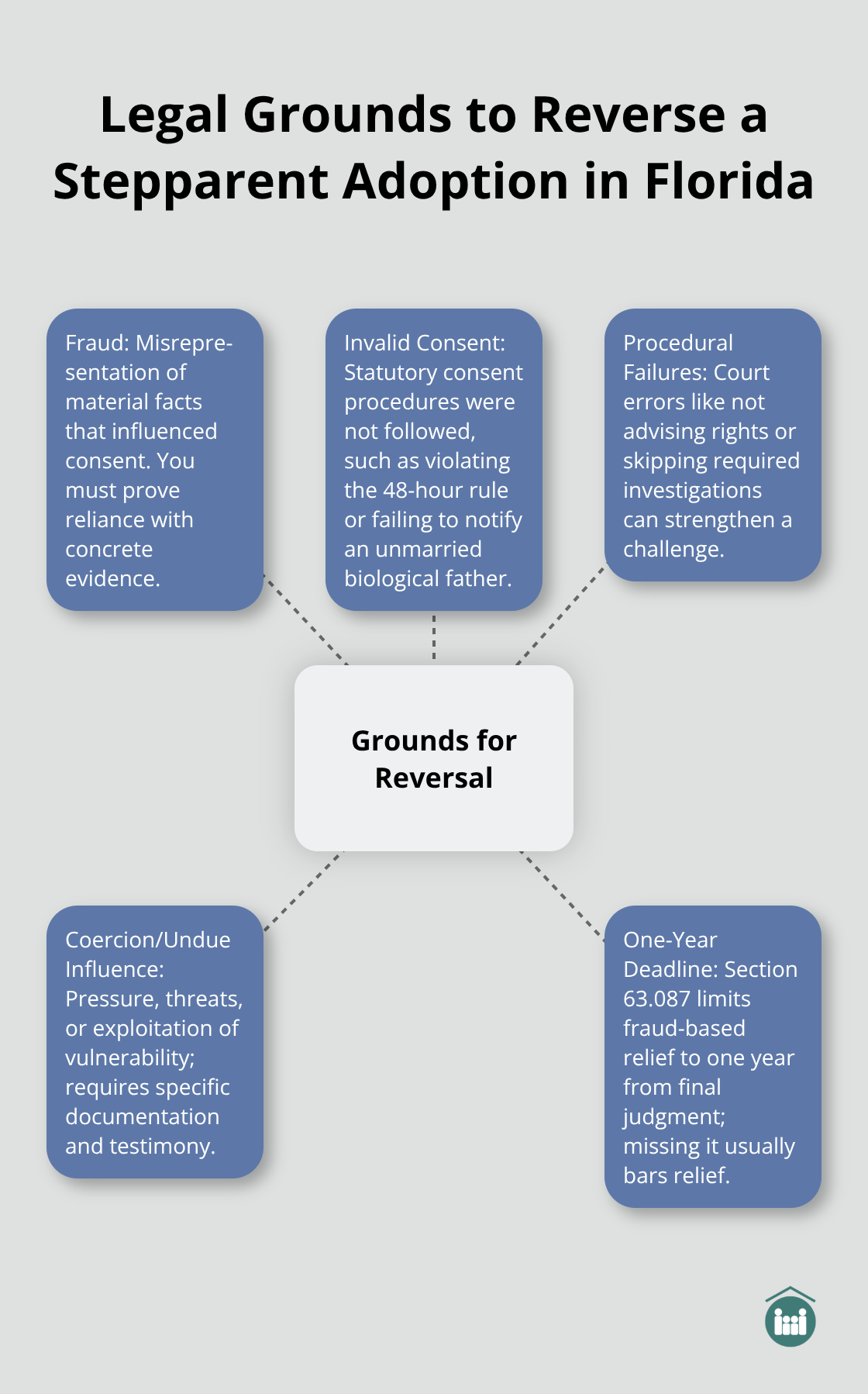
Fraud stands as the most viable ground for reversal. A biological parent or adoptive parent can challenge the adoption if material facts were misrepresented during the process. For example, if the adoptive stepparent concealed significant financial instability, ongoing substance abuse, or a criminal history that directly influenced the biological parent’s decision to consent, that constitutes fraud. However, courts demand concrete evidence, not suspicions. The biological parent must prove they relied on the false information and would not have consented had they known the truth.
Florida Statutes Section 63.087 provides a one-year window from the final adoption judgment to file for relief based on fraud. This creates an urgent deadline for anyone considering this path. Missing this deadline typically bars the claim entirely, regardless of the strength of the evidence.
Consent Issues That Support Reversal
Lack of proper consent from the biological parent offers another potential ground, though this applies primarily to situations where consent was never validly obtained. Florida law requires specific consent procedures: birth mothers cannot sign consent until at least 48 hours after birth or hospital discharge, and unmarried biological fathers must receive proper notice and opportunity to assert rights. If the adoption proceeded without meeting these requirements, reversal becomes more feasible.
Courts take consent violations seriously because they strike at the foundation of the adoption itself. A biological parent who never received notice or opportunity to participate in the process has stronger grounds than one who simply changed their mind after valid consent.
Procedural Failures and Coercion
Failure to follow legal procedures during the adoption process itself can support a reversal petition. If the court failed to properly advise the biological parent of their rights or failed to conduct required investigations, these violations strengthen a reversal claim. Additionally, if the biological parent can demonstrate they were coerced or unduly influenced when relinquishing rights, that provides grounds for challenge.
Coercion involves direct pressure or threats, while undue influence refers to manipulation or taking advantage of someone’s vulnerability (such as financial desperation or emotional distress). These claims require specific documentation and testimony, not vague assertions of regret or changed circumstances. The biological parent must show concrete actions or statements that pressured the decision, not merely that they now wish they had chosen differently.
Understanding these grounds is essential before pursuing reversal, but knowing the grounds is only the first step. The actual legal process to challenge an adoption in court involves additional requirements and strict procedures that courts enforce rigorously.
How to File for Reversal in Florida Court
The One-Year Filing Deadline
Florida Statutes Section 63.087 imposes an absolute one-year deadline from the final adoption judgment to file for relief based on fraud, duress, or procedural violations. This deadline is non-negotiable-missing it eliminates your ability to challenge the adoption in most circumstances, regardless of how compelling your evidence might be. The petition must be filed in the family court where the original adoption was finalized. Courts will not accept late filings, and they will not extend this deadline except in the rarest circumstances. The cost of missing this deadline is permanent: you lose your legal right to pursue reversal through the courts.
Required Documentation and Evidence
Your petition demands specific documentation that courts require without exception. You must submit the original adoption decree, birth certificates, evidence of the alleged fraud or procedural failure, and detailed affidavits explaining why the adoption should be reversed. Courts reject vague claims or emotional arguments; they demand concrete proof that material facts were misrepresented or that legal procedures were fundamentally violated. For fraud claims, you need documentation showing what false information was presented, who presented it, and how you relied on that information when consenting to the adoption. Procedural violations require court records or witness testimony demonstrating that the court failed to follow required steps.
The Clear and Convincing Evidence Standard
The burden of proof in a reversal case is substantially higher than in other family law matters. You must demonstrate by clear and convincing evidence that fraud occurred or that the biological parent’s consent was invalid or coerced. Florida courts place the child’s best interests at the center of every decision, which means even if you prove fraud, the court may still deny reversal if it determines that undoing the adoption would harm the child. The court examines the stability of the current family arrangement, the child’s emotional attachment to the adoptive stepparent, the length of time since finalization, and whether returning to the biological parent serves the child’s welfare. This is why many cases fail despite strong fraud evidence-judges weigh competing interests heavily in favor of maintaining established family relationships.
Court Procedures and Timeline
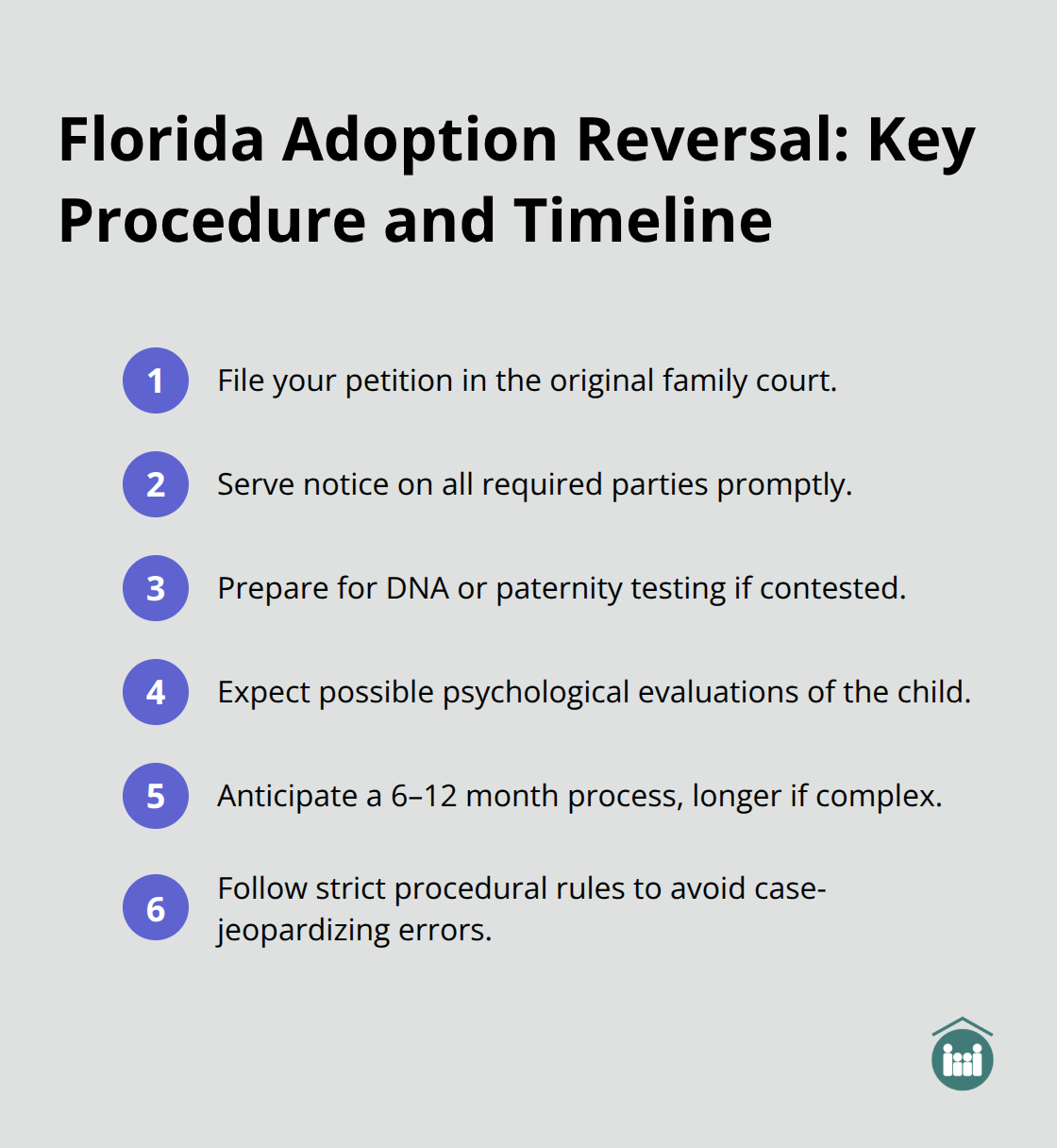
The court procedures involve filing the petition, serving notice on all relevant parties (the adoptive stepparent, the biological parent who consented, and potentially the child if they are old enough), and attending a hearing where evidence is presented. Courts typically require DNA or paternity testing if paternity remains contested, and they may order psychological evaluations of the child to assess the impact of potential reversal. The entire process from filing to final judgment typically takes six to twelve months, though complex cases involving interstate matters or disputed facts can extend considerably longer. Each step follows strict procedural rules that courts enforce without flexibility, and any misstep can jeopardize your case.
Why Professional Guidance Matters
The procedural complexity and high evidentiary standards mean that pursuing reversal without proper legal guidance carries substantial risk. An adoption attorney in Florida can evaluate whether your specific circumstances meet the legal grounds for reversal, calculate whether you fall within the one-year deadline, and prepare the documentation courts demand. The stakes are high-both financially and emotionally-because reversal attempts that fail can damage relationships and consume significant resources. Understanding these procedural requirements and timelines allows you to make informed decisions about whether pursuing reversal is realistic given your specific circumstances and whether the legal pathway exists to achieve your goals.
What Happens to the Child and Family When an Adoption Is Reversed
The Child’s Legal Status and Identity Shift
Reversing a stepparent adoption fundamentally disrupts the child’s legal and emotional world, which is precisely why courts treat reversal as a last resort. When a court vacates an adoption, the child’s birth certificate reverts to the original version, and the adoptive stepparent’s parental rights terminate entirely.
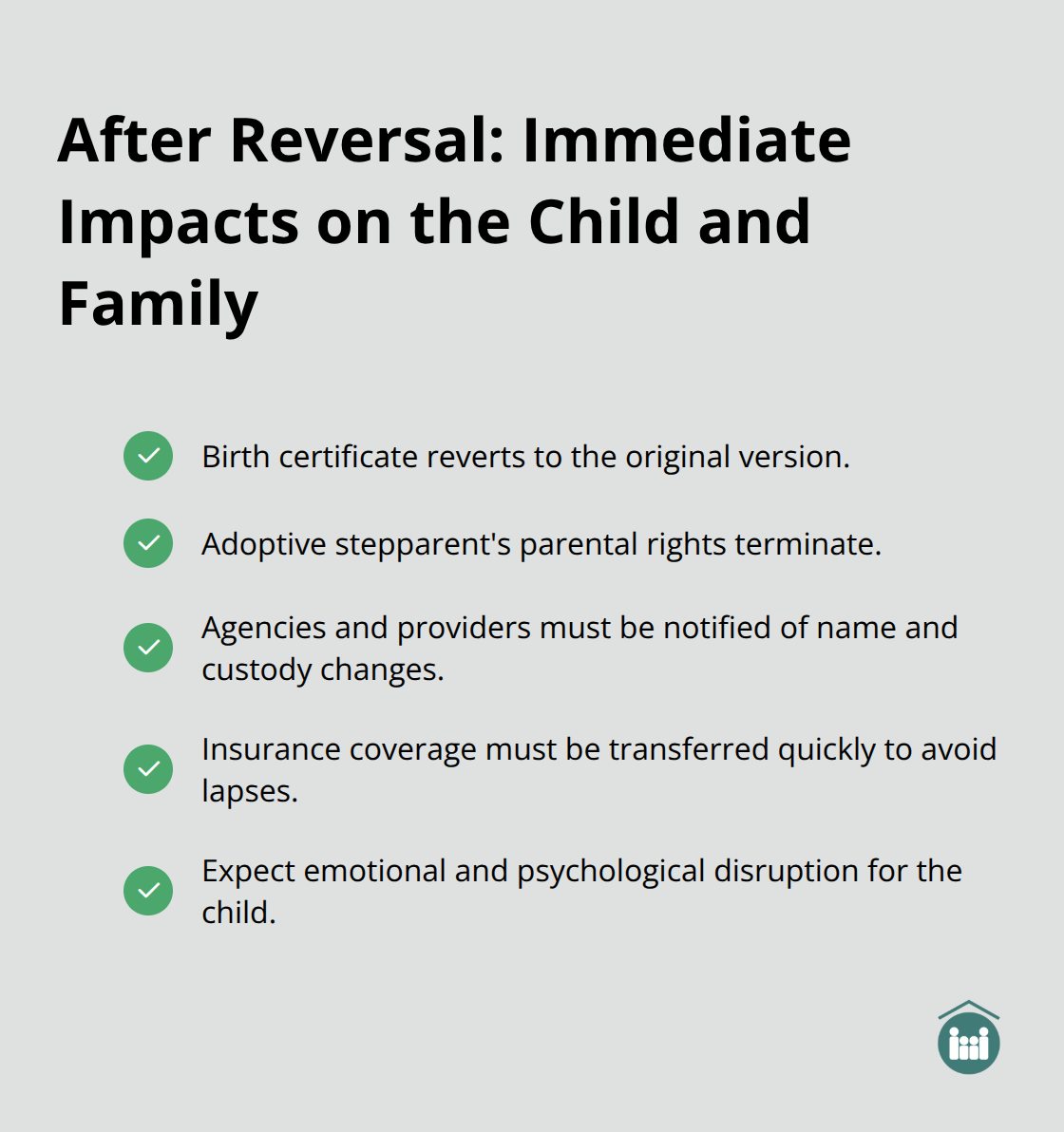
Florida Department of Health procedures require that within 30 days of the court’s final reversal order, the clerk must forward the annulment decree to the department, which then removes the new birth certificate from active files and restores the original to its place. This administrative process creates tangible instability for the child. Schools, healthcare providers, and government agencies must receive notification of the name change and custody shift. Insurance coverage may lapse if not transferred immediately. A child who spent five years calling the stepparent mom or dad faces psychological harm from forced separation that courts weigh heavily against the biological parent’s fraud claims.
Emotional and Psychological Impact on the Child
Courts recognize the damage that reversal inflicts on a child’s sense of identity and belonging. If the child has lived with the adoptive stepparent for years, suddenly losing that legal relationship creates profound confusion about who they are and where they belong. The longer the adoption has been finalized, the less likely reversal becomes, regardless of the legal grounds presented. Judges often refuse reversal even when fraud is proven, if the child has spent substantial time in the adoptive family and developed deep emotional bonds. The court’s primary concern centers on the child’s welfare, not on correcting the mistakes or deceptions of adults.
Financial Obligations and Asset Distribution
The financial and asset consequences of reversal create additional practical obstacles that complicate the process further. If the adoptive stepparent made significant financial investments during the adoption and subsequent years (paying for the child’s medical care, education, extracurricular activities, or special needs treatment), reversal does not automatically require reimbursement to the stepparent. Florida law does not mandate compensation for parental investments once an adoption is reversed. However, if the adoptive stepparent purchased property titled in the child’s name or established trusts or savings accounts for the child’s benefit, those assets typically remain with the child upon reversal unless the court orders otherwise.
Child Support and Custody Transitions
Child support obligations shift dramatically upon reversal: the biological parent who regains custody becomes responsible for the child’s financial support, and the adoptive stepparent’s obligation terminates. This creates a scenario where a biological parent who successfully reverses an adoption may suddenly face substantial support obligations they had avoided during the years of the adoption. Additionally, if the biological parent was receiving state benefits or tax credits based on the child’s custody before the adoption, reversal may restore those benefits, but the transition period involves paperwork delays and potential gaps in coverage.
Financial Capacity Requirements Before Reversal
Courts sometimes condition reversal on the biological parent demonstrating financial capacity to support the child, which means proving stable income and housing before the reversal is finalized. Without this proof, judges deny reversal petitions even when fraud is established, because they refuse to return a child to a parent unable to provide basic necessities. The court’s refusal to finalize reversal without financial stability reflects the judicial priority: protecting the child’s welfare takes precedence over correcting the legal errors or fraudulent conduct of adults involved in the adoption.
Final Thoughts
Stepparent adoption reversals remain exceptionally rare in Florida because courts intentionally construct substantial barriers to protect family stability. The legal system imposes strict deadlines, high evidentiary standards, and an unwavering focus on the child’s best interests-all designed to prevent the disruption that reversal causes. When you ask whether a stepparent adoption can be reversed, the honest answer is that Florida law permits reversal under narrow circumstances, but actually succeeding requires proving fraud, coercion, or serious procedural violations by clear and convincing evidence within one year of the final judgment.
A child who has spent years in a stable family relationship faces profound harm when that relationship terminates suddenly, and courts refuse to undo adoptions simply because circumstances have changed or regret has set in. Financial obligations shift, identity documents require reissuance, and the emotional toll on everyone involved can be severe. These consequences explain why judges demand concrete evidence of fraud rather than accepting claims of changed minds or dissatisfaction.
If you are considering whether reversal is possible in your situation, or if you are contemplating a stepparent adoption and want to understand the permanence involved, professional guidance is essential. The one-year deadline moves quickly, the procedural requirements are strict, and the burden of proof is substantial. We at Juliana Gaita, P.A. help clients throughout Florida understand their adoption rights and options, and we can evaluate whether reversal is realistic for your family.