
Choosing between foster care and adoption shapes a child’s future and your family’s journey. Foster care vs adoption statistics reveal stark differences in permanency, legal rights, and long-term outcomes that matter deeply.
At Juliana Gaita, P.A., we help Florida families understand these distinctions so you can make the right choice for your situation. This guide breaks down the numbers and realities behind each path.
Legal Rights and Responsibilities: Foster Care vs. Adoption
State Custody vs. Parental Authority
Foster care and adoption create fundamentally different legal relationships with a child, and this distinction shapes every decision you’ll make. In foster care, the state retains legal custody while you serve as a licensed caregiver with significant responsibilities but limited parental authority. You cannot make major decisions about education, medical treatment, or religious upbringing without case manager or court approval. The state can remove the child from your home if circumstances change, and you have no inheritance rights. Adoption, by contrast, transfers complete parental rights to you through a court order under Florida Statutes Chapter 63. Once finalized, you make all decisions independently-medical, educational, financial-without state oversight. Your adopted child inherits from you, takes your surname, and has the same legal standing as a biological child.
Permanency and Placement Stability
This permanency matters tremendously. In Florida, the median length of stay in foster care has risen to 13.9 months as of 2023, according to AFCARS data, meaning children often remain in temporary arrangements for over a year. Adoptive parents report significantly lower stress about placement disruption because the legal relationship cannot be reversed absent extraordinary circumstances like fraud. Foster care serves families committed to reunification or temporary care, but adoption serves families seeking finality.
Financial Support and Long-Term Control
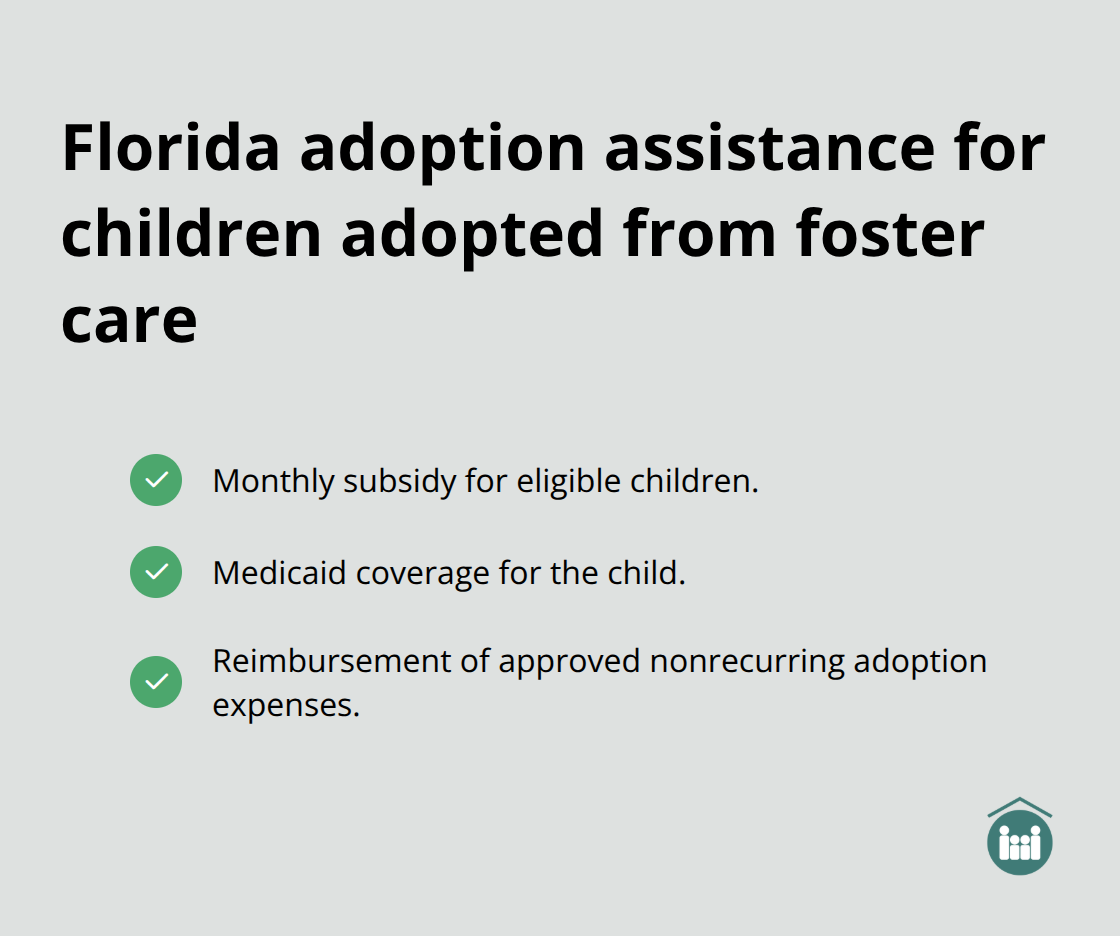
Financial support differs sharply between the two paths. Foster parents typically receive state-set monthly payments to cover the child’s living expenses, though these payments often fall short of actual costs. Adoptive families who adopt from foster care may qualify for adoption assistance agreements, which provide monthly subsidies, Medicaid coverage for the child, and reimbursement of certain nonrecurring adoption expenses. The real advantage of adoption emerges over time: you control the child’s future without state interference, you can relocate without permission, and you build genuine family permanency.
Understanding these legal distinctions helps you evaluate which path aligns with your family’s goals. The next section examines current statistics on foster care and adoption in Florida to show you how these differences play out across hundreds of real families.
Current Statistics on Foster Care and Adoption in Florida
Florida’s foster care and adoption landscape tells a story of declining placements but persistent gaps in permanency. As of September 30, 2023, Florida had 20,322 children in foster care, down significantly from 24,871 in 2019 according to AFCARS data. Yet adoptions declined even more sharply, falling from 4,650 in 2019 to 3,931 in 2022, meaning fewer children achieved permanent legal status through adoption despite smaller foster populations.
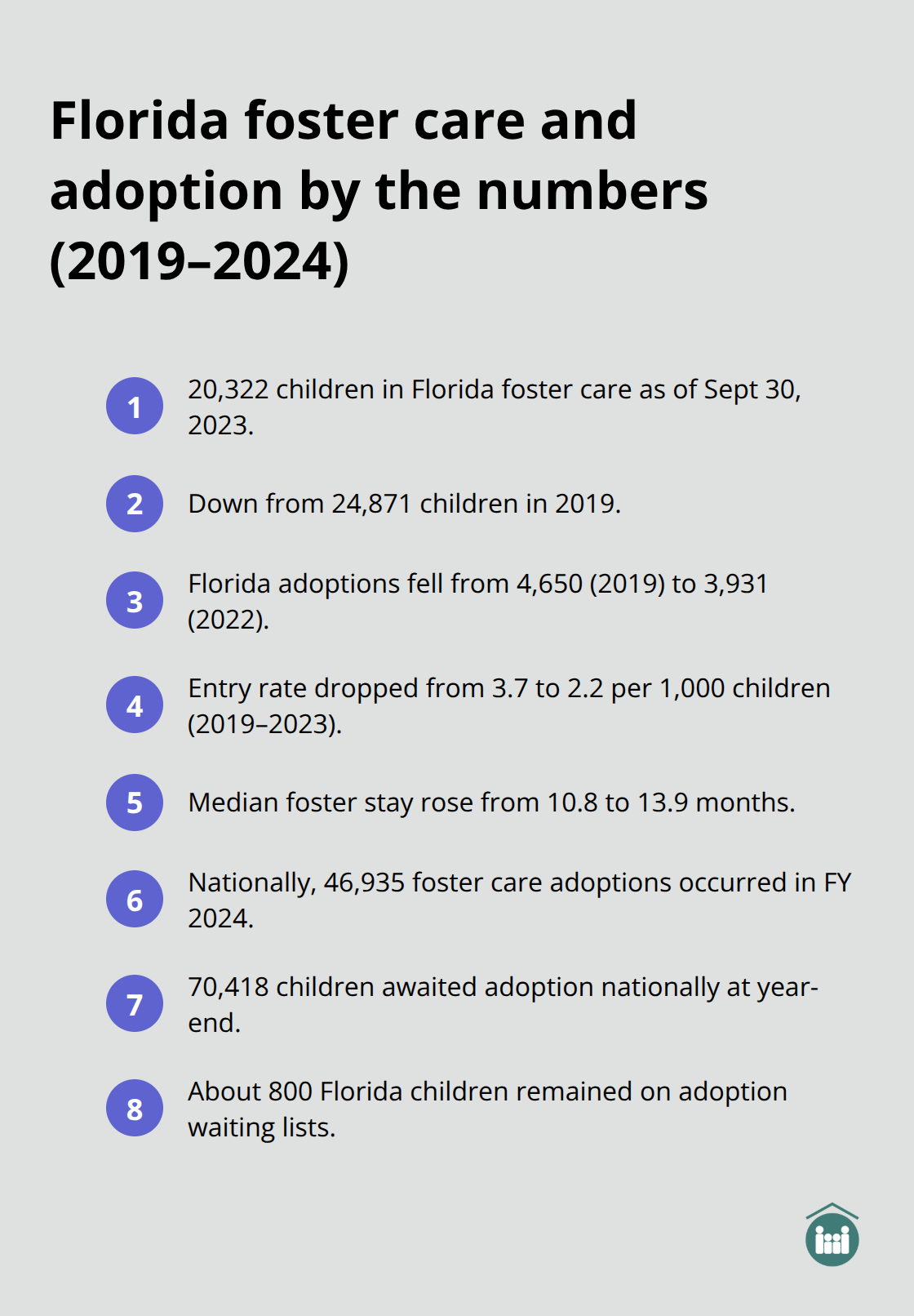
The foster care entry rate dropped from 3.7 per 1,000 children in 2019 to 2.2 per 1,000 in 2023, indicating fewer new placements annually. However, the median length of stay in foster care rose from 10.8 months to 13.9 months over the same period, revealing a troubling reality: while fewer children entered the system, those already in care spent longer waiting for permanency. This trend suggests that placement availability tightened even as demand fell. Nationally, AFCARS reported 46,935 foster care adoptions in FY 2024, with 70,418 children awaiting adoption at year-end, meaning roughly one in five children in care lacked permanent families. In Florida specifically, approximately 800 children remained on adoption waiting lists, many part of sibling groups or carrying complex medical or behavioral needs that required specialized family preparation.
Age and Race Shape Permanency Outcomes
Demographics predict which children face the longest waits. In Florida’s waiting population, White children comprised 46.5%, Black children 30.1%, Hispanic children 15.9%, and multiracial children 6.7% according to AFCARS 2023 data. Age distribution revealed the real problem: only 2.8% of waiting children were under one year old, while roughly 38% fell between ages one and five. Teens aged 13 and older represented a tiny share but faced dramatically longer waits, with adoption rates for children entering care at age 12 or older dropping to 8.3 to 11%, compared with substantially higher rates for younger entrants.
Why Sibling Groups and Special Needs Children Wait Longer
Sibling groups amplified delays because finding families willing to keep siblings together proved harder than placing single children. Among children exiting foster care with diagnosed disabilities, approximately 45% to 49% were adopted, about 11% to 12% achieved guardianship, and 24% to 30% reunified, showing that disability status complicated permanency timelines. When you consider that 61% to 62% of maltreatment cases involved neglect rather than abuse, many children carried trauma requiring post-placement support that not all families felt equipped to provide. This gap between available families and children needing placement drove longer waits and explained why adoption assistance agreements existed to help families manage the costs and complexity of adopting older or special-needs children from foster care.
These statistics set the stage for understanding why some families choose adoption over foster care-a decision that hinges on permanency, legal security, and the emotional stability that comes with finality.
Why Adoption Offers Permanency Foster Care Cannot
Families choose adoption over foster care because legal finality solves problems that temporary arrangements perpetually create. When you adopt, the state’s involvement ends. You inherit full parental authority, your child inherits from you, and no caseworker can reverse the relationship. Foster care remains conditional. The state retains custody, can remove your child if policy shifts or funding changes, and keeps you in a subordinate legal position indefinitely. In Florida, the median foster care stay stretched to 13.9 months as of 2023, yet even after months of caregiving, you cannot make educational or medical decisions without approval. Adoption eliminates this uncertainty.
Complete Legal Control After Finalization
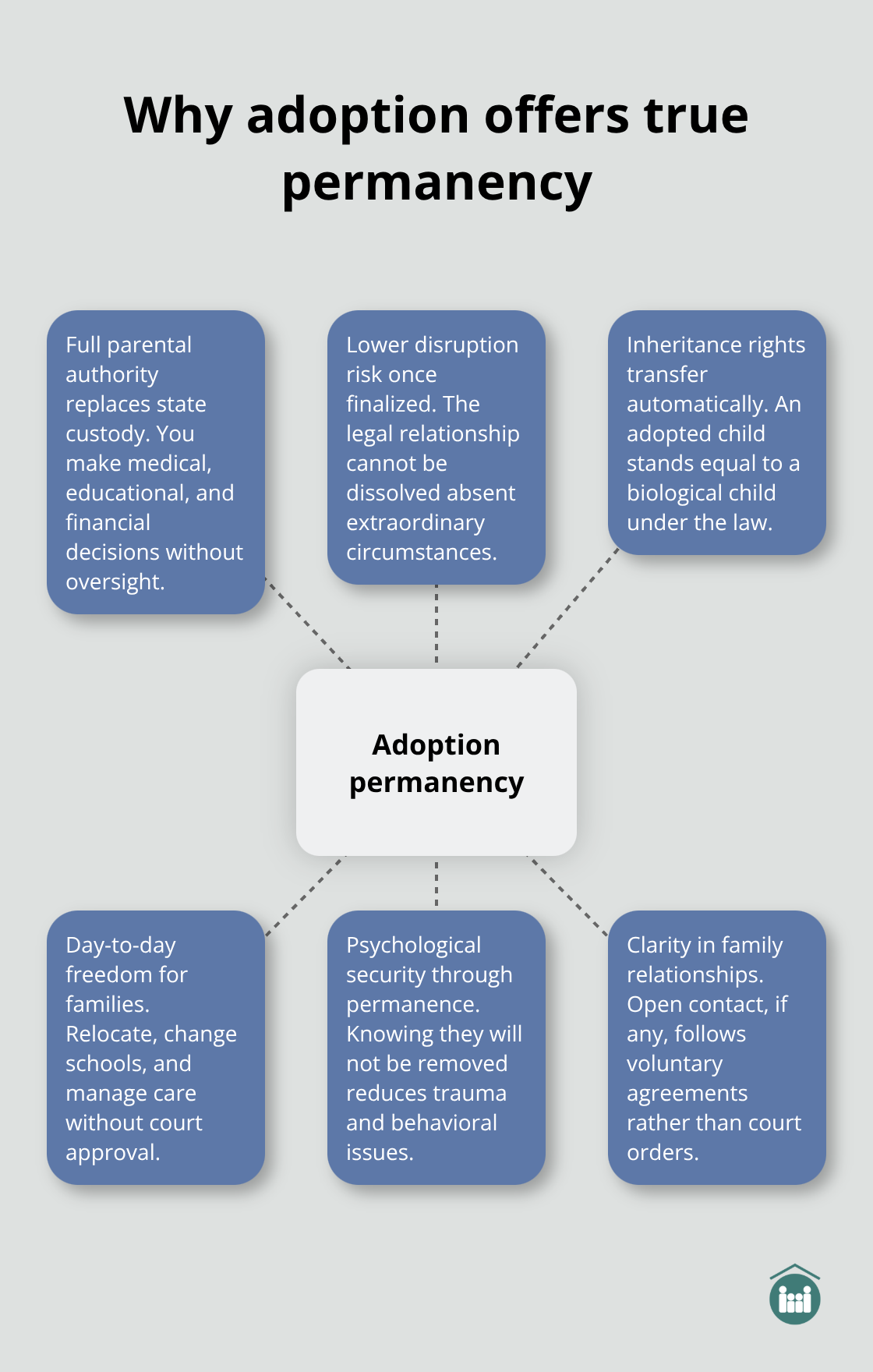
Once a judge signs the final order under Florida Statutes Chapter 63, you control your child’s future completely. You decide which school they attend, which doctor treats them, whether they travel, and how they’re raised. This autonomy matters enormously for families who’ve already invested emotionally in a child’s welfare. Adoptive parents report dramatically lower stress about disruption because the legal relationship cannot dissolve. Inheritance rights transfer automatically, meaning your adopted child stands to inherit your estate just as a biological child would.
Foster children have no such protection. If you pass away while fostering, the state places the child elsewhere regardless of your wishes.
Practical Freedom in Daily Life
Adoption also simplifies life logistics: you can relocate for a job, change schools mid-year if needed, and make parenting decisions at your own pace without court hearings or caseworker oversight. Families with older children or special-needs placements particularly value this freedom because managing ongoing medical needs, behavioral support, or educational accommodations becomes far simpler without state involvement. The adoption assistance agreement available in Florida provides monthly subsidies, Medicaid coverage, and reimbursement of nonrecurring adoption expenses for children adopted from foster care, meaning the financial burden doesn’t disappear but the legal autonomy does.
Psychological Security Through Permanence
Adoption transforms a child’s sense of belonging. Foster children often internalize impermanence, wondering if they’ll be moved again or reunified with birth families. Adopted children know they’re staying. Research consistently shows that permanency itself-the certainty of never being displaced-reduces trauma responses and behavioral problems more effectively than any therapy can. When a child aged 8 or older enters your home through adoption rather than foster care, they’re told explicitly that this is forever. No caseworker visits to assess stability. No court dates every six months. No possibility of return. That message of finality heals in ways temporary care arrangements never do.
Clarity in Family Relationships
Adoption also eliminates contact ambiguity. In foster care, visitation with birth family occurs according to the case plan, sometimes multiple times weekly, creating competing loyalties and confusion about who the child’s real family is. Adoption either severs those ties cleanly through termination of parental rights or, in open adoption arrangements, establishes clear voluntary contact agreements that don’t change based on court orders. The child knows where they stand. For families considering whether to foster or adopt, the permanency question becomes decisive. If you want to heal a child’s trauma and give them the psychological security that comes with knowing they’ll never be removed, adoption delivers that. Foster care serves reunification and temporary stability, but adoption serves finality-and finality is what children who’ve already experienced disruption need most.
Final Thoughts
Foster care and adoption statistics reveal two fundamentally different paths to permanency, and your family’s choice depends on what you can offer and what a child needs most. Foster care provides temporary stability with state involvement and median stays of 13.9 months, while adoption delivers legal finality and complete decision-making control that transforms a child’s sense of belonging. In Florida, fewer than 4,000 children were adopted annually in recent years while over 20,000 remained in foster care, highlighting the permanency gap that adoption closes.
If you want to give a child permanent legal status and eliminate state oversight, adoption offers the certainty that foster care cannot provide. Both paths require preparation, training, and support, but adoption delivers something irreversible: the knowledge that the relationship will never be reversed and that your child stands on equal legal footing with biological children. Foster care vs adoption statistics show that permanency itself-not therapy or time alone-reduces trauma responses most effectively in children who’ve already experienced disruption.
We at Juliana Gaita, P.A. help Florida families navigate both foster care and adoption with clarity and confidence. Contact our Boca Raton office to discuss your situation with someone who knows Florida adoption law thoroughly, and we’ll explain how these statistics apply to your family, review your options, and help you choose the path that aligns with your goals.