Adopting a child through foster care across state lines involves navigating the Interstate Compact on Placement of Children, commonly known as ICPC. Understanding the ICPC foster adoption timeline helps families set realistic expectations and prepare for each stage of the process.
At Juliana Gaita, P.A., we guide families through this complex journey, helping them avoid common pitfalls that extend timelines unnecessarily. This guide breaks down exactly what to expect at each step.
ICPC Processing Times and What Controls Them
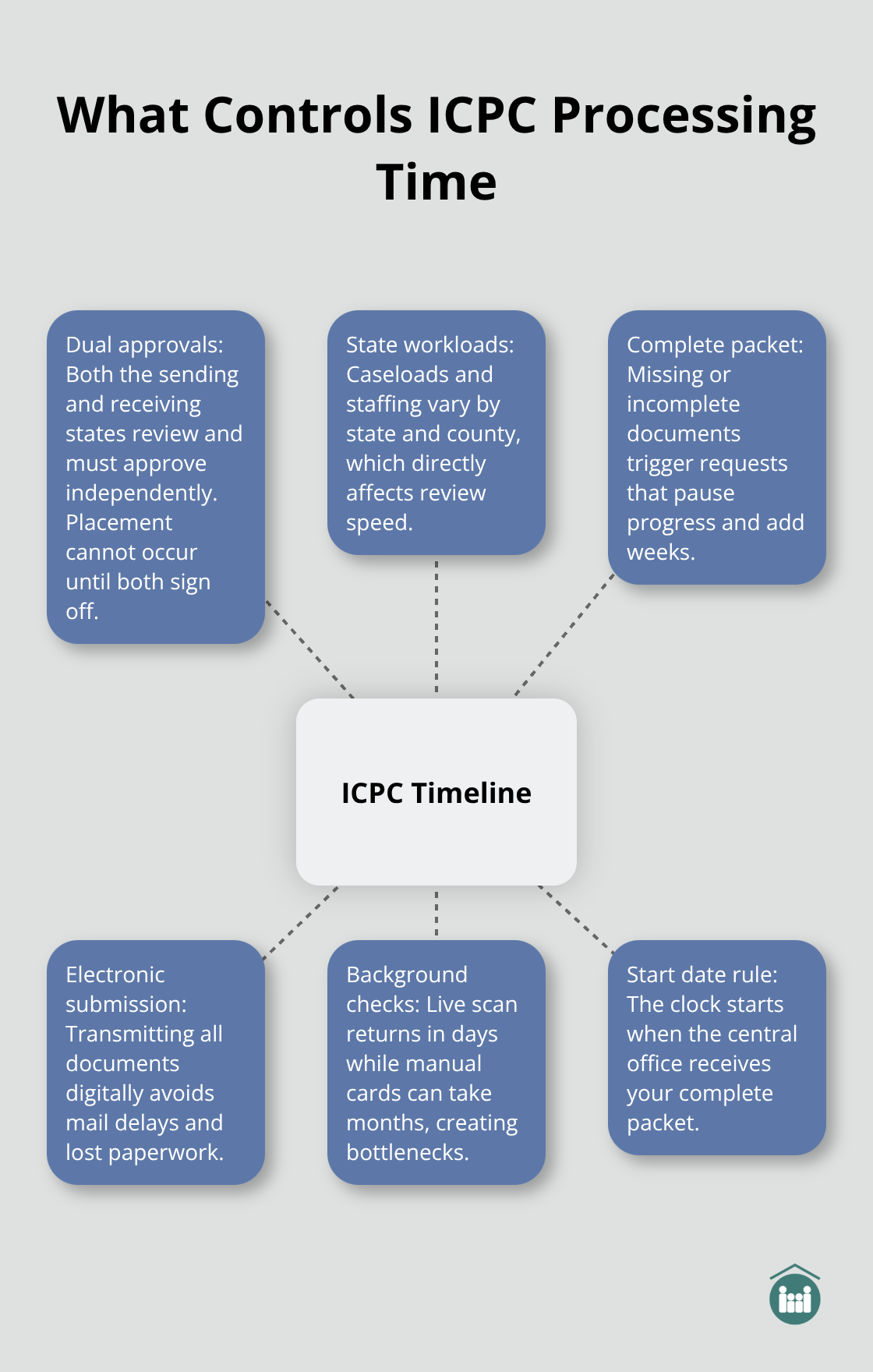
ICPC approval requires both your home state and the child’s current state to sign off before placement occurs. This is not a single decision but two separate governmental reviews running in parallel. The sending state (where the child is currently in care) reviews your home study, background checks, and financial documentation. Simultaneously, your receiving state (where you live) conducts its own evaluation. Only when both states approve can the child cross state lines legally. This dual-approval requirement protects the child and confirms that both jurisdictions’ adoption laws will be followed. The process typically takes 10-14 business days after you submit complete ICPC forms, according to processing data from state ICPC offices. However, this timeline assumes everything is submitted correctly the first time-which rarely happens.
How State Workloads Determine Your Timeline
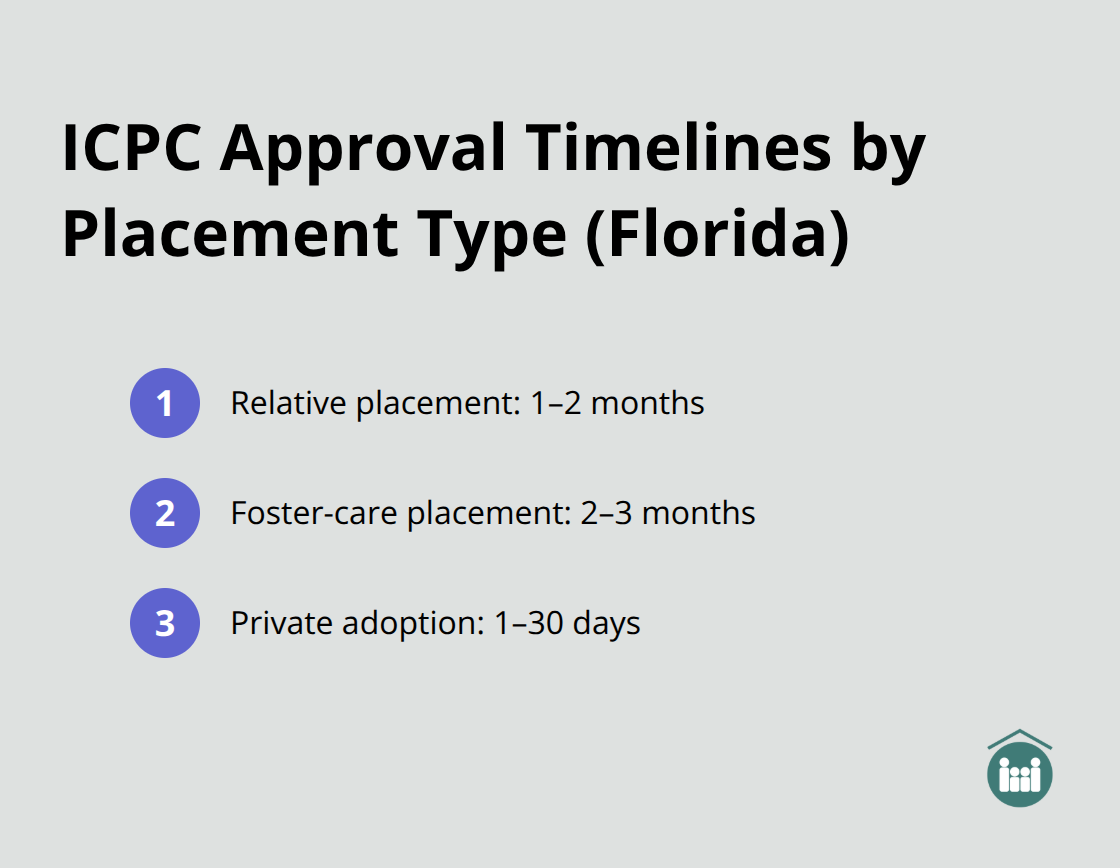
Your actual wait time depends heavily on which states you’re moving between and their current caseloads. Florida assigns county or regional staff to conduct home studies and process interstate placements, and workload varies significantly by location. A relative placement in Florida currently averages 1-2 months for ICPC approval, while foster-care placements run 2-3 months. Private adoptions move faster at 1-30 days because fewer parties must sign off. The critical date is when your completed packet arrives at the central office-that’s when the processing clock starts. Submit your documents electronically whenever possible; all ICPC documents including the ICPC 100A form, home study report, criminal background verification, and financial plan can be transmitted electronically, which reduces delays compared to mail delivery. If the receiving state requests additional information, every day of back-and-forth adds weeks to your timeline.
Background Checks Create the Biggest Bottleneck
Criminal and abuse registry checks represent the single largest cause of delays. Federal, state, and local background checks plus abuse and neglect registry searches must all clear before either state will approve you. Live scan fingerprinting takes 48-72 hours, but manual fingerprint cards take 31-60 days. If you submit manually, you lose a month immediately. Submit your fingerprints through live scan at a local law enforcement agency or licensed vendor. Gather all required clearances before submitting your ICPC packet-do not wait for the states to request them.
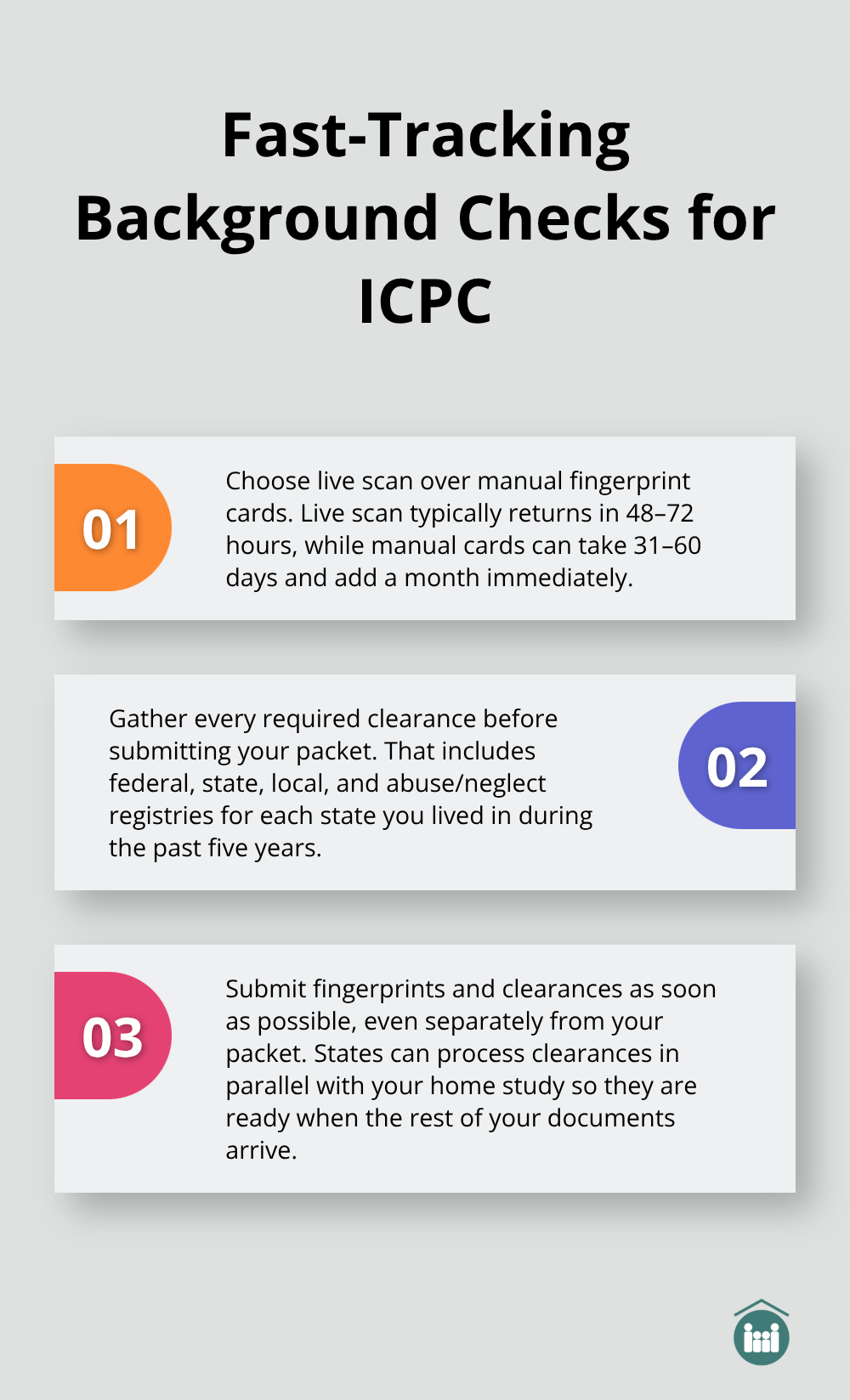
You need criminal history from every state you’ve lived in for the past five years, not just your current state. Missing even one state’s clearance forces the sending state to request it, halting your timeline while you obtain it retroactively.
What Happens When Documentation Goes Missing
Incomplete submissions trigger automatic delays that compound throughout the process. The sending state will not move forward until it receives every required document (home study, court order, financial plan, supervisory reports, and Title IV-E status verification). Each month of wait means continued agency fees, insurance premiums, and opportunity costs from delayed family plans. You control this outcome by preparing a complete packet before submission. Create a checklist of all required documents and verify each one is included. Electronic transmission reduces the risk of lost paperwork, so transmit everything digitally rather than by mail. One missing document can extend your timeline by 2-4 weeks.
Moving Forward with Your ICPC Application
The path forward requires attention to detail and proactive communication with both state offices. You now understand the dual-approval structure, the impact of state workloads, and the critical importance of background checks and complete documentation. The next step involves preparing your home study and understanding exactly what documentation each state requires from you.
What Happens During Each ICPC Stage
The Three Phases of ICPC Processing
Your ICPC journey follows three distinct phases, each with its own timeline and documentation requirements. The first phase begins the moment you submit your initial application packet to the sending state-the state where the child currently resides. This packet must include your completed home study, ICPC 100A form (the placement request), court order, criminal background verification, financial and medical plan, and Title IV-E status documentation. According to Florida ICPC processing data, the date your packet arrives at the central office is when the clock officially starts. Submitting documents to your local agency does not count as submission; only receipt at the state’s central office triggers the timeline. The sending state then conducts its review while simultaneously your receiving state (where you live) processes the same documents independently.
Understanding Parallel State Reviews
This parallel review structure is critical to understand: delays in one state do not pause the other state’s review, but both must approve before placement occurs. Most states request additional information within the first 10 business days if anything is missing. Live scan fingerprints complete in 48-72 hours, but manual fingerprint cards take 31-60 days-a delay that cascades through both state reviews. Electronic transmission of all documents eliminates mail delays and reduces the chance of paperwork loss, which represents a significant advantage over mailed submissions.
Home Study Completion Controls Your Timeline
Your home study completion directly controls when you can submit your ICPC packet. The average interstate home study takes approximately 60 days according to Florida ICPC data, though this excludes the background check processing time. A licensed agency home study costs roughly $1,200–$2,500 and includes background checks, financial verification, and medical clearances. Start your home study immediately, even before your ICPC application is formally submitted, because this document represents the biggest controllable delay in your timeline.
ICPC Approval Timelines by Placement Type
Once both states approve your ICPC submission, the sending state notifies you that clearance is complete and you may travel to bring the child home. For relative placements in Florida, ICPC approval averages 1–2 months total; foster-care placements run 2–3 months; private adoptions move fastest at 1–30 days because fewer parties require sign-off. The variation depends entirely on which states are involved and their current caseloads. Do not contact ICPC offices directly to expedite your case-this does not speed clearance and often slows it down. Instead, work through your adoption attorney or agency, who maintains the proper communication channels with state offices and can request clarification on any requested information without creating friction.
What Comes After ICPC Approval
Once you receive ICPC clearance from both states, the legal landscape shifts. You move from the interstate approval phase into placement and post-placement supervision, which brings its own set of requirements and timelines that directly affect when your adoption becomes final.
What Causes ICPC Delays and How to Stop Them
The three biggest delays in ICPC processing fall entirely within your control, yet most families encounter them anyway. Missing or incomplete documentation tops the list because it forces the sending state to halt review and request what you failed to submit initially. Every request for additional information adds 7–10 business days to your timeline as documents travel between your attorney, the agency, and state offices. You need criminal history clearances from every state you have lived in during the past five years, not just your current state. Federal background checks, state checks, local checks, and abuse and neglect registry searches must all clear simultaneously.
How Background Checks Create Bottlenecks
If you submit manual fingerprint cards instead of live scan, you lose 31–60 days immediately compared to the 48–72 hour turnaround for live scan processing. The solution is straightforward: compile your complete packet before submission. Create a physical checklist matching Florida ICPC requirements and verify every single document is present. Electronic transmission of all documents eliminates mail delays and reduces lost paperwork, which happens far too often with mailed submissions. One missing document extends your timeline by 2–4 weeks, and multiple missing documents compound into months of delay.
Background check delays represent the second major bottleneck because you cannot control state processing speed once you submit fingerprints. However, you can control when you submit them. Obtain your live scan fingerprints immediately, even before your home study is complete. Submit them to the sending state as a standalone item rather than waiting to bundle them with your final packet. States process background checks in parallel with your home study, so submitting early means clearances return before your other documents are ready.
Why Communication Gaps Slow Your Case
Communication gaps between states cause the third category of delays, and this is where families make critical mistakes. Do not contact ICPC offices directly to check status or request expedited processing. This actually slows your case because state staff must divert attention to respond to you rather than processing cases in order. Your adoption attorney maintains proper channels with state offices and knows how to request information without creating friction. If the receiving state requests additional information, your attorney handles the response, not you.
How State Workloads Affect Your Timeline
State workloads vary dramatically by location. Relative placements in Florida average 1–2 months for ICPC approval, while foster-care placements run 2–3 months, and private adoptions move fastest at 1–30 days. These timelines assume complete documentation submission. Incomplete packets trigger automatic requests that reset the clock, so your actual wait time depends almost entirely on how thoroughly you prepare your initial submission.
The critical date is when your completed packet arrives at the central office-that is when the processing clock starts.
Final Thoughts
The ICPC foster adoption timeline depends almost entirely on how thoroughly you prepare your initial submission. Obtain live scan fingerprints immediately rather than manual cards, which cost you 31–60 days, and compile your complete packet before submission, including criminal history from every state you have lived in during the past five years. Submit everything electronically to eliminate mail delays and reduce lost paperwork, and do not contact ICPC offices directly to check status or request expedited processing, as this slows your case rather than accelerating it.
Working with a Florida adoption attorney transforms your ICPC foster adoption timeline from a source of stress into a manageable process. Your attorney maintains proper communication channels with state offices, responds to information requests without creating friction, and ensures your documentation meets every requirement before submission (which prevents the back-and-forth delays that extend timelines unnecessarily). An attorney also handles the court proceedings after placement and guides you through post-placement supervision requirements, which typically last a minimum of 90 days with monthly social worker visits.
Contact the legal team at Juliana Gaita, P.A. to discuss your rights and options if you are considering foster adoption across state lines. We help clients navigate the ICPC process throughout Florida and guide you through each stage with clear expectations and proactive planning.