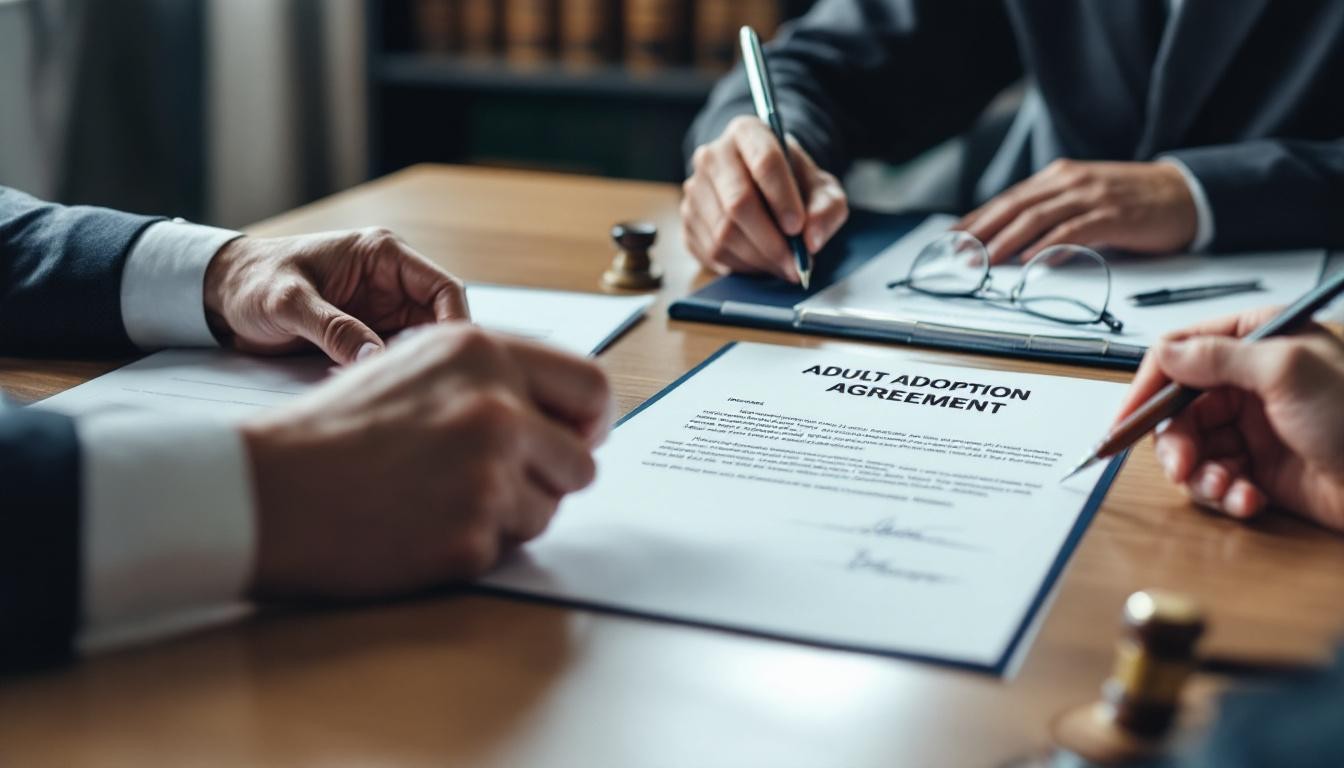
Adult adoption in Florida is a legal process that allows adults to formalize family relationships through the court system. Unlike child adoption, adult adoption involves different requirements and procedures that protect all parties involved.
At Juliana Gaita, P.A., we guide clients through how to adopt an adult step by step. This guide covers everything from eligibility requirements to the final court decree.
Understanding Adult Adoption in Florida
Who Can Adopt an Adult in Florida
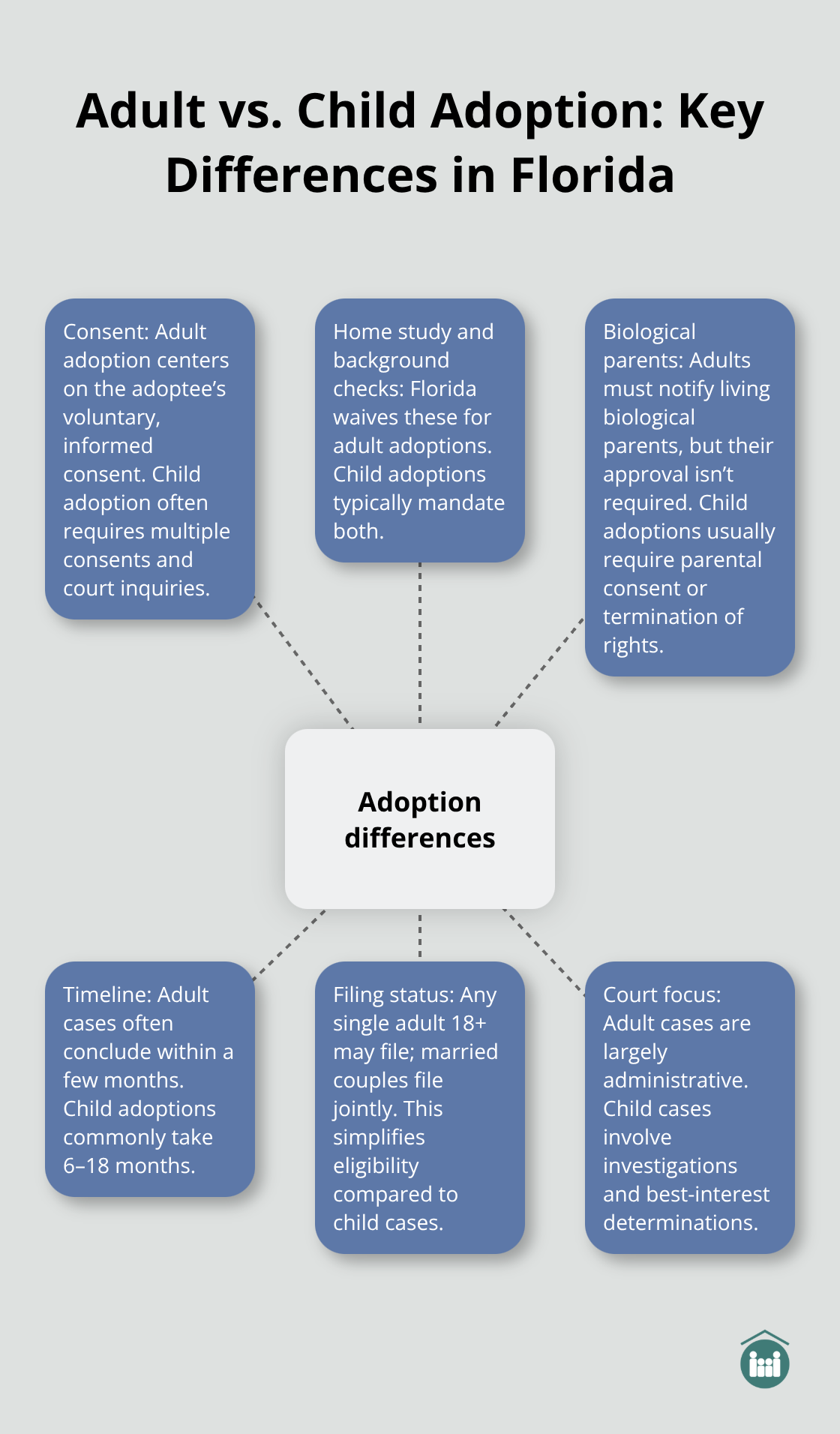
Florida’s adult adoption law is refreshingly straightforward compared to child adoption. Any single adult aged 18 or older can petition to adopt another adult, and married couples must file jointly. The adoptee must consent to the adoption, but here’s what makes this different from child adoption: biological parents don’t need to approve. If the biological parents are still living, they must receive notification, but their permission isn’t required. This removes a major barrier that complicates many child adoptions and explains why adult adoption often moves faster through the courts. No home study or background check is mandated for adult adoptions in Florida, which accelerates the timeline considerably. Most adult adoptions reach their final court hearing within a few months of filing, compared to the 6–18 months typical for child adoptions.
What Separates Adult from Child Adoption
Adult adoption strips away requirements that make sense for children but become unnecessary for autonomous adults. Child adoption involves extensive home studies, background checks, and parental consent from biological families. Adult adoption discards these safeguards because the adoptee is legally capable of making their own decisions. The paperwork is lighter, the process is faster, and the focus shifts entirely to consent between two willing adults.
In Florida, the adoptee’s signature on consent forms serves as the legal linchpin. This consent must be voluntary and informed, but once obtained, the adoption can proceed. The court’s role becomes administrative rather than investigative. Another significant difference: inheritance rights. An adopted adult gains the same legal standing as a biological child under Florida law regarding intestate succession. This matters tremendously for families without formal wills or trusts.
The 2011 Virginia Supreme Court decision established that adult adoption can sever ties to the biological family entirely, affecting multiple generations of inheritance rights. Understanding these consequences before filing is essential.
Why People Pursue Adult Adoption
Adults choose adoption for three primary reasons: securing inheritance rights, establishing medical decision-making authority, and formalizing long-standing family bonds. Inheritance protection tops the list, especially when a stepparent wants to ensure their adult stepchild inherits like a biological child. Medical authority matters intensely for unmarried partners or non-biological caregivers who need hospital visitation rights and emergency decision-making power.
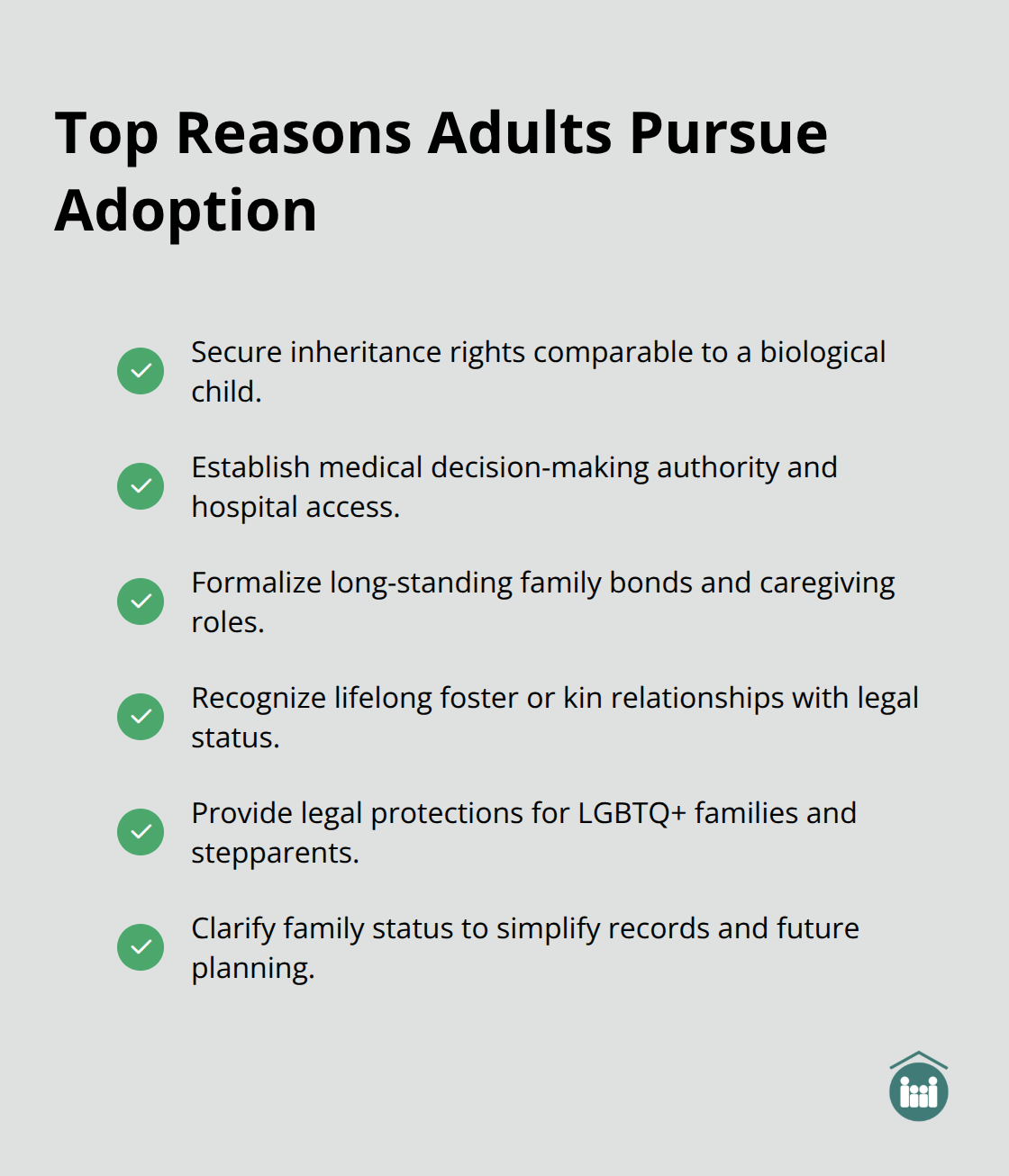
A former foster parent caring for an adult they raised can formalize that relationship through adoption, creating legal recognition for decades of care. Some adults adopt to drop confusing labels entirely, moving from stepchild or foster child to simply being family. Senate Bill 564, passed in 2024, expanded aftercare eligibility in Florida, benefiting thousands of foster youth by widening access to ongoing supports. This legislative shift reflects growing recognition that adoption serves real needs for adults transitioning out of the system.
LGBTQ+ couples and stepparents adopt their spouse’s adult children to create legal protections that marriage alone doesn’t provide in all situations. These varied motivations demonstrate that adult adoption addresses genuine legal and personal needs. Understanding your specific reasons for adoption helps you prepare for the next phase: navigating the actual legal process and filing your petition with the court.
The Adult Adoption Process in Florida
Filing Your Petition and Gathering Documents
Filing your adult adoption petition in Florida requires you to gather specific documents and submit them to the court in your county of residence. The petition itself is a formal request asking the court to recognize the parent-child relationship between you and the adult you wish to adopt. Florida’s Children First and Florida Youth SHINE provide an Adult Adoption Brochure with blank forms in Word format, allowing you to customize documents before filing. You’ll need the adoptee’s consent form signed and notarized, proof of residency for both parties, and identification documents. The filing fee varies by county but typically ranges from $200 to $400. Once you file, the court clerk assigns your case and notifies both parties of the next steps.
Notifying Biological Parents
If the biological parents are still living, Florida law requires you to notify them even though their consent isn’t required. You must document this notification and include it in your court file. This step protects the legal integrity of the adoption and prevents challenges later. The notification doesn’t delay the process significantly, but you must complete it before the court hearing.
Understanding the Timeline
The timeline from filing to court hearing typically spans two to four months, depending on your county’s docket. Some counties move faster than others, so contact your local court clerk about current processing times to set realistic expectations. This variation means your specific location matters when planning your adoption schedule.
Securing Voluntary Consent
The adoptee’s voluntary consent stands as the legal foundation for the entire process. This consent must be informed, meaning the adoptee understands they’re becoming your legal child with all associated rights and responsibilities. The consent form must be signed in front of a notary public, and Florida courts take this requirement seriously. If the adoptee later claims they didn’t understand what they were signing, it can delay or derail the adoption. Meeting with an adoption attorney before obtaining signatures prevents these complications.
The Court Hearing and Final Decree
The court hearing itself is straightforward and often brief, typically lasting 10 to 15 minutes. You and the adoptee appear before the judge, who confirms consent, verifies all documents are complete, and issues the Final Decree of Adoption. Once the judge signs the decree, the adoption is legally final and irrevocable.
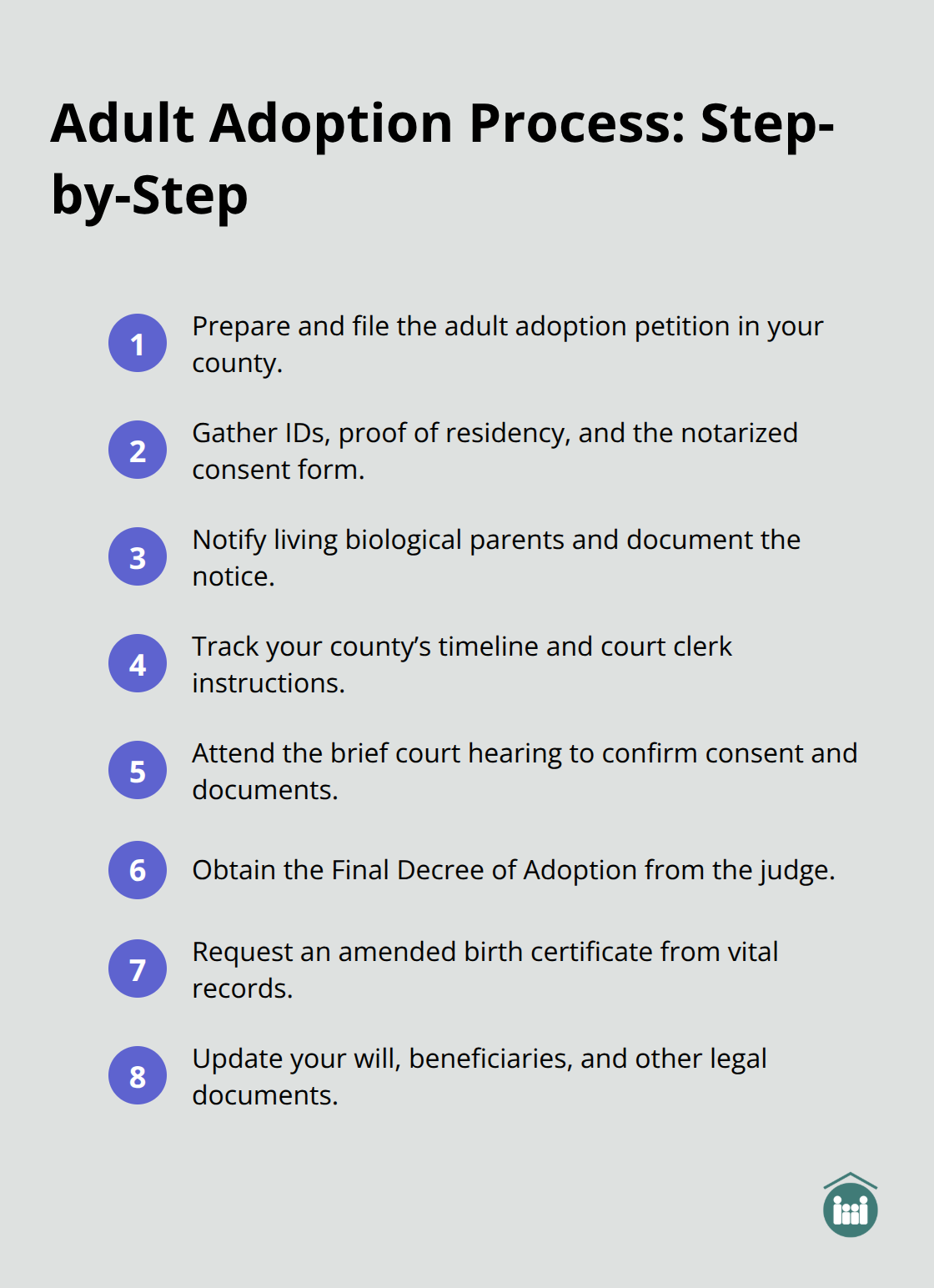
You then request an amended birth certificate from Florida’s vital records office and update your will, insurance beneficiaries, and any other legal documents to reflect the new relationship. The entire process from filing to amended birth certificate usually takes four to six months, making adult adoption significantly faster than child adoption. With your adoption finalized, the next critical step involves understanding how legal representation protects your rights throughout this journey and what to expect when working with an adoption attorney.
Working With an Adoption Attorney
Why You Need Legal Representation
Hiring an adoption attorney transforms adult adoption from a DIY paperwork exercise into a streamlined legal process with built-in protections. Florida law doesn’t mandate attorney representation for adult adoptions, but skipping it creates unnecessary risk. The adoptee’s consent form must be signed correctly, biological parent notifications must follow proper procedures, and the final decree must contain no errors. A single mistake-a missing notary signature, incorrect legal language, or procedural misstep-forces you to refile, delaying your adoption by weeks or months. An attorney ensures documents are completed accurately the first time, eliminating these costly delays. They also verify that the adoptee’s consent is genuinely voluntary and informed, protecting you from challenges years later.
Document Accuracy and Court Compliance
An adoption attorney handles communication with biological parents if notification is required, manages court filings, and represents you at the hearing. This professional handling reduces stress during what can feel like an overwhelming process. Your attorney verifies that all paperwork meets your county’s specific requirements and that nothing falls through the cracks before your court date.
Cost and Timeline Advantages
The cost of hiring an adoption attorney in Florida typically ranges from $1,500 to $3,500 for an uncontested adult adoption, depending on complexity and your county. This investment is modest compared to the four to six month timeline you’ll otherwise spend managing forms, court deadlines, and procedural requirements yourself. Counties vary significantly in their processing speeds and requirements, so an attorney familiar with your specific jurisdiction knows exactly what the local court expects. They understand your county clerk’s preferences, anticipated delays, and whether online filing options exist. Some counties accept electronic submissions while others require in-person filing, and an experienced attorney navigates these differences seamlessly.
Local Court Knowledge and Efficiency
The timeline remains two to four months from filing to court hearing regardless of whether you use an attorney, but attorney representation eliminates the uncertainty and the risk of restarts. An attorney familiar with your county knows which procedural shortcuts work and which ones create problems. This local knowledge prevents wasted effort and keeps your adoption moving forward without unnecessary delays.
Estate Planning and Long-Term Implications
You also gain someone who can answer questions about inheritance implications, explain how the adoption affects existing wills or trusts, and advise whether updating beneficiary designations matters for your situation. These conversations prevent costly estate planning mistakes after your adoption finalizes. An attorney helps you understand that adult adoption creates permanent, irrevocable changes to your family’s legal structure and inheritance rights.
Final Thoughts
Adult adoption in Florida follows a clear path: file your petition with the required documents, obtain the adoptee’s voluntary consent, appear before a judge, and receive your Final Decree of Adoption. The entire process typically takes four to six months, making it substantially faster than child adoption. Once finalized, you’ll update your birth certificate, revise your will and beneficiary designations, and establish the legal parent-child relationship you’ve formalized through the court system.
Working with an adoption attorney transforms how to adopt an adult from a stressful, error-prone process into a streamlined legal transaction. An attorney ensures every document meets your county’s specific requirements, eliminates costly mistakes that force refiling, and protects you from consent challenges years later. The cost of hiring an attorney (typically $1,500 to $3,500) is modest compared to the time and frustration you’ll save.
Adult adoption severs ties to your biological family and affects inheritance rights across multiple generations, so review your existing wills and trusts before filing. Contact an adoption attorney in South Florida who can answer your specific questions and guide you through the process. We at Juliana Gaita, P.A. help clients throughout Florida navigate adoption cases, including adult adoptions, and we’re ready to discuss your rights and options with confidence and clarity.