Parental rights termination in Florida opens a path to adoption, but the legal landscape can feel overwhelming. At Juliana Gaita, P.A., we guide families through the adoption process after termination of parental rights with clarity and support.
This guide walks you through each stage, from understanding termination to finalizing your adoption in court.
Understanding Parental Rights Termination in Florida
What Happens to Your Rights After Termination
Termination of parental rights in Florida is a court-ordered decision that severs the legal parent-child relationship permanently. According to Florida Statutes 63.089, grounds for termination include abandonment, neglect, voluntary surrender, or failure to respond to court proceedings. Abandonment requires proof by clear and convincing evidence, which is a high legal standard. Once a judge enters the termination judgment, the biological parents lose all legal claim to the child, and their parental rights cannot be restored. This finality is intentional-the law recognizes that children need stability and a clear path to permanence, not years of uncertainty waiting for a parent to regain custody rights.
The Critical 60-Day Filing Window
After the termination judgment is entered, you must file an adoption petition within 60 days according to the Florida Bar. This deadline is not flexible, and missing it can complicate your adoption timeline significantly. Filing late signals to the court that you lack commitment or have encountered unforeseen obstacles, either of which can raise questions during the adoption hearing. Prepare your adoption petition paperwork immediately after termination occurs. Gather your financial documentation (tax returns from the past two to three years, proof of income, and bank statements), personal references from three non-family members, and medical reports confirming good health for all household members aged seventeen and older. The sooner these materials are ready, the sooner you can file and move toward finalization.
Voluntary Versus Involuntary Termination Changes Your Timeline
Voluntary termination occurs when a biological parent chooses to surrender parental rights, often because they cannot provide adequate care or want the child to be adopted. Involuntary termination happens when the court removes parental rights against the parent’s wishes due to abuse, neglect, or abandonment. The distinction matters for your adoption timeline.
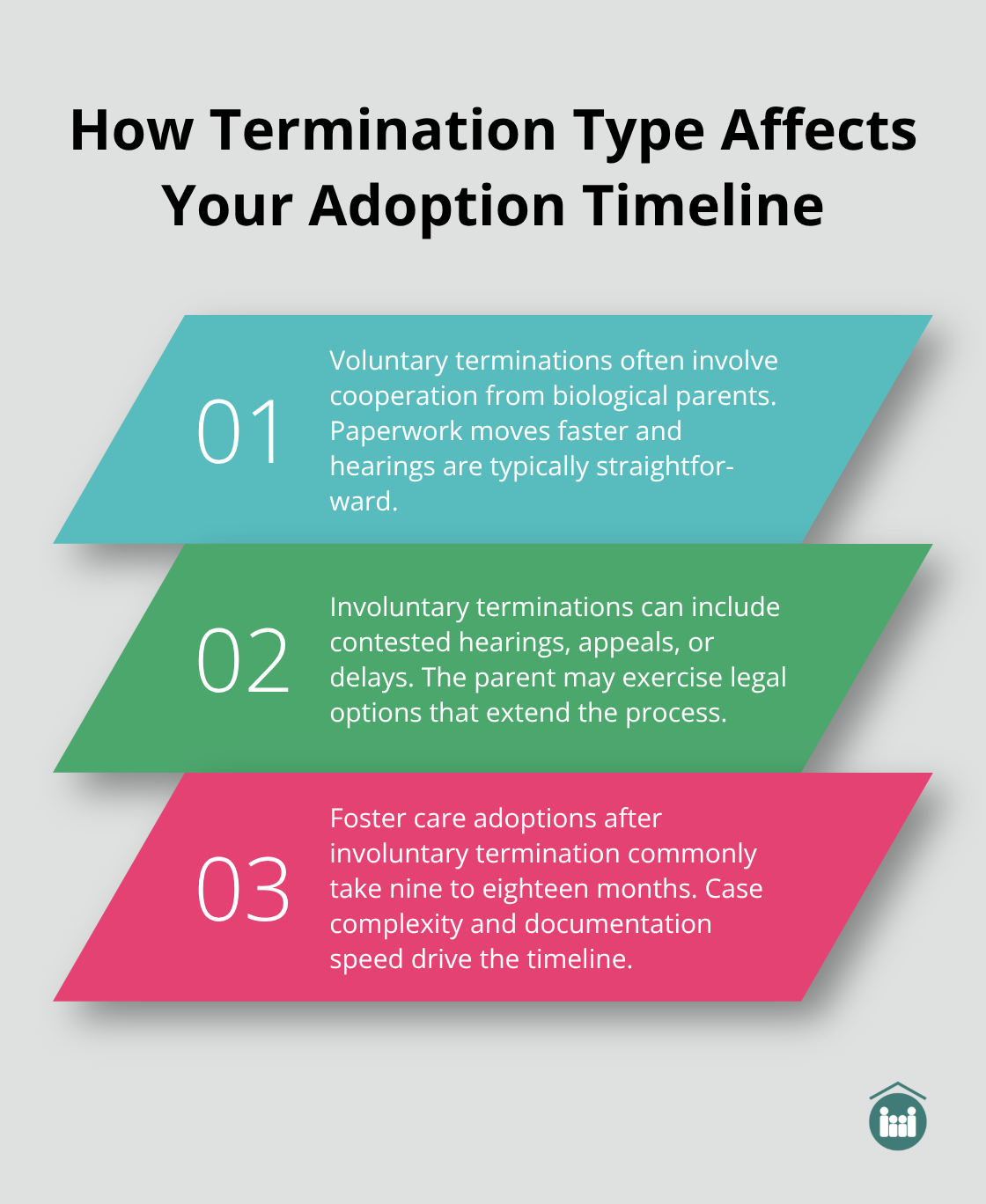
In voluntary terminations, biological parents typically cooperate with the process, paperwork moves faster, and court hearings are straightforward. Involuntary terminations may involve contested hearings, appeals, or delays while the parent exercises their legal options. Some involuntary cases take longer to reach final judgment, which postpones your sixty-day filing window. If you are adopting a child from foster care following involuntary termination, the entire process from termination to finalization spans nine to eighteen months depending on case complexity and how quickly documentation is compiled.
What Comes Next in Your Adoption Journey
The path forward requires you to understand the specific waiting periods and legal requirements that apply after termination. Your adoption attorney will guide you through the documentation process and help you meet each deadline. The next section walks you through the adoption timeline and explains what happens between filing your petition and standing before the judge for finalization.
The Timeline From Termination to Finalization
The 60-Day Filing Deadline
After termination judgment enters, you have exactly 60 days to file your adoption petition according to the Florida Bar. This window is strict, and missing the deadline creates unnecessary friction with the court and delays permanence for the child. The moment termination occurs, your adoption attorney should begin assembling documentation. Tax returns covering the past two to three years, proof of current income, bank statements, medical clearances for household members aged seventeen and older, and three personal references from non-family members need to be compiled immediately. Most families spend two to four weeks gathering these materials, so starting the day after termination judgment is final prevents last-minute scrambling.
The 90-Day Post-Placement Supervision Period
Once your petition is filed, the next phase depends on whether you are adopting from foster care or through another route. For foster care adoptions following termination, Florida law requires a 90-day post-placement supervision period before the finalization hearing can occur, according to the Florida Bar. This means the earliest your adoption can be finalized is 90 days after the child is placed in your home or 30 days after the termination judgment, whichever comes later. During this 90-day window, a licensed caseworker conducts monthly contact with your family to verify the placement is stable and the child’s needs are being met. The caseworker also prepares a post-placement report for the judge.
Home Study Completion and Timelines
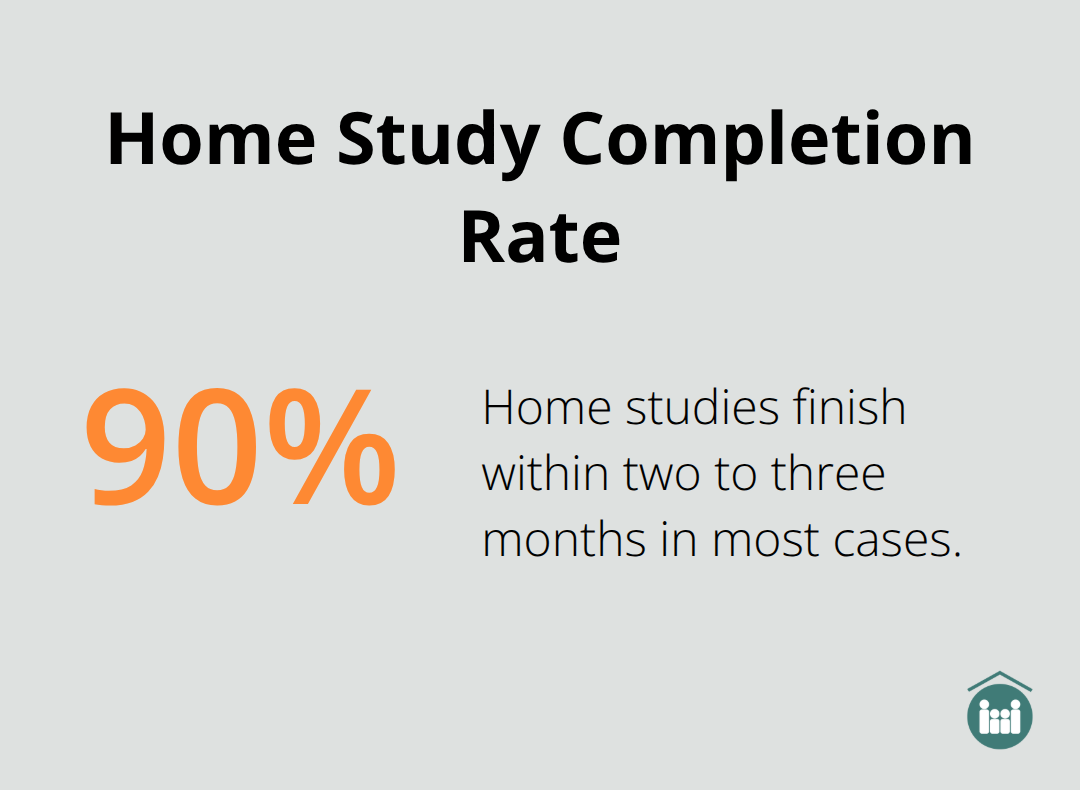
Home study completion typically takes two to three months, and 90 percent of studies finish within this timeframe. If your home study is delayed, the entire timeline shifts backward. Stepparent adoptions bypass the home study requirement entirely, which accelerates the process significantly.
The finalization hearing itself is usually brief if all prior steps are completed correctly. The judge verifies consent, reviews the post-placement report, and confirms the adoption serves the child’s best interests. With orderly documentation, most hearings proceed to finalization without complications.
The New Birth Certificate and Final Steps
After the judge signs the final adoption decree, you request a new birth certificate from the Florida Department of Vital Statistics listing you as the parent. Processing takes two to four weeks, though expedited copies are available if needed. From termination judgment to holding the child’s new birth certificate, foster care adoptions typically span nine to eighteen months, with case complexity and documentation speed determining where your case lands within that range. Your adoption attorney plays a central role in managing each deadline and ensuring no paperwork falls through the cracks during this critical period.
Working with an Adoption Attorney During This Process
Why You Need Legal Guidance After Termination
An adoption attorney becomes your most important partner the moment termination judgment enters. This is not the time to navigate paperwork alone or rely on general legal forms found online. Florida adoption law contains strict deadlines, documentation requirements, and procedural rules that, if missed, can delay finalization by months or derail your case entirely. Your attorney ensures the 60-day filing deadline is met, verifies that all required documents are included in your petition, and monitors compliance with the 90-day post-placement supervision period. The Florida Bar emphasizes that adoptions involve complex statutory requirements, and unlicensed facilitators or online services cannot provide the legal protection you need.
Protecting Your Parental Rights and Meeting Legal Requirements
Your attorney protects your parental rights by confirming that consent from all required parties (biological parents, guardians, or others with legal standing) is properly documented and that notice requirements have been satisfied. In some cases, unmarried biological fathers must be identified and notified according to Florida Statutes 63.054, and failure to follow these rules can result in the adoption being challenged years later. Additionally, your attorney ensures that federal laws, including the Interstate Compact on the Placement of Children if applicable, are followed correctly. If the child has Native American heritage, your attorney confirms compliance with the Indian Child Welfare Act to protect tribal rights. These overlapping state and federal requirements demand someone who knows Florida adoption law thoroughly.
Managing Complications and Unexpected Obstacles
Your adoption attorney provides clarity when unexpected complications arise. If the biological parent appeals the termination judgment, your attorney explains how this affects your adoption timeline and what to expect. If the home study reveals issues requiring remediation, your attorney works with the agency to resolve problems quickly. If the post-placement caseworker raises concerns about the placement, your attorney advocates for your family and ensures the concerns are addressed appropriately before the finalization hearing.
The Finalization Hearing and Beyond
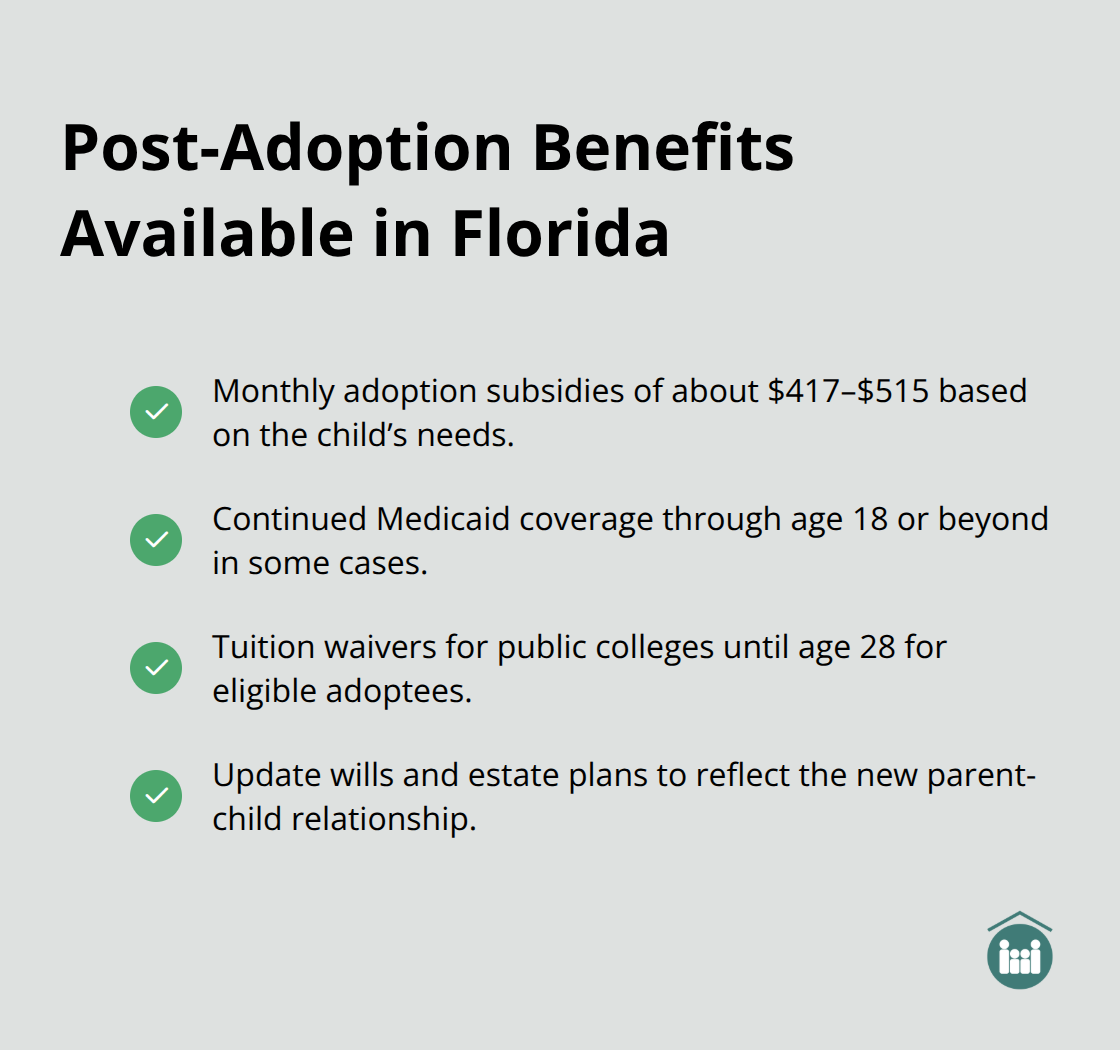
The finalization hearing itself is typically brief when all prior steps are completed correctly, but your attorney attends to answer any questions the judge raises and ensures the final adoption decree is entered without delay. After finalization, your attorney can guide you through post-adoption benefits available in Florida, including adoption subsidies (typically ranging from $417 to $515 monthly depending on the child’s needs), continued Medicaid coverage through age 18 or beyond in certain circumstances, and tuition waivers for public colleges until age 28 for eligible adoptees. Your attorney also helps you update your will and estate plans to reflect the new parent-child relationship.
The cost of hiring an adoption attorney is an investment in permanence for the child and legal protection for your family.
Final Thoughts
The adoption process after termination of parental rights demands strict adherence to deadlines and proper documentation. Florida law gives you exactly 60 days to file your adoption petition after termination, your home study typically takes two to three months, and the 90-day post-placement supervision period must be completed before finalization. From start to finish, foster care adoptions span nine to eighteen months depending on case complexity and how quickly you compile documentation.
An adoption attorney protects your rights by verifying that all required parties receive proper notice, consent is correctly documented, and federal laws like the Interstate Compact on the Placement of Children are followed. Your attorney manages each deadline, assembles documentation, and advocates for your family if unexpected obstacles arise. The cost of hiring an attorney is far less than the cost of a delayed or failed adoption.
After finalization, your family gains access to post-adoption benefits including subsidies, Medicaid coverage, and tuition waivers for public colleges. If you are considering adoption or are already navigating this process, contact an adoption lawyer in Boca Raton to discuss your rights and options. We at Juliana Gaita, P.A. help clients throughout Florida with adoption cases and stand ready to guide your family toward permanence.