Embryo adoption offers a path to parenthood that many families in Florida don’t fully understand. The embryo adoption process involves distinct legal, medical, and financial steps that differ significantly from traditional adoption.
At Juliana Gaita, P.A., we guide families through each stage of this journey. This guide breaks down what you need to know to move forward with confidence.
Understanding Embryo Adoption in Florida
Embryo adoption in Florida involves using frozen embryos from previous IVF cycles that genetic parents no longer intend to use. These embryos are cryopreserved leftovers, and thousands exist nationwide waiting for adoptive families. The process differs fundamentally from traditional adoption because the adoptive parents experience pregnancy and childbirth, though neither parent has a genetic connection to the child. Florida law treats embryo adoption under specific statutes that recognize donation arrangements while protecting all parties involved.
What Florida Law Requires
Under Florida Statute 742.14, donors can receive only reasonable compensation limited to direct costs like removal, storage, and transportation. Donors relinquish all rights and responsibilities to the embryos and any resulting children once the agreement is signed. The recipient couple gains full parental rights immediately upon birth, regardless of the child’s health status. This legal framework makes Florida a favorable jurisdiction for embryo adoption compared to many other states.
How the Medical Process Works
The medical side of embryo adoption requires careful preparation of the recipient’s body. Your fertility provider will first assess your uterus through imaging, often a sono-hysterosalpingogram performed by your local OB/GYN or reproductive endocrinologist. Once cleared medically, you’ll receive estrogen for 10 to 13 days to prepare your uterine lining. An ultrasound then confirms your endometrium is adequately thickened. When ready, progesterone begins, and the embryo transfer happens after five days of progesterone supplementation. Pregnancy rates vary significantly: about 60 percent of transfers with one chromosomally normal embryo result in pregnancy, while two normal embryos increase success to roughly 80 percent.
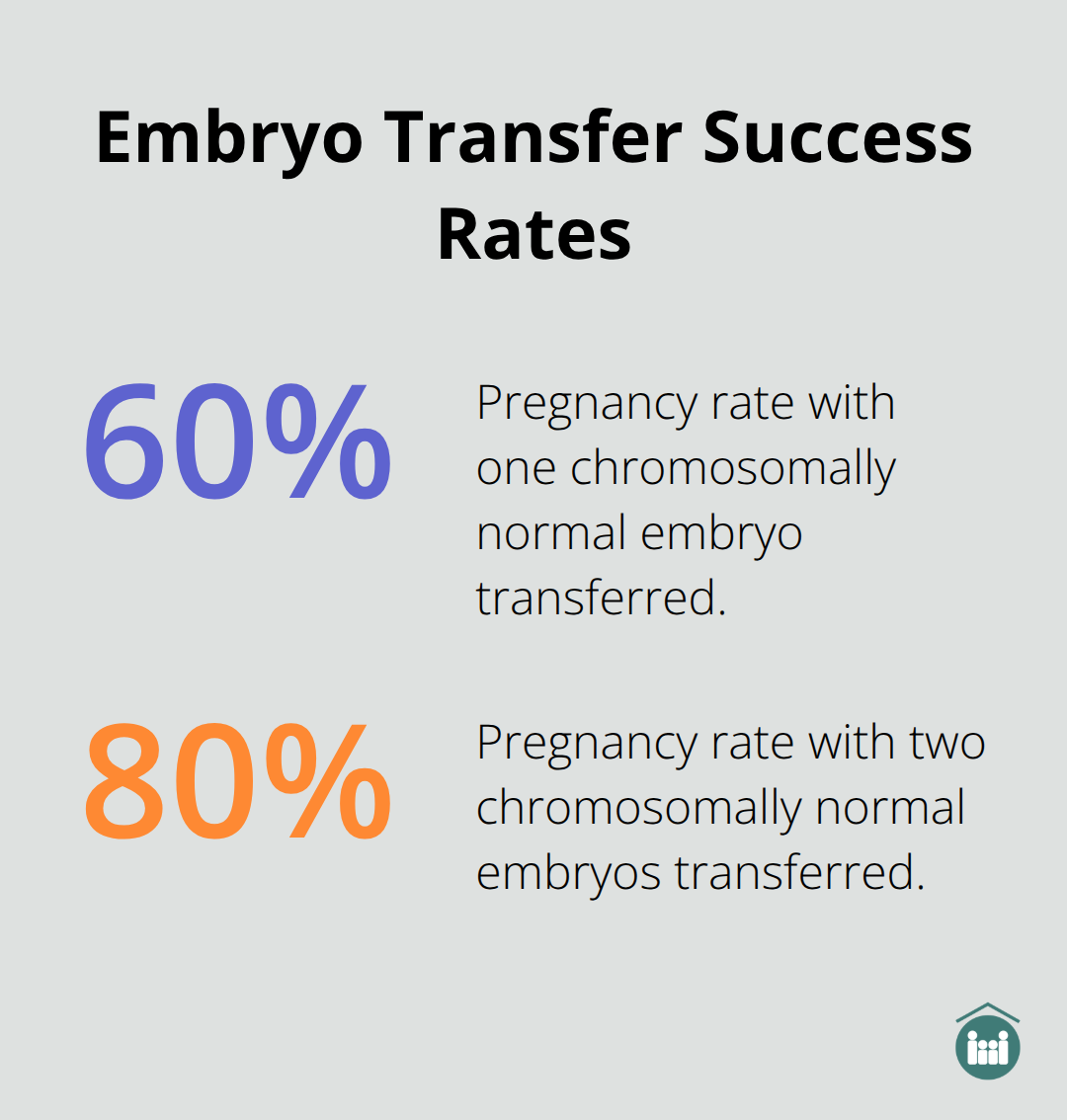
Age matters for eligibility; most programs decline transfers for individuals over 50, and those 45 and older should expect cardiac testing before proceeding due to pregnancy-related cardiovascular demands.
Written Agreements Protect All Parties
Florida law requires written agreements between donors and recipients that specify compensation, embryo numbers, treatment location, and relinquishment of parental rights. Anonymous embryo donation is more enforceable than open donation, where donors and recipients know each other. Open donations need detailed written agreements to prevent future disputes about parentage or claims that the recipient is a surrogate. Courts generally don’t need to approve embryo donation unless requested; embryos are treated as the recipient’s property under Florida statutes. The agreement must cover medical risks, potential failure, confidentiality, and voluntary consent. Both parties should have access to independent legal counsel to review terms. When a donation is open and parties know each other, extra documentation protects everyone from future claims.
What Comes Next in Your Journey
The legal requirements form only one part of your embryo adoption path. Understanding the steps involved in the adoption journey-from initial consultation through medical evaluation to final documentation-helps you prepare for what lies ahead.
Your Roadmap Through Embryo Adoption
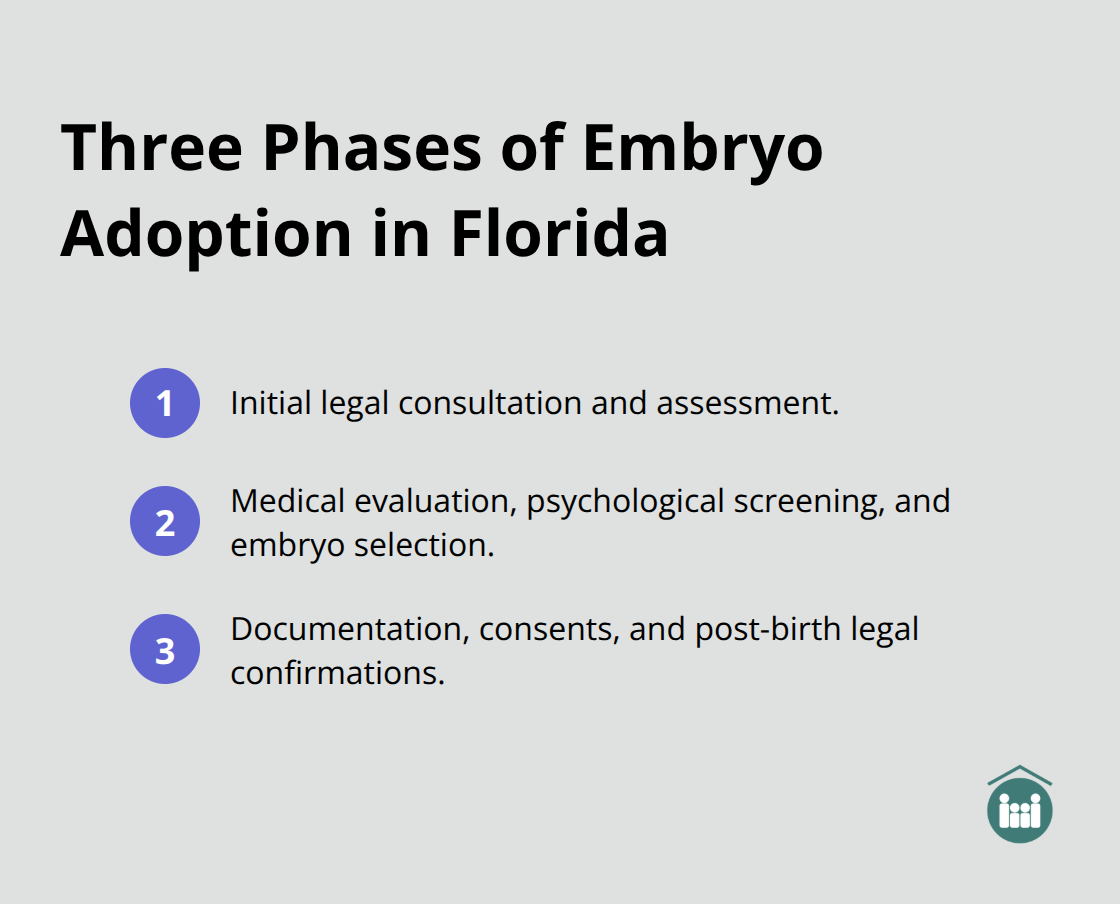
The embryo adoption journey moves through three distinct phases, each with specific timelines and requirements. Understanding what happens in each phase helps you prepare mentally and logistically for the road ahead.
Initial Consultation and Legal Assessment
Your first step involves scheduling an initial consultation with legal counsel familiar with Florida embryo adoption statutes. During this meeting, an attorney will review your situation, explain your rights and obligations under Florida law, and assess whether embryo adoption aligns with your family goals. This consultation typically happens over the phone or in person and focuses on understanding your medical history, relationship status, and financial readiness.
Legal assessment at this stage identifies potential complications early. For instance, if you’re over 45, your attorney should discuss the cardiac evaluation requirement before you invest time in the medical screening process. Most families spend one to three weeks in this initial phase before moving forward.
Medical Evaluation and Embryo Selection
The medical evaluation phase runs parallel to legal preparation and involves multiple steps that cannot be skipped. Your fertility provider will order a sono-hysterosalpingogram to assess your uterus-a procedure your local OB/GYN can perform if you prefer to avoid travel. Simultaneously, you’ll undergo psychological screening by a mental health professional experienced in reproductive medicine, often conducted by phone.
These screenings verify that you’re emotionally prepared for the unique aspects of embryo adoption, including the fact that neither parent shares genetics with the child. Most programs maintain 20 to 40 donor embryos available for selection at any time, so matching typically happens quickly once you’re medically cleared. You’ll receive information about embryo quality grades where available, allowing you to make informed choices about which embryos to transfer.
Once you’ve selected your embryo or embryos, your fertility provider schedules the transfer cycle, which takes approximately three to four weeks from hormone initiation to transfer day. If your first transfer doesn’t result in pregnancy, you can attempt again with remaining embryos without repeating the full screening process, saving both time and money on subsequent attempts.
Documentation and Legal Protections
The paperwork and court procedures phase involves documentation that protects all parties under Florida law. Your attorney will prepare a written agreement specifying the number of embryos, compensation limits, medical risks, and the donor’s relinquishment of parental rights. You’ll also sign consent forms acknowledging that you accept full parental responsibility immediately upon birth, regardless of the child’s health status.
If your embryo adoption involves an open donation where you know the genetic parents, expect more detailed documentation to prevent future disputes. Florida courts generally don’t require approval for embryo donation unless specifically requested, but your attorney may recommend filing adoption paperwork after birth to establish your legal parentage definitively. This final documentation typically takes two to four weeks to prepare and execute.
Throughout all three phases, communication between your attorney, fertility provider, and psychological screener ensures nothing falls through the cracks. Each deadline must be met and every legal requirement satisfied before you proceed to the next stage. The financial side of this process-including what you’ll actually pay and where funding might come from-plays an equally important role in your decision-making.
Financial and Emotional Considerations for Embryo Adoption in Florida
Embryo adoption costs significantly less than traditional IVF with donor eggs, making it an accessible path to parenthood for many families. The total expense typically ranges from $5,000 to $15,000, depending on whether you work with a fertility clinic that has embryos available or use a dedicated embryo adoption program. This price tag covers medical screening, hormone therapy, the embryo transfer procedure, and legal documentation. Donor egg IVF commonly costs $20,000 to $30,000 or more, making embryo adoption the more affordable option for families who want to experience pregnancy without the genetic connection. Your fertility provider will give you a detailed fee schedule upfront so you know exactly what each component costs before committing.
Breaking Down the Actual Costs
The financial reality extends beyond the transfer itself. You’ll pay for the sono-hysterosalpingogram to assess your uterus, which runs $500 to $1,500 depending on whether your local OB/GYN performs it or you travel to the fertility clinic. Psychological screening typically costs $300 to $800, though some clinics bundle this into their overall program fee.
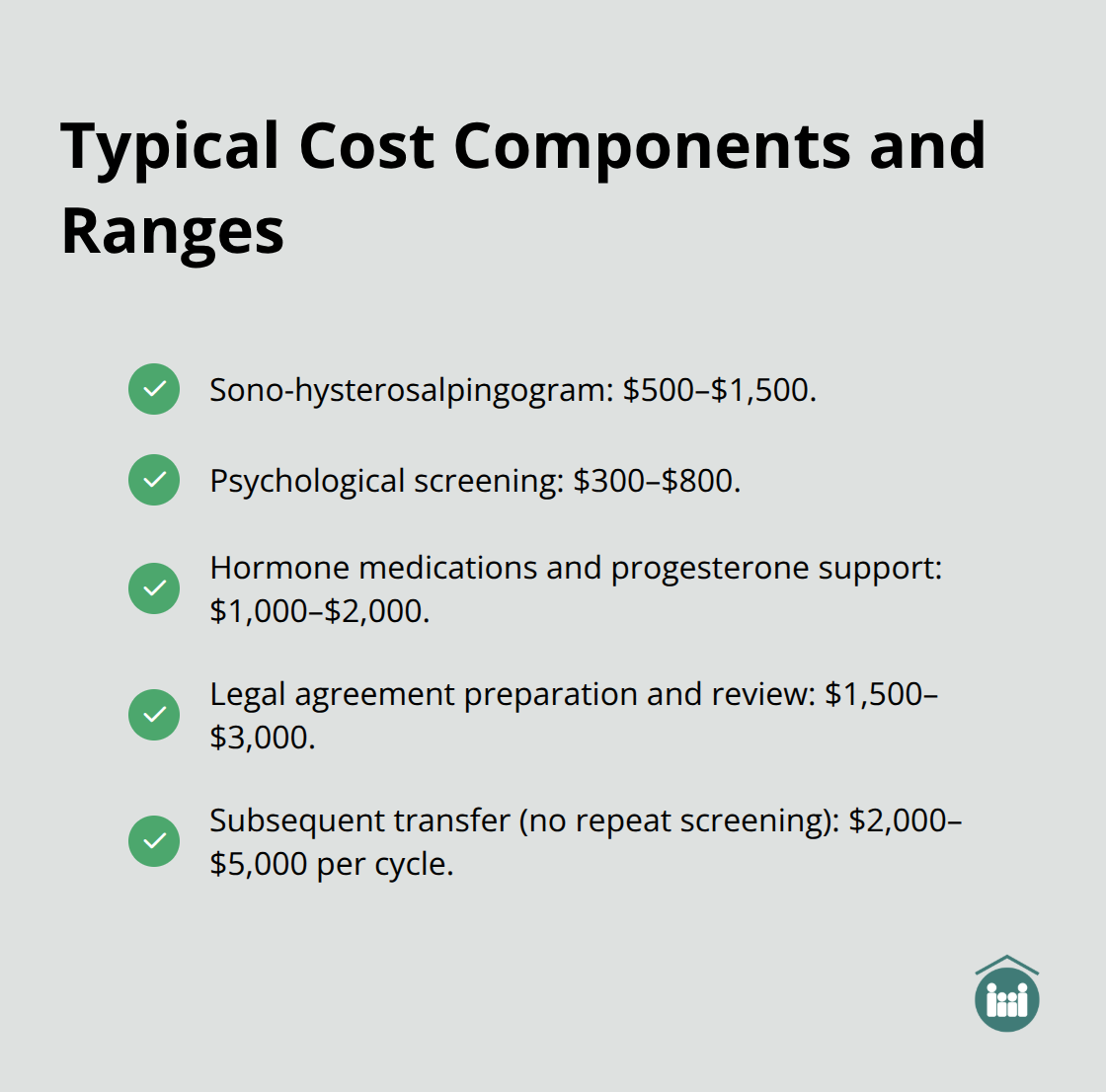
Hormone medications for the preparation cycle and progesterone support after transfer add another $1,000 to $2,000. Legal fees for reviewing and preparing the embryo donation agreement range from $1,500 to $3,000 when you work with an adoption attorney in Boca Raton who understands Florida’s specific embryo adoption statutes. If your first transfer doesn’t result in pregnancy, subsequent attempts cost far less because you skip the screening and legal phases, paying only for medications and the transfer procedure itself-typically $2,000 to $5,000 per cycle.
Insurance Coverage and Financial Resources
Most health insurance plans don’t cover embryo adoption because it falls under fertility treatment rather than traditional adoption. You’ll need to pay out of pocket unless your employer offers fertility benefits through programs like Progyny or Carrot Fertility, which increasingly cover embryo adoption alongside IVF. Some fertility clinics offer shared-risk or money-back programs where you pay a higher upfront fee but receive refunds if the cycle fails, though these programs rarely apply to embryo adoption specifically. Employer-sponsored dependent care accounts let you set aside pre-tax dollars for medical expenses, including fertility treatment, saving you roughly 20 to 30 percent in taxes on those funds. A few non-profit organizations provide grants specifically for embryo adoption, though funding remains limited; resources about available grants exist through various adoption networks.
Preparing Emotionally for Your Journey
Preparing emotionally for embryo adoption differs from biological parenthood or traditional adoption because you’ll carry a genetically unrelated child. The psychological screening during your medical evaluation isn’t a barrier but rather an opportunity to work with a mental health professional experienced in reproductive medicine who helps you process what this means for your family identity and parenting journey. Many families benefit from continued counseling after the transfer, especially if the cycle fails or if you struggle with bonding after birth despite no genetic connection. Support groups specific to embryo adoption exist in Florida and online, connecting you with families who understand the unique emotional landscape of this path. The fact that you’re not genetically related to your child won’t affect your legal parental rights or emotional connection, but acknowledging and preparing for this reality makes the transition to parenthood smoother and more intentional.
Final Thoughts
Embryo adoption in Florida offers a structured, legally protected path to parenthood that combines medical precision with clear legal safeguards. The embryo adoption process moves through three manageable phases: initial legal consultation, medical evaluation with psychological screening, and documentation that protects all parties. Costs typically range from $5,000 to $15,000, making this option significantly more affordable than donor egg IVF, with success rates reaching 60 percent with one chromosomally normal embryo and 80 percent with two.
Florida’s legal framework sets embryo adoption apart from other fertility options. Under Florida Statute 742.14, donors relinquish all rights while recipients gain full parental authority immediately upon birth, and written agreements specify compensation limits, medical risks, and confidentiality terms. Anonymous donations prove more enforceable than open arrangements, though detailed documentation protects both scenarios from future disputes, with courts generally treating embryos as the recipient’s property under state law.
Moving forward requires proper legal guidance from someone who understands Florida’s specific statutes and embryo adoption requirements. An experienced adoption lawyer in Boca Raton can review your situation, explain your rights and obligations, and protect your family through all documentation. At Juliana Gaita, P.A., we help clients navigate adoption cases throughout Florida, including embryo adoption, so contact our office to discuss your rights and options with our trusted legal team.