
Relative adoption offers families a path to formalize existing relationships while providing children with permanent, loving homes. Florida’s relative adoption process involves specific legal requirements that differ significantly from traditional adoptions.
We at Juliana Gaita, P.A. guide families through these complex procedures daily. Understanding the steps ahead helps families prepare for this meaningful legal journey.
What Makes Florida Relative Adoption Different
Legal Requirements That Set Relative Adoptions Apart
Florida law treats relative adoptions fundamentally differently from traditional adoptions. Chapter 63 of the Florida Statutes streamlines the process for family members and eliminates several barriers that non-relatives face. The most significant difference lies in the home study requirement. While traditional adoptions mandate comprehensive home studies, relatives who care for children for at least six months typically bypass this step entirely. This change alone saves families $3,000 to $5,000 in fees and months of wait time.
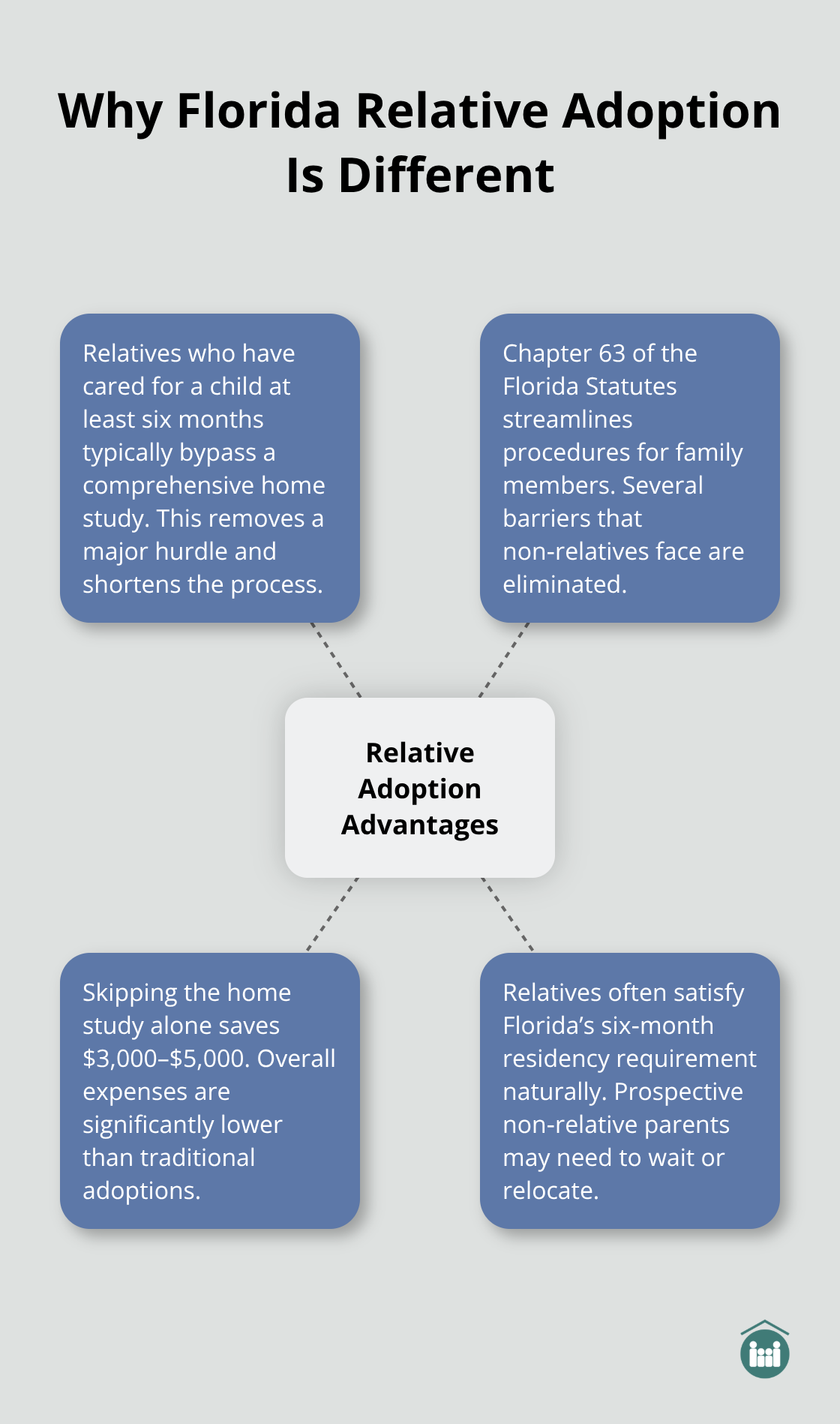
The residency requirement also differs substantially. Florida courts require children to live in the state for at least six months before adoption proceedings can begin. However, relatives who already care for these children often meet this requirement naturally, unlike prospective parents in traditional adoptions who may need to relocate or wait extended periods.
Who Qualifies Under Florida’s Relative Definition
Florida defines relatives very specifically within the third degree of consanguinity. This includes grandparents, great-grandparents, siblings, aunts, uncles, and their spouses. Stepparents also qualify under this definition, which makes blended family adoptions more accessible. Cousins, however, do not qualify as relatives under Florida law (despite common assumptions otherwise).
The blood relationship requirement means that close family friends or godparents cannot use the relative adoption process, regardless of their emotional connection to the child. These relationships, while meaningful, require the traditional adoption route with full home studies and extended wait periods. Florida courts consistently enforce this distinction, which makes it vital for families to verify their legal relationship status before they begin proceedings.
Cost Differences Between Adoption Types
Relative adoptions in Florida typically cost between $2,500 and $3,500, compared to traditional adoptions that can exceed $15,000. The reduced cost stems from eliminated home study requirements and simplified court procedures. Families may also qualify for adoption tax credits up to $16,810 in 2024 (based on documented expenses incurred during the process).
These financial advantages make relative adoption accessible to more families who might otherwise struggle with traditional adoption costs. The streamlined process also reduces attorney fees and court costs significantly. Understanding these cost differences helps families plan their adoption journey more effectively as they move forward with the step-by-step process.
How Do You Start the Relative Adoption Process
File Your Petition in Circuit Court
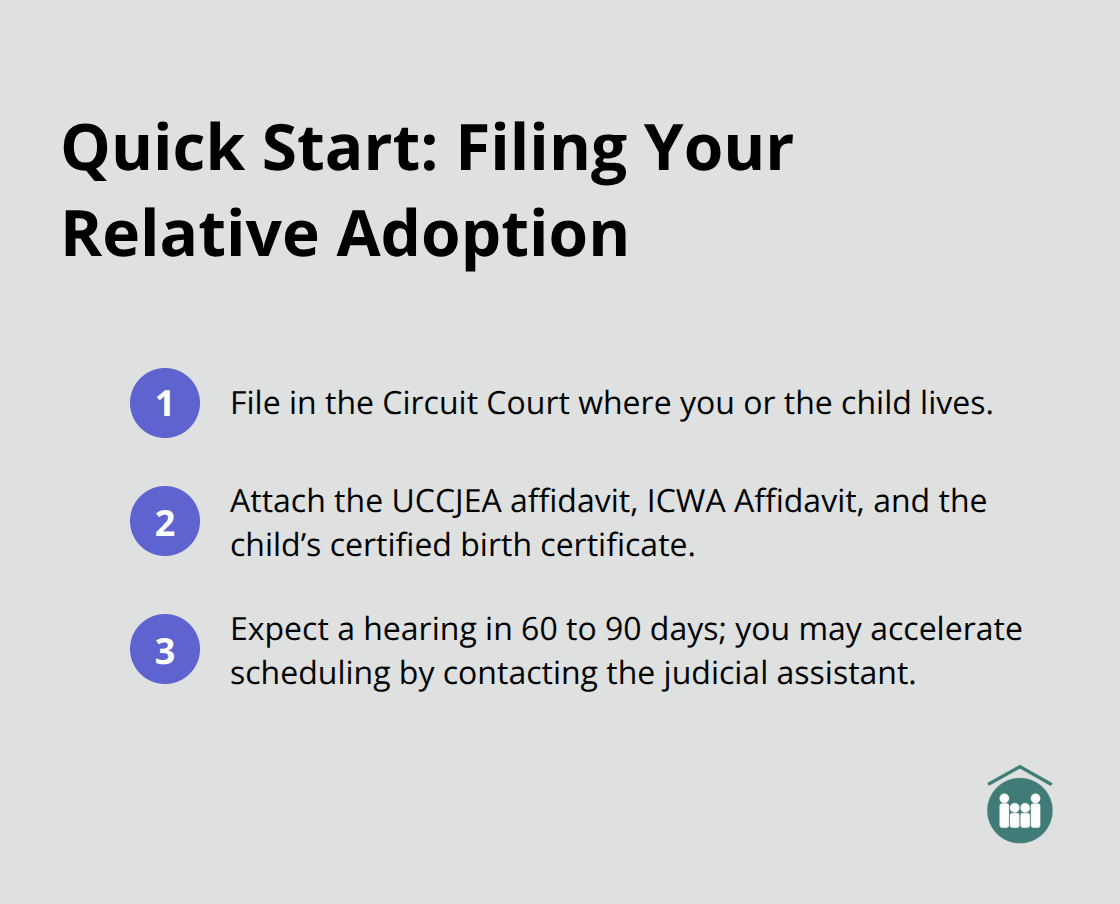
The relative adoption process starts when you file a petition in the Circuit Court where either you or the child lives. Florida requires specific documents with this petition: the Uniform Child Custody Jurisdiction and Enforcement Act affidavit, Indian Child Welfare Act Affidavit, and the child’s certified birth certificate. Most Florida counties do not provide pre-made forms for relative adoptions, which makes attorney assistance necessary to avoid costly errors.
The petition must detail your relationship to the child, current arrangements, and reasons why adoption serves the child’s best interests. Courts typically schedule hearings within 60 to 90 days after you file, though families can speed this up by contacting the judicial assistant directly.
Background Checks Replace Traditional Home Studies
Florida eliminates the comprehensive home study requirement for relatives who have cared for the child for at least six months. Instead, courts require basic background checks and may request financial documentation that proves your ability to support the child.
Criminal background checks cost approximately $24 per person and take two to three weeks to process. The absence of a full home study saves families $3,000 to $5,000 and reduces the timeline from six months to three months or less. However, courts retain discretion to order a home study if they have concerns about the placement.
Secure Consent or Terminate Parental Rights
Birth parents can voluntarily consent to the adoption, but Florida law requires this consent to be witnessed and notarized. When parents refuse consent or cannot be located, courts can terminate parental rights based on abandonment, unfitness, or failure to maintain meaningful contact with the child.
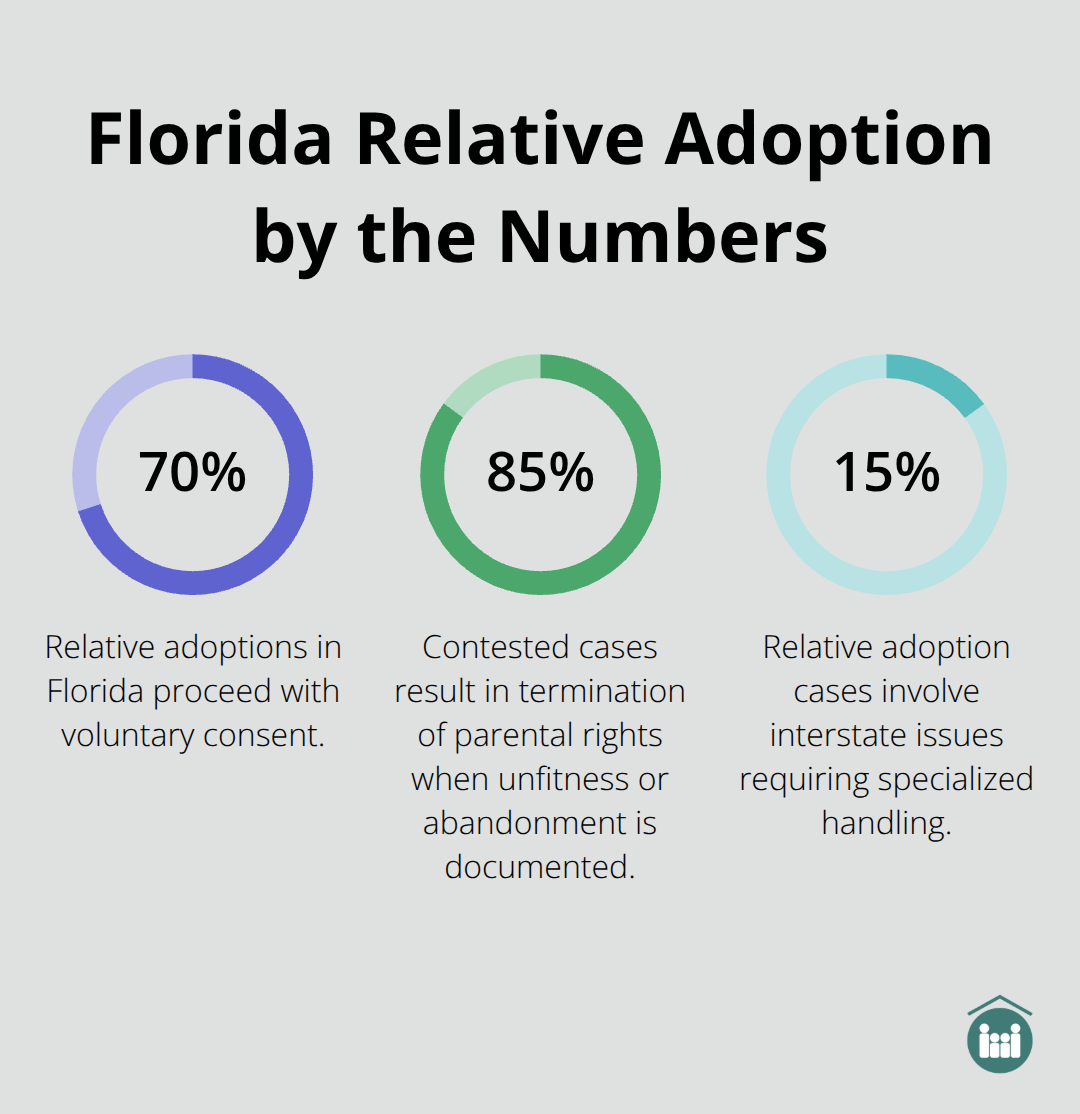
The termination process typically adds 30 to 60 days to the timeline but can occur simultaneously with the adoption hearing in many cases. Approximately 70% of relative adoptions in Florida proceed with voluntary consent which makes the process significantly faster than contested cases.
These procedural steps form the foundation of your adoption case, but several legal considerations and potential challenges can complicate even straightforward relative adoptions. Understanding the adoption process and costs helps families prepare for what lies ahead.
What Legal Challenges Complicate Relative Adoptions
Birth Parent Consent Requirements and Exceptions
Florida law requires written consent from both birth parents before relative adoption can proceed, but courts waive this requirement in specific circumstances. Birth mothers must wait 48 hours after delivery before they sign consent documents, and unmarried fathers have just 30 days to register with Florida’s Putative Father Registry to maintain their parental rights. When birth parents refuse consent, courts can terminate parental rights based on abandonment, which Florida defines as failure to maintain meaningful contact for six months or longer. This abandonment standard applies when parents miss visitation, fail to provide financial support, or demonstrate consistent disinterest in the child’s welfare.
Contested Adoption Strategies That Work
Contested relative adoptions require aggressive legal action and thorough documentation of the birth parent’s unfitness or abandonment. Florida courts terminate parental rights in approximately 85% of contested relative adoption cases when relatives present evidence of substance abuse, criminal activity, or emotional abandonment. The key lies in documentation of every missed visit, unpaid support payment, and failed communication attempt over the required six-month period. Courts also consider the child’s best interests, which heavily favors relatives who have provided stable care during the birth parent’s absence. Relatives should maintain detailed records from day one of caregiving (including school enrollment, medical appointments, and daily care expenses).
Interstate Complications and Jurisdiction Issues
Interstate relative adoptions create complex jurisdiction problems that can delay proceedings by six months or longer. The Interstate Compact on the Placement of Children requires approval from both states before adoption can proceed, even when relatives have cared for the child for years. Florida courts cannot finalize adoptions for children who lived in other states within six months of filing, which forces families to establish Florida residency first. Approximately 15% of relative adoption cases involve interstate issues that require specialized legal handling and coordination between multiple court systems (making attorney representation particularly valuable in these complex situations).
Final Thoughts
Professional legal guidance transforms the relative adoption process from overwhelming to manageable. We at Juliana Gaita, P.A. handle complex paperwork, court filings, and legal requirements that families face during these proceedings. Attorney representation becomes particularly valuable when birth parents contest the adoption or interstate complications arise.
Most relative adoptions in Florida complete within three months when birth parents consent voluntarily. Contested cases typically extend to six months, while interstate adoptions can take up to twelve months due to additional regulatory requirements. These timelines assume proper documentation and legal representation throughout the process.
Families who consider relative adoption should begin by collecting essential documents including the child’s birth certificate and proof of their caregiving relationship. Document all interactions with birth parents, maintain records of financial support provided, and establish Florida residency if needed (when applicable). The next step involves consultation with an experienced adoption attorney in Boca Raton who can evaluate your specific situation and guide you through Florida’s legal requirements.