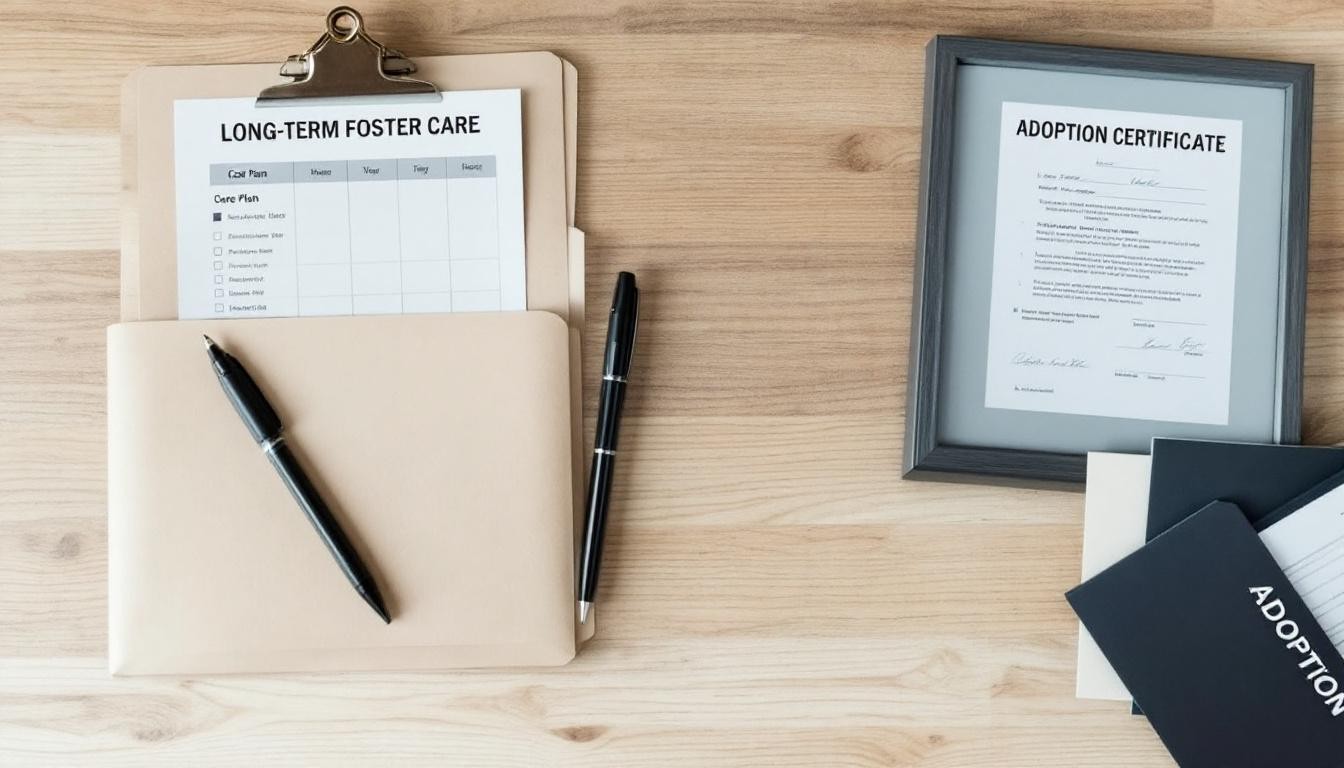
Choosing between long-term foster care and adoption shapes your family’s future in fundamentally different ways. Each path offers distinct legal protections, financial support, and emotional outcomes for children in Florida.
At Juliana Gaita, P.A., we help families understand these critical differences so you can make the right decision for your situation. This guide breaks down what matters most when comparing these two options.
Legal Status and Rights in Foster Care vs. Adoption
Permanency and Your Child’s Security
Adoption creates a permanent legal parent-child relationship that ends all dependency court involvement, while long-term foster care keeps the case active in the court system with ongoing oversight from the Florida Department of Children and Families. When you adopt, you gain full decision-making authority over your child’s education, medical care, and major life choices without needing agency approval. Foster parents make day-to-day decisions within parameters set by the court and DCF, meaning significant changes like school placement or medical treatment often require official authorization.
The legal security differs fundamentally between the two paths. In adoption, the final judgment terminates parental rights and closes the dependency case entirely, meaning no ongoing state oversight of your family life. A child adopted from foster care receives full inheritance rights, social security benefits under your name, and legal standing as your heir. In foster care, the child remains legally tied to their biological parents unless parental rights are terminated, which creates uncertainty about their long-term placement.
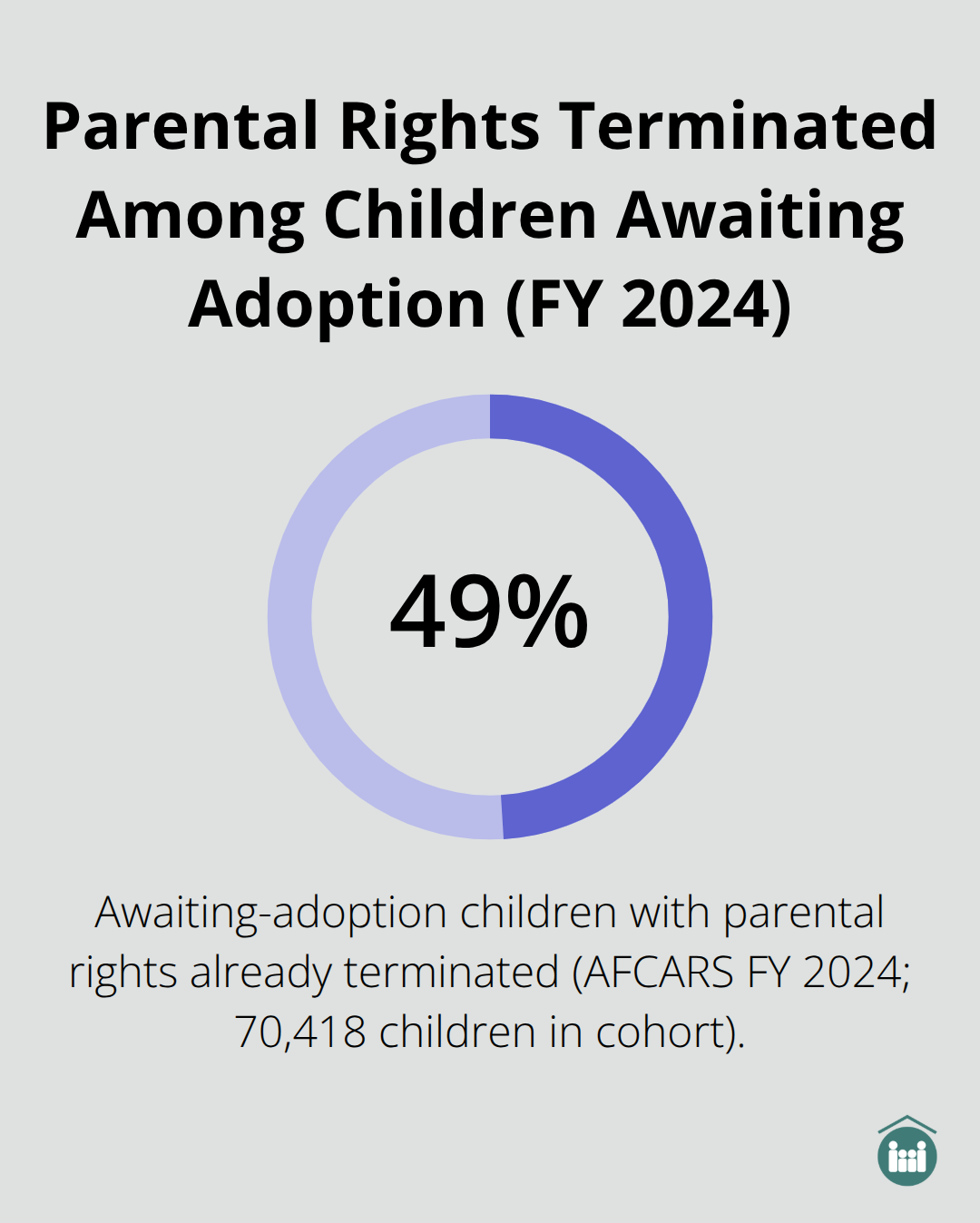
According to AFCARS data from FY 2024, among the 70,418 children awaiting adoption, only 49% had parental rights already terminated. This means nearly half still faced potential reunification or ongoing case involvement. This uncertainty affects a child’s sense of stability, even in a loving foster home. Adoption provides the definitive answer: your child is yours legally and permanently.
Decision-Making Power and Guardianship
Foster care operates under a shared decision-making model where the court retains authority over major choices. You cannot unilaterally enroll your foster child in a different school, authorize non-emergency surgery, or make long-term educational plans without DCF and court approval. Adoption removes these restrictions entirely. You make medical decisions, choose schools, handle financial matters, and plan for your child’s future independently.
If you want to adopt a stepchild or relative, Florida law provides streamlined procedures under Chapter 63 that still require court approval but move faster than dependency cases. The inheritance implications are equally significant: an adopted child inherits from you and your family under Florida law just as a biological child would, with full access to wills, trusts, and estate planning. A foster child has no automatic inheritance rights unless you specifically include them in your will, and that protection disappears if the child returns to biological family care.
How These Legal Differences Shape Your Family’s Future
The distinction between foster care and adoption affects how quickly you respond to your child’s needs and how much control you hold over their future. These legal differences also influence the financial support available to your family-a topic that carries real weight when planning for your child’s long-term care and stability.
Financial Support and Benefits
How Board Rates and Adoption Subsidies Compare
Adoption and long-term foster care create vastly different financial pictures for your family. In foster care, the state pays a board rate directly to cover the child’s living expenses-food, clothing, shelter, and basic care. According to Florida DCF guidelines, these rates vary based on the child’s age and needs, with therapeutic or medical foster care commanding higher rates. The moment you finalize an adoption, that board rate stops. Instead, you transition to an adoption subsidy, which Florida provides at approximately $416.66 per month (roughly $5,000 annually) until the child turns 18. This represents a significant financial shift that many families underestimate when considering the adoption path.
Extended Healthcare Coverage Through Adoption
The real advantage of adoption emerges when you factor in Medicaid continuation and tax benefits that foster care doesn’t offer equally. Children adopted from foster care remain eligible for Medicaid even after finalization, a protection that lasts until age 18-or until age 21 if the adoption occurred when the child was 16 or older. This healthcare coverage is substantial. Foster children receive Medicaid during placement, but that coverage terminates when they leave the system. Additionally, Florida’s tuition waiver program allows youth who were adopted after May 5, 1997 to attend any Florida public university, college, or vocational school without paying tuition or mandatory fees until age 28, creating a 28-year educational benefit that extends well into adulthood.
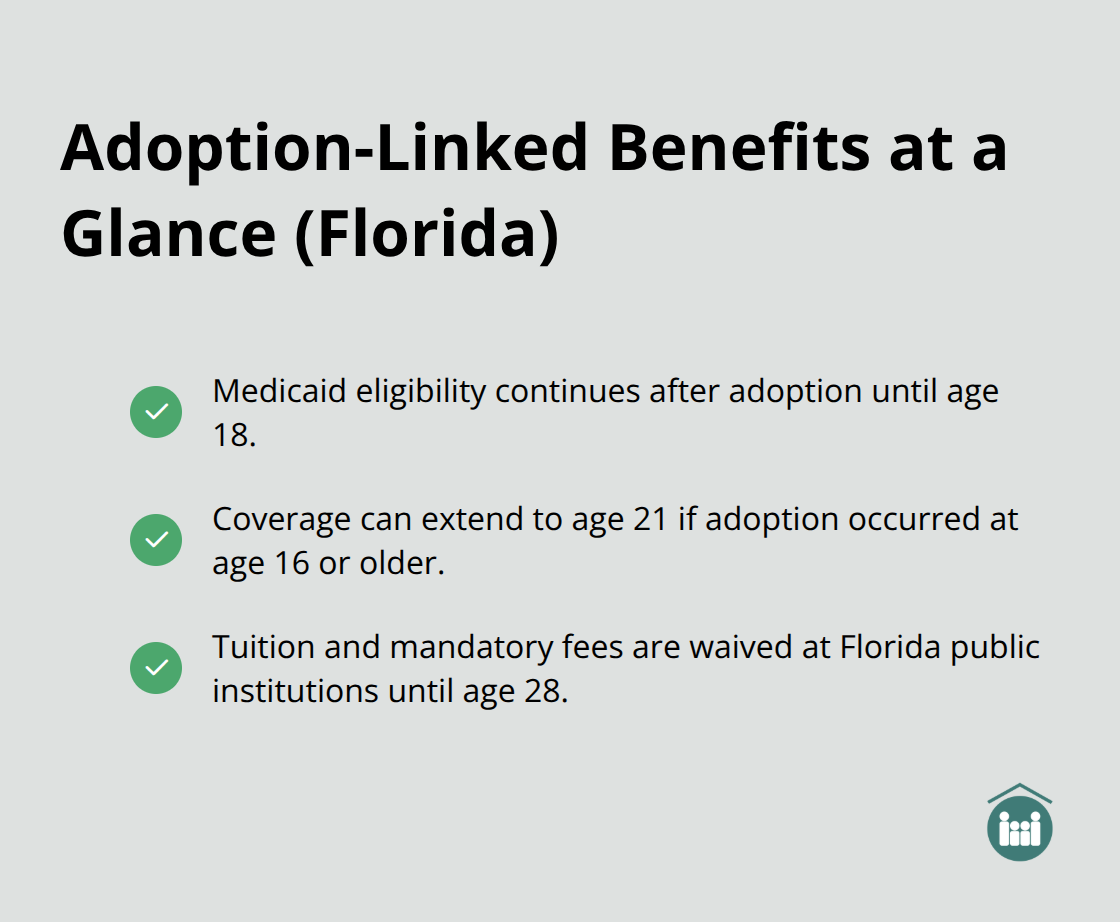
Long-term foster care doesn’t include this educational advantage. If your foster child ages out of the system without adoption, they lose access to these benefits entirely.
Negotiating Higher Subsidies for Special-Needs Children
For families with special-needs children-defined in Florida as those age 8 or older, children from racial minority backgrounds, siblings placed together, or those with developmental, physical, or emotional disabilities-adoption subsidies can be negotiated upward. If your child received a therapeutic family foster care or medical family foster care board rate while in foster care, you can negotiate an adoption subsidy up to that actual rate, not a standard amount. This negotiation matters significantly for children with complex medical or behavioral needs.
Healthcare Costs and Kinship Care Options
Foster parents shoulder fewer medical expenses because DCF covers board-rate children’s healthcare through Medicaid and agency reimbursement. Adoptive families inherit full responsibility for healthcare decisions and costs beyond Medicaid coverage. However, the extended Medicaid eligibility through age 21 (in qualifying cases) provides substantial long-term protection that foster care doesn’t guarantee. Relative and non-relative caregiver programs offer a middle path: kinship arrangements provide Medicaid and monthly financial benefits until age 18 without requiring full adoption, though these benefits terminate at 18 regardless of circumstances.
Post-Adoption Support and Long-Term Planning
Post-adoption services in Florida, administered through Community Based Care Agencies, include access to mental health resources and a post-adoption services counselor who can issue tuition waiver letters and help navigate long-term support. This structured support network exists specifically because adoption creates permanent responsibility without the ongoing state oversight that foster care provides. The financial trade-off is real: you gain control, permanency, and extended benefits, but you also assume full financial and legal responsibility for your child’s future. Understanding these financial realities prepares you for the emotional and family considerations that shape your decision between these two paths.
Emotional and Family Considerations
Permanency Shapes a Child’s Sense of Belonging
A child’s emotional security depends directly on whether their living situation feels permanent or temporary. In long-term foster care, even the most loving home carries an underlying uncertainty: the case remains open in dependency court, reunification efforts continue, and termination of parental rights may never occur. According to AFCARS data from FY 2024, among children awaiting adoption, only 49% had parental rights terminated, meaning the other half faced ongoing legal limbo. This uncertainty affects how children bond with caregivers and how they perceive their future. Children in foster care often struggle with the question of whether this placement will last, which undermines their ability to fully invest emotionally in the family unit. Adoption eliminates this doubt entirely. Once finalized, your child knows they belong permanently, which transforms their psychological orientation from temporary resident to permanent family member.
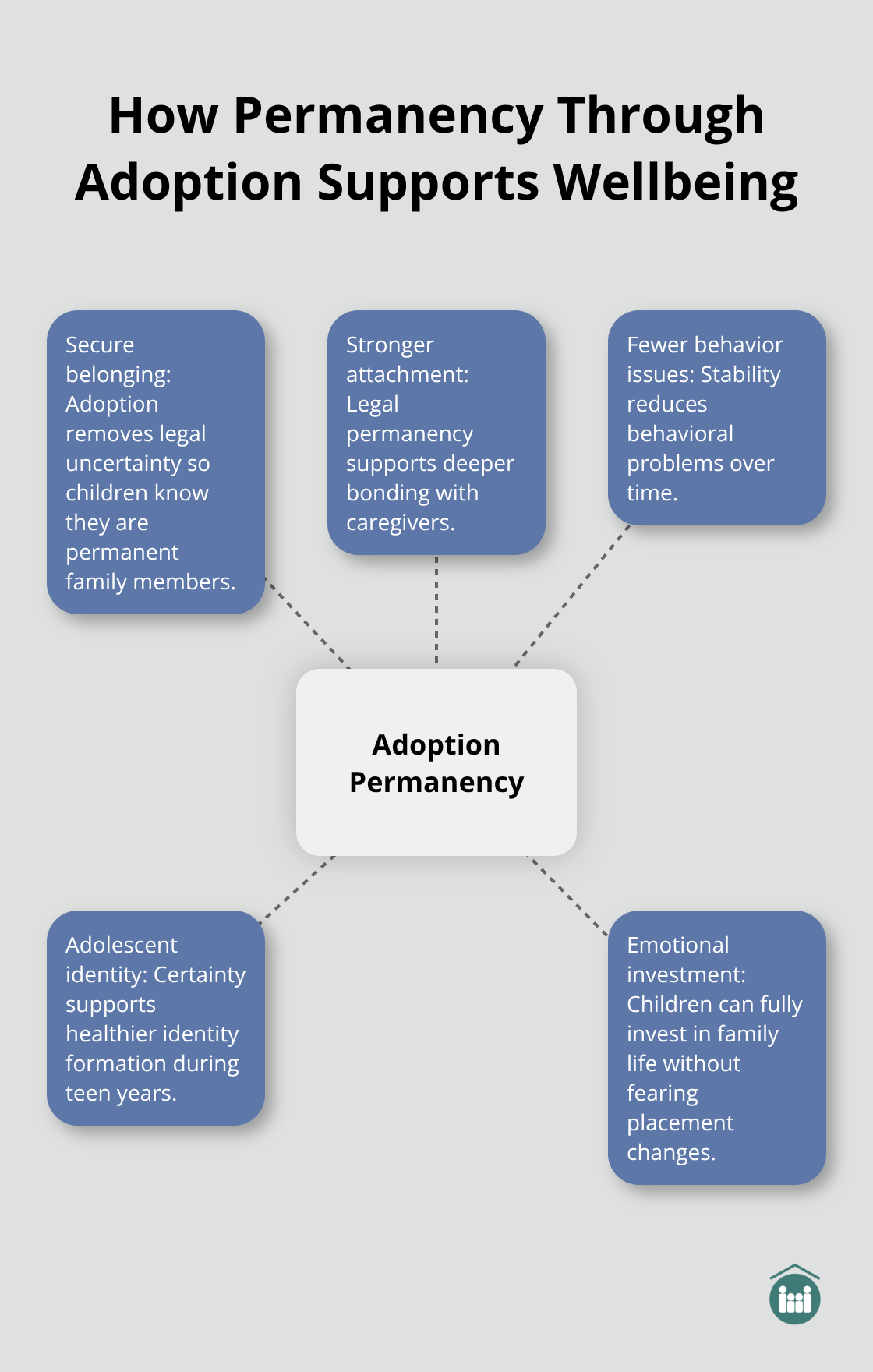
This shift matters profoundly during adolescence, when identity formation accelerates. A teenager in long-term foster care navigates puberty and self-discovery while managing the emotional weight of legal impermanence. An adopted teenager faces the same developmental challenges but without the added burden of wondering whether their placement will dissolve. Research consistently shows that permanency itself-the legal certainty that a placement will continue-strengthens attachment and reduces behavioral problems more effectively than any other single factor. Foster parents often report that children’s behavior improves noticeably after adoption finalization, not because the physical environment changed but because the child’s internal sense of security transformed.
Biological Family Contact: Control and Complexity
Connection to biological family adds complexity that adoption and foster care handle differently, and your choice here shapes your child’s identity development for life. In foster care, ongoing contact with biological relatives often follows court order or the case plan, which means you have limited control over frequency, quality, or the emotional impact of these visits. Some children benefit from maintaining these connections; others find the visits destabilizing, creating conflicting loyalties and grief. With adoption, you control the level of contact through open, semi-open, or closed adoption arrangements. You might facilitate regular visits with biological siblings or grandparents, maintain occasional letter contact, or establish no contact at all-your decision reflects what serves your child’s wellbeing best. This control matters especially when biological family members struggle with substance abuse, incarceration, or untreated mental illness. Foster care law prioritizes reunification efforts and family preservation, which can mean your child maintains relationships with people who caused their removal from home. Adoption allows you to protect your child from relationships that harm their emotional development while still honoring their genetic heritage through age-appropriate conversations and identity work.
Long-Term Educational and Institutional Support
The tuition waiver program available to Florida children adopted after May 5, 1997 extends until age 28, giving your child educational stability and demonstrating long-term institutional commitment to their future in ways that foster care cannot match. This extended support reflects society’s recognition that adoption creates lasting family bonds deserving of sustained investment, whereas foster care maintains a temporary framework regardless of duration. Children who access this benefit receive tuition-free attendance at any Florida public university, college, or vocational school-a protection that foster youth lose entirely when they age out of the system. The difference signals a fundamental truth: adoption establishes permanency that institutions recognize and support across decades, while foster care, even when long-term, remains classified as temporary in the eyes of the law and social policy.
Final Thoughts
Long-term foster care and adoption represent two fundamentally different commitments to a child’s future. Foster care prioritizes temporary safety and reunification efforts within a court-supervised framework, while adoption establishes permanent legal parenthood with full decision-making authority and no ongoing state oversight. The choice between long-term foster care vs adoption hinges on whether you seek to provide temporary care focused on family preservation or to establish permanent legal parenthood that closes dependency cases and grants inheritance rights.
Your decision should reflect your family’s capacity, financial readiness, and emotional comfort with either path. Consider whether you can transition from board-rate support to adoption subsidy and full responsibility, whether you prefer controlling contact arrangements independently or accepting court-directed biological family involvement, and whether you’re prepared for the long-term commitment adoption demands. Contact your local Community Based Care lead agency to explore foster care licensing, review Florida Statutes Chapter 39 for foster care details and Chapter 63 for adoption procedures, and visit the Florida Adoption Information Center at adoptflorida.org for subsidy information and post-adoption services guidance.
We at Juliana Gaita, P.A. help families navigate these critical differences and understand what permanency truly means for your situation. Discuss your rights and options with us so you can move forward with confidence in the path that serves your family best.