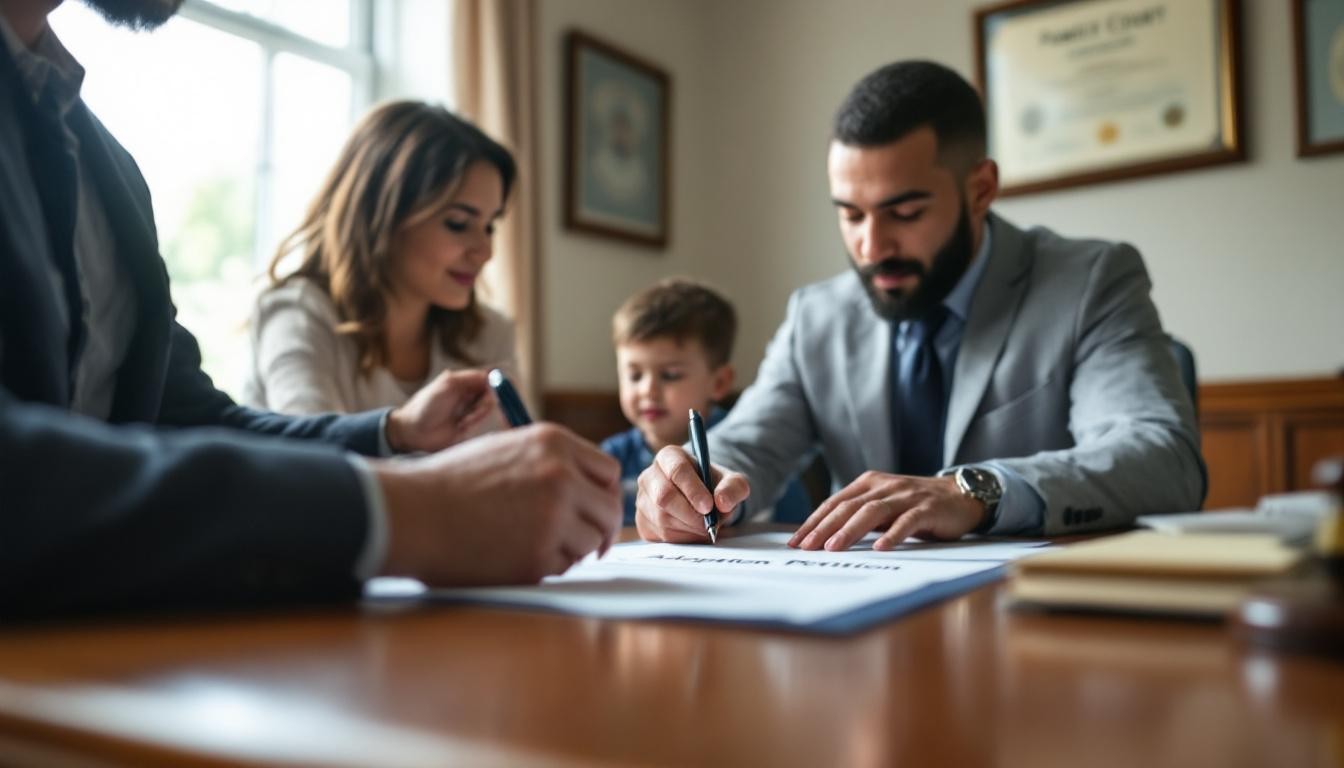
Becoming a stepfather and legally adopting your stepchild is one of the most meaningful decisions a family can make in Florida. The stepfather adoption process involves specific legal steps, consent requirements, and paperwork that can feel overwhelming without proper guidance.
We at Juliana Gaita, P.A. help families understand what this journey looks like and how to move through it smoothly. This guide walks you through each stage so you can protect your family’s future with confidence.
What You Need to Know Before Starting a Stepfather Adoption
Eligibility Requirements That Matter
Florida stepfather adoption has straightforward eligibility requirements, but missing even one detail can delay your case by months. You must be legally married to the child’s biological mother, and the child must have lived in Florida for at least six months before filing the petition. Florida Statutes Chapter 63 sets these rules clearly, and they apply regardless of how long you’ve acted as a father figure. If the child is 12 or older, they must consent to the adoption unless the court waives this requirement, which happens rarely and only under specific circumstances. You’ll also need to demonstrate that you’re financially and morally capable of supporting and raising the child-this isn’t vague language, but rather a standard courts apply consistently when reviewing your case.
Uncontested vs. Contested Adoptions
Stepfather adoptions in Florida fall into two distinct categories: uncontested and contested cases. Uncontested adoptions occur when the biological father consents voluntarily or when grounds exist to proceed without his consent. These cases typically resolve in 2–3 months and cost around $2,500–$4,500 in attorney fees as a flat rate, according to industry estimates.
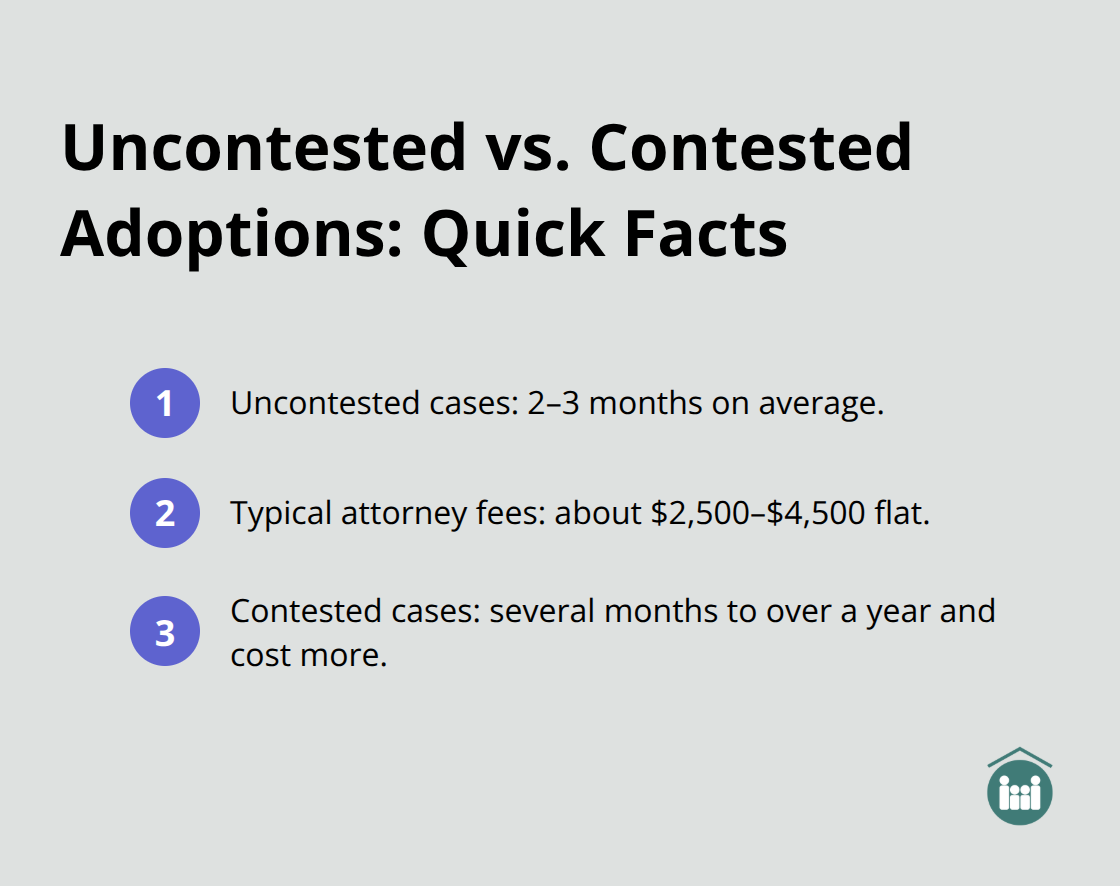
Contested adoptions require you to prove grounds for terminating the biological father’s rights, such as abandonment, neglect, or failure to support the child for two years. These cases stretch from several months to over a year and cost significantly more due to additional hearings and legal work.
Paternity Status and Consent Requirements
Florida courts will not grant adoption without establishing that it serves the child’s best interests-this is the central question at every hearing. The law recognizes different paternity situations: if the biological father was married to the mother at the child’s birth, he’s presumed the legal father and his consent is required unless his rights are terminated; if paternity was established through court order or a signed acknowledgment, consent is still required; if paternity was never established or he’s not listed on the birth certificate, consent may not be required. Understanding which category applies to your situation determines your entire path forward.
Why Florida’s Process Stands Apart
Unlike many other adoption types, Florida stepfather adoptions don’t require a home study, which significantly simplifies and speeds up the process. This makes Florida’s approach notably different from states like Kansas, where home studies are standard. Once finalized, stepfather adoption grants you full legal parental rights, making you the child’s legal heir and allowing you to make healthcare, education, and welfare decisions without restriction. The adoption also terminates the biological father’s custody, visitation, and inheritance rights permanently.
With these foundational requirements and distinctions in mind, the next step involves understanding the specific documentation and consent processes that move your case forward.
Moving Through the Legal Steps
Securing Consent or Establishing Grounds for Termination
The path forward starts with securing consent from the biological father or establishing grounds to proceed without it. Florida Statutes Chapter 63 gives you two routes: obtain his voluntary consent in writing, or present evidence to the court that grounds exist for termination, such as abandonment, failure to support for two years, or permanent incompetence. If the biological father cooperates, you can have a signed consent form within days or weeks.
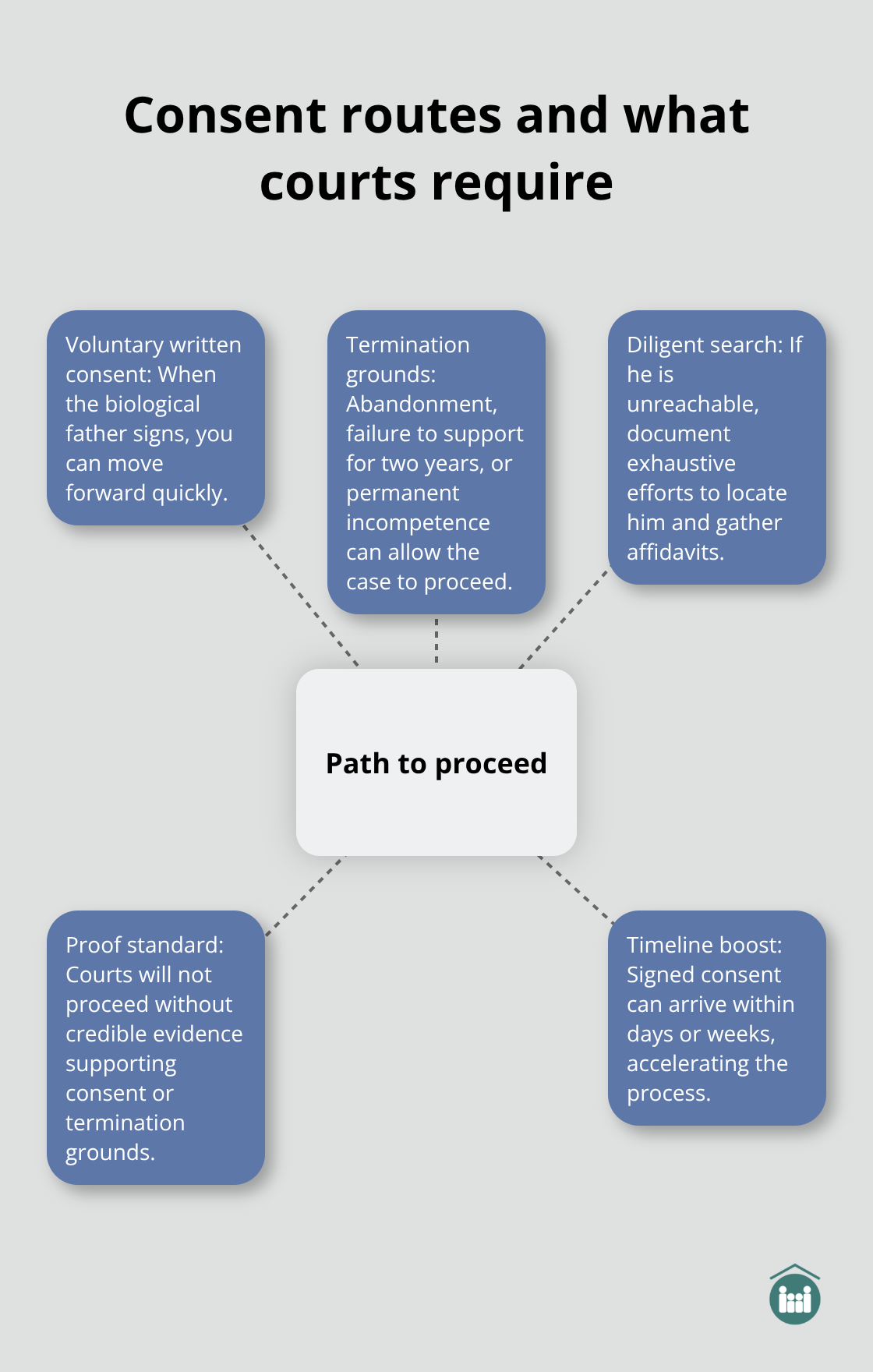
If he refuses or remains unreachable, you must document your diligent search efforts and gather affidavits showing abandonment or neglect. This documentation becomes critical because the court will not proceed without proof that you made genuine attempts to locate him or that his absence from the child’s life meets Florida’s legal definition of abandonment. Understanding the complexities of terminating parental rights can help you prepare for this stage.
Filing the Adoption Petition
Once consent is secured or grounds for termination are established, you file the adoption petition in the circuit court of your county of residence. The petition must include the child’s details, your relationship to the child and biological parent, the consent status or termination grounds, and a statement that adoption serves the child’s best interests. Florida courts do not require a home study for stepfather adoptions, which eliminates one major hurdle other states impose. The petition filing fee varies by county but typically ranges from $200 to $500. After filing, the biological father must be served with notice unless consent has already been obtained-this requirement is non-negotiable under Florida law.
The Court Hearing and Final Judgment
The court hearing typically lasts 5 to 10 minutes if the case is uncontested and all parties are present. The judge will confirm that you meet eligibility requirements, that proper notice was given, and that the adoption genuinely serves the child’s best interests. If the child is 12 or older, the judge will speak with them to confirm their consent. The final judgment of adoption is issued on the spot in most uncontested cases, making the adoption official immediately.
Obtaining the Amended Birth Certificate
After the hearing, you file paperwork with the Florida Bureau of Vital Statistics to obtain an amended birth certificate listing you as the legal parent-request this right away because schools, insurance companies, and medical providers often require it. The adoption process timeline for an uncontested case typically spans 2 to 3 months from petition filing to finalized judgment, though this varies based on court schedules and how quickly all parties provide required documents. Contested cases take significantly longer, often stretching 6 to 12 months or more, because the court must hold additional hearings to determine whether grounds for terminating the biological father’s rights have been met.
Essential Documentation Before Filing
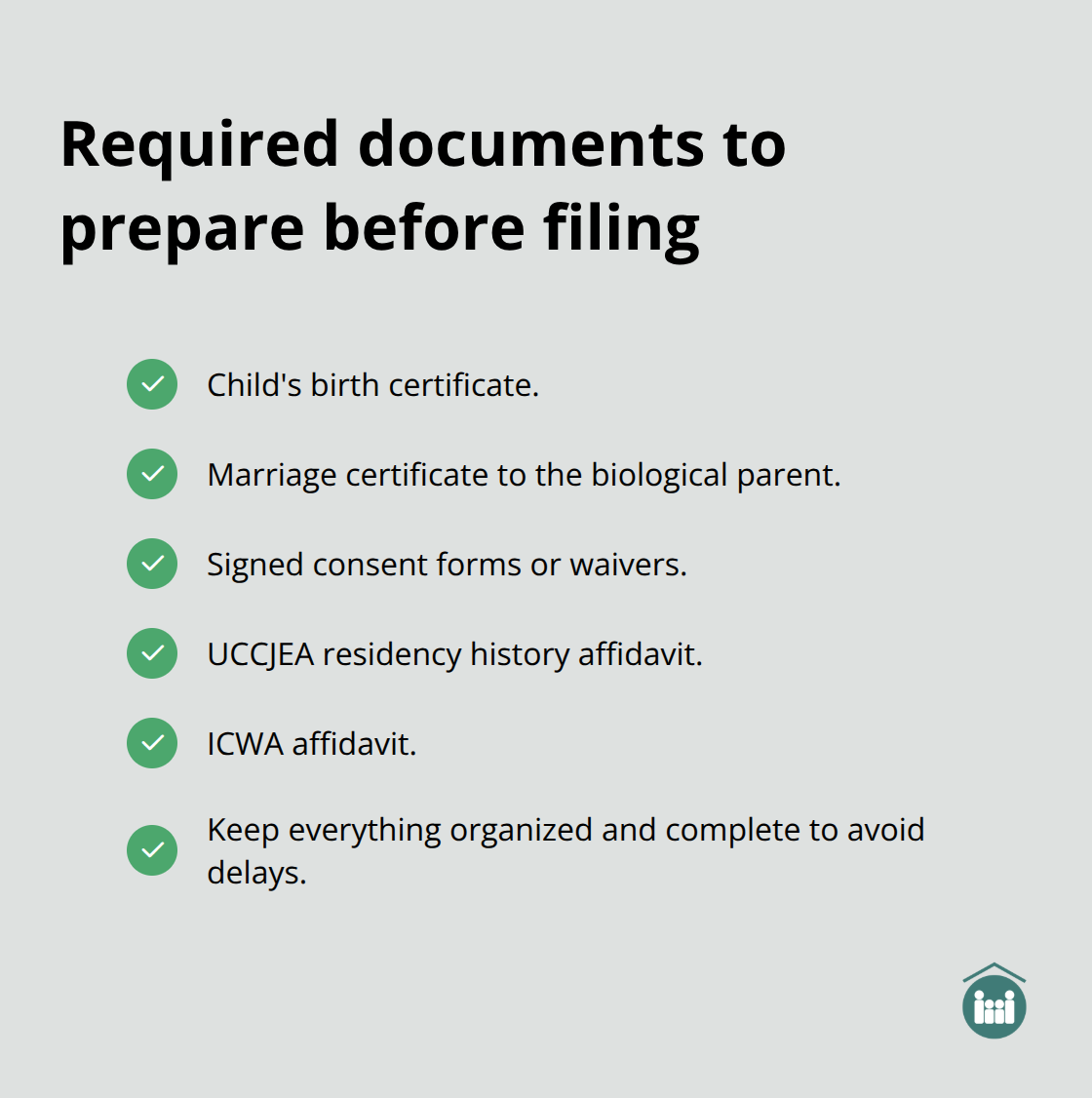
Throughout this process, gather and organize your required documents before filing: the child’s birth certificate, your marriage certificate to the biological parent, any consent forms or waivers, a Uniform Child Custody Jurisdiction and Enforcement Act residency history affidavit, and an Indian Child Welfare Act affidavit. Missing or incomplete paperwork is one of the most common reasons cases stall.
With your documents prepared and your consent strategy in place, you’re ready to address the obstacles that commonly arise during stepfather adoptions-and how to prevent them from derailing your case.
What Stops Stepfather Adoptions and How to Prevent It
The Biological Father’s Refusal to Consent
The biological father’s refusal to consent represents the single biggest roadblock in stepfather adoptions, and it happens far more often than families expect. Florida Statutes Chapter 63 requires you to prove to the court that grounds exist to proceed without his consent-abandonment, failure to support for two years, or permanent incompetence. The real challenge isn’t proving abandonment in theory; it’s documenting it with concrete evidence that satisfies a judge. Courts require a diligent search showing you made genuine attempts to locate the biological father through public records, social media, employment databases, and direct contact attempts. Without this documentation, judges won’t terminate his rights, and your adoption stalls indefinitely.
Many families mistakenly assume two years of no contact automatically equals abandonment under Florida law. It doesn’t. Courts examine the specific facts: Did he pay child support? Did he send birthday cards or attempt communication? Did he maintain any meaningful relationship with the child? A biological father who pays support inconsistently but hasn’t seen the child in three years occupies a gray area that requires legal strategy to navigate. If consent seems unlikely, address this early with a family law attorney who can evaluate your specific situation and determine whether termination grounds actually exist.
Procedural Errors That Derail Cases
Procedural errors rank second among adoption killers, and they’re entirely preventable with attention to detail. Missing documents, incomplete affidavits, or filing paperwork in the wrong county forces courts to reject your petition or issue continuances that stretch timelines from three months to six or more. The Indian Child Welfare Act affidavit and the Uniform Child Custody Jurisdiction and Enforcement Act residency history affidavit aren’t optional formalities-they’re mandatory under Florida law, and omitting either one halts your case immediately.
Filing fees, court filing procedures, and notice requirements vary slightly by county, which trips up families who assume the process works identically everywhere in Florida. One family filed their petition in the wrong courthouse because they didn’t verify jurisdiction rules for their specific county, adding eight weeks to their timeline. The solution is straightforward: gather all required documents before filing anything, verify your county’s specific filing procedures with the clerk of court, and have an attorney review your paperwork for completeness.
The Amended Birth Certificate Trap
The amended birth certificate process also requires precision-Florida Bureau of Vital Statistics won’t issue a new certificate without the correct final judgment language and supporting documentation. Families who finalize their adoptions successfully often face delays getting the updated birth certificate because the final judgment didn’t include the specific statutory language the Bureau requires. Confirm these details upfront rather than discovering them after the judge signs off on your case.
Final Thoughts
Stepfather adoption in Florida protects your family’s future by establishing legal rights that reflect the relationship you’ve already built. The stepfather adoption process requires attention to eligibility, consent, documentation, and court procedures, but none of these steps are insurmountable when you understand what to expect. Uncontested adoptions move quickly-typically 2 to 3 months-while contested cases demand more time and resources.
Your next step depends on where you stand right now. If you haven’t yet discussed adoption with the biological father, start that conversation or prepare your documentation for termination grounds. If you’re ready to file, verify your county’s specific procedures and ensure every required document is complete before submitting anything to the court. If you’re facing resistance from the biological father, don’t assume your case is blocked-Florida law provides clear pathways to proceed without consent when abandonment or failure to support can be documented.
An attorney familiar with Florida’s stepfather adoption requirements can identify potential obstacles early, ensure your paperwork meets statutory standards, and represent you at the hearing if complications arise. We at Juliana Gaita, P.A. help families throughout Florida navigate adoption cases, and if you’re ready to move forward or need guidance on your specific situation, contact our Boca Raton adoption law office to discuss your rights and options with our legal team.