
Adoption in Florida comes with specific legal protections and rights that every adoptive family should understand. At Juliana Gaita, P.A., we help families navigate these requirements and secure their legal standing.
This guide covers the core aspects of Florida adoptive family rights, from parental authority to post-adoption support. You’ll find practical information to protect your family’s interests.
Legal Rights of Adoptive Parents in Florida
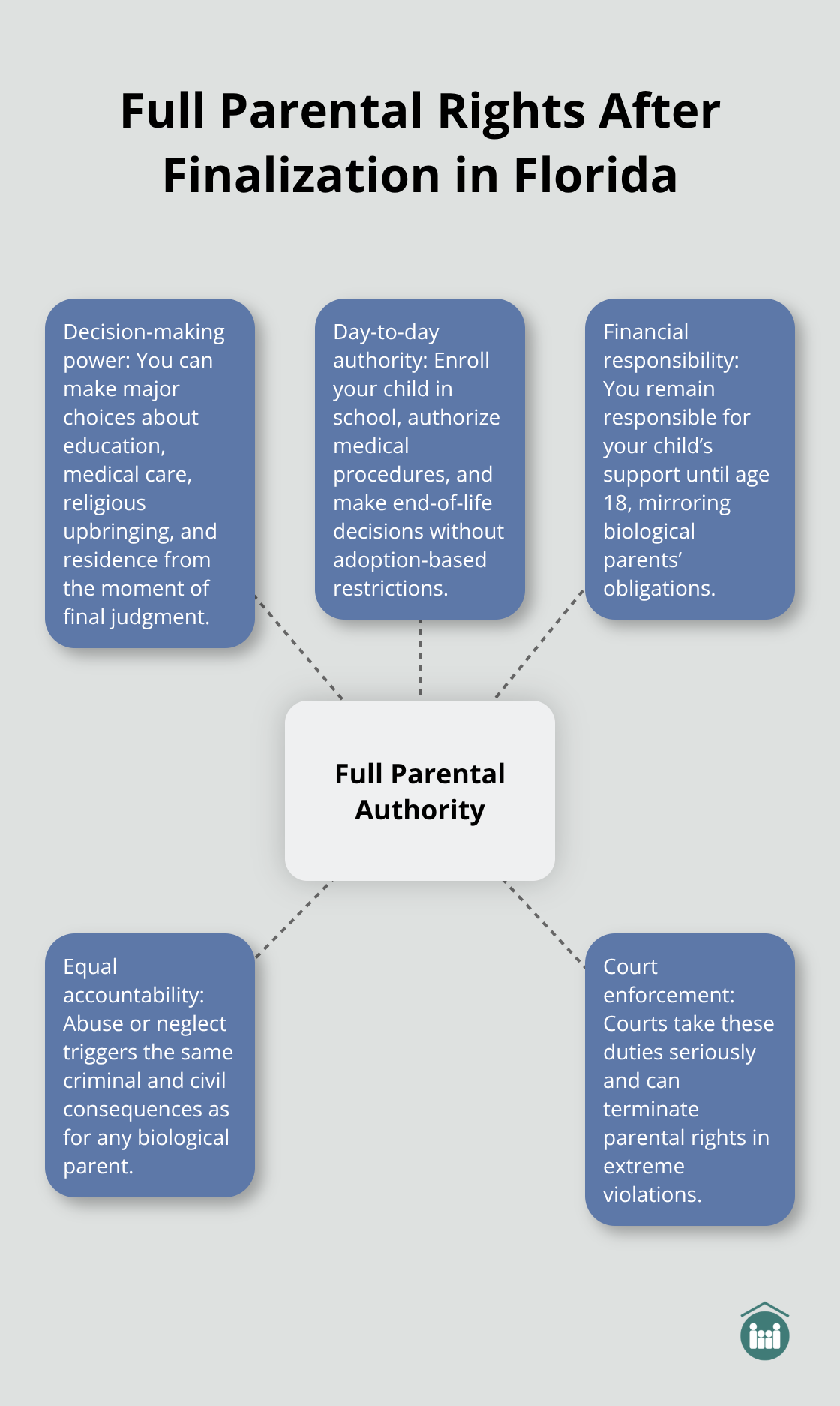
Once a Florida court finalizes your adoption, you gain full parental rights identical to those of biological parents. This means you hold legal authority over major decisions including education, medical care, religious upbringing, and residence. Florida Statutes Section 63.172 makes this explicit: adoptive parents inherit all parental powers and responsibilities from the moment the final judgment is entered. You can enroll your child in school, authorize medical procedures, and make end-of-life decisions without any restrictions tied to the adoption. However, this authority comes with corresponding legal obligations. You remain financially responsible for your child’s support until age 18, and you cannot abuse or neglect your child without facing the same criminal and civil consequences as any biological parent. Courts take these responsibilities seriously, and violations can result in termination of your parental rights in extreme cases.
Inheritance Rights and Estate Planning
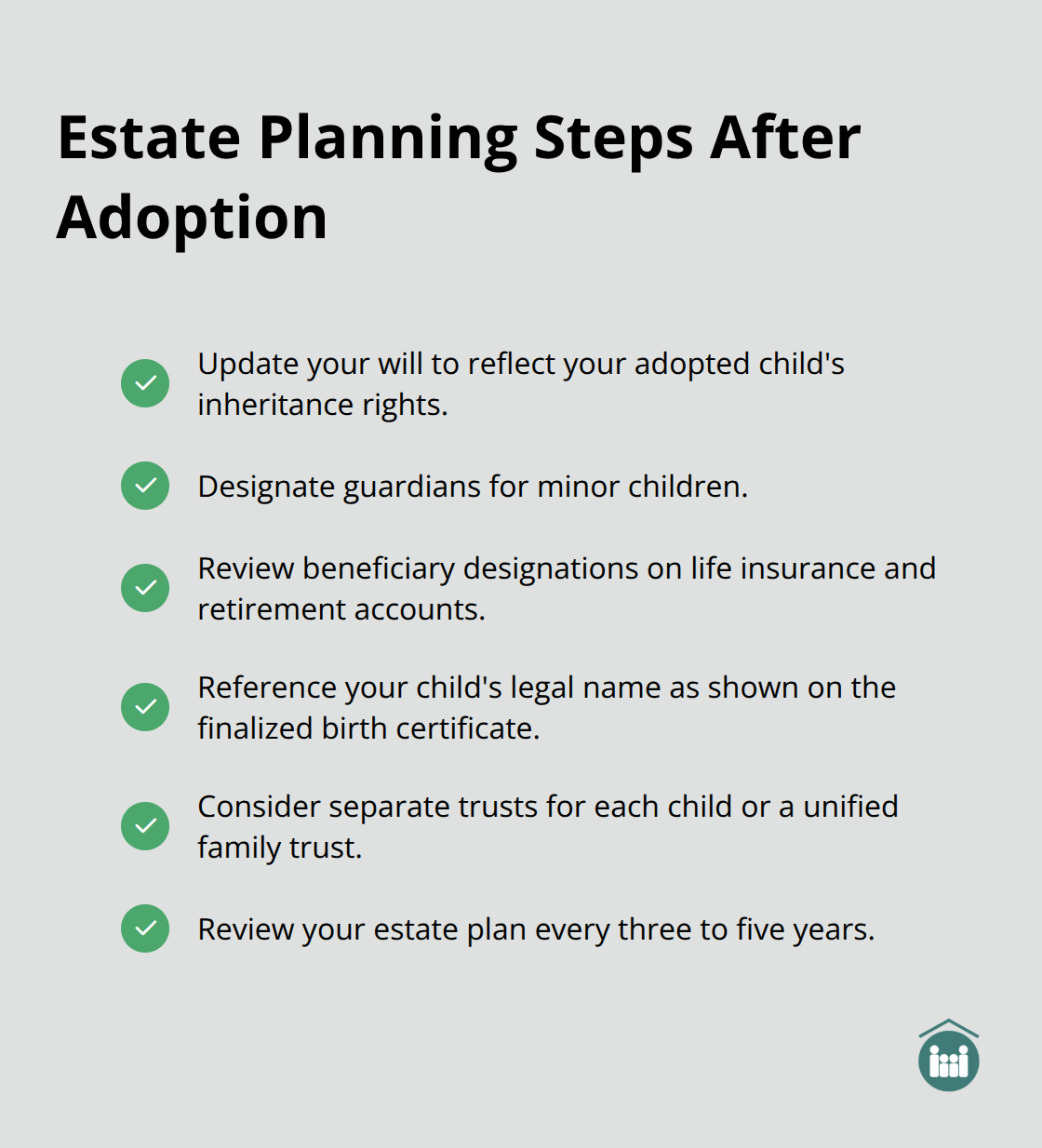
Your adopted child has full inheritance rights under Florida law, meaning they inherit from you as if born to you biologically. If you die without a will, your child inherits according to Florida’s intestacy laws just like any biological child. More importantly, your child can inherit from both sides of your family, including grandparents and other relatives, provided they’re named in wills or included in default succession. This changes the financial security picture significantly. Many adoptive families overlook updating their estate plans after finalization, which creates problems. You should update your will, designate guardians for minor children, and review beneficiary designations on life insurance and retirement accounts. If your child comes from an international adoption, ensure your documents reference them by their legal name as it appears on the finalized birth certificate. Some families also establish trusts to manage inheritance for younger children or those with special needs.
Medical Records and Genetic Information Access
Florida law gives adoptive parents access to nonidentifying medical and genetic information about the birth parents and child’s medical history. This information includes genetic conditions, hereditary diseases, mental health history, and developmental concerns. The adoption entity must provide this information to you before or shortly after placement. After finalization, you can request updated medical information from the adoption entity if new health issues emerge. This matters practically because knowing a child’s genetic predisposition to conditions like diabetes, heart disease, or certain cancers helps you plan preventive care and screen appropriately. If your child develops health problems later, you can sometimes contact the adoption entity to request updated information from birth parents. Florida’s Adoption Reunion Registry allows adoptees age 18 and older to access identifying information about birth parents if both parties consent. For younger children, you control access to this information until they reach majority. If your adoption was open, you may have direct contact with birth parents and can ask for updated medical information informally.
Estate Planning Considerations for Adoptive Families
Your estate plan should reflect your family structure and protect your child’s financial future. An adoption lawyer in Boca Raton can help you coordinate your will, guardianship designations, and beneficiary documents to work together seamlessly. This coordination prevents conflicts and ensures your child’s inheritance passes smoothly to them or to designated guardians if you pass away while they’re still a minor. Special considerations apply if your child has special needs or if you adopted multiple children at different times. You may want to establish separate trusts for each child or create a unified family trust depending on your circumstances. Regular reviews of your estate plan (every three to five years) help you adjust for life changes, additional children, or shifts in your financial situation.
Understanding Your Rights During the Adoption Process
Before finalization, you hold certain rights as the prospective adoptive parent, though the adoption entity or court retains some authority. You have the right to receive a favorable home study before placement occurs, and you have the right to information about the child’s background, medical history, and any special needs. You also have the right to counseling and education about adoption before and after placement. Post-placement monitoring occurs for 90 days with monthly in-home contact for agency placements, or two post-placement visits for attorney-mediated placements. During this period, you work with the adoption entity to address any adjustment issues and prepare for finalization. Understanding these rights helps you advocate for your family’s needs and ensures the adoption entity fulfills its obligations to support your transition into parenthood.
Legal Protections Through the Adoption Process
Stepchild and Adult Adoption Pathways
Stepchild adoption and adult adoption operate under different rules than standard adoptions, and understanding these distinctions protects your family from costly delays or legal complications. Stepchild adoption happens when your spouse’s child from a previous relationship becomes legally yours, which requires terminating the absent parent’s rights or obtaining their written consent. Florida Statutes Section 63.042 permits this pathway, and it typically moves faster than other adoptions because the child already lives with you and one biological parent supports the adoption. The key practical requirement is obtaining consent from the non-custodial parent or proving grounds for termination, which include abandonment, neglect, or failure to maintain contact for six months or longer. Courts require explicit termination proceedings before your adoption can finalize-this is not automatic when a stepparent marries into a family. This process usually takes three to six months once filed, and costs run considerably lower than private infant adoptions since home studies are streamlined for existing household arrangements.
Adult adoption follows an even simpler path under Florida law because no home study is required and consent comes only from the adult being adopted. Courts approve adult adoptions readily when both parties agree, and finalization can occur within weeks rather than months. This option suits situations where you want to formalize a long-standing relationship with someone of legal age, such as an adult stepchild or family member you have raised.
Why Legal Representation Matters in Adoption
Legal representation during any adoption process protects your rights and your child’s future. Florida requires that adoption entities be licensed and that all proceedings follow strict statutory procedures, meaning mistakes can derail months of planning or create post-adoption complications. An adoption lawyer handles petition filing, ensures all required parties receive proper notice, manages consent documents, coordinates home studies with licensed professionals, and represents you at finalization hearings. The attorney also verifies that the adoption entity has conducted diligent searches for unknown or missing parents, particularly unmarried biological fathers who may have rights under the Florida Putative Father Registry.
Without legal guidance, families sometimes proceed with placements before home studies are complete, fail to obtain necessary consents, or overlook grandparent notification requirements that can later invalidate the entire adoption. A contested adoption or invalidated judgment creates far greater costs than preventive representation. Your attorney also protects you by ensuring the adoption entity discloses all known medical and genetic information, by confirming that post-placement supervision meets statutory requirements, and by preparing you for finalization so the court hearing proceeds without surprises or delays.
Moving Forward With Confidence
The adoption process involves multiple moving parts, and each one demands attention to detail. When you work with an experienced adoption lawyer in Boca Raton, you gain someone who understands Florida’s statutory requirements and can navigate the specific circumstances of your family’s situation. The trusted legal team at Juliana Gaita, P.A. helps clients throughout Florida with adoption cases, ensuring that your rights remain protected at every stage. As you prepare for the next phase of your adoption journey, having proper legal guidance sets the foundation for a smooth finalization and a secure future for your family.
Post-Adoption Support and Resources Available in Florida
Adoption Subsidies and Financial Assistance
Florida adoption subsidies provide meaningful financial relief for qualifying families, and understanding what you can access makes a real difference in your household budget. When you adopt a child from the Florida child welfare system, you may qualify for monthly adoption subsidies that continue until the child turns 18, sometimes extending to 21 if the child has special needs or attends college. The subsidy amount varies based on the child’s age, special needs status, and what you would have received as a foster parent before adoption. For example, a teenager with significant behavioral or medical needs typically qualifies for a higher subsidy than a younger child with no documented special needs.
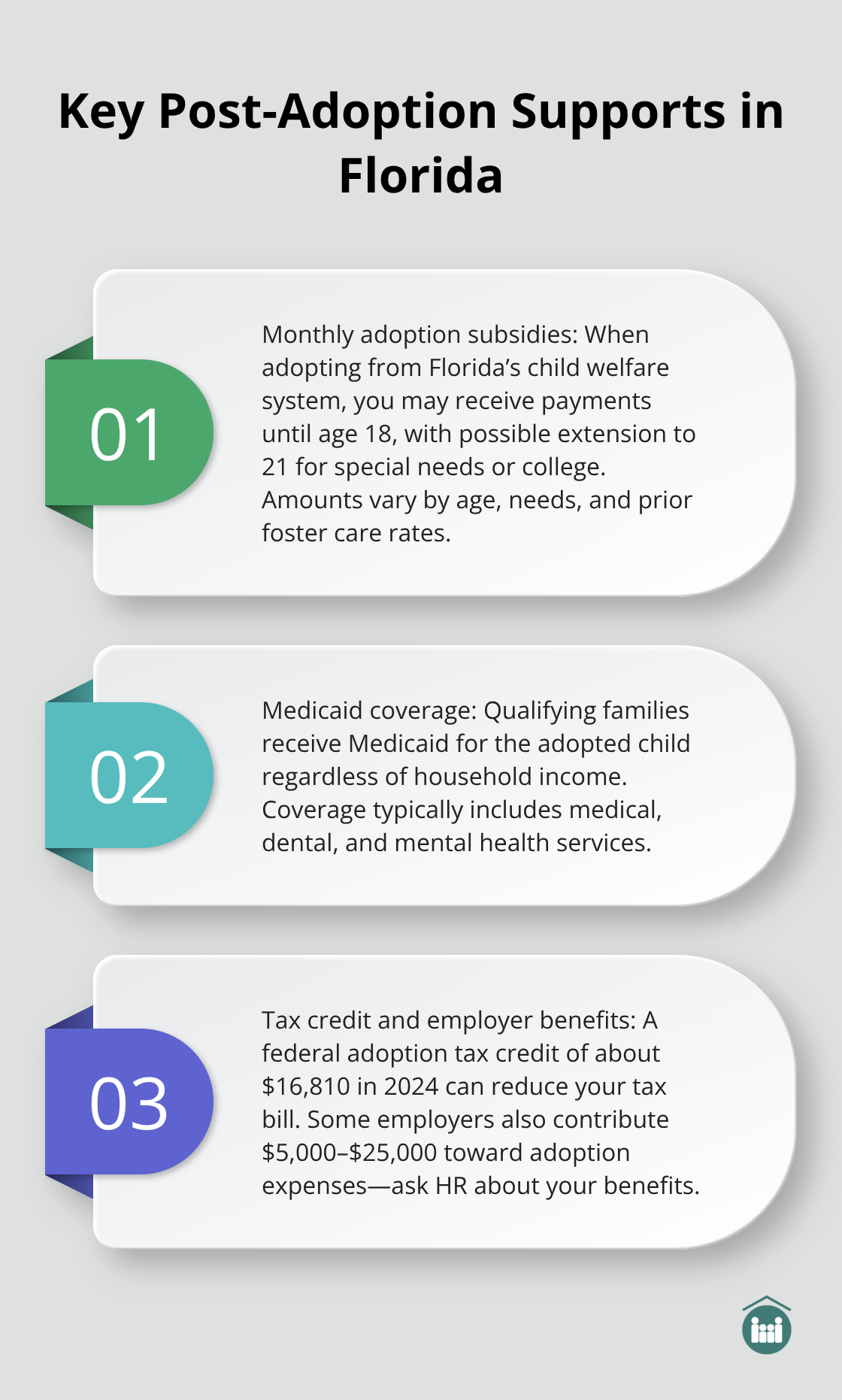
You must apply for subsidies before finalization, and the adoption entity handles coordination with the Florida Department of Children and Families. Beyond monthly payments, qualifying families receive Medicaid coverage for the adopted child regardless of your household income, which covers medical, dental, and mental health services. Additionally, you can claim a federal adoption tax credit of roughly $16,810 in 2024 according to the IRS, which reduces your federal tax liability directly. Some employers offer adoption benefits ranging from $5,000 to $25,000 toward adoption expenses, so review your employee handbook or ask your human resources department about this option. State veterans benefits may also apply if you served in the military. These financial resources compound significantly when you combine them, and many families overlook the subsidy or tax credit option because they assume they don’t qualify.
Counseling and Support Groups for Adoptive Families
Counseling and support groups matter far more than most adoptive families realize, particularly during the first two years after placement when adjustment challenges surface. Post-adoption support prevents crises and strengthens family bonds. Florida provides post-adoption support services at no cost until your child turns 18, including counseling for the child, parents, and siblings to address identity questions, attachment issues, or behavioral concerns. Licensed adoption counselors understand trauma-informed care and can help your child process their adoption story in age-appropriate ways.
Support groups connect you with other adoptive families facing similar challenges, reducing isolation and providing real strategies for common situations like managing medical appointments or explaining adoption to extended family. The Florida Adoption Information Center can connect you with local support services by calling 1-800-96-ADOPT. These resources help your family navigate the emotional and practical aspects of adoption throughout your child’s development.
Updated Birth Certificates and Legal Documentation
After finalization, you receive an updated birth certificate listing you and your spouse as parents, with the child’s new legal name if you changed it. The original birth certificate is sealed and stored confidentially by the state, accessible only through court order or the Florida Adoption Reunion Registry once your child reaches 18. You should request certified copies of the new birth certificate immediately after finalization because schools, medical providers, and other institutions require official documentation. Store originals in a safe place and obtain multiple certified copies for future use with colleges, employers, and other organizations.
Final Thoughts
Florida adoptive family rights protect your interests from the moment you file your petition through finalization and beyond. You gain full parental authority, inheritance protections, and access to medical information that shapes your child’s future. Understanding these rights prevents costly mistakes and positions your family for long-term stability.
An adoption lawyer protects your interests throughout the entire journey by ensuring all required parties receive proper notice, verifying that consents are valid and irrevocable, and confirming that the adoption entity meets its disclosure obligations. Florida law is specific and unforgiving of procedural errors, making professional legal support essential rather than optional. This guidance prevents invalidated judgments, missed subsidy opportunities, and post-adoption complications that cost far more to resolve than preventive representation.
We at Juliana Gaita, P.A. help clients throughout Florida with adoption cases, guiding families through every phase from initial planning through finalization and beyond. Whether you’re exploring stepchild adoption, pursuing a match with a birth mother, or considering adult adoption, having proper legal guidance sets the foundation for success. Contact our Boca Raton adoption law office to begin your conversation about building your family through adoption.