
Stepparent adoption in Florida gives your blended family legal recognition and protection. When you marry someone with children, becoming their legal parent involves specific steps and requirements that vary by situation.
At Juliana Gaita, P.A., we guide families through this process every day. This roadmap walks you through what you need to know about stepparent adoption steps in Florida, from initial requirements to finalizing your family structure.
What You Need to Know Before Filing for Stepparent Adoption
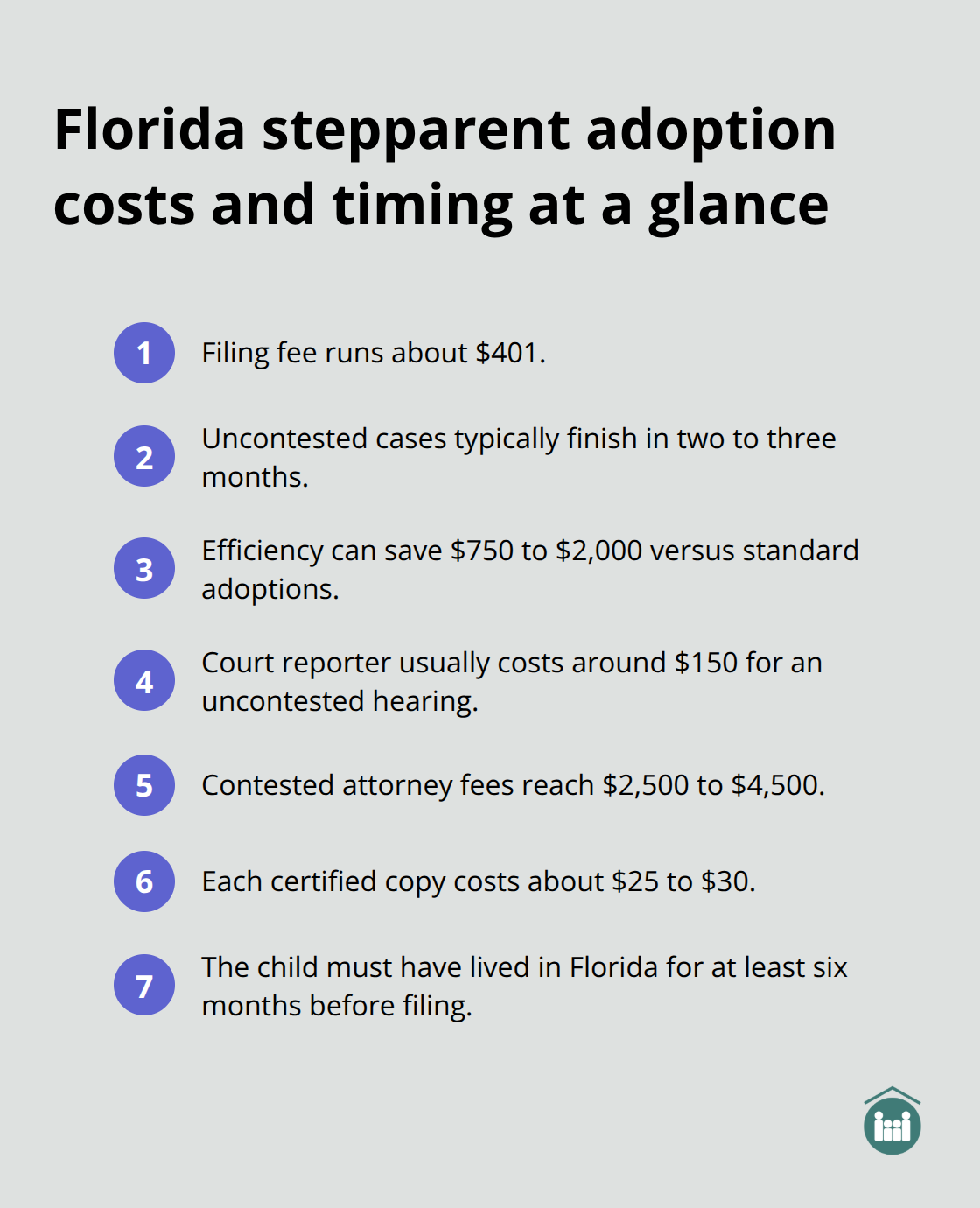
Florida law strips away unnecessary obstacles that slow down stepparent adoptions in other states. You don’t need a home study, background check, or waiting period to move forward, which means uncontested cases typically wrap up in two to three months. The state recognizes that when you’re already living with your stepchild and married to their biological parent, extensive investigations waste time and money. This efficiency saves families between $750 and $2,000 compared to standard adoptions. Your child must have lived in Florida for at least six months before you file, but you as the stepparent don’t need to be a resident-this matters if you’re relocating to Florida specifically for the adoption.
Getting Consent and Handling the Other Parent
Consent from the absent biological parent serves as the linchpin of stepparent adoption. Their signature on a notarized Consent and Waiver of Notice form ends the process quickly, but obtaining it requires strategy. If the biological parent has abandoned your child-defined by Florida courts as failing to provide financial support, communicate, or visit for a sustained period-you can proceed without their consent. Courts examine specific factors: no support payments, zero contact, and extended absence. If the parent has been incarcerated for more than two years during your child’s minority, Florida law presumes abandonment. If paternity was never legally established or the father never registered with the Putative Father Registry, consent may not be required at all. Locating the absent parent falls on you, and this step often determines whether your case stays simple or becomes contested.
Filing the Paperwork and Moving to Court
The filing fee in Florida runs about $401, and you’ll submit the Joint Petition for Adoption by Stepparent using Florida Supreme Court Form 12.981(b)(1) to the circuit court in the county where you live. Your petition must include the UCCJEA Affidavit, Indian Child Welfare Act Affidavit, and a diligent search affidavit proving you made reasonable efforts to locate the other parent. If your child is 12 or older, they must consent to the adoption unless a court waives this requirement. The final hearing happens before a judge, and a court reporter typically charges around $150 for an uncontested hearing. Uncontested cases move straight to judgment, while contested cases require a separate hearing to terminate the other parent’s rights-that’s when costs climb to $2,500 to $4,500 in attorney fees and timelines stretch to six months or longer. After the Final Judgment enters, obtain at least five certified copies for updating the child’s birth certificate, school records, and Social Security information; each copy costs about $25 to $30.
What Comes Next in Your Adoption Journey
The paperwork and court process form only part of your stepparent adoption. Once you understand these foundational steps, you’ll need to navigate the role your spouse and the other biological parent play throughout the proceedings. The decisions you make now about consent, termination of rights, and financial obligations shape how smoothly your adoption moves forward and what happens after the judge signs the Final Judgment.
The Role of the Biological Parent in Stepparent Adoption
Your Spouse’s Essential Role
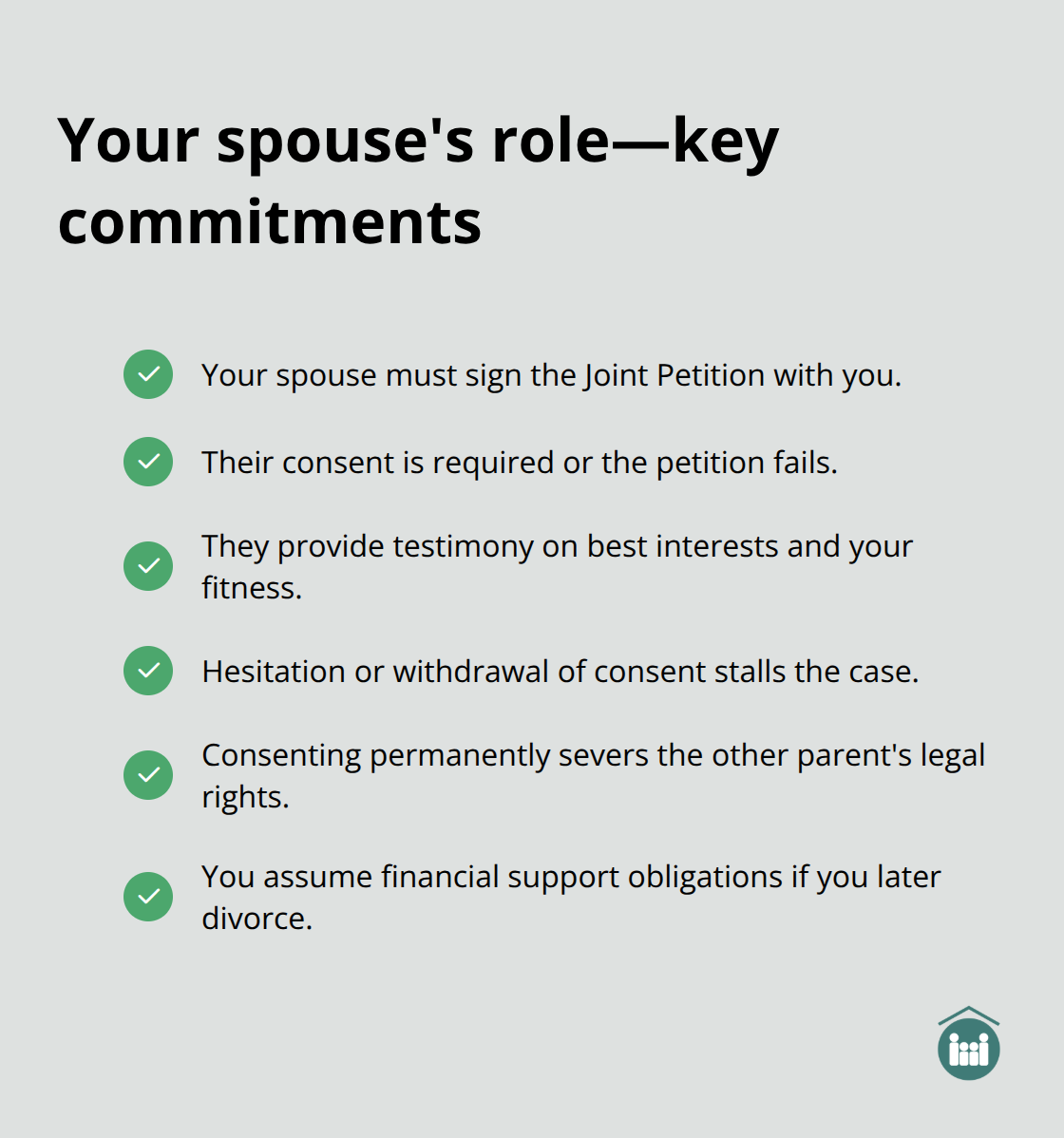
Your spouse’s role in stepparent adoption is straightforward but non-negotiable. The biological parent married to you must sign the Joint Petition alongside you, confirming their support for the adoption. Florida courts require this spousal consent because the adoption affects custody, inheritance rights, and financial obligations that flow directly from your marriage. Without it, the petition fails.
Beyond the signature, your spouse provides critical testimony at the final hearing about the child’s best interests and your fitness as a parent. Courts listen carefully to this testimony because the biological parent knows your household, your relationship with the child, and whether the adoption strengthens or destabilizes the family unit. If your spouse hesitates or withdraws consent mid-process, the entire adoption stalls.
This makes honest conversations before filing essential.
Your spouse should understand that consenting means permanently severing the other parent’s legal rights and transferring those rights to you, including the obligation to provide financial support if you later divorce.
The Absent Parent’s Consent or Termination
The absent parent’s role determines whether your case remains simple or escalates into a contested battle. Their consent, if obtained and properly notarized, ends their parental rights cleanly and quickly. Courts accept this consent as proof that termination serves the child’s best interest because the parent themselves agrees.
However, if consent is unavailable or the parent refuses, Florida courts will terminate their rights anyway if abandonment is proven by clear and convincing evidence. Courts examine whether the parent paid child support consistently, maintained contact with the child, or visited regularly. Incarceration exceeding two years during the child’s minority creates a legal presumption of abandonment under Florida Statute § 63.089(4). If the parent was never married to the biological parent and never registered with the Putative Father Registry, their consent may not be required at all.
Financial Obligations After Termination
Once parental rights terminate (either through consent or court order), the financial obligations shift entirely to you. Any past-due child support arrears owed before the adoption remain the responsibility of the biological parent, but ongoing support obligations end immediately upon finalization. If you and your spouse later divorce, you become liable for child support as the legal parent, which is a permanent consequence of the adoption judgment.
This financial reality shapes decisions you make now about whether to pursue consent or termination. Understanding these obligations helps you and your spouse prepare for the long-term commitment that stepparent adoption creates. The next section addresses the practical challenges that arise when biological parents resist the adoption or when custody and visitation disputes complicate the process.
Common Challenges and How to Navigate Them
When Biological Parents Refuse Consent
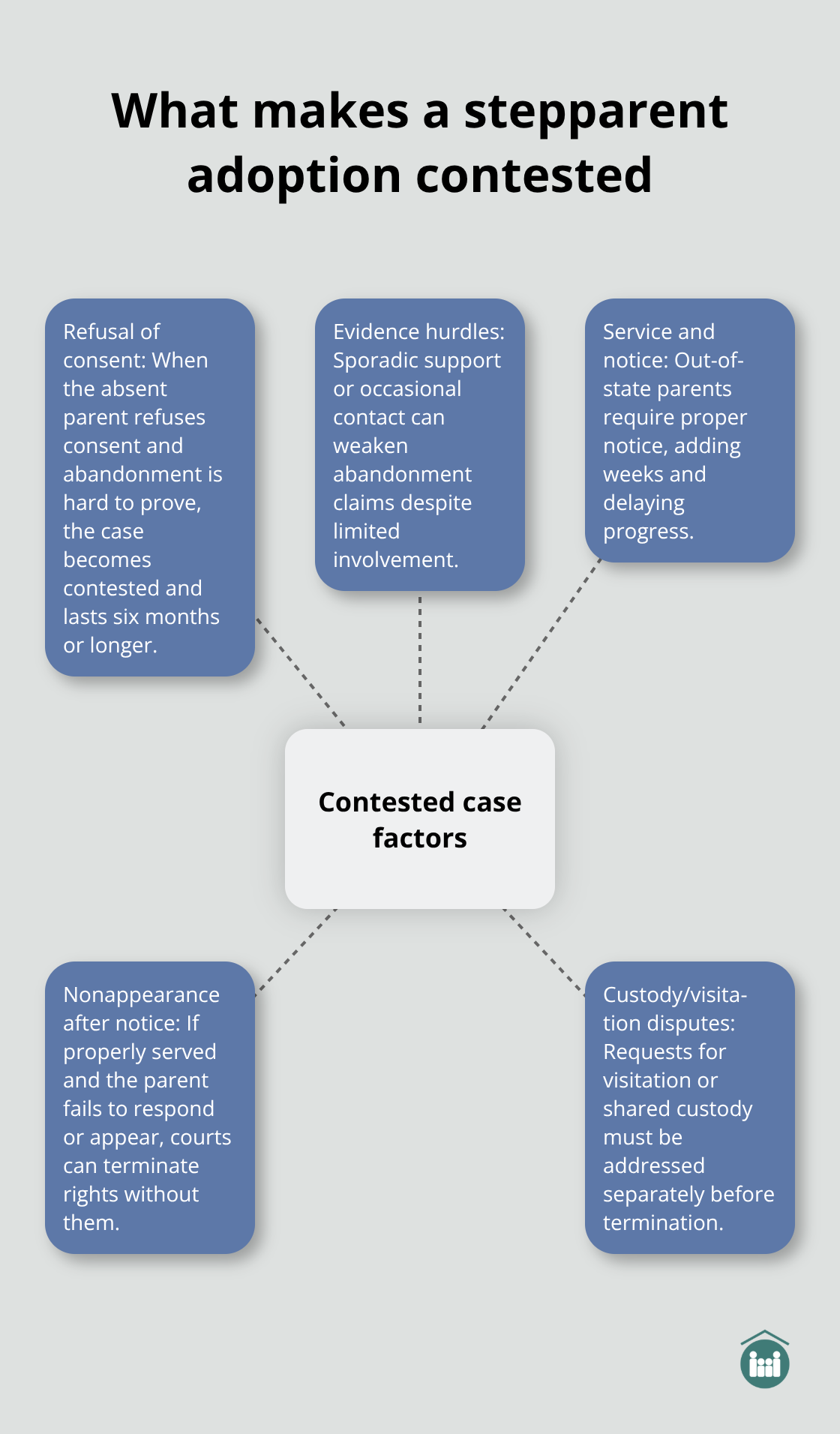
Reluctant biological parents create the costliest and longest stepparent adoptions in Florida. When the absent parent refuses consent and abandonment is difficult to prove, your case moves from uncontested to contested, transforming timelines from two to three months into six months or longer. Attorney fees jump from $2,500–$4,500 to substantially higher amounts because you must now prove termination of parental rights by clear and convincing evidence in a separate hearing.
This isn’t a theoretical problem: contested cases require locating the absent parent, serving them with legal notice, and then defending your position in court testimony. Florida Statute § 63.089 sets the standard, and courts demand specific evidence. The biological parent’s lack of financial support matters, but sporadic child support payments weaken your abandonment argument. Courts examine whether the parent visited, called, or maintained any contact with the child.
A parent who texts occasionally or sends birthday money can defeat an abandonment claim, even if they provide minimal support.
If the absent parent lives in another state, serving them requires proper notice procedures, adding weeks to your timeline. You must file an affidavit of diligent search proving you made reasonable efforts to locate them before proceeding. This step alone often determines whether you move forward quickly or stall waiting for service completion.
Understanding Resistance Motivations
Some biological parents resist not out of genuine desire to remain involved but out of anger toward your spouse or unwillingness to lose control. These parents may refuse consent while simultaneously refusing to appear at hearings, which actually works in your favor under Florida law. If proper notice is served and the parent fails to respond or appear within the required timeframe, courts can terminate their rights without their presence.
However, relying on this requires flawless legal procedure and documentation. The procedural complexities that trip up families attempting self-representation are substantial. Working with a lawyer experienced in stepparent adoption matters protects you from costly mistakes that delay finalization.
Custody and Visitation Disputes
Custody and visitation disputes compound resistance further. If the biological parent claims they want ongoing visitation or shared custody, the court must address this separately from the adoption. Florida courts cannot simply ignore a parent’s request for visitation rights during termination proceedings. The court must determine whether continuing the parental relationship harms the child before terminating rights.
This determination requires testimony about the child’s relationship with the biological parent, the stability of your household, and whether the adoption truly serves the child’s best interests. Courts take this analysis seriously and will not rubber-stamp terminations without evidence supporting the child’s welfare.
Complexity in Blended Family Situations
Blended family situations with multiple children, prior custody agreements, or complicated marital histories add layers of complexity. If you have a custody order already in place, the adoption modifies that order. If the biological parent has visitation rights documented in a previous divorce decree, those rights must be formally terminated before the adoption finalizes.
These overlapping legal obligations require careful coordination. Each prior agreement must be addressed within the adoption petition, and courts must rule on all affected rights simultaneously. The more agreements and parties involved, the more time and resources the process demands.
Final Thoughts
The stepparent adoption steps in Florida move quickly when all parties cooperate, but resistance from the absent biological parent transforms a straightforward adoption into a prolonged legal battle lasting six months or longer. Your preparation now determines whether you spend two to three months or significantly more time in court proceedings. Once the Final Judgment enters, your role as the child’s legal parent becomes permanent and carries the same rights and responsibilities as a biological parent, including financial obligations that persist even if you later divorce.
After finalization, you must obtain certified copies of the Final Judgment and use them to update the child’s birth certificate, school records, and Social Security information-administrative work that takes weeks but establishes the child’s legal identity under your family name. The adoption also affects your household’s financial planning, insurance coverage, and healthcare decisions, as the child now has full inheritance rights and access to your family’s legal protections. These benefits solidify the family bond and provide security that guardianship or informal arrangements cannot offer.
We at Juliana Gaita, P.A. help families throughout Florida navigate stepparent adoption cases and understand the emotional and legal complexities of blended families. Contact us to discuss your stepparent adoption or ask questions about the process tailored to your family’s situation.