Foster to adoption in Florida offers a meaningful path to parenthood while providing stable, loving homes for children in need. Every year, thousands of children in Florida’s foster care system wait for permanent families, and many of these placements successfully transition to adoption.
At Juliana Gaita, P.A., we guide families through this rewarding journey, helping you understand the process, navigate legal requirements, and overcome common challenges along the way.
Understanding Foster Care in Florida
Florida’s foster care system operates under the Department of Children and Families, which oversees about 19,000 children currently in state care. When a child enters foster care, DCF places them with licensed foster families who provide temporary housing, care, and support while the state works toward reunification, adoption, or other permanent outcomes. Foster parents complete training through programs like MAPP or PRIDE, which teach trauma-informed parenting and prepare caregivers for the emotional and behavioral challenges children bring from previous experiences. The licensing process requires background checks, home inspections, and reference verification, but when you work with a community-based care agency, there is no cost to foster or adopt in Florida. This removes a major financial barrier that keeps many families from considering foster care in the first place.
Monthly Support Covers Essential Care Costs
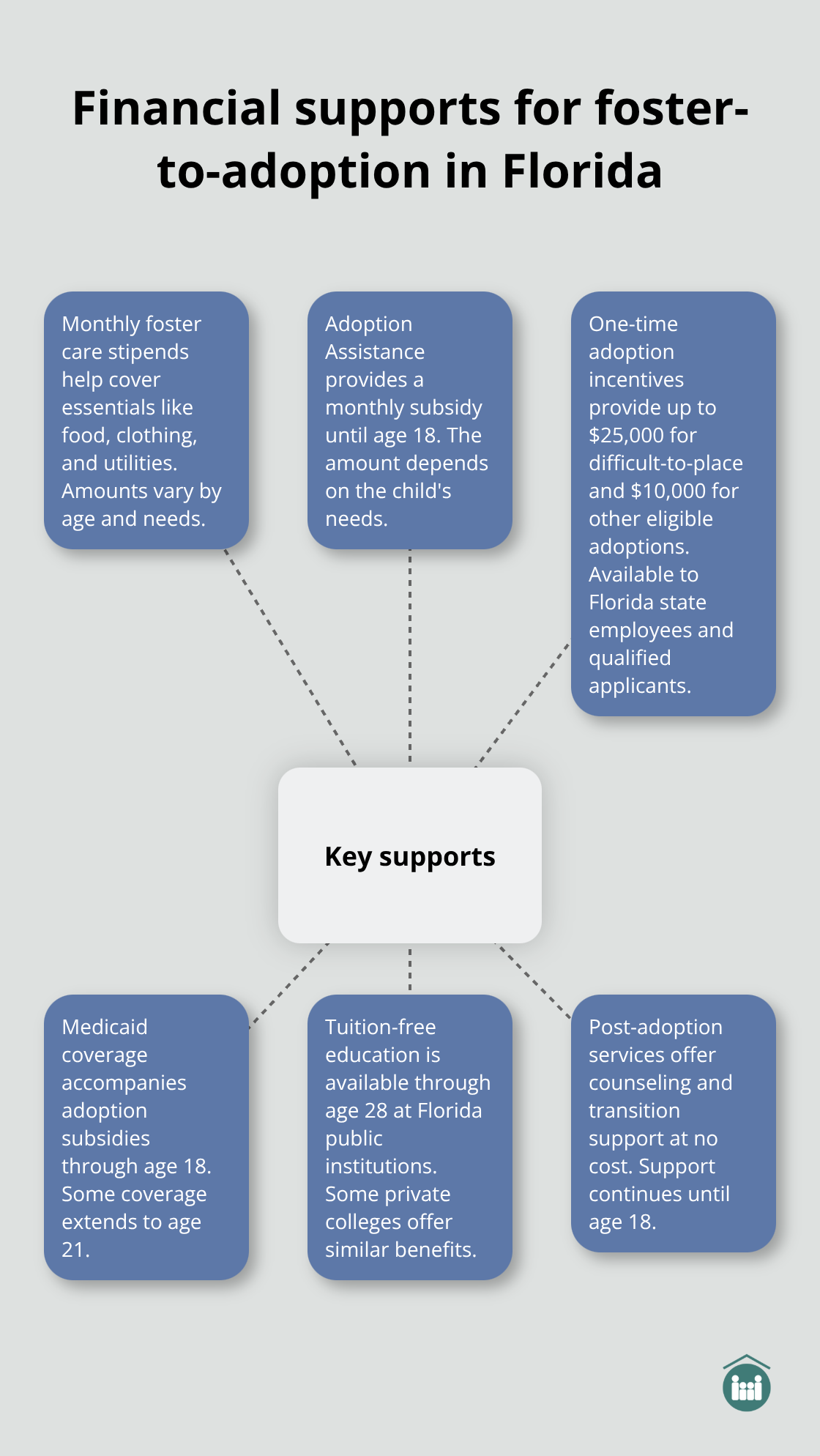
Foster parents receive monthly stipends to cover basic care costs like food, clothing, and utilities. These payments help you meet the child’s immediate needs without straining your household budget. The amount varies based on the child’s age and specific requirements, ensuring that financial constraints don’t prevent families from opening their homes.
Adoption Assistance Extends Financial Help Beyond Placement
When you transition from fostering to adoption, the financial picture improves significantly. Families who adopt a child from Florida’s foster system receive a monthly subsidy through the Adoption Assistance Program until the child turns 18, with the exact amount depending on the child’s needs. Children adopted at age 16 or older who spent time in licensed foster care qualify for a monthly stipend to support higher education. Florida state employees and qualified applicants access a one-time payment of up to $25,000 for difficult-to-place children or $10,000 for non-difficult-to-place children when adopting through the state child welfare system. All children receiving a monthly subsidy become eligible for Medicaid health coverage through age 18, and some coverage extends to age 21.
Education Benefits Create Long-Term Stability
Adoptees from foster care receive tuition-free study at Florida state universities, community colleges, and vocational schools through age 28, with some private colleges offering the same benefit. This educational support removes barriers to higher learning and helps your child build a stable future. Post-adoption support services remain available at no cost to your family until the child turns 18, including counseling and help with trauma and school transitions.
Timeline and Next Steps Shape Your Journey
The typical timeline from starting the foster care process to finalizing an adoption runs six to eight months, though this varies based on individual circumstances. After approval, DCF matches families with a child and arranges placement, followed by a 90-day supervision period before legal finalization. The Adoption Information Center can connect you with your local community-based care agency at 1-800-96-ADOPT or 904-353-0679, or you can email [email protected]. Understanding these financial supports and timelines helps you prepare for the initial steps required to become a foster parent and begin your path toward adoption.
Starting Your Foster-to-Adoption Journey
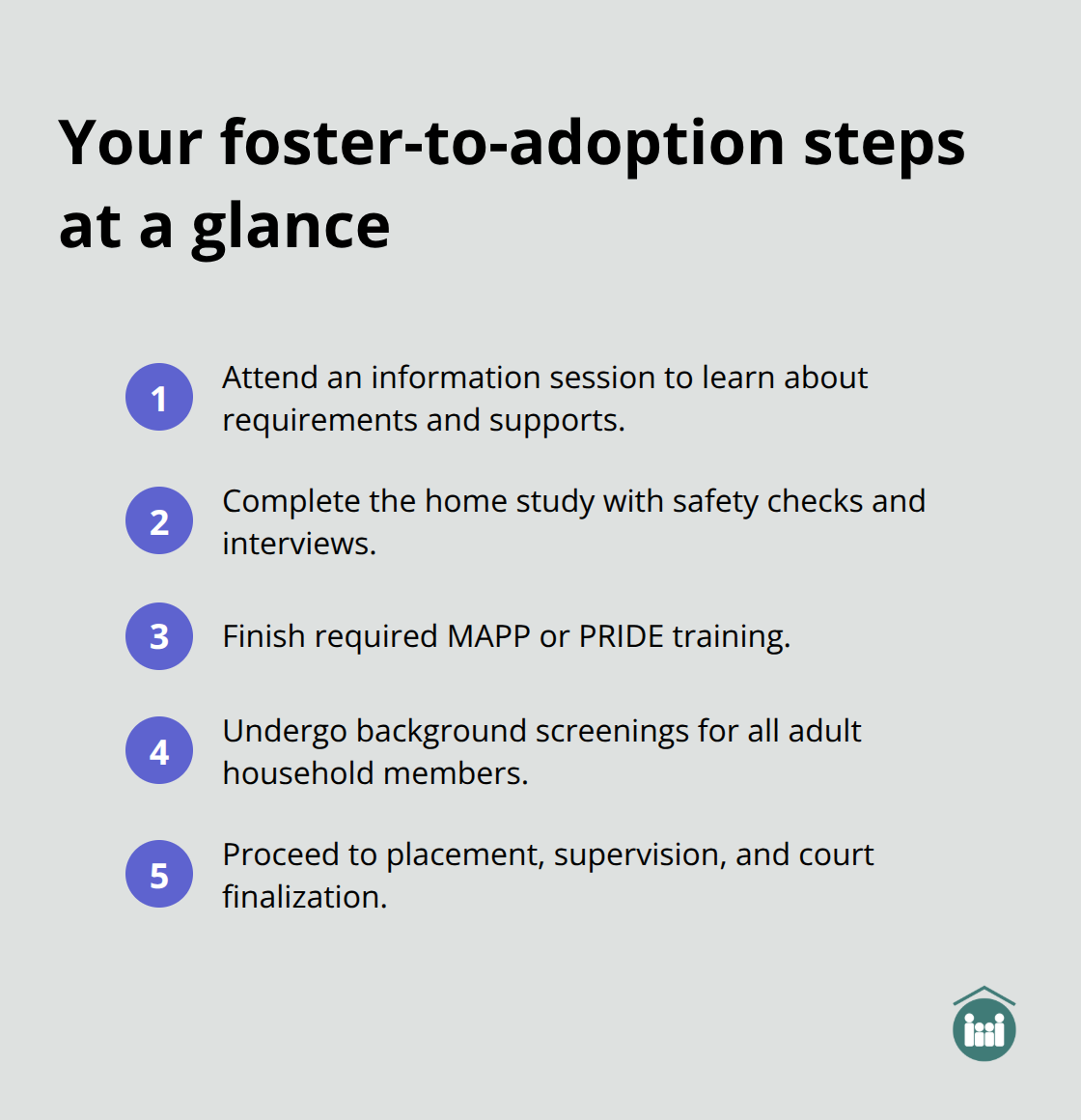
Becoming a foster parent in Florida requires completing specific steps before you welcome a child into your home. Contact your local community-based care agency through the Adoption Information Center at 1-800-96-ADOPT or 904-353-0679 to begin. You’ll attend an information session that covers what fostering involves, training requirements, and available financial supports. Next comes the home study, a comprehensive process that typically takes weeks to months and includes safety inspections, personal interviews, reference checks, financial verification, and medical statements from your household.
Background Checks and Training Prepare You for Success
Florida requires background screenings for all adults in your home, including Level 2 checks through the FDLE and FBI, state child abuse and neglect registry checks for the past five years, and sexual predator and offender registry checks. You’ll complete trauma-informed training through MAPP or PRIDE, which teaches you how to respond to behavioral challenges and attachment issues common in children from foster care. The licensing process is thorough because it protects children, but when you work with a community-based care agency, there’s no cost to foster or adopt in Florida.
Placement Begins Your Relationship With the Child
After approval, DCF matches you with a child and arranges placement, giving you the chance to build a relationship before any adoption decision takes place. You’ll spend several months fostering the child and establishing a stable, nurturing relationship during this critical period.
The Legal Path to Adoption Unfolds in Stages
The transition to adoption happens when you and the child’s caseworker determine that adoption serves the child’s best interest. Once you decide to pursue adoption, you’ll work with an adoption attorney to navigate the legal requirements specific to your situation. Florida law allows married couples to adopt jointly, unmarried adults to adopt individually, single parents, same-sex couples, and stepparents, with no maximum age and no strict residency requirement, making the process accessible to diverse families.
The legal finalization process involves filing adoption petitions, obtaining necessary consents or terminations of parental rights, and attending a final court hearing, which typically takes several months after placement. A 90-day supervision period follows placement to confirm the match is stable before the judge signs the adoption decree. The entire foster-to-adoption timeline from initial approval to finalization usually spans six to eight months, though complex cases may take longer.
Legal Guidance Protects Your Family’s Interests
Navigating adoption law requires understanding your rights and options at each stage. An experienced adoption lawyer in Boca Raton can guide you through the legal requirements, help you prepare documentation, and represent your interests during court proceedings. The trusted legal team at Juliana Gaita, P.A. helps clients throughout Florida with adoption cases, ensuring you understand each step and protecting your family’s interests as you move forward.
What Makes Foster-to-Adoption Difficult and Rewarding
Foster-to-adoption presents real challenges that families must navigate with clear understanding. Children entering foster care have experienced loss, instability, and often trauma that shapes their behavior and emotional responses. The National Survey of Adoptive Parents found that about 9 in 10 adoptive couples report their relationship with their adopted child is very close, but reaching that closeness requires patience and professional support.
Behavioral Challenges Test Your Commitment
Behavioral issues surface during the first months after placement. A child may test boundaries, struggle with trust, or show regression in skills they previously mastered. The Bisby family completed more than 40 hours of specialized training to prepare for these responses, and this preparation made a measurable difference when difficult moments arose. Therapy during the first year after placement accelerates attachment and improves outcomes significantly. In-home support from adoption professionals during this critical period reduces placement disruptions and helps your family navigate the adjustment.
Legal Complexity Requires Professional Guidance
The legal finalization process adds another layer of complexity, requiring coordination with DCF caseworkers, court appearances, and documentation that must be precise and complete. An adoption attorney throughout this stage protects your family’s interests and prevents costly delays. If you are considering adoption for your family, you should discuss your rights and options with an experienced adoption lawyer in Boca Raton. The trusted legal team at Juliana Gaita, P.A. helps clients throughout Florida with adoption cases, ensuring you understand each step as you move forward.
Permanency Transforms Children’s Lives
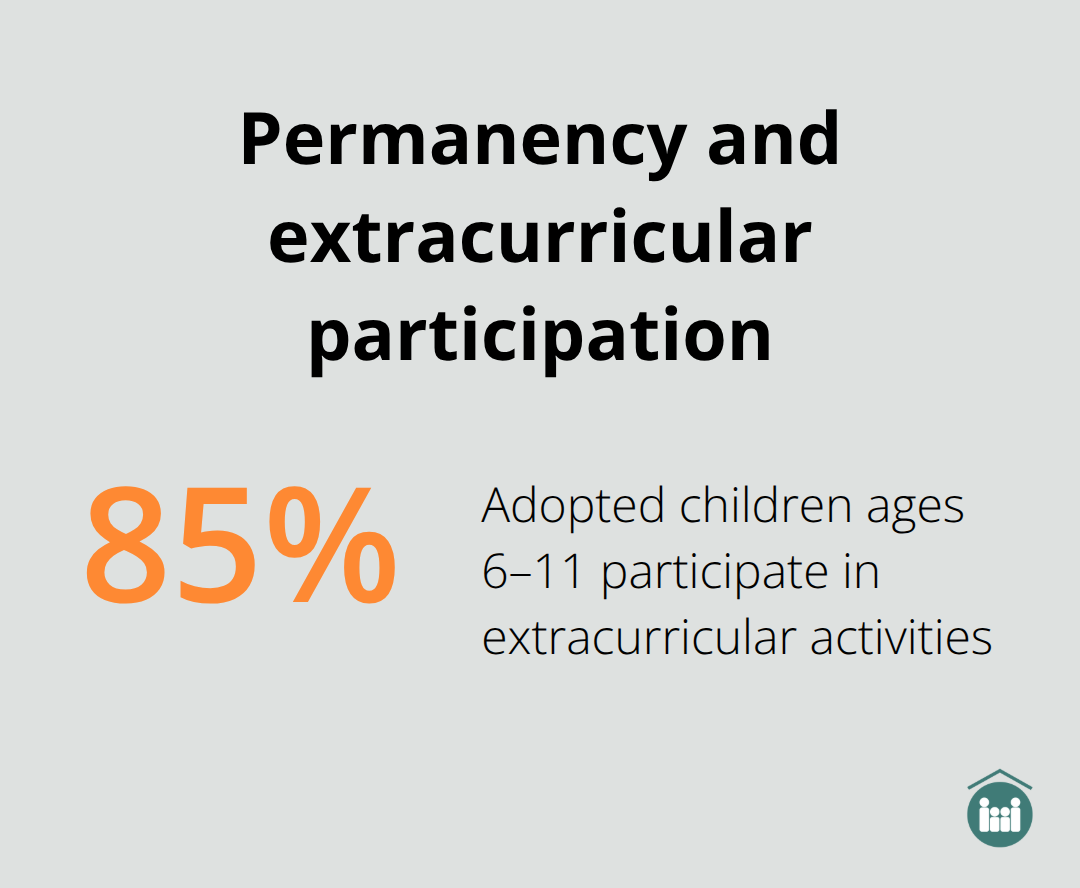
The rewards of foster-to-adoption far outweigh these obstacles for families who commit to the journey. About 85 percent of adopted children aged 6 to 11 participate in extracurricular activities, showing how permanency supports normal childhood experiences and allows children to thrive. The Lansing family adopted all four of their foster children, creating a stable forever family where siblings remained together during the transition. Permanency rewires brain development in children, reducing survival-mode focus and enabling learning and growth.
One documented case showed a child named Denise shift from struggling to thriving in 9th grade after permanency was secured.
Real Families Build Lasting Change
The Polanco family fostered 17 children over 1,445 days before adopting Caleb, Faith, and Grace, illustrating how perseverance on the foster-to-adoption path creates lasting change. Your commitment to showing up when it is hardest builds trust and reinforces permanency for a child who has experienced instability. Large adoption day events, like one in Austin with 47 adoptions in a single day, demonstrate the community impact of foster-to-adoption. When you finalize an adoption, you provide a child with educational benefits through age 28, monthly subsidies until age 18, and access to Medicaid coverage that supports their long-term health and stability.
Final Thoughts
Foster to adoption in Florida transforms lives for both children and families willing to commit to the journey. The financial supports available through the state-including monthly subsidies, Medicaid coverage, and tuition-free education through age 28-remove barriers that once prevented families from considering this path. Real families like the Lansing family, who adopted all four of their foster children, and the Polanco family, who fostered 17 children before adopting three, demonstrate that permanency works when families receive proper preparation and support.
The challenges are real, and children from foster care bring behavioral and emotional needs that require patience, professional training, and sometimes therapy. About 85 percent of adopted children aged 6 to 11 participate in extracurricular activities, showing how permanency enables normal childhood experiences and allows children to thrive. Your commitment to showing up during difficult moments builds trust and rewires brain development in children who have experienced instability.
We at Juliana Gaita, P.A. understand that foster to adoption in Florida involves legal complexity at every stage, from the initial home study through the final court hearing. Contact our legal team to discuss your rights and options with an experienced adoption lawyer who helps clients throughout Florida with adoption cases. Your journey toward creating a forever family starts with a single conversation-reach out to your local community-based care agency through the Adoption Information Center at 1-800-96-ADOPT to begin.