Adopting a child in Florida involves navigating legal requirements, financial planning, and emotional preparation. The adoption process in Florida varies significantly depending on whether you’re pursuing domestic infant adoption, foster care adoption, or stepparent adoption.
At Juliana Gaita, P.A., we guide families through each stage with clarity and support. This guide breaks down the steps, costs, and resources you need to move forward confidently.
Florida’s Four Main Adoption Paths
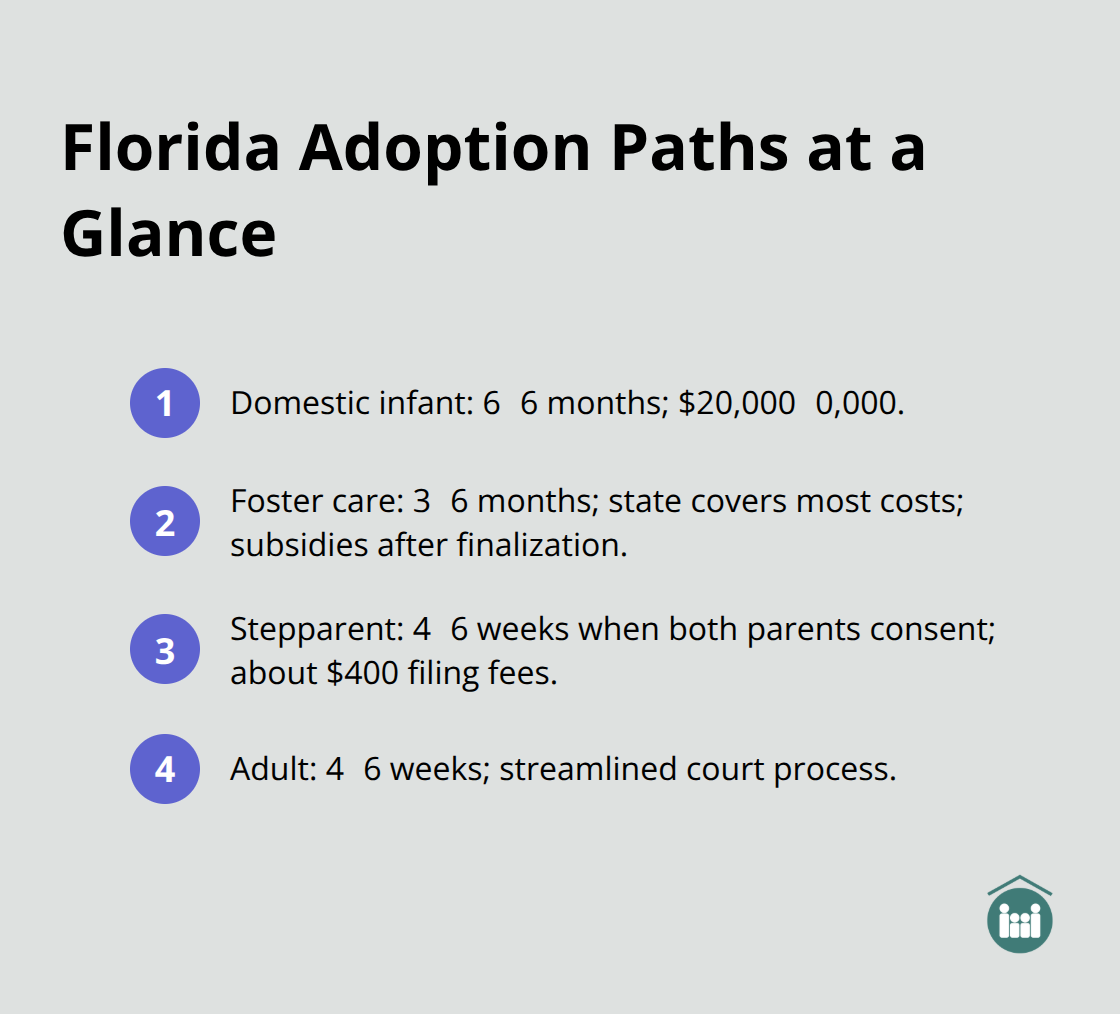
Florida offers four distinct adoption pathways, each with different timelines, costs, and legal requirements. Domestic infant adoption typically takes six to twelve months and costs between $20,000 and $40,000, though adoptive parents often receive living and medical expense reimbursements from the birth mother’s resources. Foster care adoption moves faster-usually three to six months-and costs significantly less because the state covers most expenses and provides ongoing subsidies after finalization. Stepparent adoption is the quickest option, often completing in four to six weeks when both biological parents consent, with court filing costs around $400. Adult adoption, used less frequently, also moves quickly at four to six weeks.
The choice between these paths depends on your family situation, budget, and timeline expectations.
Domestic Infant Adoption and Agency Placements
Domestic infant adoption requires you to work with a licensed agency or attorney who manages the entire process, from matching you with a birth mother to handling consents and post-placement supervision. You must complete a home study, background checks, and attend adoption education classes. The birth mother can sign consents 48 hours after birth, though she retains a three-business-day revocation period if the child is six months or older. Placement within the first twelve months of life produces the strongest outcomes, and adopted children tend to outperform non-adopted peers over time, according to the Florida Department of Children and Families. You will pay for the agency’s services, home study fees, legal costs, and often the birth mother’s living and medical expenses. Many families benefit from the federal adoption tax credit, which reached $16,810 for 2024 according to the IRS.
Foster Care Adoption Through Florida’s Public System
Foster care adoption costs far less than private options because the state absorbs most expenses and provides post-adoption support services at no cost until the child turns eighteen. You contact Florida’s Adoption Information Center at 1-800-96-ADOPT to connect with a local adoption specialist within seven business days. The matching process is collaborative-your specialist aligns your family’s strengths with the child’s needs-and visits begin gradually before the final move-in. This pathway offers substantial financial relief and ongoing support that private adoptions typically do not provide.
Stepparent and Adult Adoption Routes
Stepparent adoption requires consent from both biological parents unless the court excuses one for abuse or abandonment. If you are adopting your spouse’s child and the other biological parent cannot be located, you must conduct a diligent search to satisfy Florida’s requirements. All stepparent adoptions skip certain notice requirements, making them the fastest and most affordable option for blended families. Adult adoption follows similar timelines and costs, completing in four to six weeks with court filing costs around $400. These routes offer families a streamlined path when relationships and circumstances align. Understanding which adoption path fits your situation sets the stage for the legal requirements and documentation you’ll encounter next.
What Legal Steps and Timelines Apply to Your Florida Adoption
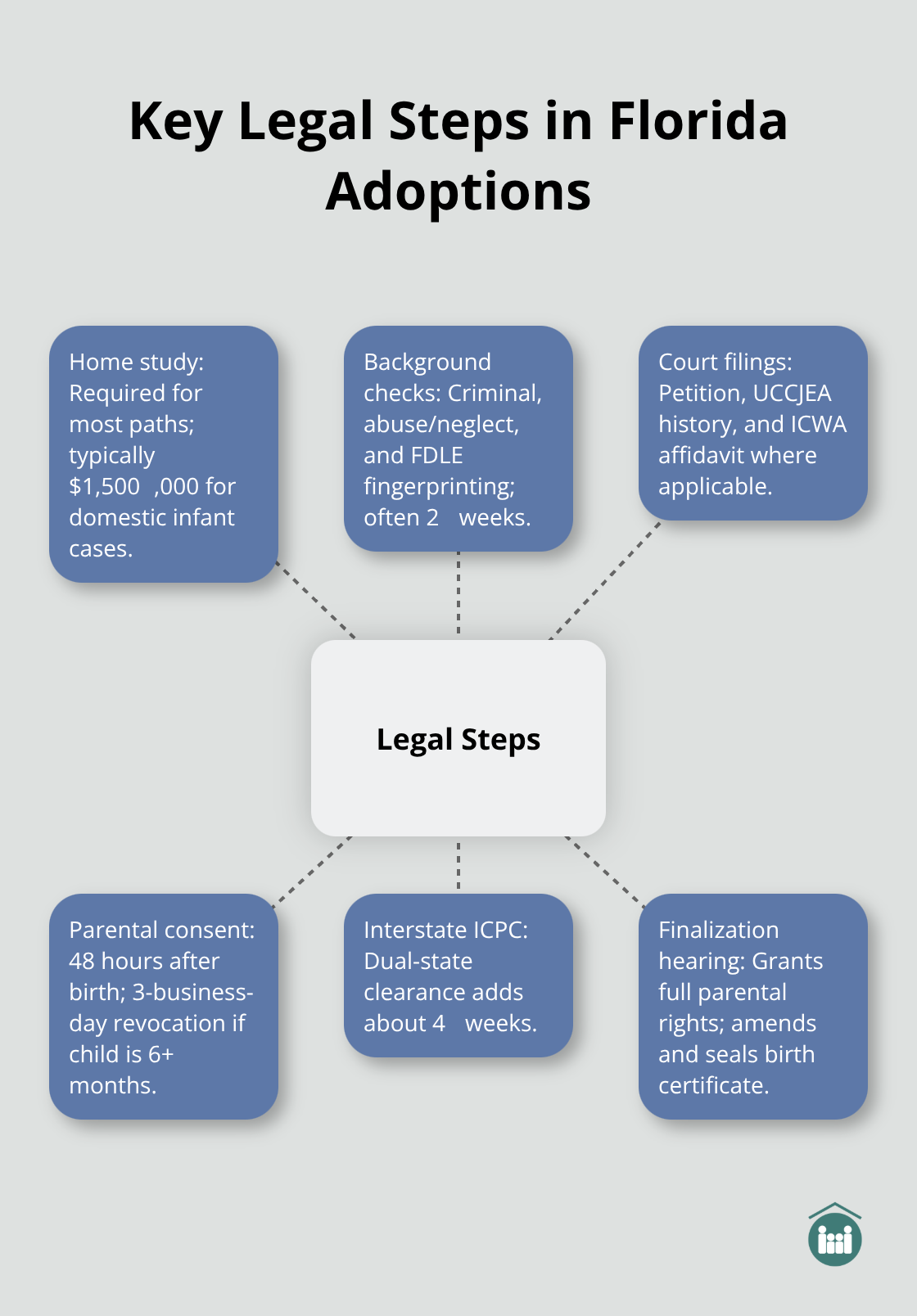
Every adoption path in Florida requires a home study, background checks, and court filings, but the sequence and intensity of these requirements shift dramatically based on your adoption type. For foster care adoptions, the home study happens early and is thorough because the state needs assurance before placing a child in your care. For domestic infant adoption, the home study occurs before matching with a birth mother and typically costs $1,500 to $3,000 according to licensed agencies statewide. Stepparent adoptions require a home study only in certain circumstances, making them significantly faster. The background check process includes criminal history screening, child abuse and neglect registry checks, and fingerprinting through the Florida Department of Law Enforcement. This step alone takes two to four weeks.
Filing Your Petition and Required Documents
Once clearances pass, you file your petition with the court, which includes the Standard Petition for Adoption, UCCJEA documentation showing the child’s residence history over the past five years, and an ICWA affidavit to confirm whether the child has Native American heritage. If Native American ancestry exists, the Indian Child Welfare Act imposes additional protections and notice requirements that extend your timeline by several weeks. Filing costs run approximately $400 for court fees in stepparent and relative adoptions, though domestic infant adoptions through agencies involve higher legal fees paid to the adoption entity handling your case.
Securing Parental Consent and Managing Termination
The finalization process begins after parental rights are terminated, which requires the birth parent’s consent or a court order excusing consent due to abandonment, abuse, or neglect. Florida law allows birth mothers to sign consent 48 hours after birth, but if the child is six months or older, a three-business-day revocation period applies, meaning finalization cannot occur until that window closes. Notifying birth parents takes three to four weeks on average, and if a parent cannot be located, you must complete a diligent search documented through court filings.
Handling Interstate and Multi-Jurisdiction Complications
Interstate placements add complexity because the Interstate Compact on the Placement of Children requires clearance from both the sending and receiving state before finalization can proceed, typically adding four to eight weeks. Once all consents are secured and any termination judgment is final, the court schedules a finalization hearing where the judge grants full parental rights to you. At this hearing, the child’s birth certificate is amended, the original is sealed, and the child gains all inheritance rights and legal status as your child.
Understanding Your Timeline Expectations
Straightforward minor adoptions typically finalize within three to six months from initial filing, though agency and multi-jurisdiction cases can extend to six to twelve months depending on complexity and judge availability. The specific timeline your adoption follows depends on whether you work with a licensed agency, pursue a stepparent route, or navigate interstate requirements. Each path presents distinct procedural demands that affect how quickly you move toward finalization. Understanding these legal steps prepares you for the financial realities that accompany adoption in Florida.
How Much Does Adoption Cost in Florida and What Financial Help Is Available
Adoption costs in Florida vary dramatically depending on your path. Foster care adoption costs virtually nothing because the state covers all expenses and provides post-adoption support services at no cost until your child turns eighteen. Domestic infant adoption through a licensed agency typically runs $20,000 to $40,000, with adoptive parents often covering the birth mother’s living and medical expenses. Stepparent adoption costs around $400 in court filing fees plus any service of process expenses, making it the most affordable option for blended families. Federal and state assistance programs offset much of the financial burden for families who qualify.
Understanding What You’ll Actually Pay
Domestic infant adoption expenses break down into several categories that add up quickly. Home study fees range from $1,500 to $3,000 through licensed agencies statewide. Agency service fees cover matching, counseling, and post-placement supervision and constitute the largest expense for most families. You may also pay for the birth mother’s medical expenses, living costs during pregnancy, and legal fees for the adoption entity handling your case. Court filing costs run around $400 for most adoptions. If you need service of process to locate or notify a biological parent, expect additional costs for a licensed private investigator to conduct a diligent search. Foster care adoption eliminates almost all these expenses because the state absorbs costs and provides subsidies after finalization. Stepparent adoption requires only the basic court filing fee unless you need to locate a biological parent or handle contested parental rights, which adds legal expenses.
Federal Tax Credits and State Reimbursements That Reduce Your Burden
The federal adoption tax credit provides substantial relief. According to the IRS, the credit reached $16,810 for 2024, meaning you can claim this amount against your federal income tax liability in the year of finalization. This credit applies to all adoption types, including domestic infant, foster care, and stepparent adoptions. Many employers offer adoption benefits or subsidies that complement the federal credit, so check your employee handbook or speak with your human resources department.
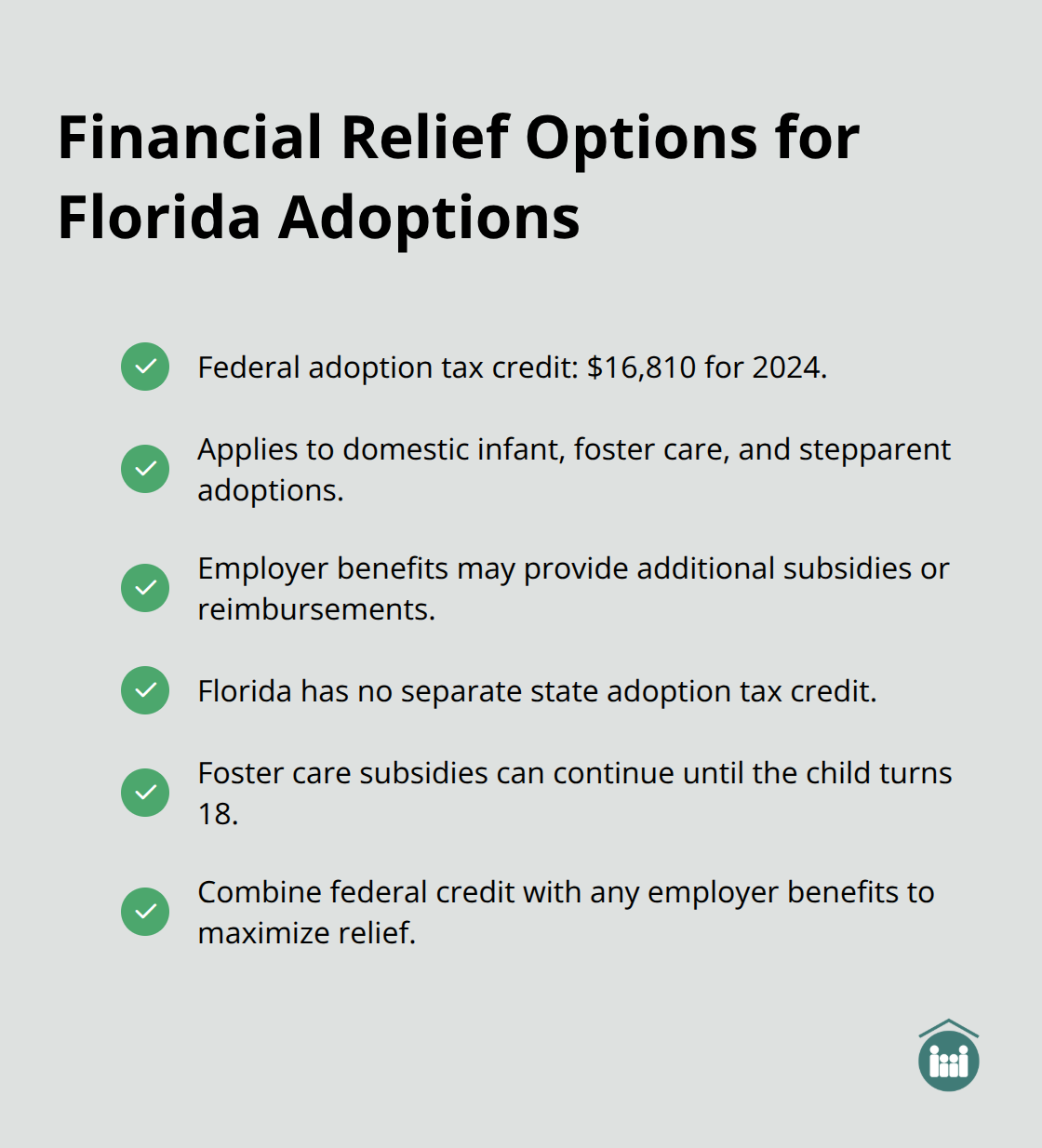
Florida does not offer a state-specific adoption tax credit, but the federal credit alone covers a significant portion of domestic infant adoption costs. If you adopted through foster care, the state provides ongoing adoption subsidies after finalization that help with the child’s living expenses. These subsidies continue until the child turns eighteen and represent a substantial financial advantage over private domestic infant adoption.
State Programs and Resources That Support Your Adoption
Florida’s public adoption program through the Department of Children and Families offers the most direct financial support. When you contact Florida’s Adoption Information Center at 1-800-96-ADOPT, you connect with a local adoption specialist within seven business days who guides you toward available state resources. Foster care adoption through this program covers home study costs, background checks, and all placement expenses. After finalization, the state continues to provide post-adoption support services at no cost, including counseling and family services that help with transitions and ongoing stability. Some families qualify for adoption subsidies that reimburse ongoing medical and educational expenses for the adopted child. These subsidies are negotiated based on the child’s needs and your family’s circumstances. Adoption through the state system also qualifies you for the federal tax credit, so you benefit from both state support and federal tax relief. Private domestic infant adoption does not include state subsidies, making the federal tax credit your primary financial relief mechanism.
Final Thoughts
The adoption process in Florida demands clarity about your path, realistic expectations about costs, and professional guidance at every stage. Foster care adoption offers the fastest timeline and lowest costs because the state covers expenses and provides ongoing support until your child turns eighteen, while domestic infant adoption takes longer and costs more but gives you involvement in matching and birth mother contact. Stepparent adoption moves quickly when both biological parents consent, making it ideal for blended families ready to formalize relationships.
Your next step depends on your situation. If you are considering foster care adoption, contact Florida’s Adoption Information Center at 1-800-96-ADOPT to connect with a local adoption specialist within seven business days. If you are pursuing domestic infant adoption, research licensed agencies in your area and request home study quotes. If you are a stepparent ready to adopt your spouse’s child, gather consent documentation from both biological parents or prepare for a diligent search if one parent is unavailable.
Legal guidance protects your family because adoption involves permanent changes to parental rights, inheritance status, and your child’s legal identity. Mistakes in documentation, missed consent deadlines, or improper notice to biological parents can delay finalization or create complications years later. We at Juliana Gaita, P.A. help families navigate adoption cases throughout Florida by discussing your rights and options from the beginning, and proper legal guidance ensures compliance with Florida law as you move toward building your forever family.