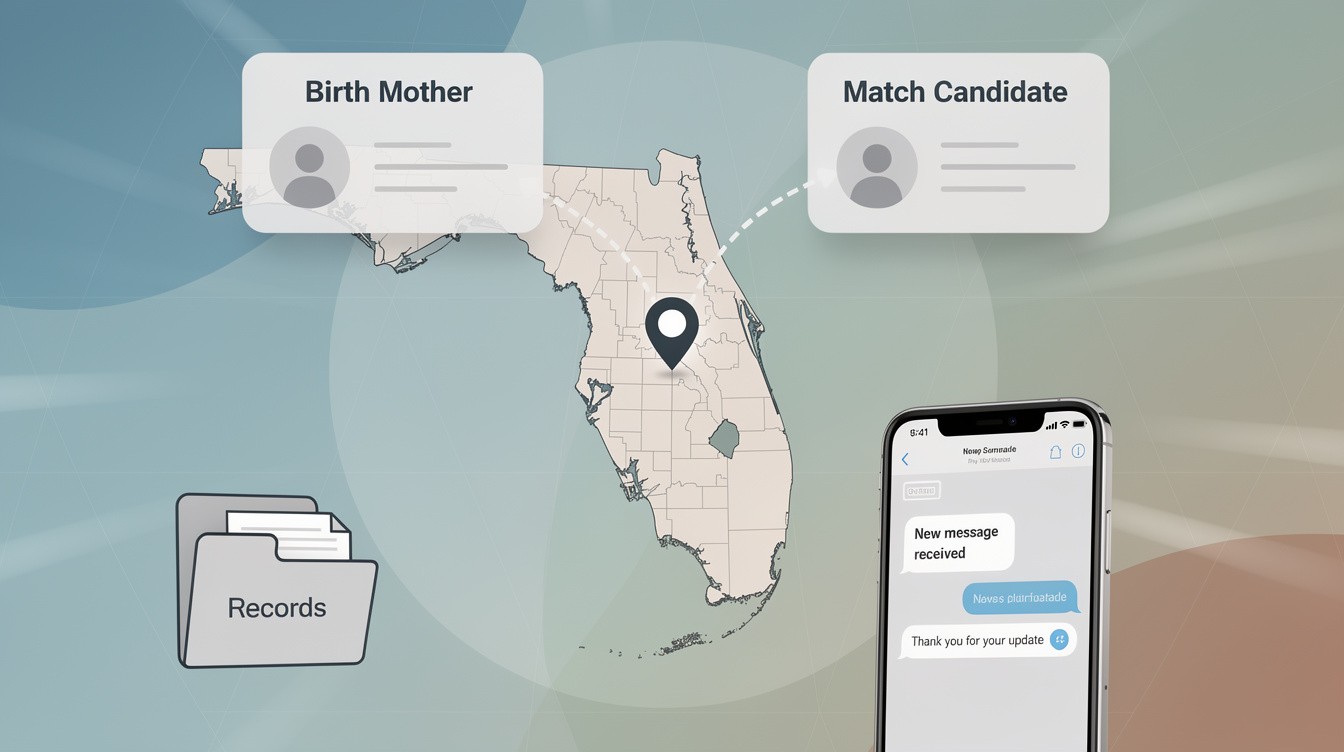
Finding the right birth mother Florida match requires understanding how the process works, what factors matter most, and how to navigate Florida’s legal requirements.
We at Juliana Gaita, P.A. help adoptive families move through this journey with clarity and confidence. This guide walks you through each stage, from initial matching through building a lasting connection.
How Birth Mother Matches Actually Work in Florida
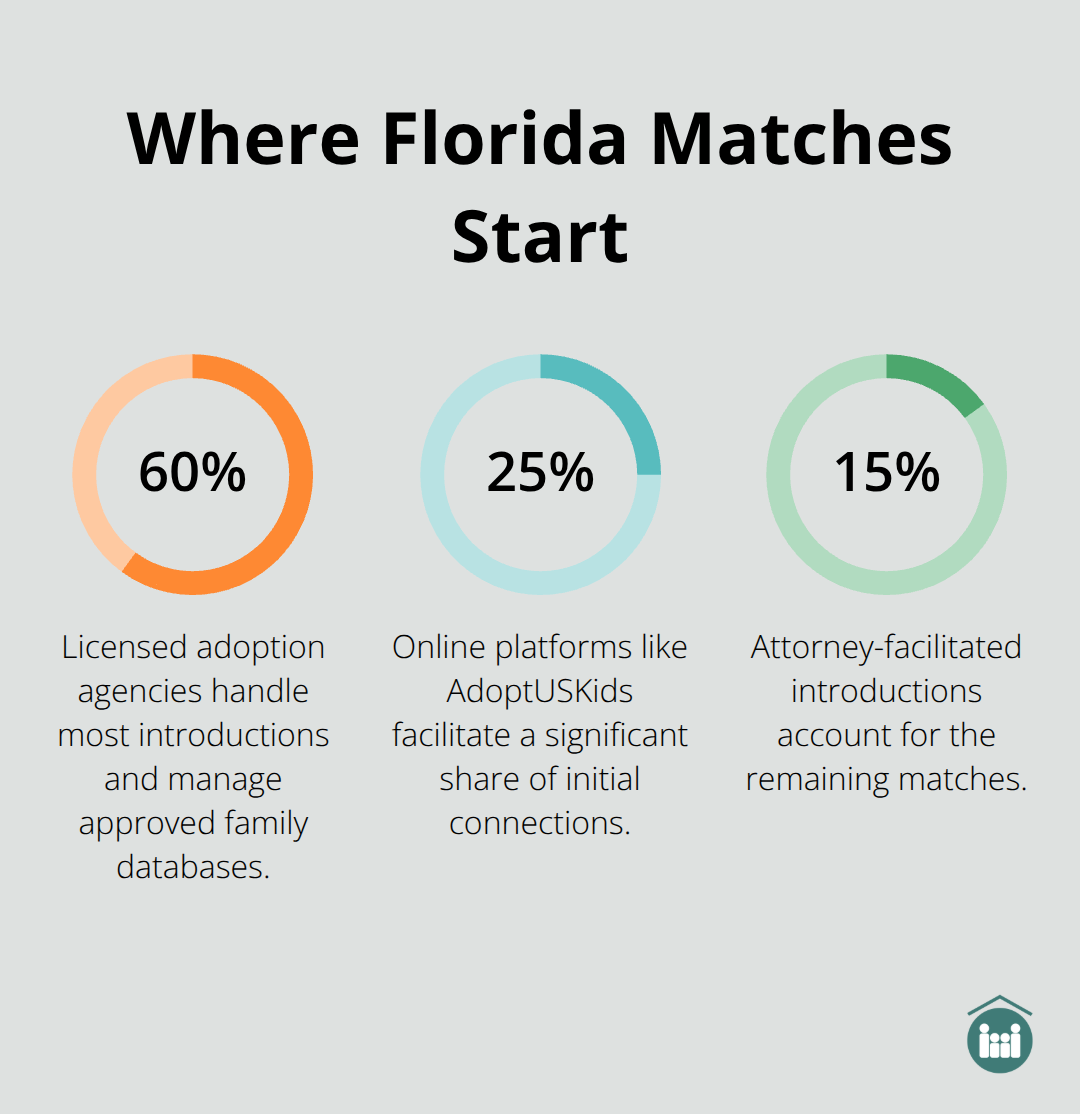
Florida’s matching process sits at the intersection of agency guidance, legal requirements, and personal preference. Approximately 60% of Florida adoptions happen through licensed agencies, which maintain databases of approved families and handle the introduction process. The remaining matches occur either through online platforms like AdoptUSKids (about 25%) or attorney-facilitated introductions (roughly 15%). This means your path to connection depends partly on which route you choose, and each has different timelines and involvement levels.
What Birth Mothers Actually Look For
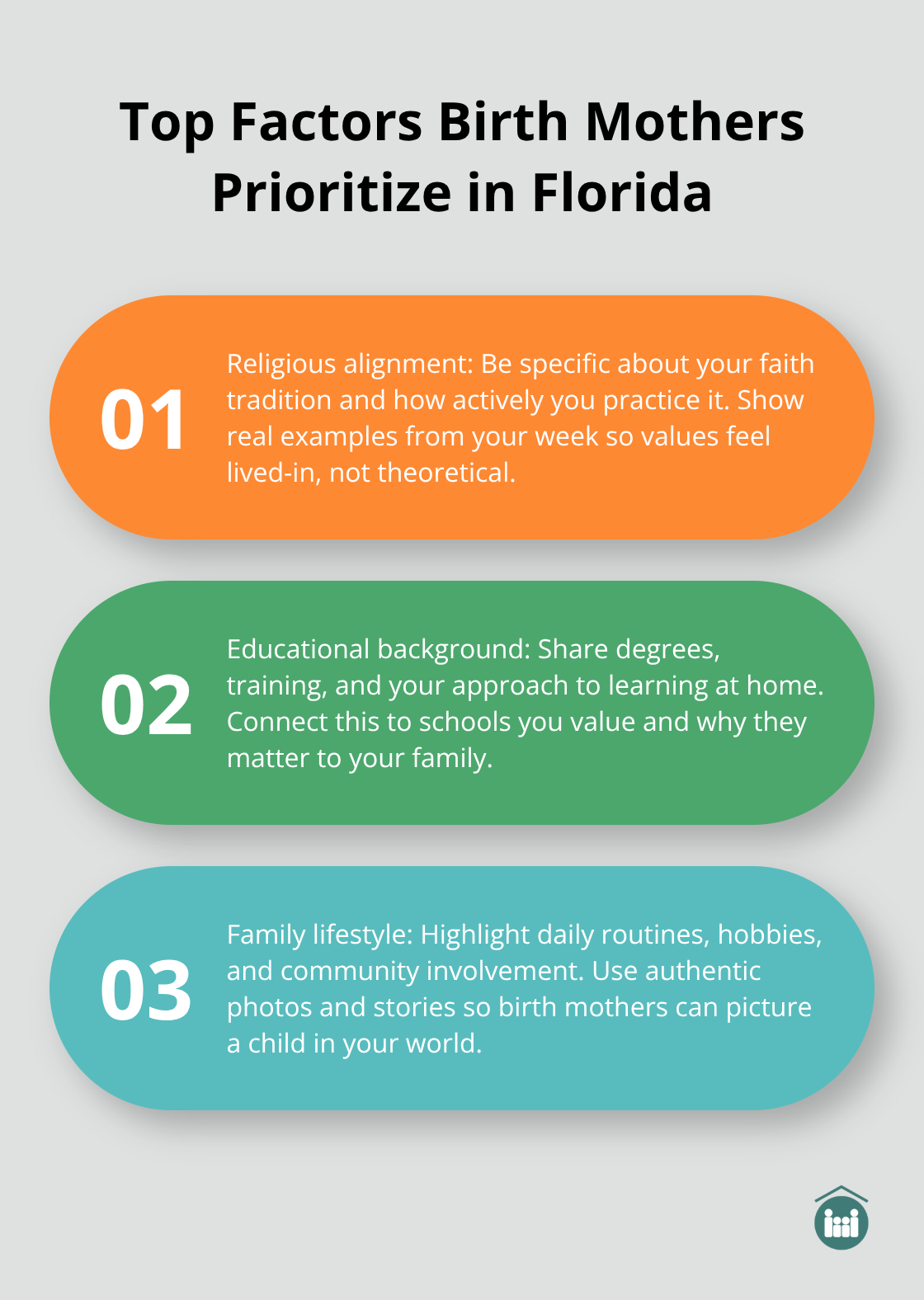
Birth mothers reviewing family profiles spend 15–20 minutes per profile on average, but they reject a match within 30 seconds if core values don’t align. This speed matters because your presentation must be immediate and authentic. Research from Florida adoption agencies shows birth mothers prioritize three factors above all else: religious alignment (78%), educational background (65%), and family lifestyle (52%). Geographic proximity influences about 40% of birth mother choices, favoring families within reasonable distance.
Birth mothers typically review 8–12 family profiles before they decide. Profiles with authentic daily-life photos significantly outperform those with posed images. High-quality profiles include 8–12 photos showing genuine moments, written sections of 300–500 words with clear philosophies on children and community involvement, and details about your pets, hobbies, and neighborhood. Families earning above $75,000 annually have better match rates according to Florida adoption agency data. The financial stability factor isn’t about wealth-it’s about showing you can provide security and stability for a child.
The Timeline from First Contact to Placement
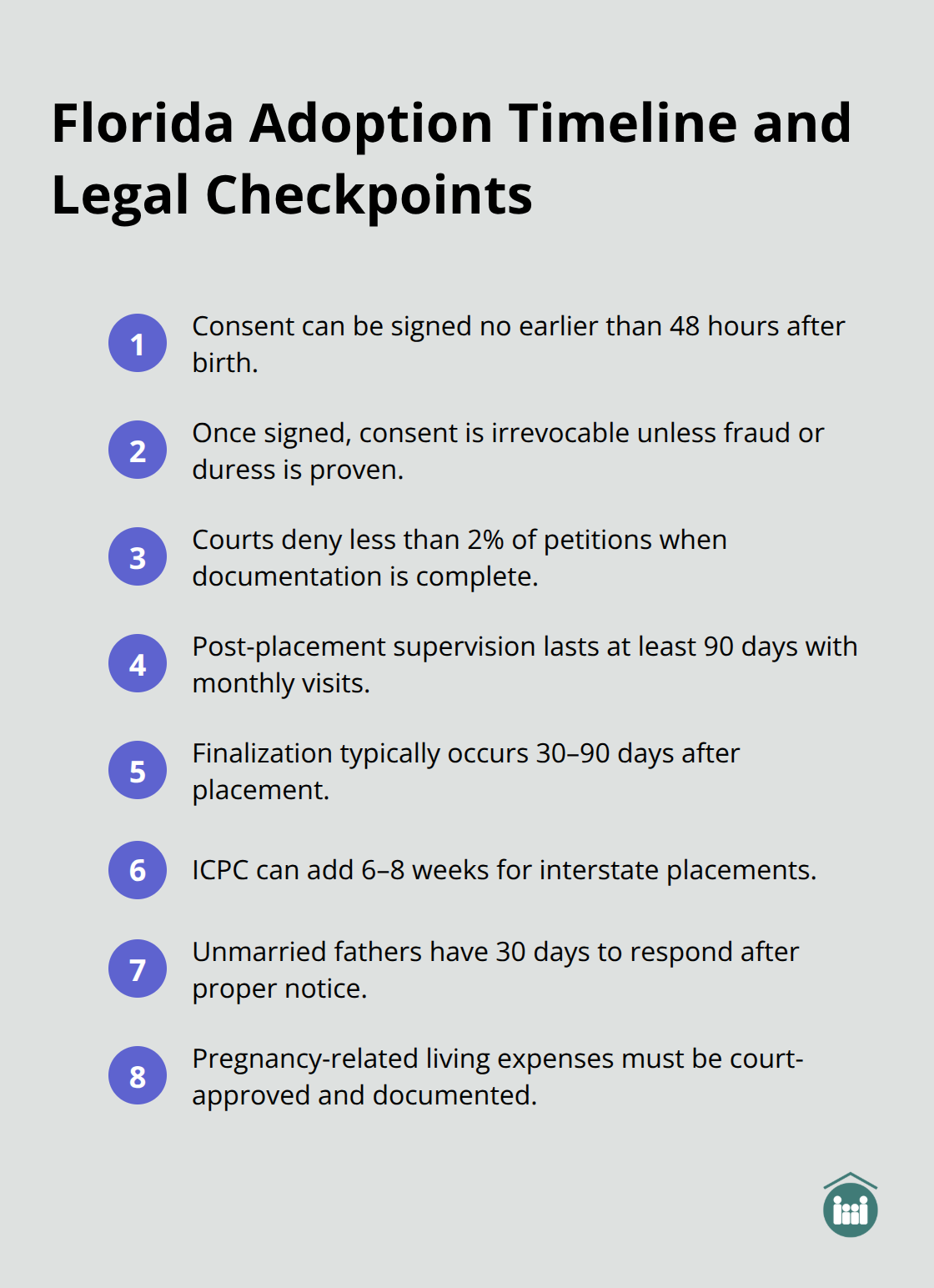
Most successful connections happen within the first 30 days of active search efforts. Once a birth mother shows interest, the average time from initial contact to your first meeting is 5–10 days, though geographic proximity and scheduling can accelerate or slow this. First meetings typically last 20–30 minutes and most occur during the second trimester. Most successful matches require 2–3 in-person meetings before a birth mother makes her decision, with a 1–2 week decision period following the final meeting. The entire process from matching to finalization typically takes 12–18 months in Florida. During this time, adoption attorneys handle legal requirements, including verifying pregnancy status, reviewing medical records, managing interstate compact requirements if needed, and drafting privacy-protecting communication agreements. After the baby is born, Florida law requires consent no earlier than 48 hours after birth, and once signed, consent becomes irrevocable unless fraud or duress is shown. Post-placement supervision lasts at least 90 days with monthly visits by licensed social workers, and finalization usually occurs 30–90 days after placement.
How Adoption Attorneys Protect Your Interests
An adoption attorney plays a critical role in protecting your rights throughout the matching and placement process. Your attorney verifies all pregnancy information, reviews medical records, and ensures interstate compact requirements are met if your match involves another state. They also draft communication agreements that protect privacy while allowing the level of openness you and the birth mother have agreed upon. Courts deny less than 2% of adoption petitions when documentation is complete and procedures meet Florida requirements. This high success rate reflects the importance of having proper legal guidance from the start. When you work with an adoption attorney in Florida, you gain someone who understands the nuances of state law and can anticipate potential complications before they arise.
What Matters Most When Birth Mothers Choose Your Family
Medical History and Genetic Background
Medical history and genetic background shape how birth mothers evaluate long-term health outcomes for their child. When a birth mother reviews your family profile, she thinks about inherited conditions, family medical patterns, and whether you can handle potential health challenges. You should request detailed medical histories from both sides of your family and be transparent about any genetic concerns or chronic conditions in your household. Birth mothers ask specific questions: Has anyone in your family experienced heart disease, diabetes, mental health conditions, or genetic disorders? Your honesty builds trust faster than vague reassurances. Florida adoption agencies report that families providing comprehensive medical disclosure and demonstrating understanding of health risks gain significantly more inquiries. You should not shy away from discussing how you would manage a child with special needs or medical complexities. Birth mothers respect families who acknowledge reality rather than present a sanitized version of their lives.
Values and Religious Alignment
Values alignment determines whether a match actually lasts beyond placement. Religious alignment tops birth mother priorities at 78% according to Florida adoption agency data, followed by educational background at 65% and family lifestyle at 52%. Your profile needs to communicate your actual beliefs and daily practices, not aspirational versions of yourself. If faith matters to you, specify which tradition and how actively you practice it. If you value outdoor activities, show photos of hiking trips or beach days. If education is central to your family, mention the schools you’re considering and why they matter. Birth mothers also care deeply about whether you will maintain her child’s cultural heritage, especially in Florida where roughly 35% of birth mothers are Hispanic. Bilingual families or those committed to cultural competency have stronger match rates.
Geographic Proximity and Location Preferences
Geographic proximity influences about 40% of birth mother decisions, so you should consider whether you are comfortable with a local match or open to families across the country. Your location affects not only the initial matching timeline but also your ability to meet the birth mother before placement and maintain contact afterward. Families within reasonable distance of the birth mother often move through the matching process more quickly. You can discuss location preferences with your adoption attorney before your profile circulates to ensure alignment with what birth mothers in your target region seek.
Communication Preferences and Openness Levels
Communication preferences and openness levels require honest conversations before matching happens. Some birth mothers want monthly photos and annual visits; others prefer semi-open contact through a secure portal with letters and photos exchanged through an intermediary. Still others choose closed adoptions with no ongoing contact. Florida recognizes all three levels of openness, and there is no wrong choice-only the choice that fits your comfort and the birth mother’s needs. You should discuss these preferences clearly with your adoption attorney before your profile circulates. Families who commit to genuine openness and follow through on communication agreements build stronger long-term relationships and experience fewer placement disruptions. The level of openness you agree to becomes part of your legal arrangement, so you should approach this decision thoughtfully rather than optimistically. Once you understand what matters most to birth mothers, the next step involves preparing your family profile to stand out and communicate authenticity in ways that resonate with the families you hope to match with.
What You Need to Know About Florida Adoption Consent and Legal Requirements
The 48-Hour Rule and Birth Mother Consent
Consent to adoption in Florida operates under strict legal timelines that protect both birth parents and adoptive families. Florida law requires consent no earlier than 48 hours after birth, according to Florida Statute 63.082, which means birth mothers have time to recover physically and emotionally before making this irreversible decision. Once a birth mother signs consent, it becomes irrevocable unless she can prove fraud or duress-a high legal bar that rarely succeeds. This finality protects your family from sudden reversals after placement, but it also means the birth mother enters this decision with full awareness of its permanence.
Birth Father Rights and the Putative Father Registry
Birth fathers face different requirements under Florida law. Unmarried fathers must register with Florida’s Putative Father Registry under Florida Statute 63.062 to assert parental rights, and if they do not register, adoption can proceed without their consent. If a father is located but does not respond within 30 days of proper notice, the court can terminate his rights. This system sounds straightforward, but the execution matters enormously. Your adoption attorney must verify that all notice requirements were met, that the Putative Father Registry was checked, and that documentation proves proper service or good-faith attempts at service. Missing even one procedural step can delay finalization or, in rare cases, invalidate the entire adoption. Florida courts deny less than 2% of adoption petitions when documentation is complete, which tells you that proper legal preparation from the beginning prevents almost all problems.
Financial Support and Legal Boundaries
The financial support you provide during pregnancy and after birth must stay within legal boundaries. You cannot pay a birth mother to place her child for adoption according to Florida Statute 63.097, but you can cover reasonable living expenses including rent, utilities, maternity clothing, and medical care-all with court approval. These expenses must be documented carefully and presented to the court during finalization. Courts scrutinize financial arrangements closely, so transparency matters more than generosity. If you attempt to hide payments or provide gifts disguised as living expenses, you risk judicial rejection of the entire adoption.
Interstate Matches and ICPC Requirements
Interstate matches add complexity that requires immediate attorney involvement. If the birth mother lives in another state or you live out of state, the Interstate Compact on the Placement of Children (ICPC) governs the placement. ICPC requires both the sending state (where the birth mother lives) and the receiving state (where you live) to approve the placement before the baby can cross state lines. This process typically adds 6–8 weeks to your timeline, according to ICPC guidelines, because each state must verify your home study, background checks, and financial stability independently. Your attorney must file ICPC paperwork correctly and track approvals from both states to avoid placement delays after birth. Some families underestimate this timeline and arrive in another state expecting to take a baby home only to discover that ICPC approval is still pending. Working with an adoption attorney who understands interstate requirements prevents this scenario.
Special Considerations for Native American Adoptions
If you plan to adopt a Native American child, the federal Indian Child Welfare Act applies regardless of state lines. ICWA requires tribal notice and gives tribes specific placement preferences, which means the matching process changes significantly and timelines extend further. Your attorney should explain these requirements early so you understand the full scope of what adoption involves in this context. After the judge signs the adoption decree (typically 30–90 days after placement), amended birth certificates are issued within 2–3 weeks by the Florida Bureau of Vital Statistics. At that point, your legal relationship to the child is complete and identical to biological parenthood.
Final Thoughts
Your birth mother Florida match succeeds when you approach it with honesty, legal protection, and genuine commitment to the relationships you’re building. Share specific details about your daily life, your values, and what you hope to offer a child, because birth mothers respond to authenticity far more than polished perfection. Establish clear communication channels early-whether that’s email, a secure portal, or phone calls-and respond promptly to messages while following through on any commitments you make.
Emotional readiness matters as much as legal preparation, and adoption brings both joy and complexity. You may experience anxiety about whether the birth mother will change her mind, uncertainty about how to parent a child with a different genetic background, or grief about infertility if that’s part of your story (these feelings are normal and worth processing with a counselor before placement). Post-placement supervision requires monthly visits from licensed social workers for at least 90 days, which gives you structured support during the adjustment period and opportunities to ask questions.
Florida offers concrete resources to support your journey, and we at Juliana Gaita, P.A. help adoptive families navigate legal requirements and protect your rights throughout the process. When you contact us about adoption law in Florida, you gain someone who understands Florida law and can anticipate complications before they arise. Your attorney handles consent verification, interstate compact requirements, and all documentation needed for finalization so your birth mother Florida match reaches completion with confidence.