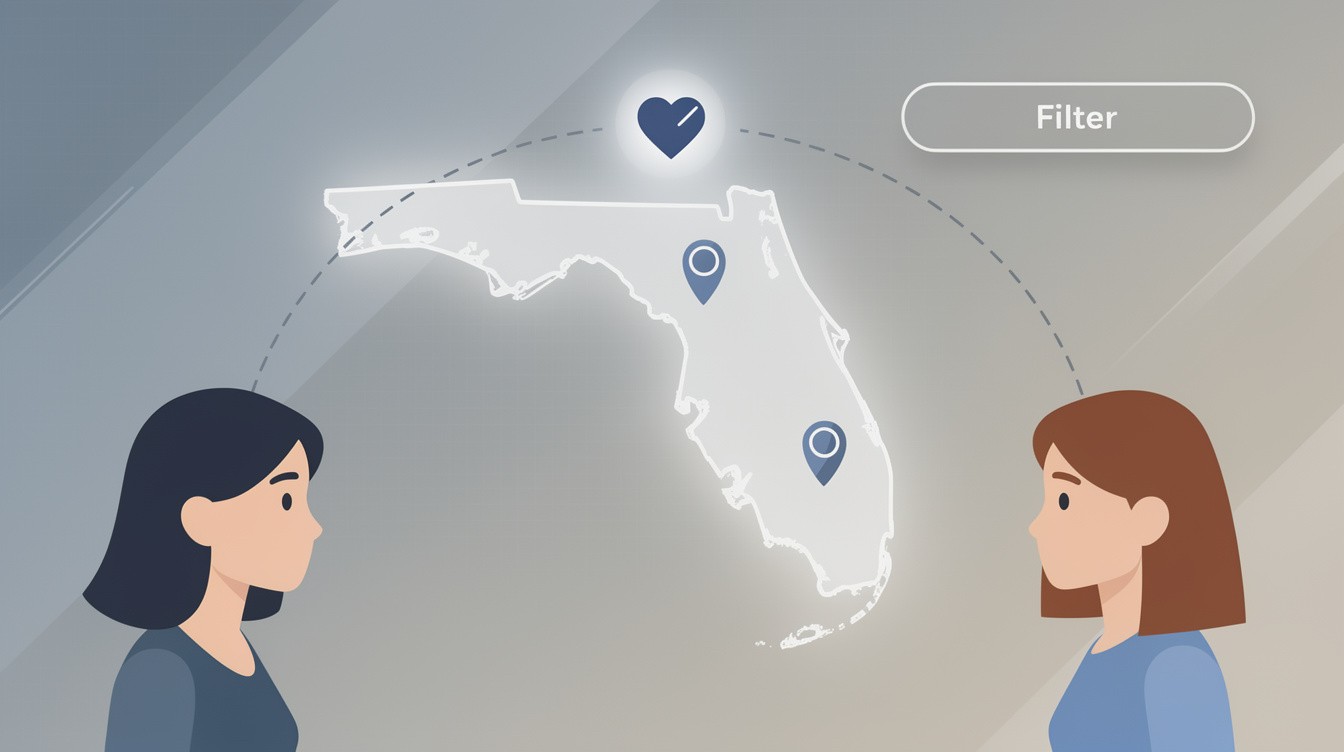
Birth mother matching in Florida requires careful consideration of medical history, values, and communication preferences. The process connects adoptive parents with birth mothers based on compatibility factors that matter most to both parties.
At Juliana Gaita, P.A., we guide families through each step of this matching journey, from understanding Florida adoption laws to navigating the tools and resources available. This guide walks you through what to expect and how to move forward with confidence.
How Birth Mother Matching Works in Florida
Florida adoption law shapes matching by requiring that all adoptive families complete a favorable home study before a child is placed with them. This isn’t optional-it’s the legal foundation that protects everyone involved. The state also mandates that birth mothers receive counseling and have time to make informed decisions about their adoption plan. Adoption agencies in Florida operate within these legal boundaries, using them to create structured matching processes that work. When an expectant mother contacts an agency, the agency identifies her specific preferences: whether she wants a two-parent household or is open to single parents, her comfort level with same-sex couples, whether she prefers a family with existing children, and how much ongoing contact she wants after placement. The agency then narrows the pool of waiting families to those who genuinely fit these criteria.
How Agencies Present Family Profiles
Typically, a birth mother sees 3 to 5 profiles of the longest-waiting families that match her requests. If those don’t feel right, the agency presents the next set of qualified families. This deliberate approach means the match isn’t random-it’s built on real compatibility.
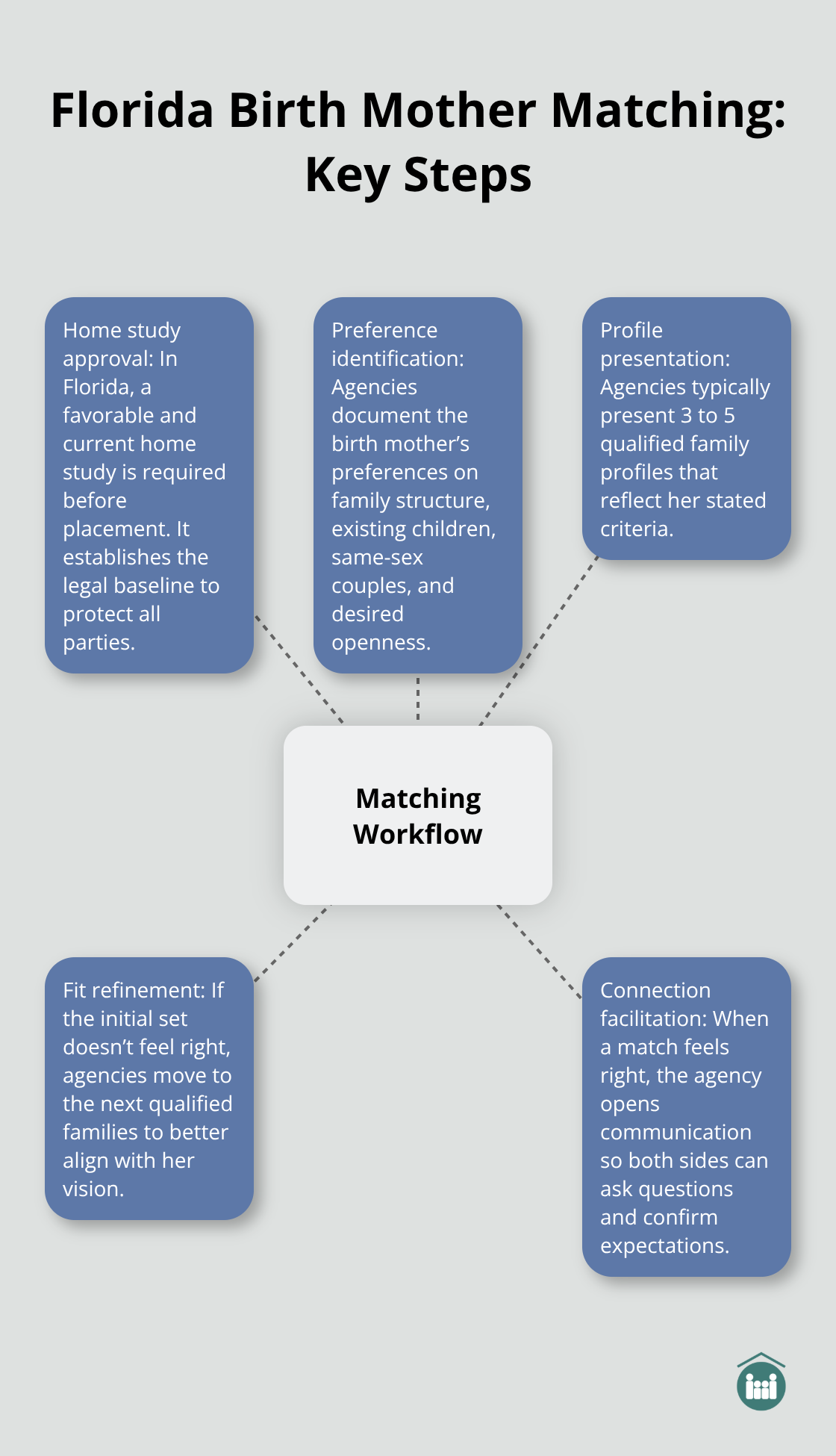
The agency works to align the birth mother’s vision for her child’s future with the families who can deliver that vision.
What Determines a Good Match
Medical history matters more than many people realize. The birth mother’s medical records, her family’s genetic background, and any known health concerns directly influence which families the agency presents to her. Agencies ask detailed questions about the birth mother’s health, her family’s medical history, and whether prenatal complications or substance exposure concerns exist. Families reviewing profiles need this information to make informed decisions about whether they can meet a child’s medical needs.
Lifestyle and values are equally important. A birth mother who values education and wants her child in a specific type of community should match with families who share those priorities. Communication style determines long-term success in open adoptions. Some birth mothers want monthly photos and letters; others prefer annual updates or occasional visits. Matching families whose communication comfort levels align prevents conflict after placement. The timeline from initial contact to actual match typically takes about 9 months, though individual circumstances vary significantly. Some matches happen faster; others take longer depending on how specific the birth mother’s preferences are and how many families meet those criteria.
How Agencies Vet Families and Facilitate Matches
Adoption agencies in Florida screen all waiting families before their profiles ever reach a birth mother. This vetting process includes verifying the home study is favorable and current, confirming background clearances are complete, and assessing whether the family’s stated preferences align with reality. Reputable agencies take this seriously because a poor match harms everyone.
When a match feels right to the birth mother, the agency facilitates communication between her and the family. This is when an adoption attorney becomes essential-someone who can verify the pregnancy, explain Florida law to the birth mother, clarify what financial assistance she can legally receive, and ensure all consents are handled correctly. An experienced adoption attorney protects the birth mother’s rights while also protecting the adoptive family from legal complications that could arise from mistakes in the matching or consent process. If you’re navigating this stage, having proper legal guidance from someone familiar with Florida adoption law makes all the difference in moving forward smoothly.
What Makes a Match Work Between Birth Mothers and Adoptive Families
Medical Information Forms the Foundation
Medical information determines compatibility from the start. When a birth mother contacts an adoption agency, she provides detailed health records covering her medical history, her family’s genetic background, and any prenatal complications or substance exposure concerns. Agencies ask specific questions: Has she had previous pregnancies? Does her family carry genetic conditions? Are there known health risks the adoptive family should understand? This information directly shapes which families the agency presents to her. Families need accurate medical details to assess whether they can meet a child’s healthcare needs, manage potential developmental delays, or handle ongoing medical requirements. Without this transparency, matches fall apart after placement when families discover undisclosed health issues. The birth mother’s medical records also inform the adoption plan itself-hospitals may need advance notice of specific health concerns, and post-placement counseling may need to address trauma or substance exposure. Florida law requires adoption agencies to obtain and share this medical history because families deserve to make informed decisions and birth mothers deserve families equipped to care for their child’s actual needs.
Values and Communication Style Drive Long-Term Success
Values and communication style determine whether a match survives long-term. A birth mother who values education and wants her child in a college-preparatory environment should never match with a family indifferent to academics. A birth mother seeking ongoing contact through monthly photos and letters will struggle with a family who prefers complete anonymity. Agencies ask birth mothers directly: What matters most for your child’s upbringing? Do you want a family in a specific geographic area? Are you comfortable with same-sex parents? How much contact do you want after placement-monthly updates, annual visits, or no contact at all?
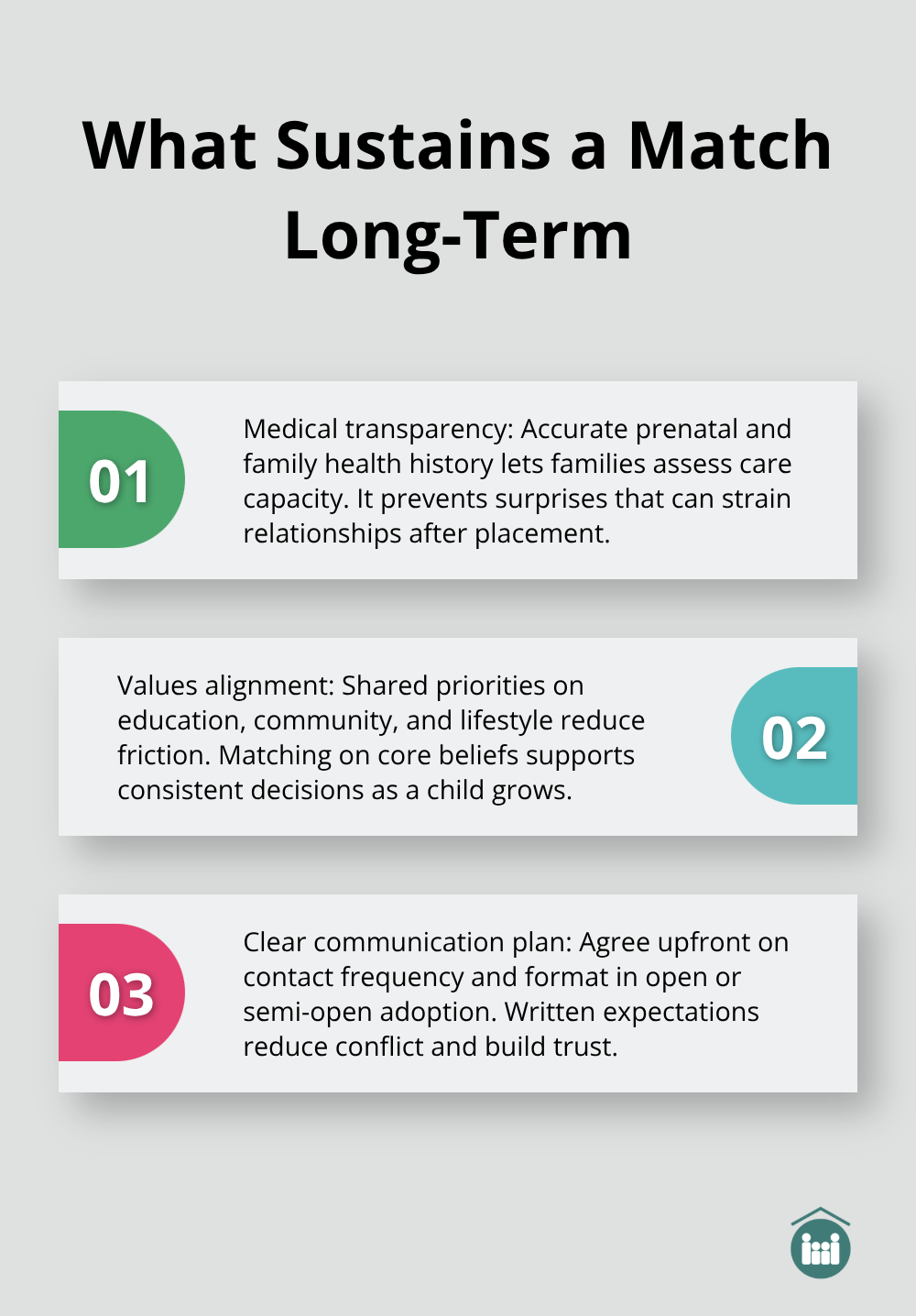
These preferences aren’t negotiable; they form the core of compatibility. Families whose communication style aligns with the birth mother’s expectations report stronger post-placement relationships and fewer conflicts. If a birth mother wants semi-open adoption with twice-yearly visits and a family agrees but then resists contact after placement, that match was poorly made from the start. The best matches happen when both parties understand exactly what ongoing contact looks like and genuinely want that arrangement.
How Agencies Filter for True Compatibility
Reputable agencies in Florida filter waiting families against the birth mother’s stated preferences rather than simply presenting whoever has waited longest. Compatibility requires honesty about what each party actually wants, not just who is available. When an agency presents only the longest-waiting families without filtering for value alignment, unnecessary friction follows. The agency’s role is to narrow the pool intentionally-presenting 3 to 5 profiles that genuinely fit the birth mother’s vision for her child’s future. This deliberate approach takes time but produces stronger matches. A birth mother who wants her child raised in an urban environment with access to arts programs should see families living in cities with those resources, not rural families simply because they’ve waited longer. Similarly, a family’s stated openness to contact must match the birth mother’s actual expectations. If a family says they welcome semi-open adoption but the birth mother later discovers they screen calls and ignore letters, trust collapses. Agencies that take matching seriously verify that families’ actions align with their stated preferences before presenting them to birth mothers.
The Role of Legal Guidance in Protecting Both Parties
An adoption attorney becomes essential once a match feels right. Someone familiar with Florida adoption law can verify the pregnancy, explain the birth mother’s rights and options, clarify what financial assistance she can legally receive, and ensure all consents are handled correctly. An experienced adoption attorney protects the birth mother’s rights while also protecting the adoptive family from legal complications that could arise from mistakes in the matching or consent process. This legal foundation prevents misunderstandings that could otherwise damage the relationship after placement. When both parties have proper legal guidance from the start, they move forward with clarity about their obligations and rights. The attorney also helps the adoption agency and both parties understand how Florida law shapes the adoption plan-what hospital decisions the birth mother controls, when she can sign consents (at least 48 hours after birth), and what post-placement contact arrangements the law permits. With proper legal guidance, matches that work on paper also work in practice because everyone understands the framework they’re operating within.
Finding the Right Tools and Resources for Your Match
Self-Matching: Risks and Vetting Requirements
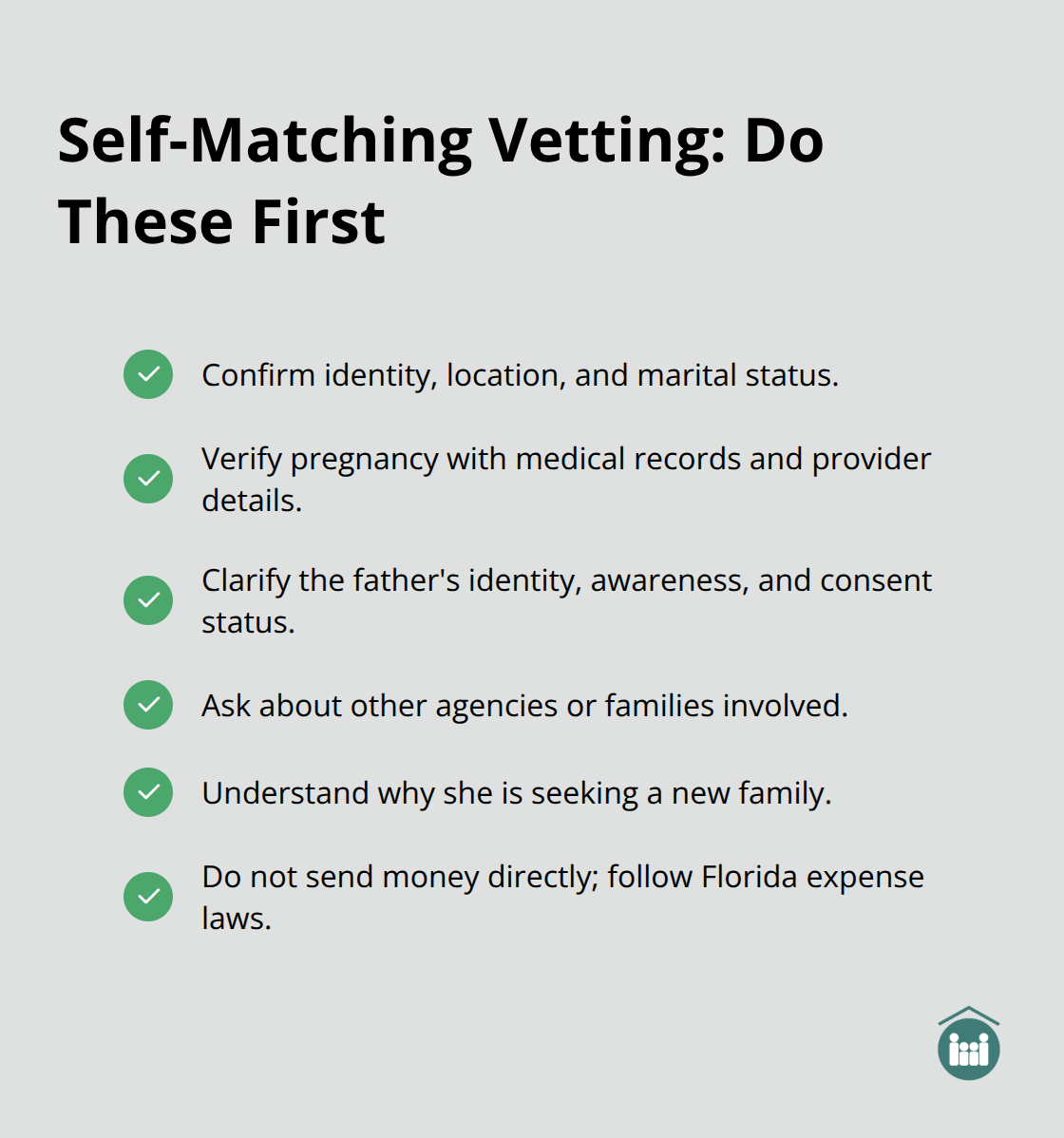
Adoptive families pursuing self-matching in Florida face a critical decision about which platforms and professional support will actually protect them. The internet offers countless adoption matching websites, but not all are equally safe or effective. Self-matching through unvetted online platforms carries the highest risk because you don’t know who you’re communicating with and identity can be misrepresented. This means vetting a potential birth mother requires specific steps before any money changes hands or emotional investment deepens.
Ask for her name and location, marital status, whether the father is the husband or someone else, pregnancy confirmation and the doctor’s details, proof of pregnancy through medical records, the father’s awareness and agreement, other agencies or families involved, and why she is seeking a new family. Once you’ve gathered basic information, do not discuss or provide money to a birth mother directly-prenatal and postnatal expenses are regulated differently by state and may have strict limits under Florida law.
The Critical Role of Legal Vetting
Retain an adoption attorney immediately to vet both the birth mother and father, verify the pregnancy through medical records, and gather family, social, and medical history. This step costs money upfront but prevents far more expensive problems later. The attorney will explain the birth mother’s state adoption laws, prepare and file necessary court documents to inform the court of the intended adoption plan, and determine what financial assistance the birth mother may legally receive while ensuring compliance with applicable laws.
Licensed Adoption Agencies as a Structured Alternative
Working with licensed adoption agencies in Florida provides a structured alternative to self-matching. Agencies like Heart of Adoptions, Inc., a licensed private adoption agency operating across multiple Florida locations with a toll-free line at 1-800-GO-ADOPT and text access at 877-202-9624, handle the vetting process for you. American Adoptions, a Florida-licensed national domestic infant adoption agency, maintains hundreds of waiting families nationwide and presents video profiles to help birth mothers visualize their child’s potential life with each family.
These agencies screen all waiting families before profiles reach a birth mother, verifying favorable home studies, confirming background clearances, and assessing whether stated preferences align with reality. The matching process typically takes about nine months, though timelines vary significantly based on how specific the birth mother’s preferences are. If you’re working with an adoption agency, ask about sample profiles, how profiles are vetted, and whether cross-agency collaboration can broaden your options for a compatible match.
Support Communities and Real-World Insights
Support communities like Facebook groups for expecting and adoptive mothers offer real experiences from people navigating the same process, providing insights that no agency website can deliver. These communities help you understand what post-placement contact actually looks like in practice and what challenges other families have faced. The legal team at Juliana Gaita, P.A. can screen a Florida self-match for you or provide referrals to reputable adoption attorneys in other states if you’re pursuing an interstate adoption, ensuring you move forward with proper protection regardless of which matching path you choose.
Final Thoughts
Birth mother matching in Florida succeeds when both parties have clear information, realistic expectations, and proper legal protection from the start. The matching process connects people whose values, communication styles, and medical understanding align well enough to build a lasting relationship. When agencies filter families intentionally, when birth mothers receive honest counseling about their options, and when legal guidance shapes every decision, matches hold up long after placement.
If you’re pursuing self-matching, contact an adoption attorney immediately to vet potential matches and verify pregnancies before emotional or financial investment deepens. If you’re working with a licensed adoption agency, ask detailed questions about how they filter families for compatibility, whether they collaborate with other agencies to expand your options, and what post-placement support they provide. Either way, legal guidance makes the difference between a smooth adoption and one that unravels later due to preventable mistakes.
We at Juliana Gaita, P.A. guide families through birth mother matching in Florida by explaining your rights, vetting matches, and handling all legal steps from match through finalization. Contact us to discuss your adoption plan and how we can support your family’s journey.