Adoption in Florida involves specific legal steps, financial considerations, and emotional preparation that many families find overwhelming. We at Juliana Gaita, P.A. have guided countless families through this journey, and we know that having clear information about the adoption process makes all the difference.
This guide walks you through each stage, from understanding Florida’s adoption laws to working with legal representation. You’ll find practical steps to prepare your family and avoid common pitfalls along the way.
Florida’s Four Adoption Paths
Understanding Your Adoption Options
Florida law recognizes four distinct adoption types, and understanding which one applies to your situation fundamentally shapes your timeline and costs. Entity adoption through a licensed agency or attorney handles adoptions of children whose parental rights have been terminated by the state-this is the path most families take when adopting from Florida’s foster care system. Stepparent adoption occurs when a spouse adopts their partner’s biological child, typically the fastest and least expensive route since no home study fees apply and court costs run minimal. Relative adoption allows grandparents, aunts, uncles, or other family members to adopt, operating under similar streamlined rules as stepparent cases.
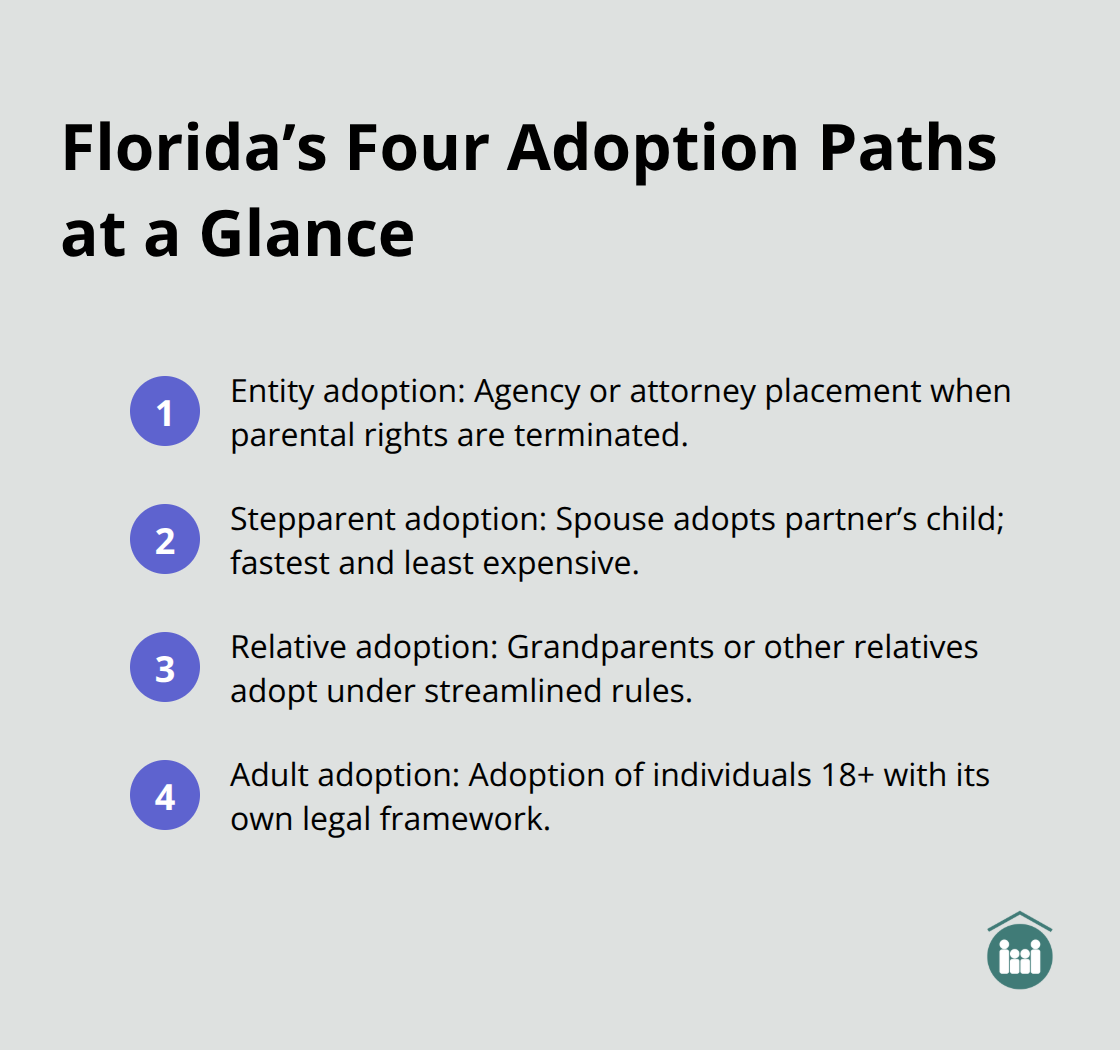
Adult adoption, while uncommon, exists for adopting individuals over 18 and follows its own legal framework entirely separate from child adoption.
Costs Across Different Adoption Paths
For families pursuing entity adoption-whether through the state or a private licensed agency-expect to invest between zero and several thousand dollars depending on your chosen path. State adoption through Florida’s Department of Children and Families costs nothing in adoption fees because the state covers pre-adoptive training, home study, and most court expenses; you’ll only pay for items like certified birth certificates or travel. Private agency adoption runs substantially higher, often exceeding $50,000 when working with licensed child-placing agencies, though federal adoption tax credits up to $16,810 in 2024 can offset these costs. The federal government also provides subsidies for qualifying adoptions, and some employers offer adoption benefits-military families receive up to $2,000 annually for qualified expenses.
Timeline and Eligibility Requirements
Your timeline depends heavily on which adoption type you pursue: state entity adoptions typically complete within six to eight months from application to finalization, while private infant adoptions can stretch eighteen months or longer. Eligibility requirements remain consistent across all paths-you must be at least 18 years old with no automatic disqualifications based on age, rental status, or disability, though certain felony convictions may affect approval and each case receives individual evaluation.
Taking Your First Step
The Florida Department of Children and Families processes state adoptions, while licensed attorneys or agencies handle private placements. Contact the Adoption Information Center at 1-800-962-3678 to connect with a caseworker within seven business days who will assess your readiness and outline which path suits your family best. Once you understand which adoption type matches your circumstances, the next phase involves preparing your household and finances for the journey ahead.
Getting Your Household and Finances Ready for Adoption
Understanding the Home Study Process
The home study process in Florida is mandatory for entity adoptions and involves a licensed social worker evaluating your home environment, family dynamics, and parenting capacity. This assessment focuses on safety, stability, and your ability to meet a child’s developmental and emotional needs-not on cleanliness or decor. The social worker conducts multiple home visits, interviews household members, runs criminal background checks, and verifies clearances through child abuse registries. Physical disability or rental status won’t disqualify you; what matters is your demonstrated capability to parent effectively. The entire home study takes weeks to complete, so start this process early if you’re pursuing state adoption. Florida’s Department of Children and Families covers these costs entirely when you work through the state system. Private agency adoptions require home studies as well, though you’ll pay separately-costs typically range from $1,500 to $3,000 depending on the agency.
Securing Your Finances Before Placement
Financial preparation demands honest assessment of your resources and exploration of available assistance programs. If you adopt through Florida’s state system, adoption subsidies provide monthly payments to qualifying families until your child turns 18, helping offset expenses for children with special needs or sibling groups.
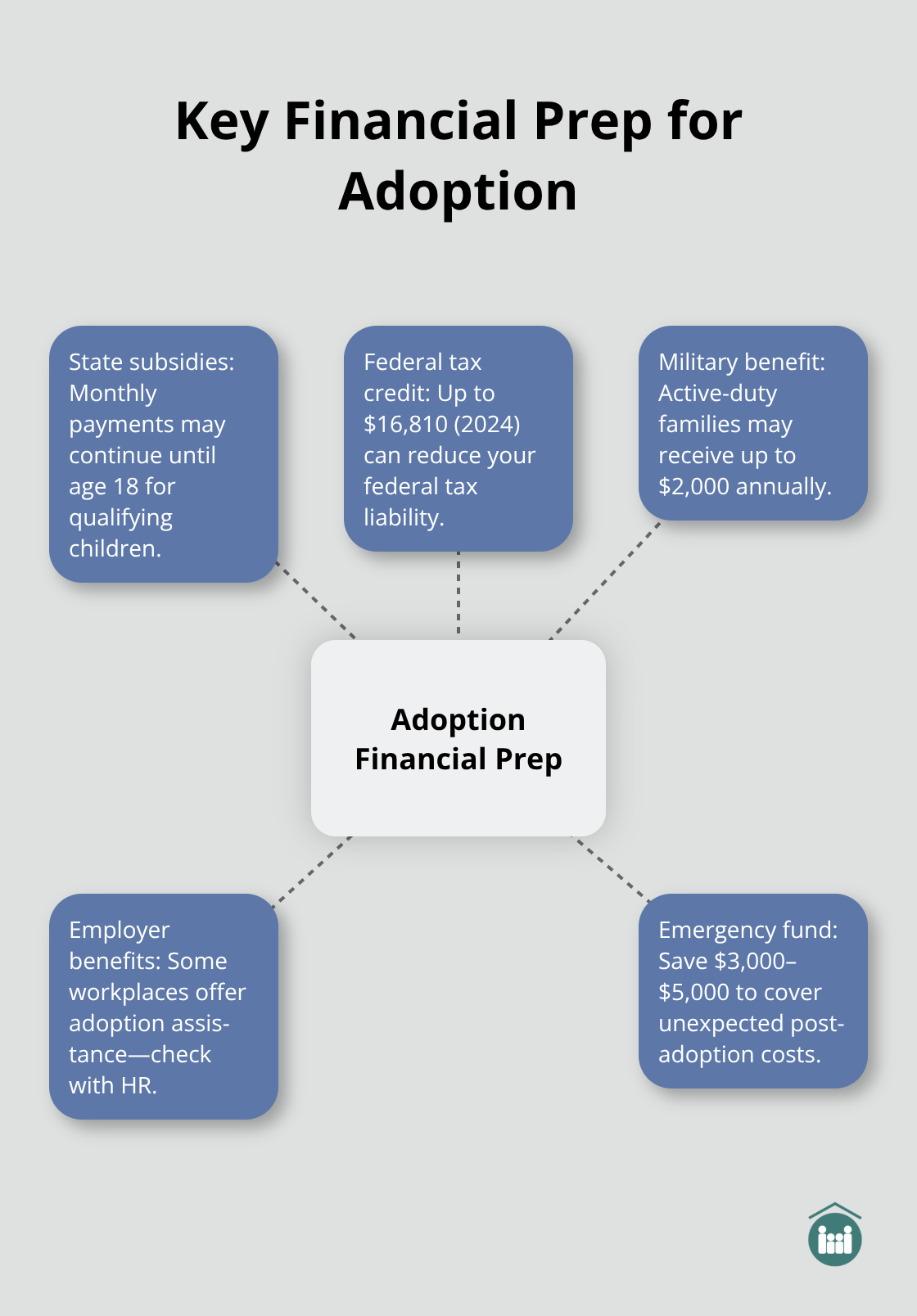
The federal adoption tax credit reached $16,810 in 2024 and can significantly reduce your tax burden (consult a tax professional about carrying credits forward if your tax liability doesn’t fully absorb the credit). Active-duty military families receive up to $2,000 annually for qualified adoption expenses, and some employers offer adoption benefits as part of employee assistance programs-contact your HR department to determine what support your workplace provides. Build an emergency fund of $3,000 to $5,000 before placement to manage unexpected post-adoption costs without financial stress.
Building Emotional Resilience for Your Family
Emotional readiness matters equally to financial preparation, yet many families underestimate the adjustment period after placement. Connect with support groups through your local community-based care agency to gain perspective from families who’ve navigated similar transitions. Post-adoption counseling services are available at no cost through Florida until your child turns 18, helping your family process attachment challenges and identity questions as they arise. These resources address the real emotional work that adoption requires, transforming your household from preparation into a functioning family unit. With your home study complete, finances secured, and emotional support systems in place, you’re ready to work with legal representation to protect your rights throughout the adoption process.
Working with a Licensed Adoption Attorney
An adoption attorney in Florida handles far more than paperwork filing-they navigate consent requirements, parental rights termination, and court procedures that directly impact whether your adoption finalizes successfully. Florida law requires licensed attorneys or licensed child-placing agencies to manage entity adoptions, meaning you cannot legally proceed without proper representation. The attorney’s role starts before you match with a child, verifying that all parties have provided legally valid consent and that birth fathers have either consented or been properly notified through the Putative Father Registry, which unmarried biological fathers must register with the Florida Department of Health to preserve their rights.
Protecting Your Rights Before Placement
This registration requirement catches many families off guard-if a biological father fails to register, he loses certain legal rights, but your attorney must confirm this happened correctly or the entire adoption could face challenge later. Throughout the matching and placement phases, your attorney documents the child’s medical history, developmental background, and any special needs disclosures so nothing surprises your family post-placement. Your attorney verifies that all consent signatures are notarized and witnessed according to Florida law, protecting you from future legal complications that could unravel months of preparation.
Managing Court Finalization
When finalization arrives, your attorney files the Adoption Petition with the court, coordinates with the judge’s schedule, and ensures you understand that finalization creates a full legal parent-child relationship identical to birth-your child inherits from you, uses your surname, and appears on a new birth certificate issued after the court hearing concludes. Your attorney attends the finalization hearing (telephonic or in-person) and presents the favorable social or agency report that the judge requires to sign the final adoption judgment.
Handling Post-Finalization Documentation
Your attorney protects your rights after finalization by managing the documentation process that many families underestimate. After the judge signs the final adoption judgment, you’ll need a certified copy of the Adoption Finalization Order, which only your attorney or the courthouse can provide-not your adoption caseworker or lead agency.
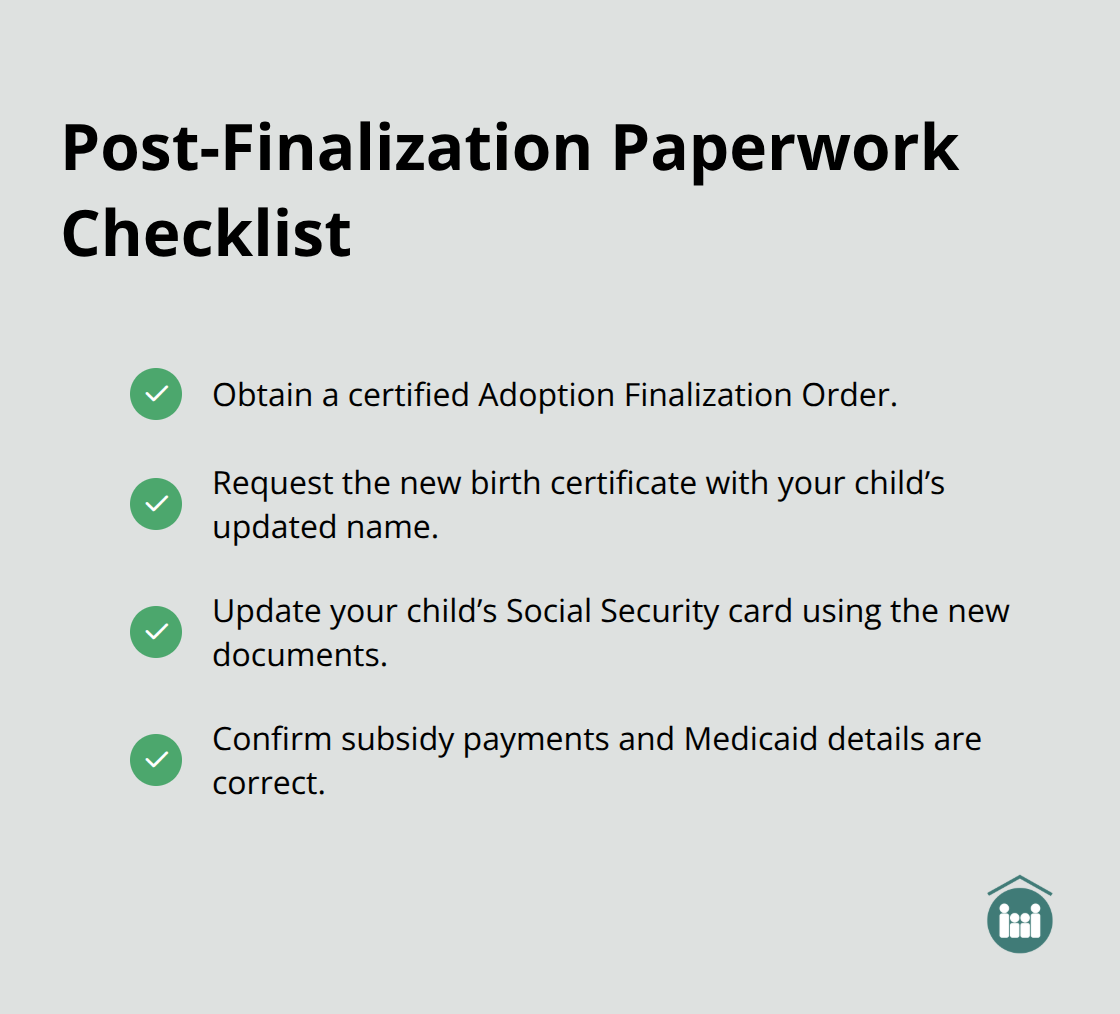
Your attorney typically arranges for the new birth certificate with your child’s new name to be filed immediately after finalization, though you won’t receive it for several weeks. The Social Security Administration requires the new birth certificate and finalization order to issue a new Social Security card, and your attorney can handle this submission or guide you through it directly.
Coordinating Subsidies and Benefits
If you adopt through the state system, your attorney coordinates with the post-adoption subsidy specialist at your local community-based care agency to ensure your adoption subsidy payments continue without interruption and that your Medicaid card reflects the correct information-delays in this process cost families real money when subsidies pause or medical coverage lapses. Verify upfront that your attorney handles these post-finalization steps rather than assuming you’ll manage them alone, because missing deadlines on Social Security applications or subsidy paperwork creates unnecessary stress during your family’s critical first months together.
Final Thoughts
Successful adoption in Florida requires three foundational elements: understanding which adoption path fits your family, preparing your household and finances thoroughly, and securing proper legal representation from the start. The families who navigate this journey most smoothly are those who gather complete information about the adoption process early, connect with support systems before placement arrives, and work with an attorney who handles both the legal complexities and the post-finalization documentation that protects your rights long after the court hearing concludes.
Common mistakes derail otherwise prepared families-many assume their adoption caseworker will manage post-finalization paperwork like Social Security applications and subsidy coordination, only to discover months later that deadlines passed and benefits lapsed. Others underestimate the emotional adjustment period and lack support systems when attachment challenges surface. Some families fail to verify that biological fathers registered with the Putative Father Registry, creating legal vulnerabilities that could threaten finalization.
If you’re still exploring whether adoption fits your family, contact the Adoption Information Center at 1-800-962-3678 to speak with a caseworker who can assess your readiness and explain which adoption type matches your circumstances. If you’ve already decided to move forward, begin your home study immediately and schedule a consultation with an adoption attorney in Boca Raton who understands Florida law and can guide you through every stage. We at Juliana Gaita, P.A. help families throughout Florida navigate adoption cases, whether you’re pursuing state adoption, private placement, stepparent adoption, or adult adoption.