
Adoption in Florida involves multiple pathways, each with different timelines and requirements. The easiest adoption process for your family depends on your circumstances, the type of adoption you pursue, and how prepared you are for each stage.
At Juliana Gaita, P.A., we guide families through domestic infant adoption, foster care adoption, and international adoption. This blog breaks down what to expect at each step so you can make an informed decision.
Three Adoption Paths in Florida
Domestic Infant Adoption: Speed at a Higher Cost
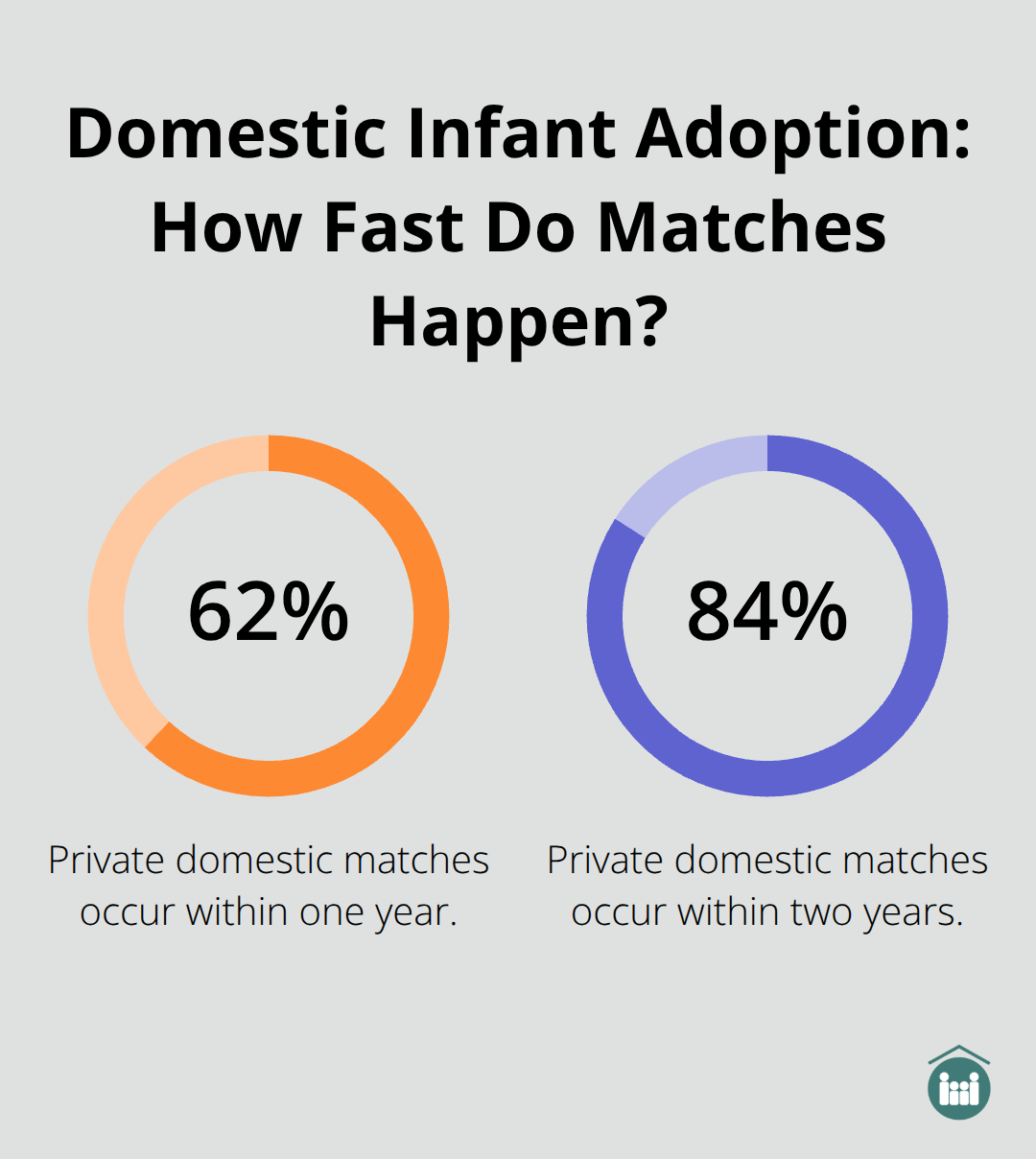
Domestic infant adoption typically costs between $30,000 and $60,000, making it the most expensive option but often the fastest route to a newborn. According to the National Survey of Adoptive Parents from 2007, about 62% of private domestic matches occur within one year, and 84% within two years. The birth mother selects the adoptive family, so your ability to connect with expectant mothers directly impacts speed. Open adoption is now standard in Florida, with 100% of prospective birth mothers able to choose their level of contact and meet the adoptive family before placement.
This transparency reduces surprises and allows families to understand the birth mother’s preferences from the start. The timeline from matching to finalization typically runs 6 to 12 months, though some families complete adoptions faster with experienced agencies.
Foster Care Adoption: Affordability With Longer Timelines
Foster care adoption operates differently-costs range from $0 to $5,000, and many states cover legal fees entirely, making it far more affordable. The tradeoff is that children in foster care are typically older or part of sibling groups, and reunification with birth parents remains the legal priority until the court terminates parental rights. This means your family may wait longer, sometimes years, before finalization occurs. The Dave Thomas Foundation for Adoption reports that over 100,000 children wait in foster care for permanent families, indicating substantial availability but also longer processing times due to court involvement and the need to exhaust reunification efforts. Training through programs like MAPP (Model Approach to Partnerships in Parenting) is mandatory and covers trauma-informed parenting, preparing you for children with complex histories.
International Adoption: Greatest Complexity and Cost
International adoption demands the most time and complexity-it requires compliance with both U.S. federal law and the laws of the child’s home country, plus Hague Convention requirements if applicable. Costs often exceed $40,000, and timelines stretch to two years or more due to foreign government processing, USCIS steps, and immigration paperwork. For most Florida families, foster care adoption offers the strongest financial advantage, while domestic infant adoption delivers speed if budget allows. Your next step involves understanding which path aligns with your family’s resources, timeline, and readiness to support a child’s unique needs.
Moving Through Florida’s Adoption Requirements
Start With a Legal Assessment
Every adoption in Florida follows a structured process that protects both the child and your family. The timeline and complexity depend on your adoption path, but all routes require a home study, background screening, and court finalization. An adoption attorney assesses your eligibility, explains state-specific rules, and identifies potential obstacles before you invest time and money. During this initial phase, you learn which requirements apply to your specific situation.
For domestic infant adoption, this conversation clarifies birth mother preferences and agency selection. For foster care adoption, it outlines DCF licensing and MAPP training requirements. For international adoption, it addresses Hague Convention compliance and USCIS immigration steps. A qualified attorney can tell you within the first consultation whether a criminal record, prior marital history, or financial situation will complicate your path or disqualify you entirely. Florida law imposes no maximum age, income threshold, or home-size requirement, but the court must confirm you can meet a child’s basic needs. This early assessment prevents wasted effort on an adoption path that won’t work for your family.
Complete Your Home Study and Background Checks
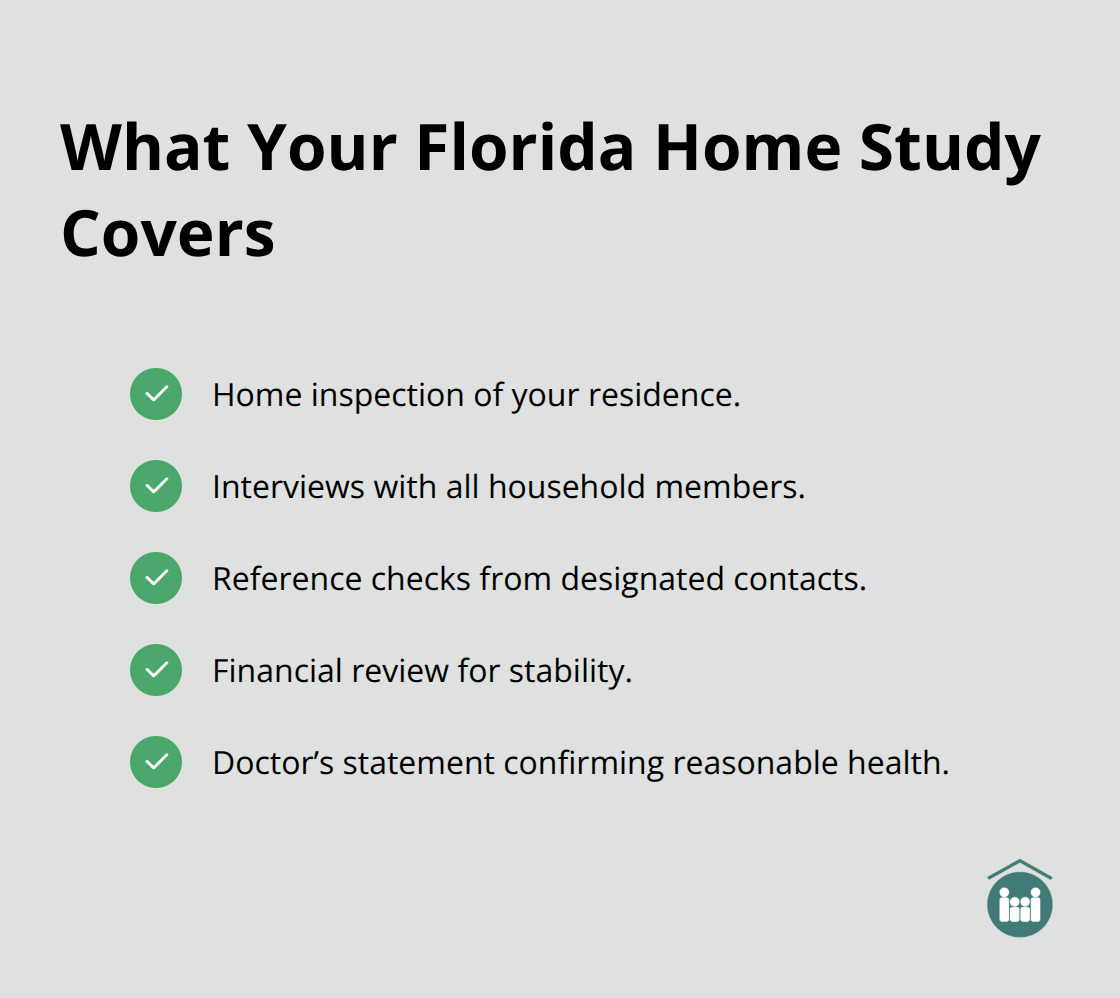
The home study comes next and typically takes 2 to 8 weeks depending on agency availability. This process includes a home inspection, interviews with all household members, reference checks, financial review, and a doctor’s statement confirming reasonable health. Florida Statutes Chapter 63 requires this step for nearly all adoptions except stepparent cases with modified requirements.
Simultaneously, Level 2 background checks through FDLE and FBI run parallel to child-abuse and sexual offender registry checks for every state where household members lived in the past five years. Once your home study clears and background checks return clean, paperwork filing begins. This dual-track approach (home study and background screening) accelerates your timeline considerably.
Navigate Paperwork and Court Finalization
For domestic infant adoption, you file consent documents from the birth mother signed before two witnesses with notarization, followed by finalization at a court hearing 6 to 12 months after placement. For foster care adoption, you navigate termination of parental rights proceedings and then the adoption filing itself, which can stretch 12 to 24 months as courts prioritize reunification efforts. For international adoption, USCIS form I-600 processing and foreign government approval add 18 to 24 months to your timeline.
Court schedules in your county directly impact finalization speed, so some families complete adoptions faster than others in the same path. Legal representation from the start prevents costly mistakes in document preparation and confirms compliance with both state and federal requirements. Your attorney coordinates with the court, manages deadlines, and responds to any requests that arise during proceedings.
The paperwork phase determines whether your adoption moves smoothly or encounters delays. Understanding these requirements upfront-and having someone guide you through each filing-makes the difference between a straightforward process and one that stalls. Your next step involves selecting the right adoption path and preparing your household for the home study phase.
Factors That Affect Adoption Timeline and Complexity
Your Adoption Path Sets the Baseline
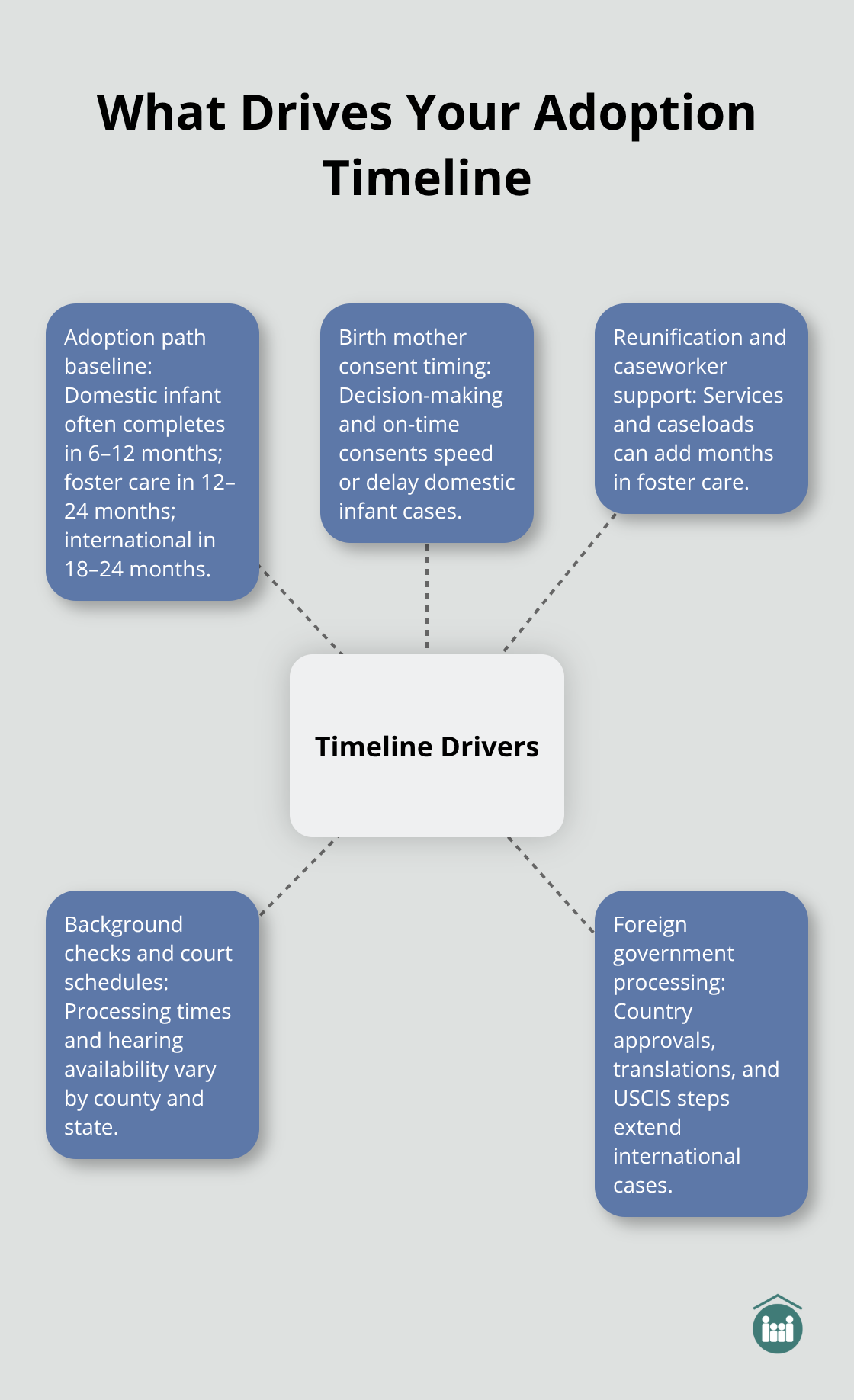
The adoption type you select creates the foundation for your timeline. Domestic infant adoption typically completes in 6 to 12 months according to the 2007 National Survey of Adoptive Parents, while foster care adoption stretches 12 to 24 months due to mandatory reunification efforts. International adoption requires 18 to 24 months minimum because two countries must approve the process. These timelines represent the standard path when all parties cooperate and no complications arise.
However, real delays emerge when parties fail to cooperate or when your county court system moves slowly.
Birth Mother Decisions and Consent Timing
In domestic infant adoption, the birth mother’s timeline for making her decision affects your matching speed. Some expectant mothers decide within weeks, while others take months to commit to an adoption plan. Once matched, her cooperation with signing consents on schedule prevents delays at finalization. Birth mothers in domestic infant adoption sometimes change their minds during the consent window, extending your timeline indefinitely or forcing you to restart matching. This uncertainty is inherent to the path and requires emotional preparation alongside legal readiness.
Foster Care Reunification and Caseworker Cooperation
In foster care adoption, biological parents who engage in reunification services can delay termination of parental rights by months or years, even when reunification ultimately fails. Foster parents must accept this uncertainty as part of the path-the state prioritizes biological family reunification before adoption finalization occurs. Your relationship with the child’s caseworker determines how quickly information flows and whether the state supports your family’s path to adoption. Caseworkers overwhelmed with large caseloads sometimes respond slowly to paperwork requests, extending your timeline by months. Building a positive working relationship with your caseworker accelerates progress considerably.
Background Checks and Court Schedules
Background check processing varies dramatically by county and state. Florida’s Level 2 background checks through FDLE and FBI typically complete within 2 to 4 weeks, but if you or a household member lived in multiple states during the past five years, child-abuse registry checks from each state can add 4 to 8 additional weeks. One delayed check halts your entire timeline since courts will not proceed without clearance for all household members. Court schedules in your specific county create unavoidable timing differences. A finalization hearing in Miami-Dade County may occur faster than the identical hearing in a rural Florida county with fewer judges. Some counties require multiple court appearances, while others finalize by paperwork only in certain adoption types. If your case hits a complication-a missing document, a background check delay, a biological parent filing an objection-your hearing date moves back.
International Adoption and Foreign Government Processing
International adoption requires cooperation from a foreign country’s government, which operates on its own timeline and may prioritize certain cases over others. Language barriers and document translation requirements add weeks to processing. Your USCIS-approved immigration attorney manages these delays, but you cannot control foreign government speed. Understanding these timing realities prevents frustration and helps you plan your family’s adoption with realistic expectations about what you can control and what depends on external forces.
Final Thoughts
Florida offers three distinct adoption paths, each suited to different family circumstances and timelines. Domestic infant adoption delivers speed if your budget allows $30,000 to $60,000, with most matches occurring within one to two years. Foster care adoption provides affordability at $0 to $5,000 and serves families ready to parent older children or sibling groups, though timelines extend 12 to 24 months due to reunification requirements. International adoption demands the greatest investment in time and money, often exceeding $40,000 and stretching beyond two years because two countries must approve the process.
The easiest adoption process for your family depends on balancing cost, timeline, and your readiness to support a child’s specific needs. A family with substantial savings and flexibility may find domestic infant adoption fastest, while a family prioritizing affordability and willing to wait longer may discover foster care adoption offers the strongest financial advantage. A family drawn to international adoption must accept extended timelines as the cost of pursuing that path.
Contact Juliana Gaita, P.A. to discuss which adoption path aligns with your family’s resources and goals. During a free consultation, you’ll learn whether your circumstances fit the adoption type you’re considering and what timeline to expect. We guide families throughout Florida seeking to adopt through domestic infant, foster care, or international pathways.