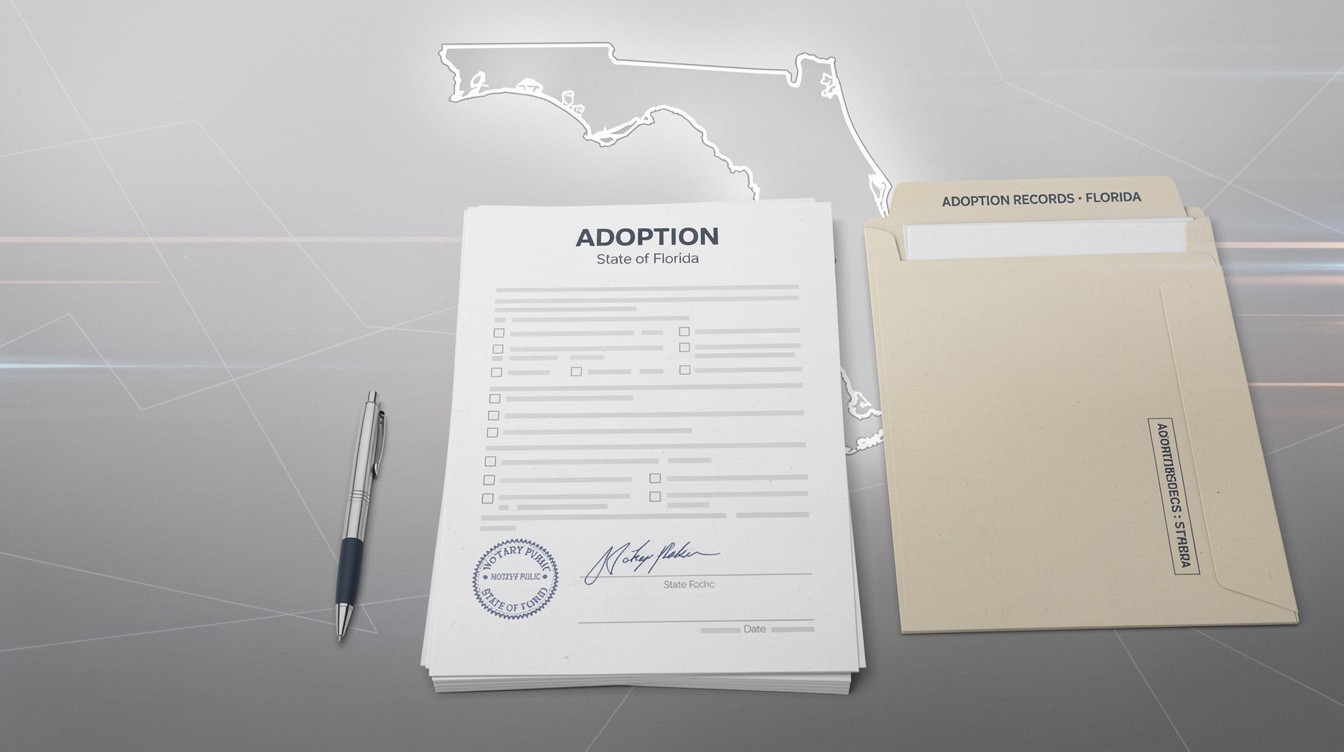
Adoption paperwork in Florida involves multiple forms, strict filing requirements, and tight deadlines. Missing a single signature or submitting documents out of order can delay your adoption by months.
We at Juliana Gaita, P.A. have helped families navigate this process successfully. This guide walks you through the exact documents you need, common mistakes to avoid, and how to stay organized from start to finish.
What Documents Do You Actually Need to File in Florida?
Florida adoption requires specific forms that vary by adoption type. The Florida Department of Children and Families maintains a searchable form repository containing the exact documents you need. The adoption petition serves as your starting document, filed with the circuit court in the county where the child resides. For stepparent adoptions, you file Form 12.981(a)(1) along with a consent form or, if consent is waived, Form 12.981(a)(3) with supporting evidence of abandonment. Agency and private adoptions require the same petition but include additional documentation: home study reports, background check clearances, and termination of parental rights orders. The Florida Department of Children and Families requires that you complete all forms using the correct software-some forms need Adobe Acrobat Reader, others require Microsoft Word or Excel. Downloading official versions from the DCF forms portal prevents submission rejections caused by outdated or incorrectly formatted documents.
Filing Order Prevents Costly Delays
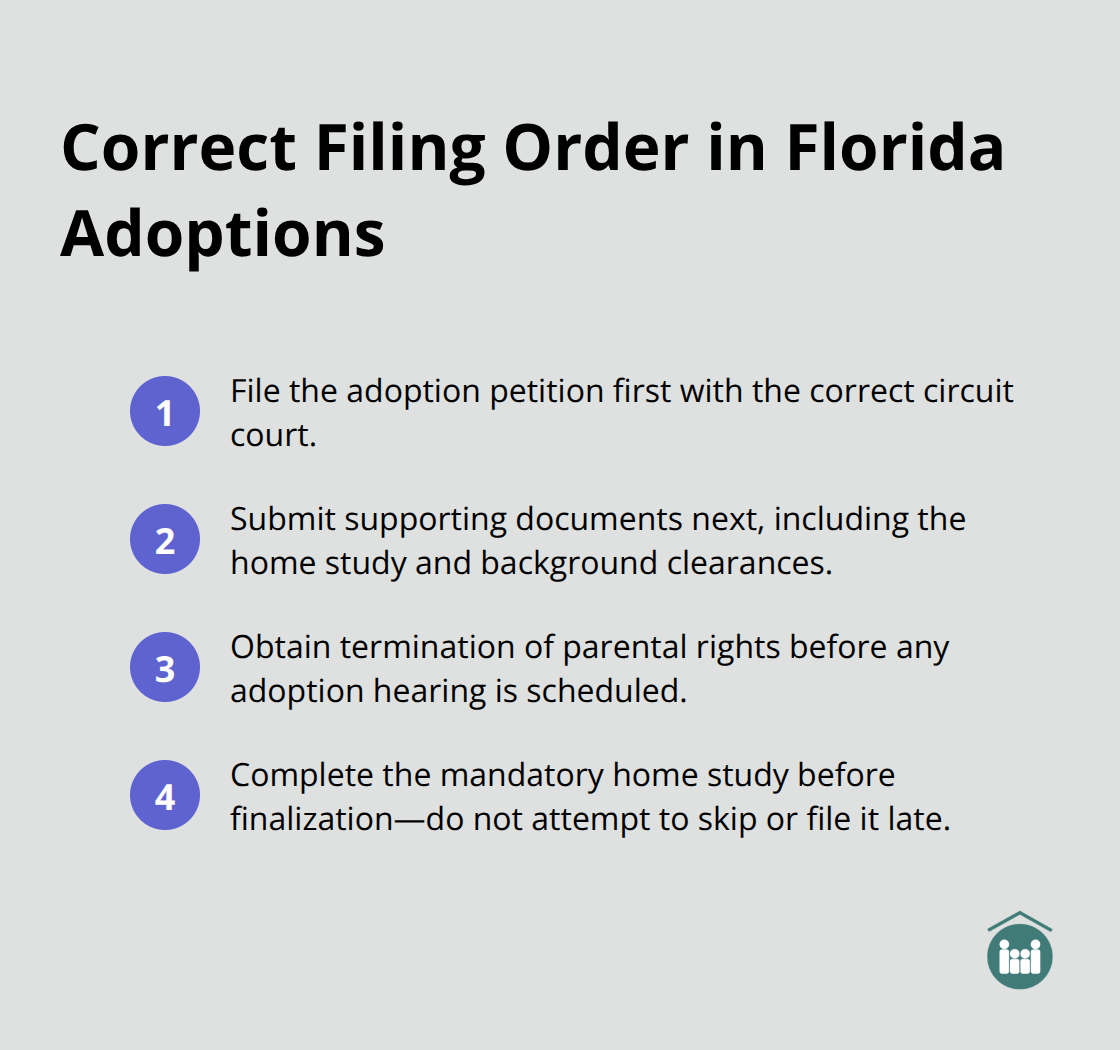
Courts reject submissions filed out of sequence, which is why understanding the correct filing order matters. You must file the adoption petition first, then submit supporting documents like the home study and background clearances. Termination of parental rights must occur before the adoption petition receives a hearing; attempting to file these simultaneously creates confusion and rejection. The state requires a mandatory home study before finalization, so you cannot skip this step or file it after other documents. Under Florida Statute 63.064 for stepparent adoptions, consent forms or waiver petitions must accompany the initial petition filing.
Court filing fees range from $300 to $500 depending on the county, with fee waivers available based on income. Most adoptions take 6 to 12 months from petition filing to finalization, but incorrect filing order can extend this timeline to 18 months or longer.
Deadlines and Background Check Requirements
Florida’s new background check requirements, effective under House Bill 1083, mandate that all household members submit fingerprints to the Florida Department of Law Enforcement within seven days of home study initiation. Missing this seven-day window delays your entire case because the home study cannot receive approval without completed fingerprint clearances. The DCF will also check criminal histories for any non-residents present in your home for five consecutive days or seven days within a 30-day period. Publication notice for missing biological parents costs $200 to $400 and adds 30 to 45 days to your timeline, so locating parents early prevents this delay. Court hearings on adoption petitions typically occur within 60 days of filing once you submit all documents correctly. If your case involves a contested consent waiver, you should expect an additional 6 to 12 months for mediation and hearings (with mediation costing $300 to $500 per session).
What Comes Next in Your Paperwork Journey
Understanding which documents you need and when to file them sets the foundation for your adoption. The next critical step involves recognizing the mistakes that derail countless Florida adoptions-mistakes that proper attention to detail can prevent entirely.
Paperwork Mistakes That Delay Florida Adoptions
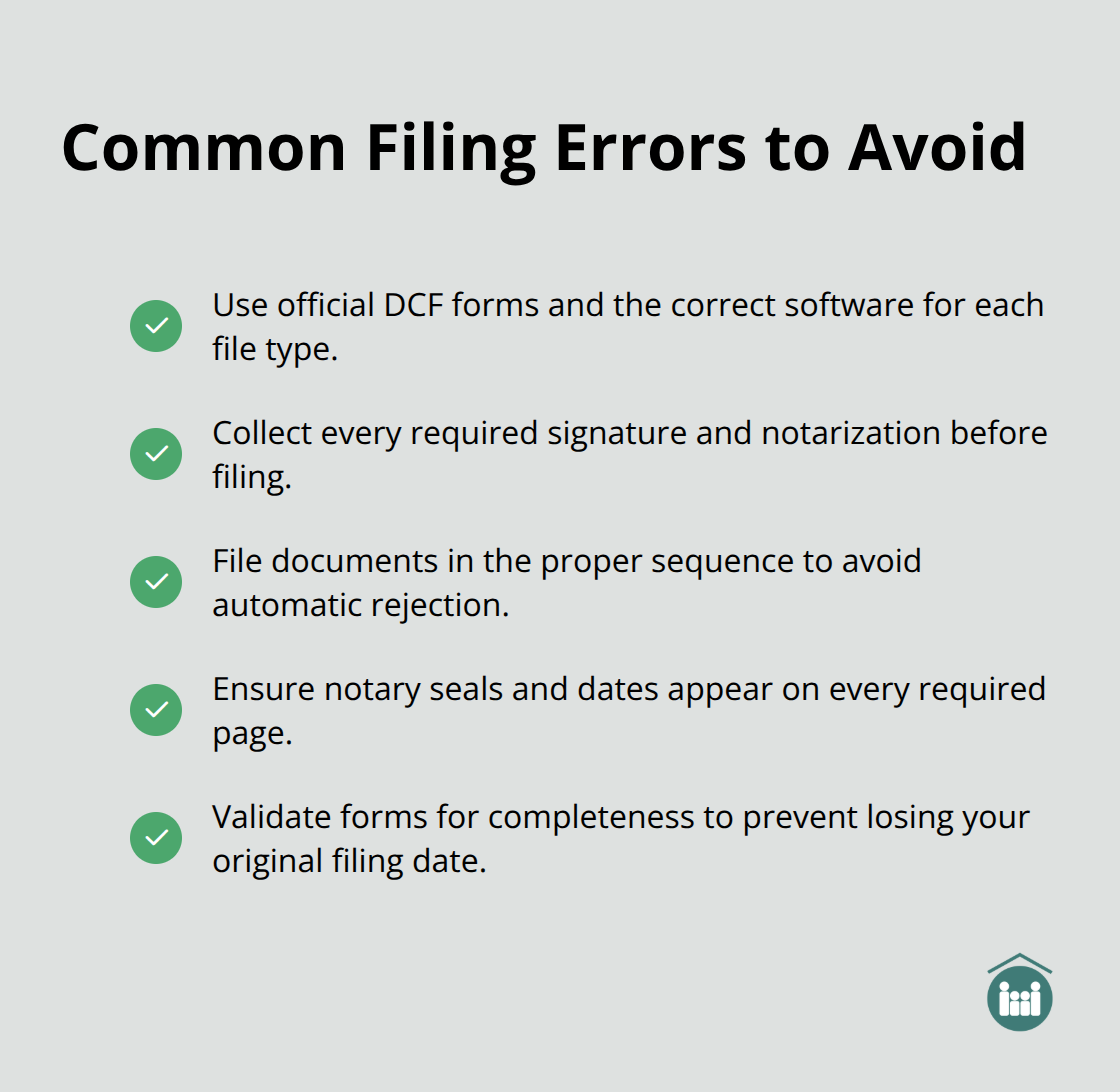
Form errors destroy Florida adoptions faster than almost anything else. Courts reject petitions with incomplete information, missing signatures, or notarization failures-and each rejection adds weeks or months to your timeline. The Florida Department of Children and Families reports that approximately 35% of adoption submissions contain at least one critical error on the initial filing. Most rejections stem from three preventable problems: applicants fill forms with incorrect software versions, omit required signatures from notaries or witnesses, and submit documents in the wrong sequence.
When a court rejects your petition, you restart the filing process from scratch, losing your original filing date and pushing your case backward in the court queue.
Software Errors Create Immediate Rejections
The DCF forms portal requires Adobe Acrobat Reader, Microsoft Word, or Microsoft Excel depending on the form type. Opening a Word form in Excel or attempting to print a PDF form without the correct software produces corrupted files that courts automatically reject. A single missing notarization on a consent form or waiver petition forces you to obtain a new signature and refile-a process that typically costs $50 to $150 and consumes 5 to 10 business days. Download official versions from the DCF forms portal to prevent submission rejections caused by outdated or incorrectly formatted documents.
Notarization and Signature Requirements
Consent forms and waiver petitions must bear original notary seals-photocopies or digital signatures do not satisfy Florida Statute 63.064 requirements. Both adoptive parents must sign the petition, the home study, and financial disclosure documents. If your case involves a stepparent adoption where consent is waived, the waiver petition requires the signature of a judge or magistrate certifying that the diligent search was conducted properly; missing this judicial signature invalidates the entire waiver claim and forces you to restart the abandonment process.
Notaries must sign and date every page of multi-page documents, not just the final page. Courts regularly reject submissions where only the last page bears a notary seal. Publication notices for missing biological parents require notarized affidavits confirming that you conducted a diligent search using at least four methods (last-known employer, family contacts, social media, and public records). Incomplete affidavits prevent courts from authorizing the publication process, extending your timeline by 30 to 45 days. Hiring a notary public costs $5 to $15 per document, but the time saved by obtaining correct notarization upfront prevents far costlier delays.
Document Sequence Matters
Courts reject submissions filed out of sequence, which is why understanding the correct filing order matters. You must file the adoption petition first, then submit supporting documents like the home study and background clearances. Termination of parental rights must occur before the adoption petition receives a hearing; attempting to file these simultaneously creates confusion and rejection. The state requires a mandatory home study before finalization, so you cannot skip this step or file it after other documents.
Collect all signature requirements in writing before you begin the filing process so you never submit an incomplete document to the court. The next critical step involves organizing your paperwork system to prevent errors before they reach the courthouse.
How to Organize Adoption Paperwork Without Losing Track
Create a Master Document Tracking System
Organization prevents the rejections and delays that plague disorganized filers. A master spreadsheet lists every required document for your adoption type, the filing deadline, the responsible party, and completion status. Stepparent adoptions require fewer documents than agency adoptions, so your spreadsheet structure depends on which adoption path you follow. For stepparent cases, track the adoption petition, consent or waiver forms, home study, background clearances, and the termination of parental rights order.
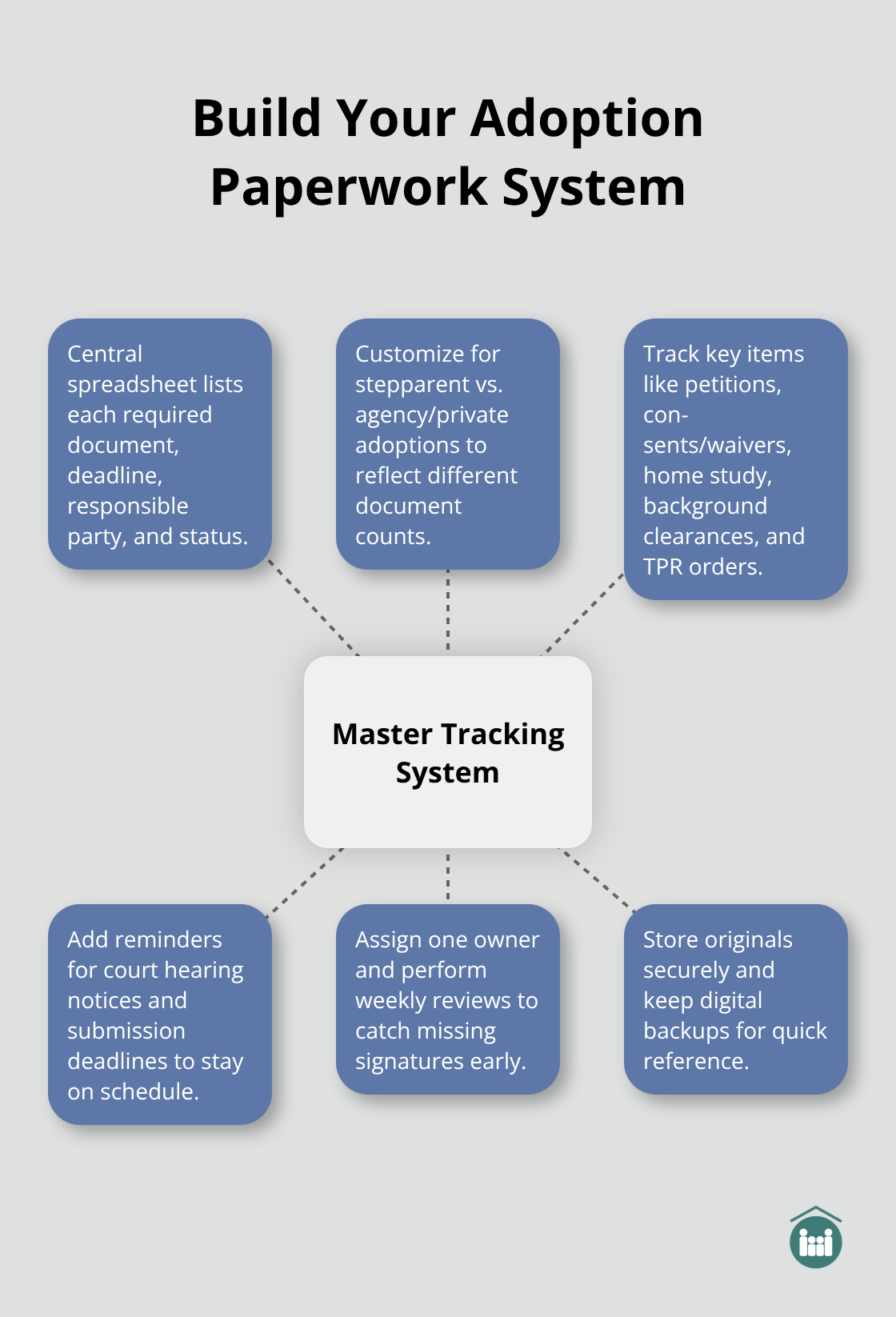
For agency or private adoptions, add home study reports, background check clearances, financial disclosures, and court hearing notices to your tracking system.
Establish a Dedicated Filing System
Assign a specific folder on your computer or a physical filing cabinet exclusively for adoption documents. Name each file with the document type and submission date so you never confuse versions. Software errors cause approximately 35% of initial filing rejections according to the Florida Department of Children and Families, so download every form directly from the official DCF forms portal and verify you have the correct software before opening any document. Store original notarized documents in a fireproof safe or safety deposit box because courts will not accept photocopies of consent forms or waiver petitions. Keep digital copies on an external hard drive stored separately from your originals.
Set Calendar Alerts for Critical Deadlines
Set phone reminders for the seven-day fingerprint submission window required under House Bill 1083, since missing this deadline delays your entire home study approval. Create a separate calendar event for every court-imposed deadline, including the 60-day window from petition filing to your first hearing. If your case involves a missing biological parent, mark the publication notice deadline on your calendar immediately after filing the diligent search affidavit, as publication adds 30 to 45 days to your timeline. Track mediation costs if your adoption becomes contested, since mediation typically costs $300 to $500 per session and resolves about 60% of disputes.
Document All Payments and Communications
Document every payment to your notary, the Florida Department of Law Enforcement, and the court so you maintain accurate records for fee waivers or reimbursement requests. Assign one household member to manage the spreadsheet and calendar so communication failures do not cause missed deadlines. A weekly review of your spreadsheet confirms all documents remain on schedule and no signatures have been overlooked. This systematic approach (combined with attention to detail) prevents the costly errors that extend timelines from 6–12 months to 18 months or longer.
Final Thoughts
Adoption paperwork in Florida requires three core actions: you must use the correct documents, file them in the proper sequence, and stay organized throughout the process. The mistakes that delay adoptions stem from preventable errors-software incompatibility, missing notarizations, and out-of-order filings account for the majority of court rejections. A master spreadsheet tracking every document, deadline, and responsible party eliminates the confusion that leads to missed signatures or forgotten forms, while calendar alerts for the seven-day fingerprint window, the 60-day hearing deadline, and publication notice timelines keep your case moving forward without unnecessary delays.
Florida’s adoption paperwork requirements have become more transparent and standardized under House Bill 1083, which means you access clearer fee structures, published cost comparisons through the DCF Adoption Transparency website, and stricter timelines that courts enforce consistently. Families who organize their documents early, download official forms from the DCF portal, and track deadlines systematically complete their adoptions within the standard 6 to 12-month window. Those who overlook these details often face 18-month timelines or longer, making preparation the difference between a smooth process and a prolonged one.
Professional legal guidance matters because adoption law involves statutory requirements, filing procedures, and evidence standards that vary by adoption type. An attorney familiar with Florida Statute 63.064 and the current regulatory landscape identifies which documents your specific situation requires, ensures proper notarization and signatures, and files documents in the correct sequence the first time. Contact Juliana Gaita, P.A. for a confidential consultation to discuss your adoption goals and begin organizing your adoption paperwork in Florida with professional support.