Adoption in Florida involves real costs that many families don’t anticipate. From agency fees to court expenses, understanding how much the adoption process costs helps you plan financially and avoid surprises.
At Juliana Gaita, P.A., we’ve guided families through these expenses for years. This guide breaks down what you’ll actually pay and where financial assistance can help.
What Are the Actual Costs Across Different Adoption Types in Florida
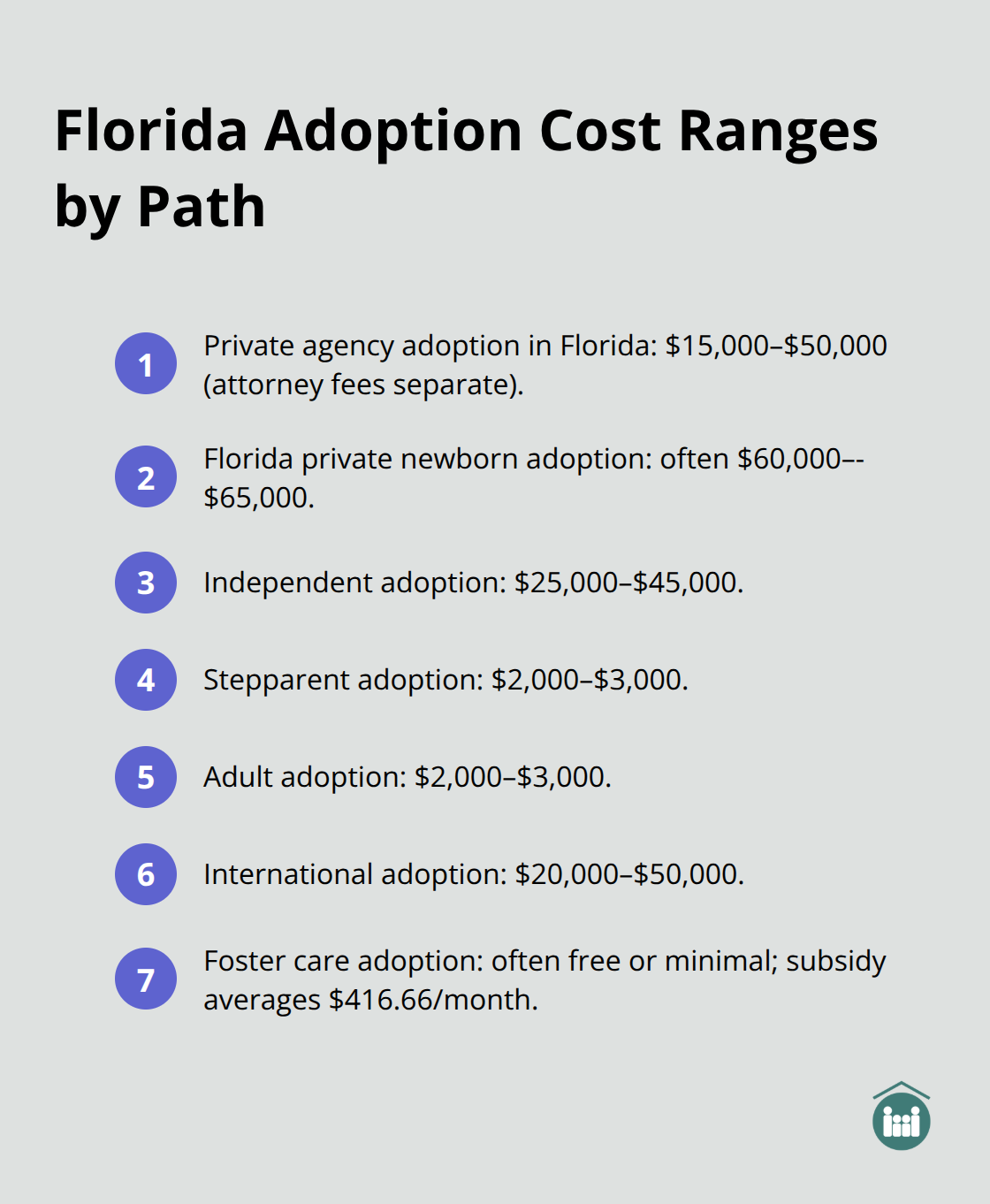
Private agency adoptions in Florida typically cost between $15,000 and $50,000, according to data from CreatingAFamily.org. These fees cover intake, matching services, home visits, birth parent travel, required trainings, and post-adoption counseling, though attorney fees are separate. The national average for private newborn adoption sits around $30,000 to $40,000, but Florida cases often run $60,000 to $65,000 due to birth mother living expenses and medical care.
The main cost drivers are straightforward: the expectant mother’s rent, utilities, groceries, maternity clothing, and transportation during pregnancy and up to six weeks postpartum. Florida law permits these living expenses without court approval as long as they remain reasonable, though amounts exceeding $5,000 require judicial approval. What separates reputable agencies from questionable ones is transparency. Agencies quoting unusually low numbers often omit critical services like legal coordination, birth mother support, or marketing to reach expectant mothers.
The larger agencies with national reach typically charge more but offer shorter wait times and 24/7 birth mother counseling, which reduces disruption risk and protects your investment.
Independent Adoption and Self-Directed Paths
Going the independent route without an agency typically costs $25,000 to $45,000. You hire an attorney to handle the entire process instead of working through an agency middleman. This approach requires more legwork on your part because you must screen potential birth parents and manage logistics yourself. You still need a home study (costing $900 to $2,000) and legal representation for both sides, but you avoid agency markup fees.
The tradeoff is significant: you gain some cost savings but lose the professional support network that agencies provide. Independent adoption demands more time, more personal outreach, and considerably more risk management on your shoulders.
Stepparent and Adult Adoption Expenses
Stepparent adoptions are far less expensive, typically running $2,000 to $3,000 in legal fees alone. These cases are straightforward because one biological parent already consents, which eliminates the need for extensive home studies, background checks, or birth parent involvement. Adult adoption follows a similar cost structure, usually landing in the $2,000 to $3,000 range as well.
Court costs and attorney fees represent the bulk of the expense. Both processes move faster through Florida courts because the legal complexity is minimal compared to infant or private adoptions. If you’re considering either path, the financial barrier is genuinely low, making these options accessible for families who might struggle with the higher costs of newborn adoption.
Understanding which adoption path fits your family’s needs and budget sets the stage for the next critical factor: what actually influences these costs and where they fluctuate most.
What Drives Adoption Costs Up or Down
The adoption path you choose determines cost more than anything else. Infant adoption through a licensed agency costs substantially more than stepparent adoption because infant cases require extensive marketing to locate birth mothers, medical care coverage, living expenses for the expectant mother, and comprehensive counseling services. Foster care adoption sits at the opposite end-often free or minimal cost-because the state covers professional fees and actually provides monthly subsidies averaging $416.66 per month through age 18 according to the Florida Department of Children and Families. The complexity within each path also matters. A straightforward private newborn adoption runs $60,000 to $65,000 in Florida, but cases involving multiple birth parents, medical complications, or interstate coordination push costs higher.
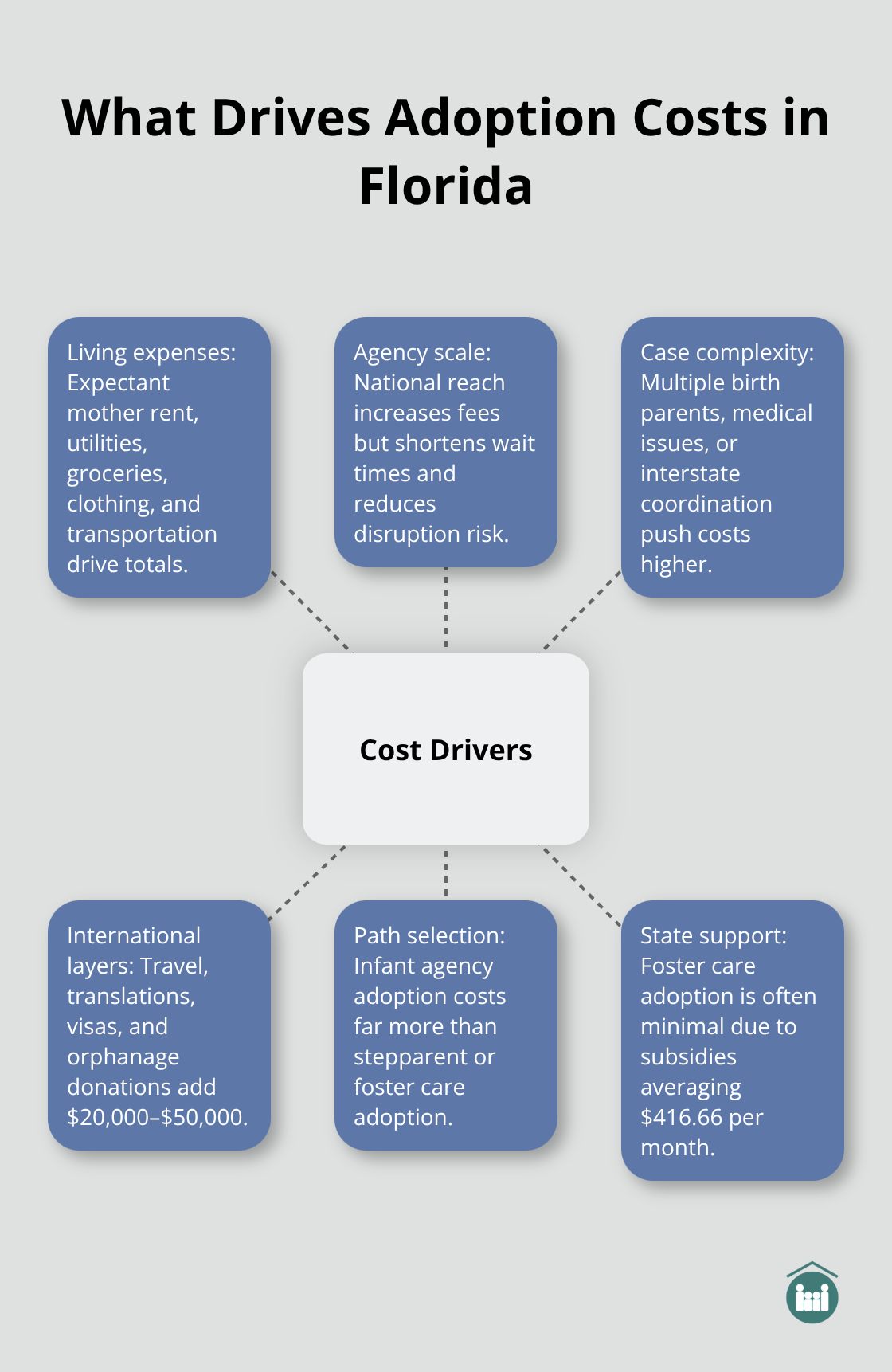
International adoption introduces additional layers: citizenship processing, document translation, orphanage donations, and multiple trips abroad typically total $20,000 to $50,000. Agencies with national reach charge more because they invest heavily in marketing to reach expectant mothers across the country, which reduces wait times and disruption risk. Smaller local agencies may quote lower fees but offer fewer opportunities and longer waits. The financial trade-off is real: higher upfront costs often mean faster placement and stronger legal protections.
Legal Representation Shapes Your Bottom Line
Attorney fees vary dramatically based on complexity. Stepparent adoptions cost $2,000 to $3,000 because the legal work is minimal-one parent consents, and paperwork flows quickly. Independent adoptions require attorneys on both sides to handle everything an agency would normally coordinate, running $25,000 to $45,000 total. Florida law requires court approval for certain expenses exceeding thresholds: birth mother living expenses over $5,000 need judicial sign-off, and legal fees exceeding $12,000 demand scrutiny. An adoption attorney hired early protects your budget because they identify which expenses require court approval before you incur them.
Home Studies and Background Checks
Home studies and background checks add $900 to $2,000, with costs and state requirements varying. These aren’t optional-Florida law mandates them for all adoption types except stepparent cases where the adoptive parent already lives with the child. A licensed social worker conducts the home study, which includes background checks, home visits, and extensive documentation. This requirement protects both your family and the child by establishing a safe, stable environment.
Tax Credits and Employer Benefits
The federal Adoption Tax Credit of $16,810 for 2024 applies to qualified legal, court, agency, and travel expenses, but you must track documentation carefully to claim it. Employer adoption assistance programs reimburse between $5,000 and $15,000 at many companies, which directly reduces out-of-pocket costs. Families who combine the tax credit, employer benefits, and grants from HelpUsAdopt.org can offset $30,000 or more of total expenses.
Hidden Costs and Budget Protection
The mistake many families make is budgeting based on low-end estimates without understanding which costs are included-then discovering hidden expenses mid-process. Some agencies quote the low end of the range to appear affordable, but those estimates may omit costs incurred later. Transparent cost breakdowns are essential; avoid agencies that hide or exclude fees like legal, living expenses, or marketing. Risk-sharing programs can refund fees if a match disrupts, which protects your financial investment. Understanding these cost drivers prepares you to evaluate financial assistance options that can meaningfully reduce what your family actually pays.
How to Pay for Adoption Without Draining Your Savings
The Federal Adoption Tax Credit: Your Largest Financial Tool
The federal Adoption Tax Credit of $16,810 for 2024 stands as your single largest financial tool, but most families mishandle it. The credit applies to qualified legal fees, court costs, agency fees, and travel expenses, but only if you document everything meticulously. Many families discover mid-adoption that they kept poor records and lose thousands in tax benefits. Start a dedicated folder immediately and collect receipts for every expense-attorney bills, court filings, home study fees, travel costs. You claim the credit on your tax return after finalization, which means the money doesn’t reduce your out-of-pocket costs upfront; it comes back as a tax refund or credit. For 2024, the credit is partially refundable, so you may recover funds even if your tax liability doesn’t cover the full amount. The National Council for Adoption confirms this credit applies to intercountry adoptions and re-adoption expenses as well. Don’t rely on your accountant to know adoption tax rules-they change annually, and most tax professionals aren’t current. Consult with an adoption attorney who understands which expenses qualify before you incur them.
Employer Adoption Assistance Programs
Employer adoption assistance programs reimburse between $5,000 and $15,000 at many companies, and this money stacks on top of the federal tax credit. Ask your HR department directly whether adoption assistance exists in your benefits package; many employees never discover this benefit because it’s buried in employee handbooks. Some employers like Carrot Fertility specifically advertise adoption coverage as part of their benefits, signaling that adoption assistance is increasingly common. This reimbursement typically flows to you directly, reducing your out-of-pocket costs immediately rather than waiting until tax season. Combining the federal tax credit with employer reimbursement can offset $20,000 to $30,000 of your total adoption costs.
Nonprofit Grants and Foster Care Subsidies
Grants from nonprofit organizations fill critical gaps that tax credits and employer benefits don’t cover. HelpUsAdopt.org awards grants up to $30,000 to qualified families, and the Gift of Adoption Fund provides additional support. These grants don’t require repayment and can fund adoption-related expenses that tax credits won’t cover.
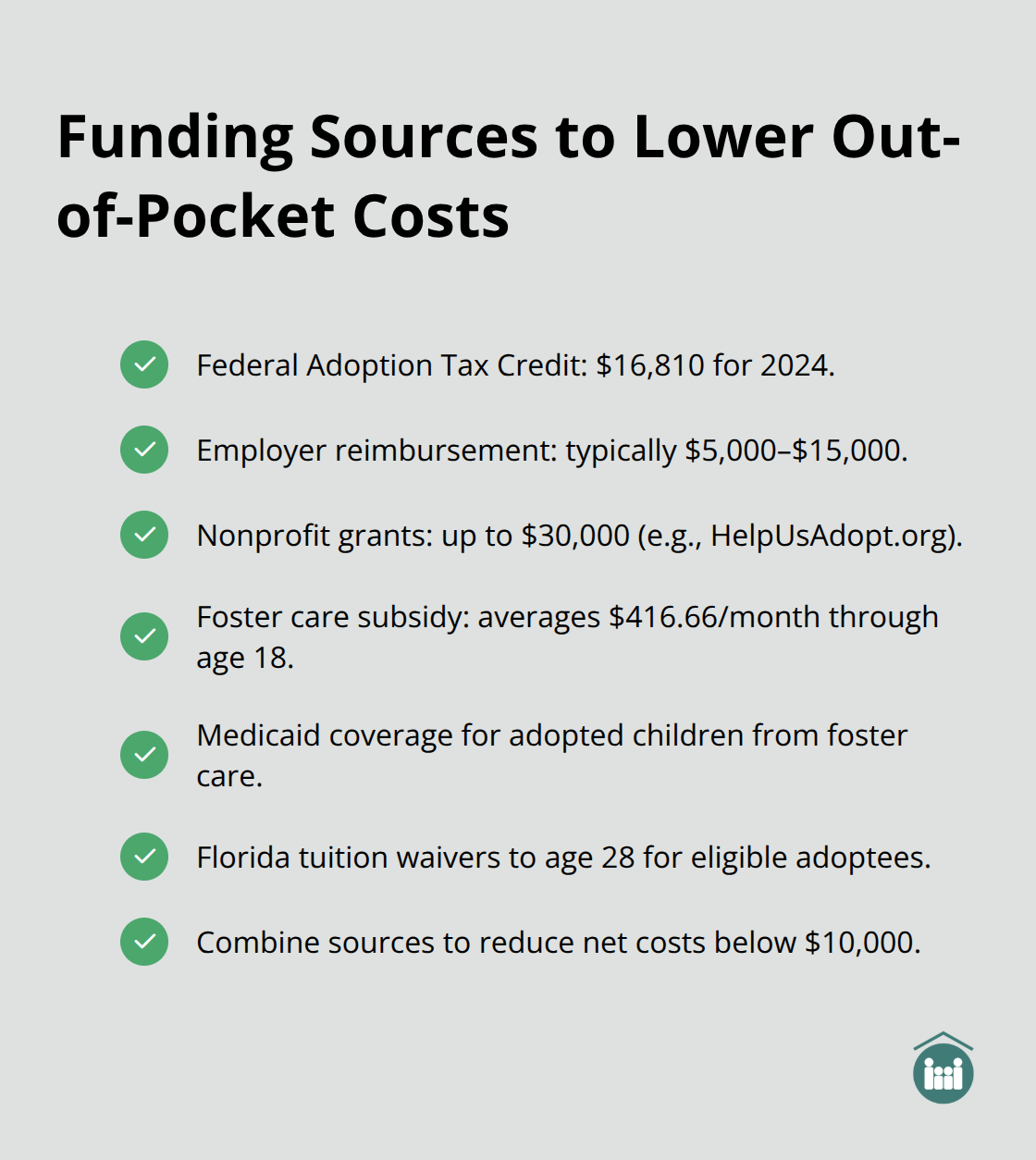
Florida offers specific financial assistance for foster care adoptions that dramatically shifts the cost equation: monthly subsidies average $416.66 per month through age 18 according to the Florida Department of Children and Families, and families can negotiate higher subsidies if the child received a therapeutic or medical foster care rate previously. Adopted children also qualify for Medicaid coverage, which eliminates healthcare costs until age 18 and sometimes extends to age 21 if the child was adopted at age 16 or 17. Florida provides tuition waivers for public universities, community colleges, and vocational schools until age 28 for children adopted from foster care, meaning no tuition or fees including lab fees. These subsidies and benefits make foster care adoption financially viable for families who cannot afford private newborn adoption.
Combining Multiple Funding Sources
The actual strategy involves combining multiple funding sources simultaneously: apply for nonprofit grants three months before you expect finalization, claim the federal tax credit on your return after finalization, request employer reimbursement once you have receipts, and for foster care adoptions, negotiate the subsidy amount with your caseworker based on the child’s previous care level. Families who piece together these resources routinely reduce their net out-of-pocket costs below $10,000 even in expensive private adoptions.
Final Thoughts
Adoption costs in Florida range from minimal to over $60,000 depending on your path, but understanding how much the adoption process costs removes the financial uncertainty that stops many families from moving forward. Foster care adoption costs little to nothing because the state covers professional fees and provides monthly subsidies averaging $416.66 through age 18, plus Medicaid and tuition waivers. Private newborn adoption typically runs $60,000 to $65,000 in Florida due to birth mother living expenses and medical care, while stepparent and adult adoptions cost only $2,000 to $3,000 because the legal complexity is minimal.
Financial assistance exists that most families overlook, and layering these resources together reduces your actual out-of-pocket expenses significantly. The federal tax credit of $16,810, employer reimbursement programs, nonprofit grants up to $30,000, and state subsidies combine to cut your net costs below $10,000 for many families. An adoption attorney from the start protects your budget by identifying which expenses require court approval before you incur them, ensuring all documentation qualifies for tax credits, and structuring the process to minimize legal complications that drive costs higher.
We at Juliana Gaita, P.A. guide families through these financial decisions and help you understand which assistance programs apply to your adoption type. Contact an adoption attorney to discuss your specific situation, understand your financial options, and create a realistic budget. The families who succeed financially in adoption plan early, document everything, and combine multiple funding sources.