Adoption in Florida involves navigating state laws, court procedures, and important decisions about your family’s future. Whether you’re considering domestic infant adoption, foster care adoption, or stepparent adoption, understanding the legal framework is essential.
At Juliana Gaita, P.A., we guide families through adoption legal Florida requirements and help you understand your rights and responsibilities as an adoptive parent. This guide covers the types of adoption available, the process from start to finish, and what you need to know to move forward confidently.
Four Adoption Paths in Florida
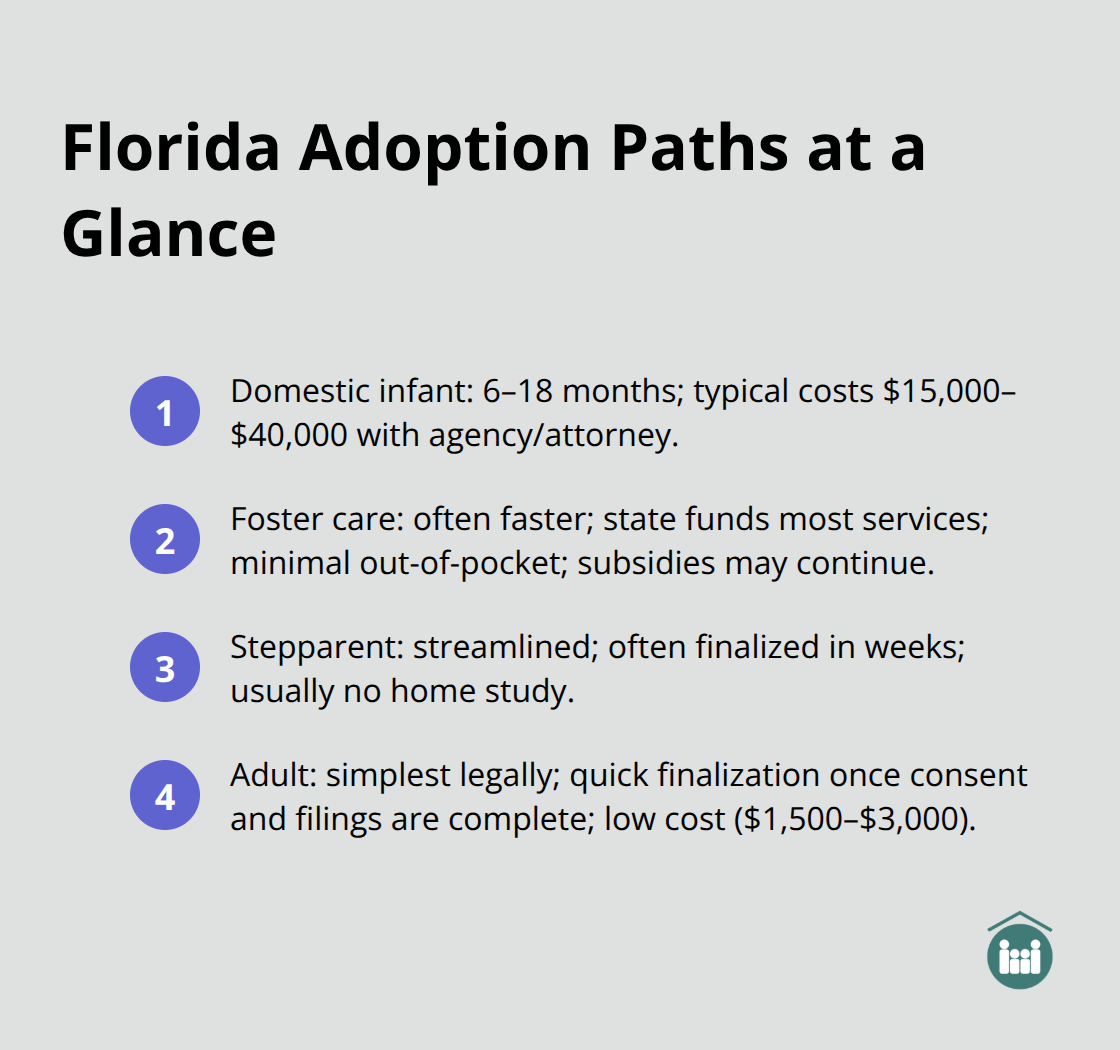
Florida law recognizes four distinct adoption pathways, each with distinct timelines, costs, and legal requirements: domestic infant adoption, foster care adoption, stepparent adoption, and adult adoption.
Domestic Infant Adoption
Domestic infant adoption involves matching with an expectant mother, completing a home study and background checks, obtaining pre-adoption training, and finalizing in court. This path typically takes 6 to 18 months from start to finish, though timelines vary based on matching and court schedules. Adoptive parents cover living expenses for the birth mother during pregnancy and up to six weeks postpartum, medical costs, legal fees, and court expenses. Total costs typically range from $15,000 to $40,000 when working with a licensed agency or attorney.
Foster Care Adoption
Foster care adoption moves faster in many cases because children are already in the state system. The process includes licensing, MAPP training (a trauma-informed parenting program), and often significantly lower costs since the state covers many adoption-related fees. The state funds most services, and many families pay minimal out-of-pocket costs. Adoption subsidies continue after finalization to help cover the child’s needs.
Stepparent and Adult Adoption
Stepparent adoption follows a streamlined process since a home study may not be required, making finalization possible within weeks rather than months. Adult adoption is the simplest path legally and can be finalized quickly once consent is obtained and paperwork is filed with the court. Both paths cost far less-typically $1,500 to $3,000-since no home study is usually required and the legal process is simplified.
Choosing Your Path
Understanding which adoption path aligns with your situation, timeline, and budget matters before you move forward. Each pathway offers different advantages depending on your family’s circumstances and what you hope to achieve through adoption. The next section covers the legal requirements and steps you’ll encounter regardless of which path you select.
The Florida Adoption Process and Legal Requirements
Home Study and Background Checks Form the Foundation
The adoption process in Florida follows a structured sequence regardless of which path you choose. Home studies and background checks form the foundation of every adoption in Florida. The home study typically lasts weeks to months and includes a home inspection, personal interviews, reference checks, financial review, and medical statements from your doctor confirming reasonable health. You’ll need documentation of income, debts, and health insurance or a plan to cover medical needs.
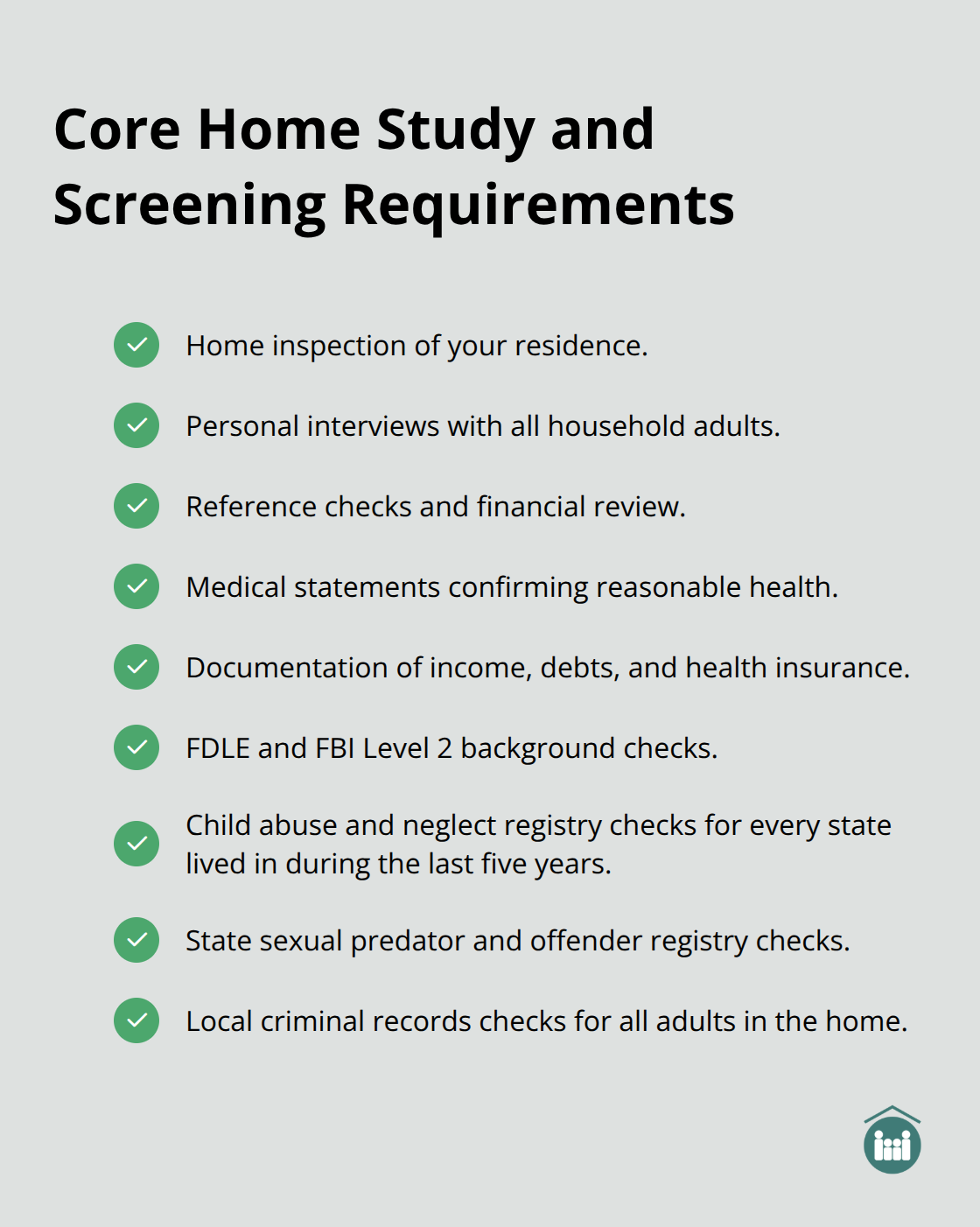
Background screenings are mandatory and thorough. The Florida Department of Law Enforcement and FBI conduct Level 2 checks, child abuse and neglect registry checks cover every state you’ve lived in during the last five years, sexual predator and offender registry checks apply statewide, and local criminal records checks include all adults in your home. A disqualification based on a record is not automatic; the court determines eligibility on a case-by-case basis depending on the adoption type and offense details.
Who Pays for the Home Study
You typically pay the licensed child-placing agency, professionals, or the Department of Children and Families for the preliminary home study, counseling, and final home investigation. These costs vary depending on your location and the agency you work with.
Consent and Termination of Parental Rights
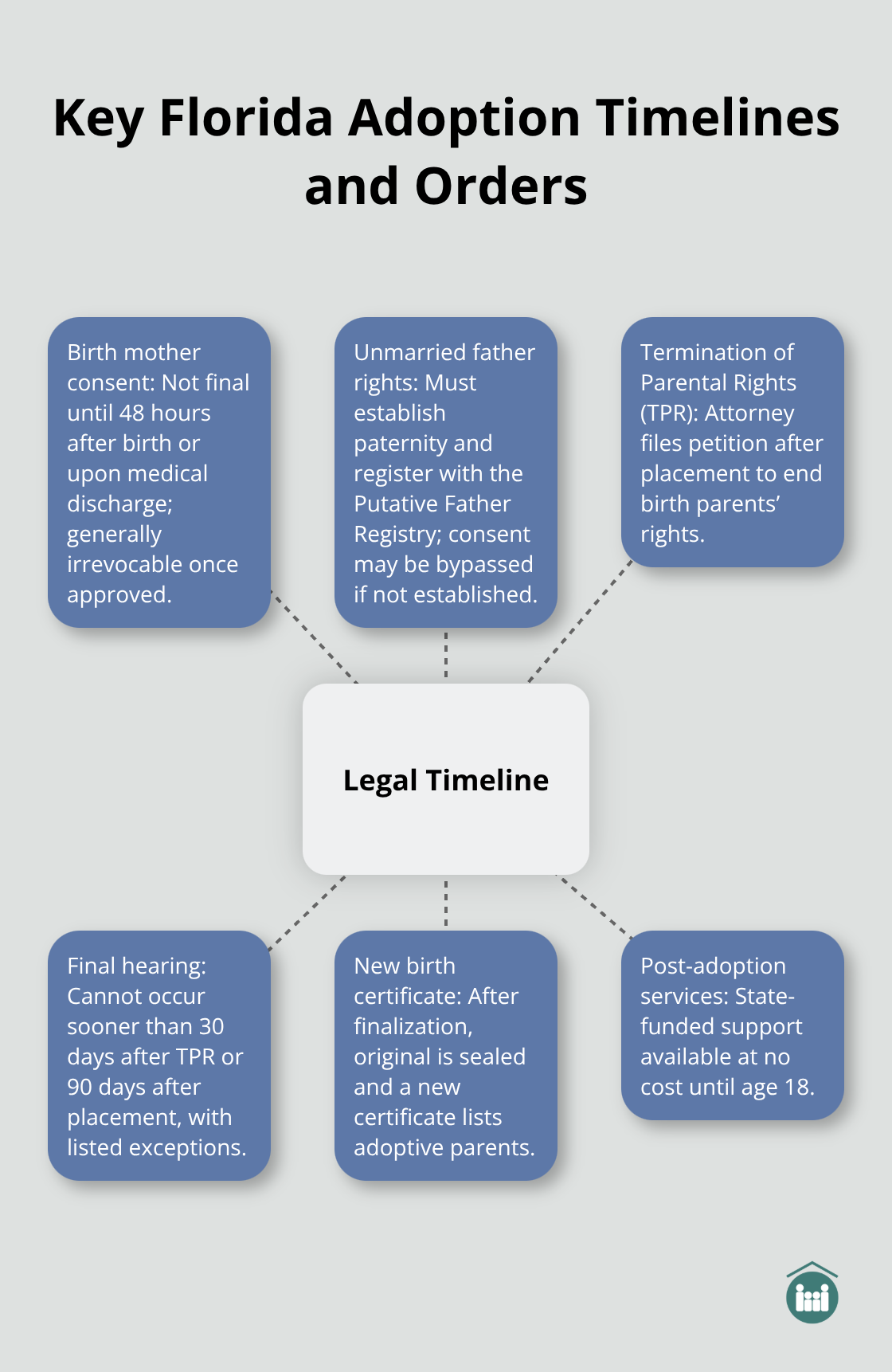
Birth mothers hold the legal right to choose adoption for their child with court approval. Consent cannot be finalized until 48 hours after birth or once the mother is medically discharged. Once signed and court-approved, adoption consent is generally irrevocable, with limited challenges only for fraud or duress.
For unmarried fathers, paternal consent can be bypassed if the father has not legally established paternity or shown involvement. Unmarried fathers must register with the Putative Father Registry to assert rights. After placement, the adoption attorney files a petition to terminate parental rights. The final adoption hearing cannot occur sooner than 30 days after termination or 90 days after placement, with exceptions for stepparent, close relative, and adult adoptions.
Finalization and What Happens Next
Finalization occurs at a court hearing with a favorable social or agency report, where the judge issues a final judgment of adoption granting you full parental rights. After finalization, your child is legally treated as your biological child; the original birth certificate is sealed and a new birth certificate naming you as parents is issued.
Post-adoption support services are available at no cost until your child turns 18, helping your family navigate life after placement and address any challenges that arise. These services provide ongoing assistance as your family adjusts to adoption and builds your life together. Understanding these legal steps prepares you for the responsibilities and rights that come with adoption-topics we explore in the next section.
Rights and Responsibilities After Adoption Finalization
Once the court finalizes your adoption, you gain full parental rights and legal custody of your child. You make all decisions about education, medical care, religious upbringing, and major life choices affecting your child’s welfare. Florida law treats your adopted child identically to a biological child in terms of inheritance rights, succession, and family relationships. Your child inherits from you under Florida’s intestacy laws, and you inherit from your child if they pass away. The new birth certificate issued after finalization lists you as the parent, and the original birth certificate is sealed by the court. This legal status is permanent and cannot be undone except in rare circumstances involving fraud or duress at the time of consent.
Financial Obligations and Tax Benefits
Financial obligations begin immediately after placement and extend through your child’s minority. You must provide food, shelter, clothing, education, and medical care. If your child qualifies for adoption subsidies through the state-especially in foster care adoptions-these funds help offset costs until the child turns 18 or sometimes 21 depending on the child’s needs and circumstances.
The federal adoption tax credit, which was $16,810 in 2024 according to the IRS, can significantly reduce your tax burden in the year finalization occurs. Many employers offer adoption benefits such as paid leave or reimbursement for adoption expenses, so review your company’s benefits package to understand what support is available to your family.
Access to Medical and Social History Records
You have access to your child’s medical and social history records, including prenatal and birth information, health conditions, family medical history, and background information about the birth parents. Florida law allows you to request these records from the adoption entity or agency that facilitated the adoption. If your child was in foster care, the state maintains detailed records about their background and experiences. Understanding your child’s history helps you provide appropriate support and anticipate potential health needs.
Open Adoption Agreements and Ongoing Contact
Open adoption agreements, while not legally enforceable in Florida unless included in the final court order, establish a foundation for contact with birth parents if both parties agree. Post-adoption contact agreements encourage some level of openness, though the specific arrangements depend entirely on what you and the birth parents negotiate. These relationships require ongoing communication and respect but can benefit your child’s sense of identity and connection to their origins.
Final Thoughts
Florida adoption law creates a structured path for building your family, and each adoption type-domestic infant, foster care, stepparent, or adult-carries distinct legal requirements, timelines, and costs. Home studies, background checks, consent procedures, and court finalization protect children and confirm that adoptive families understand their responsibilities. Your rights as an adoptive parent include full legal custody, inheritance protections, and access to your child’s medical history, which empowers you to make informed decisions about your child’s future.
Adoption legal Florida matters demand attention to detail because each family’s situation differs based on timeline, budget, and circumstances. Birth mothers receive specific protections, unmarried fathers must take concrete steps to assert their rights, and adoptive parents must navigate fee structures and post-adoption support services carefully. Missing a procedural step or misunderstanding a legal requirement can delay finalization or create complications that affect your family for years.
We at Juliana Gaita, P.A. help families throughout Florida navigate adoption law and protect their interests at every stage. Whether you’re exploring your options, ready to match with a birth mother, or seeking to adopt a stepchild, contact us to discuss your adoption goals and learn how we can support your journey.