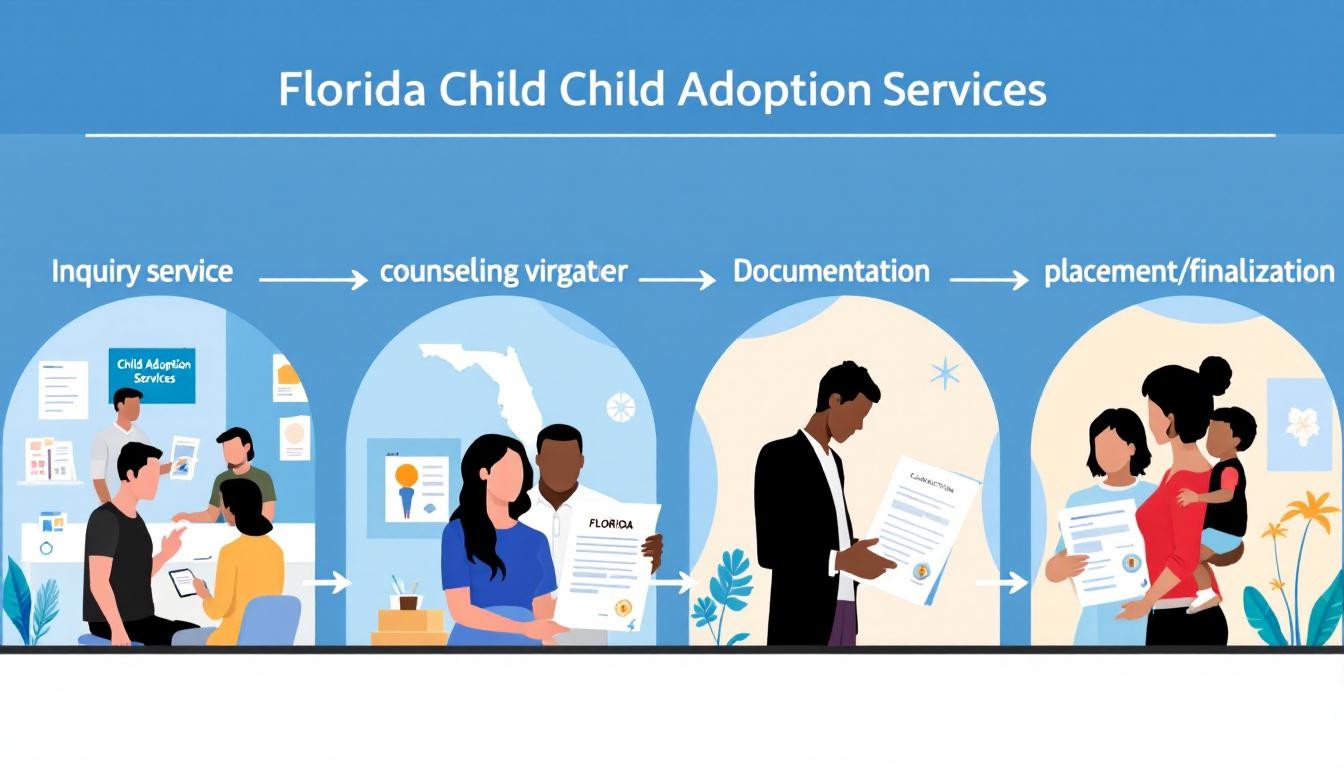
Adopting a child in Florida involves navigating legal requirements, court procedures, and emotional decisions that can feel overwhelming without proper guidance. We at Juliana Gaita, P.A. understand that families need reliable information and support at every step of their adoption journey.
This guide covers the types of adoption available in Florida, the services that help families succeed, and the obstacles you might face along the way. You’ll find practical information to help you move forward with confidence.
How Florida’s Four Adoption Pathways Work
Florida recognizes four distinct types of adoption, and choosing the right path fundamentally shapes your timeline, costs, and legal requirements. Entity adoption through a licensed agency or attorney is the most common route for families pursuing infant or foster care placements. Stepparent adoption applies when a spouse wants to legally adopt their partner’s biological child and typically requires consent from the biological parent not in the marriage. Relative adoption covers situations where grandparents, aunts, uncles, or other family members become the child’s legal parents.
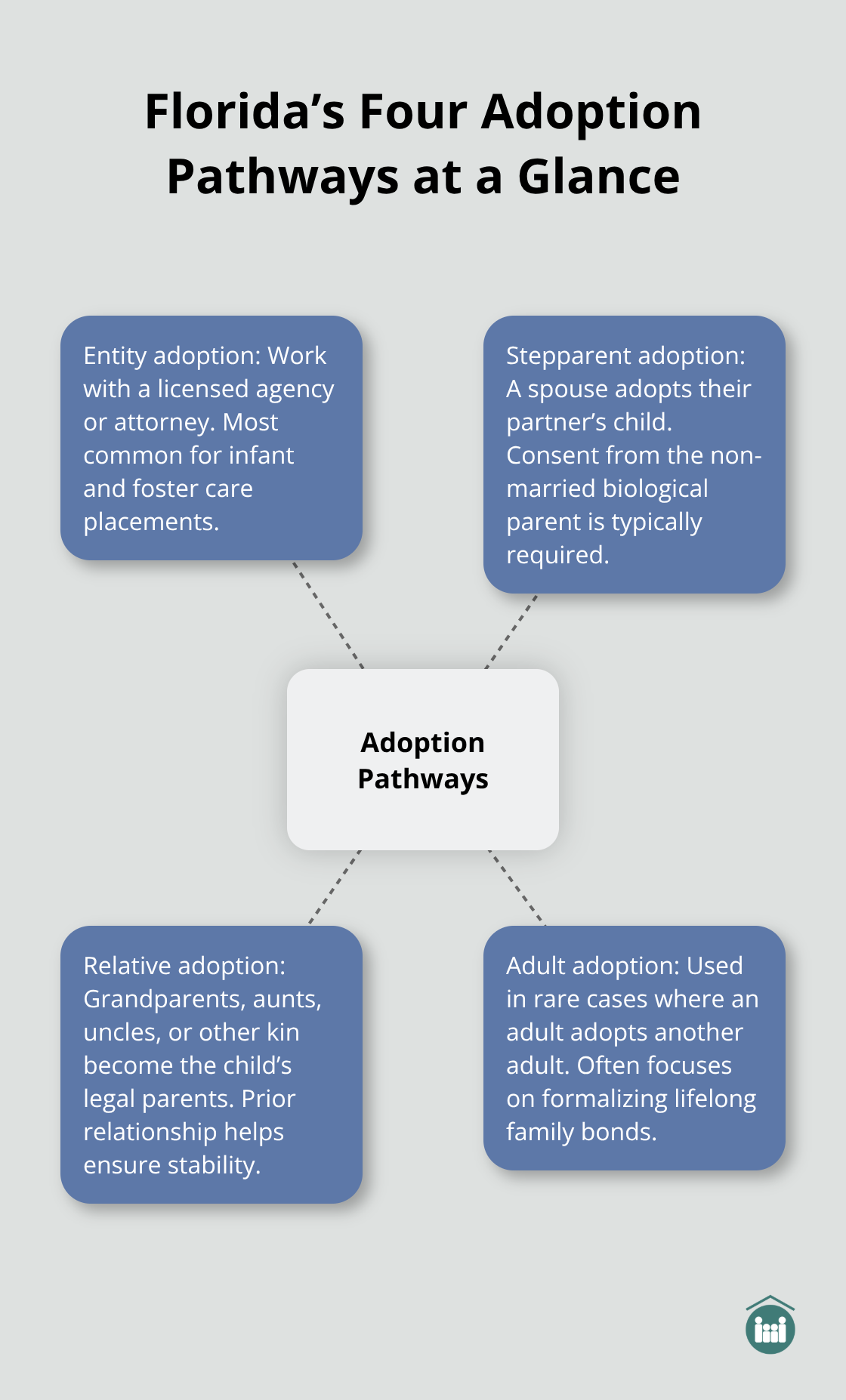
Adult adoption exists for rare cases where someone adopts another adult. The path you select determines which professionals you’ll work with and how quickly your case moves through the court system.
Foster Care Adoption Moves Fastest
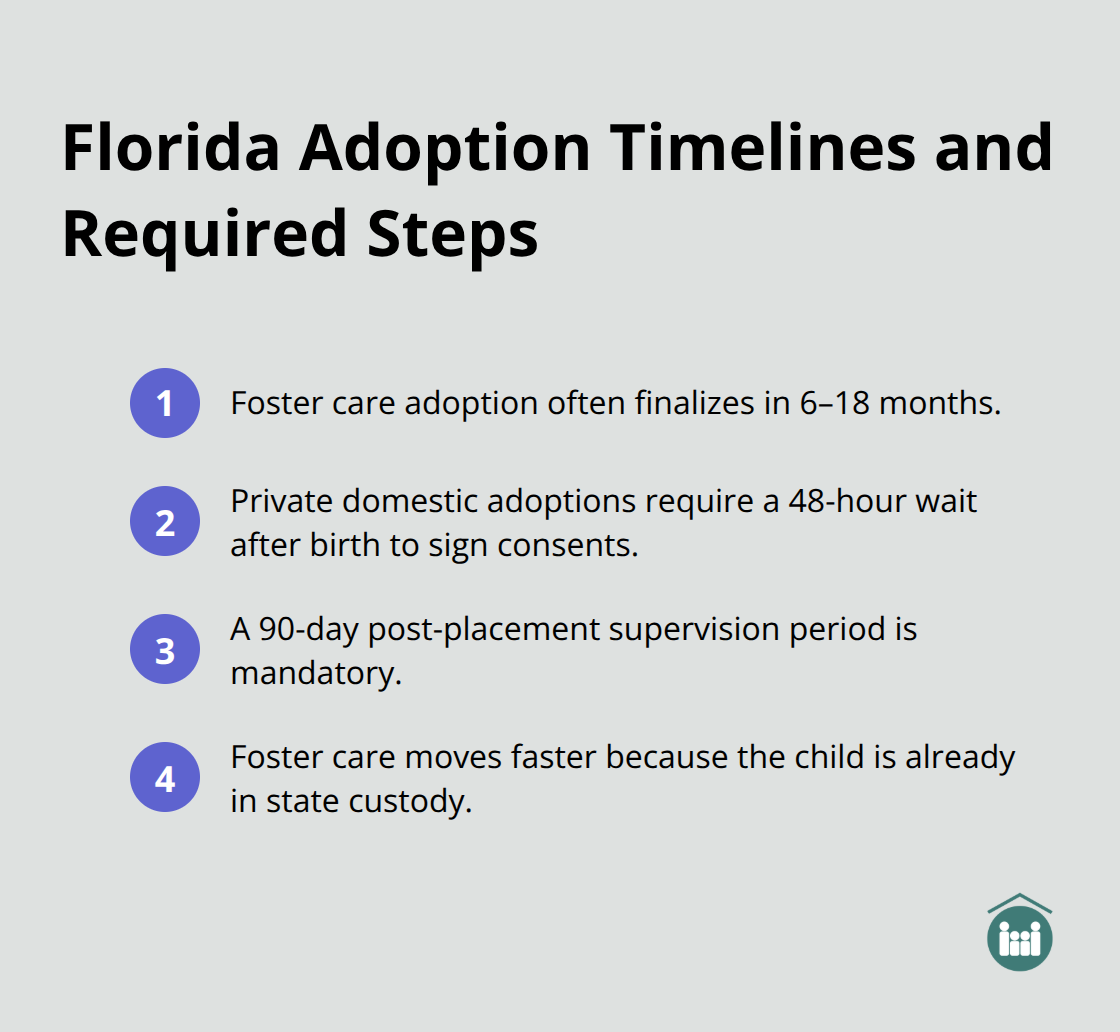
Foster care adoption typically takes 6 to 18 months from start to finalization, making it the fastest route for most families. This speed exists because the child is already in state custody and the groundwork for placement is underway. Private domestic infant adoptions can stretch longer because they depend on matching with an expectant birth mother, and Florida law requires a 48-hour waiting period after birth before consents can be signed. After placement, Florida mandates a 90-day supervision period with monthly in-home contact before finalization occurs.
Virtual Hearings Eliminate Travel Barriers
The court hearing itself-your finalization-can happen via virtual hearing through Zoom, which eliminates the need for out-of-state families to travel repeatedly. Interstate adoptions require ICPC approval, which typically takes 10 business days but can occasionally be approved same-day or next-day. Over 3,000 children were adopted from Florida foster care last year, yet approximately 800 children remain waiting for permanent families, highlighting both the volume of successful placements and the persistent need for adoptive parents.
Courts Protect Rights Through Strict Standards
Florida courts require clear and convincing evidence before terminating parental rights, and both birth parents must consent unless their rights are excused by the court. The biological father’s rights depend critically on whether he registers with the Putative Father Registry-if he remains unmarried and fails to register, his rights may be terminated without his involvement. A favorable home study is mandatory for all adoptions except stepparent, close relative, or adult adoptions, and this assessment evaluates safety and readiness through background checks, home visits, interviews, and parent education.
The Final Judgment Transforms Legal Status
Once the petition for termination of parental rights is filed, the court oversees the process until the final judgment grants full parental rights to you. At that point, the child’s original birth certificate is sealed and a new one is issued, Social Security number is assigned if needed, and the child inherits from you as a biological child would. Understanding these court protections and requirements positions you to move confidently into the support services that help families succeed throughout the adoption journey.
What Support Gets You Through Adoption
Home Studies Prepare Families for Success
Home studies form the foundation of adoption readiness in Florida, and they’re far more than paperwork exercises. Licensed clinical social workers or licensed agencies conduct these assessments through background checks, home visits, interviews, and mandatory parent education-typically spanning 4 to 8 weeks depending on complexity. The evaluation examines safety, stability, and your ability to meet a child’s needs, but it’s fundamentally about preparation, not perfection. Many families worry the home study process feels invasive, yet its actual purpose is to identify gaps early and connect you with resources before placement happens.
For foster care adoptions, this assessment costs little to nothing since the state covers expenses. Private domestic or international adoptions run higher-typically $1,500 to $3,000-but thorough evaluation prevents costly delays and placement disruptions later. During the home study, you’ll complete training on trauma-informed parenting, attachment, and behavioral management, knowledge that directly impacts how smoothly your child adjusts to your family.
Counseling and Support Services Address Real Needs
Counseling and emotional support services in Florida address both pre-adoption and post-adoption needs, with many services provided free or subsidized for foster care families. The state provides post-adoption support through county-based programs offering peer support networks, mentoring from experienced adoptive parents, school transition assistance, and therapeutic services when needed. Respite care services give families breaks during challenging periods, camps and retreats provide family-focused activities, and in-home therapeutic services help children process adoption-related trauma without requiring residential placement unless absolutely necessary.
Financial Assistance Reduces Out-of-Pocket Burden
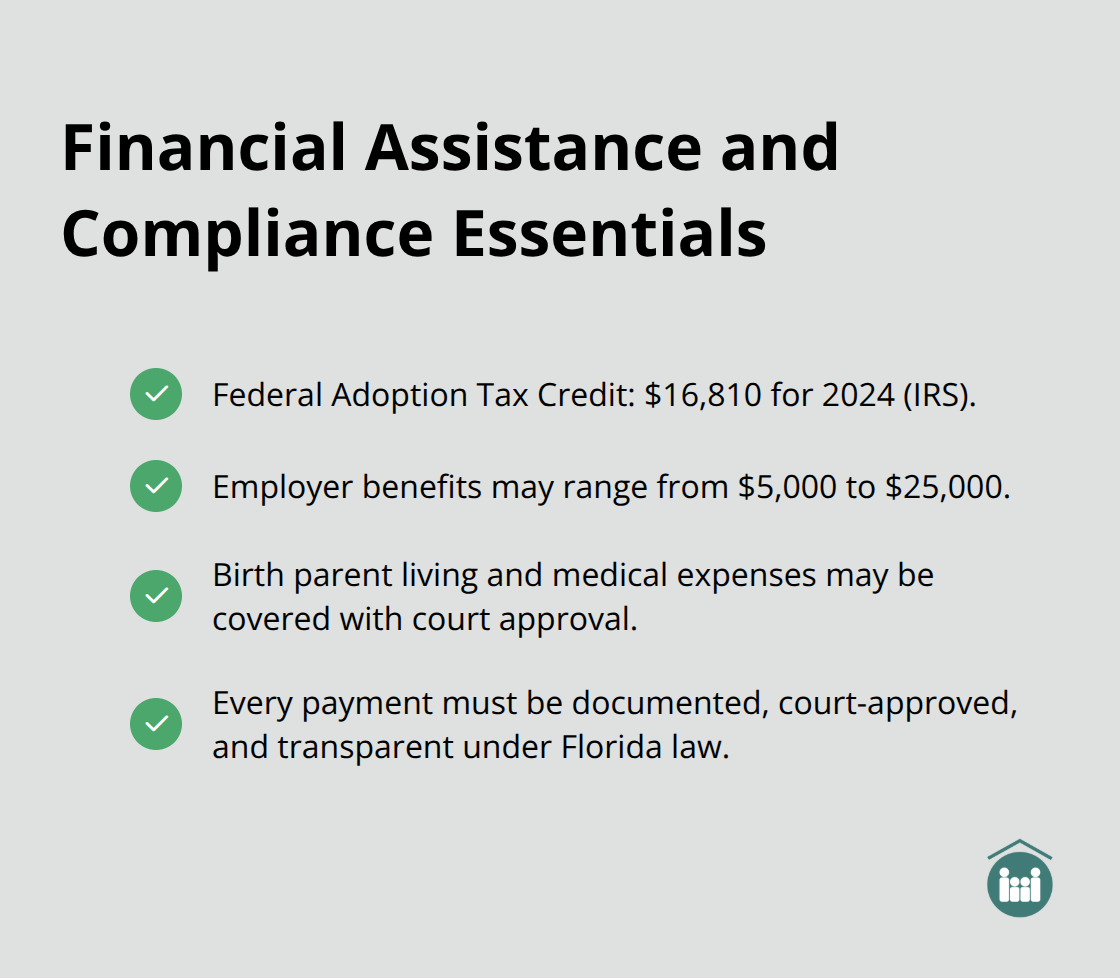
If you’re adopting across state lines, plan for financial assistance through the federal Adoption Tax Credit, which reached $16,810 in 2024 according to the IRS. Some employers-including law enforcement, healthcare workers, and military-offer adoption benefits ranging from $5,000 to $25,000 as part of employee packages, so verify your benefits before assuming out-of-pocket costs. Living and medical expenses for birth parents can be covered during private adoptions, but every dollar must be documented, court-approved, and transparent to comply with Florida law. This documentation protects both your family and the birth parents involved in the process.
Professional Guidance Keeps Finances Compliant
Managing adoption expenses requires attention to detail and knowledge of Florida’s strict compliance rules. An adoption attorney helps you navigate which expenses qualify, how to document them properly, and how to present them to the court for approval. This guidance prevents costly mistakes and keeps your adoption moving forward without legal complications.
Navigating Challenges and Common Obstacles
Structure Birth Parent Communication to Protect Your Adoption
Birth parent communication demands a structured, documented approach because informal conversations create legal vulnerabilities that can delay or derail your entire adoption. Florida law permits open adoption with ongoing contact between birth and adoptive families, but the level of openness is negotiated beforehand and not guaranteed by courts. Many families assume they can work out communication arrangements casually after placement, then face conflicts when expectations misalign.
Discuss contact frequency, communication methods, and boundary-setting with your adoption attorney before placement occurs. Document all agreements in writing so both parties understand what ongoing relationships will look like. If birth parents request updates through photos or letters, establish a timeline and method upfront rather than responding ad-hoc. This prevents misunderstandings that lead to post-placement complications and protects your finalization timeline.
Unmarried biological fathers present a specific risk: if a father fails to register with the Putative Father Registry and later claims rights after placement, your case stalls while courts determine his legal standing. Your adoption professional must investigate paternity thoroughly and confirm all required registrations are complete before placement happens.
Identify Legal Risks Before They Become Blockers
Legal complications and delays frequently stem from incomplete documentation, unqualified professionals, or procedural oversights that surface months into the process. Florida law requires that every child born in Florida be placed through a licensed Florida adoption entity, and only licensed attorneys or licensed agencies may handle adoptions-unlicensed facilitators operate illegally and expose families to failed placements and wasted costs.
Verify that any attorney handling your case holds board certification in adoption law from The Florida Bar, a credential held by only about 28 attorneys statewide. When interstate adoptions are involved, ICPC approval typically takes 10 business days, but delays occur when states request missing documents or when birth father rights remain unclear. Address potential legal risks early through thorough risk reviews that identify birth father complications, consent issues, and procedural gaps before they become finalization blockers.
Meet Supervision Requirements to Stay on Schedule
A 90-day supervision period after placement is mandatory before finalization, and monthly in-home contact is required for agency placements-missing even one visit restarts the clock and postpones your court date. Track these visits carefully and confirm completion with your adoption professional to avoid unexpected delays that push your finalization further into the future.
Select Adoption Agencies and Facilitators With Care
Private adoption agencies and facilitators vary widely in competence; some fail to conduct proper matching, leaving families with unexpected behavioral or medical issues post-placement. Interview multiple agencies, request references from families who completed adoptions, and verify their track record with post-placement support before signing contracts.
Final Thoughts
Florida child adoption services guide families through every stage, from initial home studies to post-placement support, creating a structured path toward successful adoptions. Professional legal guidance transforms adoption from an overwhelming process into a manageable journey by identifying legal risks early, verifying all required registrations and consents, and keeping your family compliant with Florida’s strict documentation rules. Board-certified adoption attorneys structure birth parent communication to prevent post-placement conflicts, manage ICPC approvals for interstate cases, and guide you through financial assistance options including the federal Adoption Tax Credit and employer benefits.
Without proper legal guidance, families risk working with unlicensed facilitators, missing critical deadlines, or facing unexpected legal complications that stall finalization. Virtual court hearings eliminate travel barriers for out-of-state families, and the 90-day supervision period protects both children and adoptive parents before finalization occurs. Foster care adoption remains the fastest pathway at 6 to 18 months, while private domestic adoptions depend on matching timelines and the mandatory 48-hour waiting period after birth.
Contact Juliana Gaita, P.A. to discuss your rights and options with an adoption attorney in Boca Raton. We help clients throughout Florida navigate adoption cases, whether you’re seeking to match with a birth mother, adopt a stepchild, or pursue any other adoption pathway under Florida law. Starting with proper legal guidance positions your family for success from day one.