Foster adoption in Florida offers a meaningful path to building your family while supporting children in need. At Juliana Gaita, P.A., we guide families through this process with clarity on financial support, legal requirements, and the practical steps involved.
This guide walks you through everything you need to know to move forward confidently.
How Foster-to-Adopt Works in Florida
The Foster-to-Adopt Path in Florida
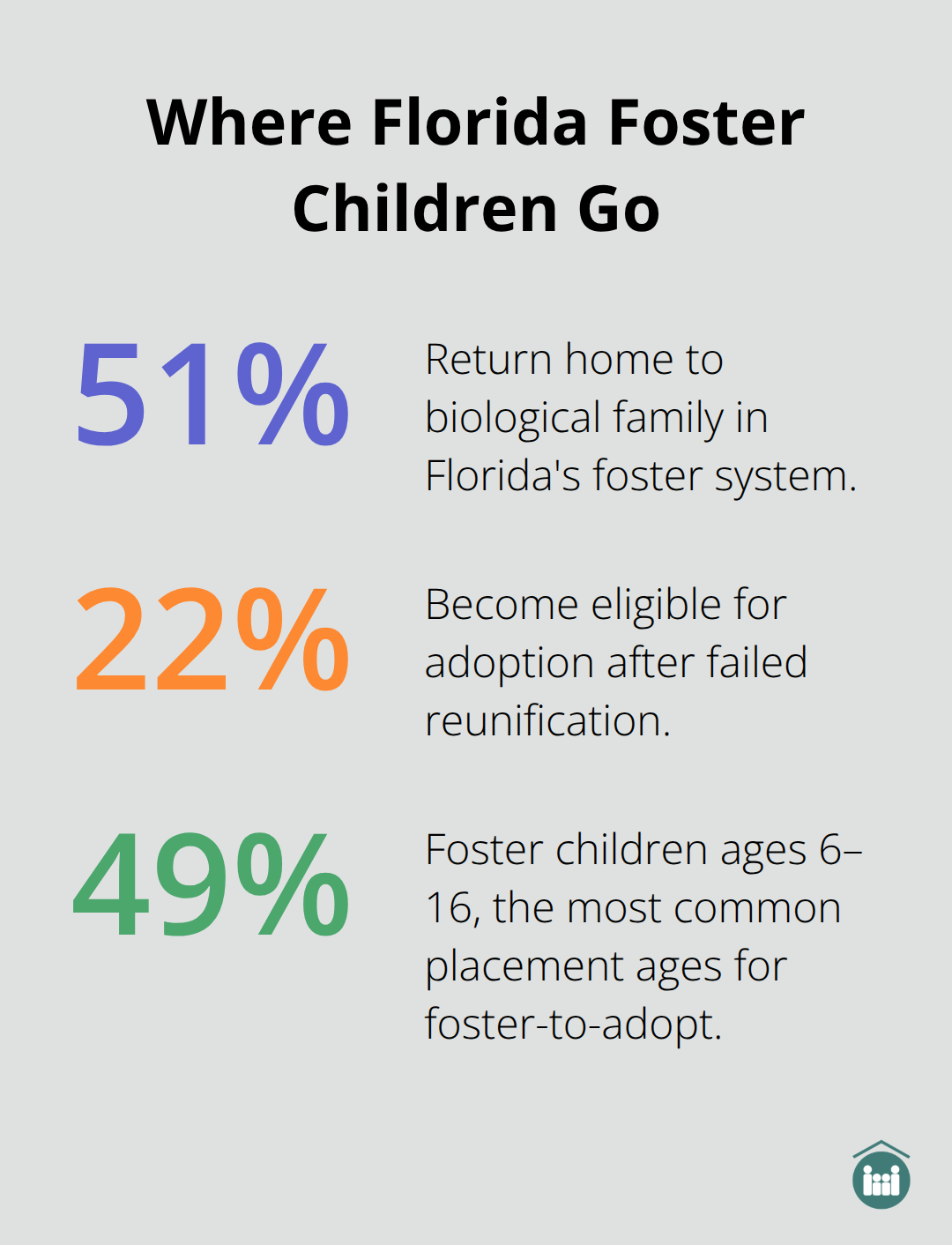
Foster-to-adopt in Florida means you become a licensed foster parent first, care for a child in your home, and then pursue adoption once parental rights are terminated. This path differs fundamentally from private infant adoption because you don’t receive a match before placement-instead, you build your family through the foster care system where nearly 19,000 children currently live. The state prioritizes reunification with biological families first, so about 51% of Florida foster children return home. However, approximately 22% cannot reunify and become eligible for adoption, creating the pool of children available to foster-to-adopt families.
Who You’ll Parent and Timeline to Licensure
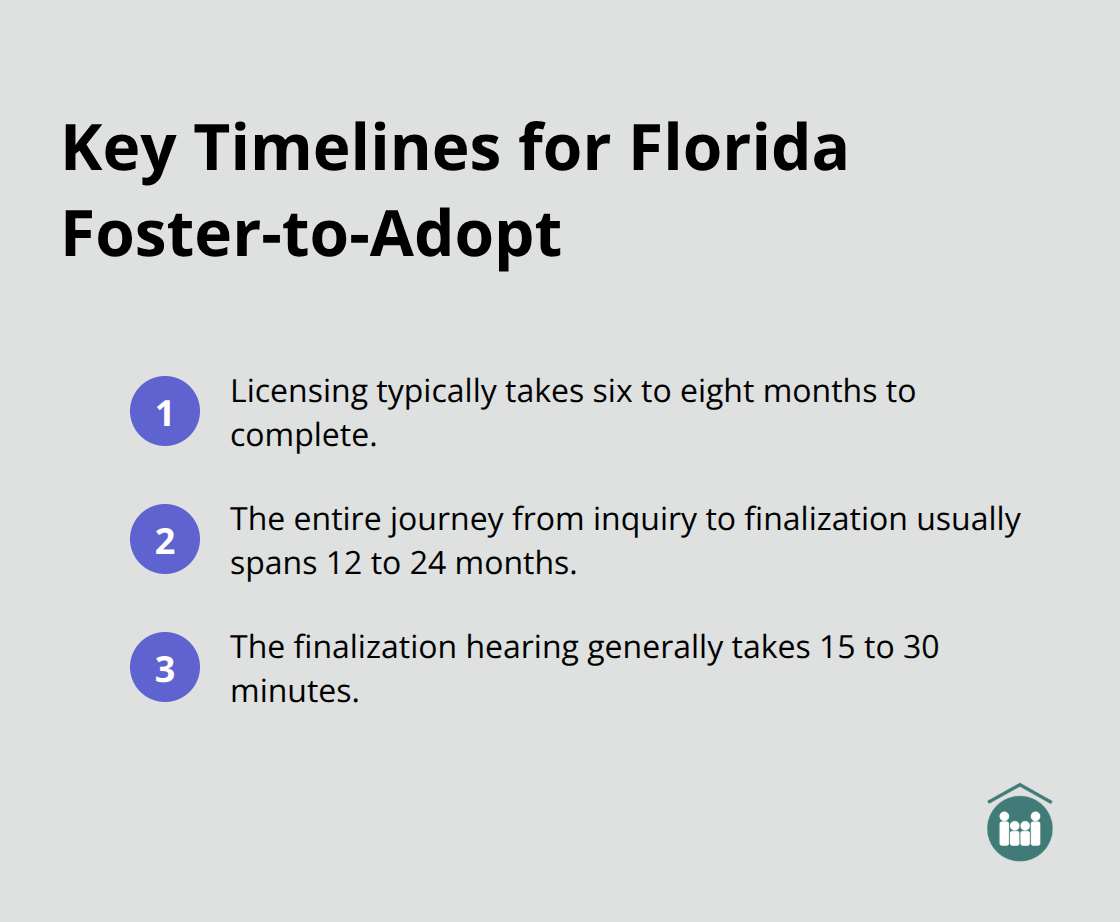
Most foster-to-adopt placements involve school-age children or sibling groups, since about 49% of Florida foster children are ages 6–16. You’ll work with a community-based care agency and your adoption attorney throughout the process. The licensing process typically takes six to eight months to complete, during which you’ll finish MAPP or PRIDE training, pass background checks for all household members 12 and older, and complete a licensing study that examines your home environment, financial stability, and readiness.
When Parental Rights End and Adoption Begins
The transition from foster care to adoption happens only when the court terminates parental rights-either voluntarily or involuntarily. Once rights are terminated, the child becomes legally free for adoption, and you move forward with finalization in circuit court. If the child is 12 or older, they must consent to the adoption. The entire journey from initial inquiry to finalization typically spans 12 to 24 months, though this varies significantly based on the individual case and how quickly parental rights are resolved.
Financial Reality of Foster-to-Adopt
Financial support makes this path more accessible than private adoption; foster care adoption costs between zero and $2,500, and you can still claim the full federal Adoption Tax Credit even with minimal expenses. Additionally, Florida offers adoption subsidies that vary by the child’s needs, helping offset costs throughout childhood. Understanding these financial benefits positions you to evaluate whether foster-to-adopt aligns with your family’s situation before you navigate the legal requirements and court proceedings necessary to finalize your adoption in Florida.
What Money Can You Actually Receive
The Federal Adoption Tax Credit
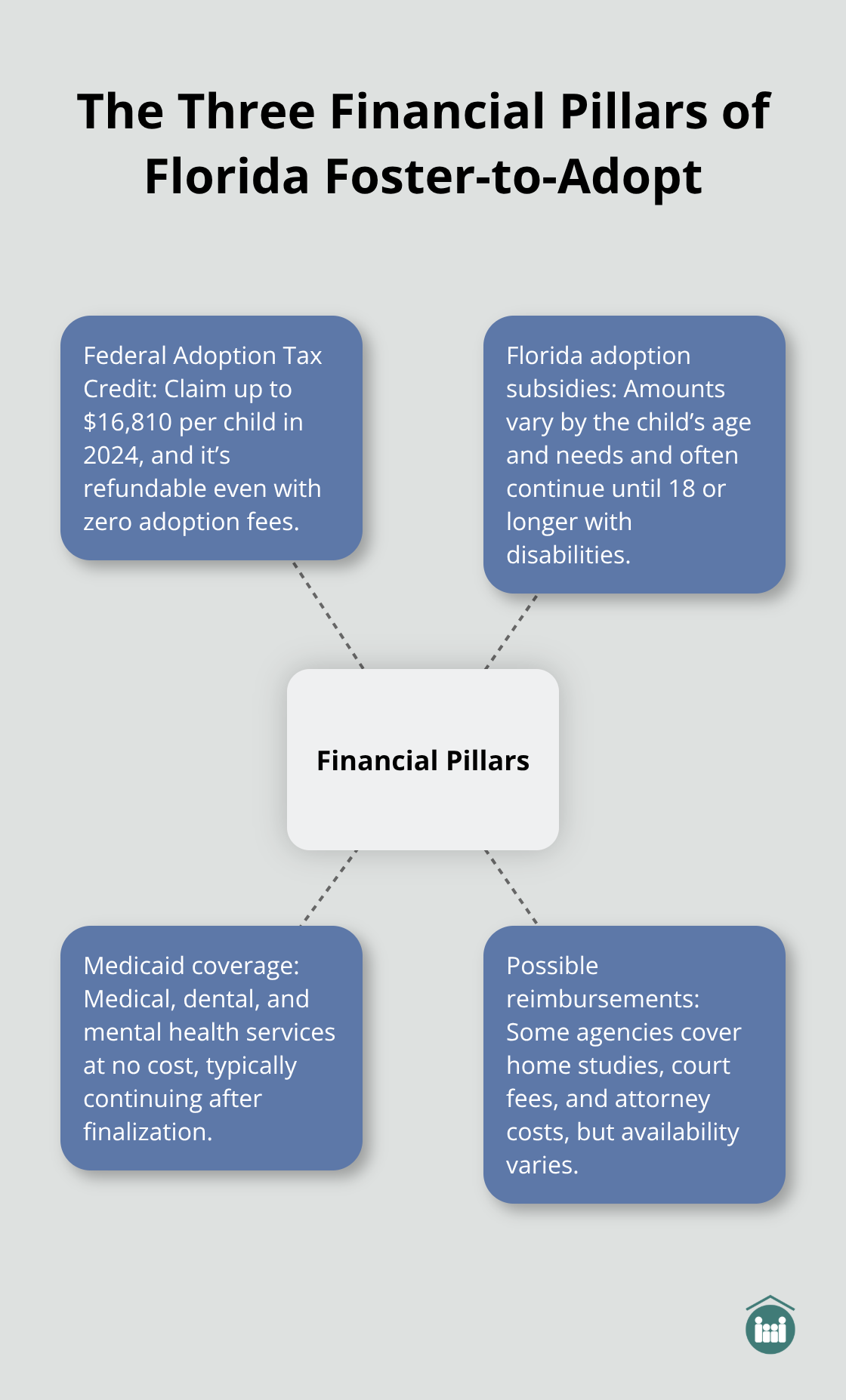
The federal Adoption Tax Credit allows you to claim up to $16,810 per child adopted in 2024, according to the IRS, and this applies even if you paid zero adoption fees through the foster care system. You don’t need to itemize deductions to claim this credit, and it’s refundable, meaning you can receive money back if the credit exceeds your tax liability. Many families overlook this benefit or misunderstand how it applies to foster-to-adopt cases, so consulting a tax professional familiar with adoption credits helps you capture every dollar available.
Florida Adoption Subsidies
Florida adoption subsidies form a second financial pillar and vary significantly based on the child’s age, health needs, and circumstances. A child with serious emotional or behavioral challenges qualifies for higher subsidies than a healthy school-age child, and subsidies continue until the child turns 18 or sometimes beyond if the child has disabilities. You negotiate subsidy amounts before finalization with your adoption attorney and the Department of Children and Families, so understanding what your specific child qualifies for matters enormously when budgeting long-term care costs.
Medicaid Coverage and Additional Reimbursements
Medicaid coverage for adopted children from foster care represents a third major benefit and covers medical, dental, and mental health services at no cost to your family. Florida automatically enrolls eligible foster children in Medicaid, and that coverage typically continues after adoption finalization, though you should verify this with DCF before your adoption is final. If your child experienced trauma or neglect in foster care, access to therapy and psychiatric services through Medicaid proves invaluable and removes financial barriers to addressing their emotional needs.
Reimbursement for adoption-related expenses like home studies, court fees, and attorney costs can sometimes come through state resources when you work with a community-based care agency, though coverage varies by agency and situation. Understanding these three financial pillars-the tax credit, subsidies, and Medicaid-positions you to evaluate the true cost of foster-to-adopt before you navigate the legal requirements and court proceedings necessary to finalize your adoption in Florida.
Legal Requirements and Documentation
The Home Study: Foundation of Your Adoption
The home study represents your first formal legal requirement and functions as the foundation of your foster-to-adopt journey in Florida. Florida law mandates that all prospective adoptive families complete a home study, which examines your living environment, background checks for every household member age 12 and older, medical history, financial stability, and references from people who know your family. The licensing study during foster care focuses on whether you can safely parent a child in temporary placement, while the adoption home study later confirms you’re prepared for permanent parenthood. These documents serve different purposes in your timeline, so many families mistakenly treat them as identical. The home study process typically takes several weeks to complete once you submit all required documentation to your adoption attorney or agency.
Background Clearances and Verification
Florida requires background checks for all household members age 12 and older, along with abuse and neglect clearances that verify your history. Your adoption attorney coordinates these clearances with the Department of Children and Families and ensures every household member passes screening before you move toward finalization. Medical history reviews and financial documentation assessments happen simultaneously, creating a comprehensive picture of your family’s stability and readiness. This verification process protects children in foster care and confirms that your home meets state standards for permanent placement.
Court Proceedings and Finalization
Once parental rights terminate and your child becomes legally free for adoption, your adoption attorney files the necessary paperwork with the circuit court in your county. Florida requires an adoption attorney to finalize any foster-care adoption, and this professional handles all court proceedings while you focus on building your relationship with your child. The finalization hearing itself typically takes 15 to 30 minutes and occurs in front of a judge who reviews your home study, verifies all background clearances are complete, confirms the child consents if they’re 12 or older, and then issues the final adoption order that makes you the legal parent.
Post-Adoption Support Services
After finalization, Florida provides post-adoption support services at no cost to your family until your child turns 18, including access to parent support groups, counseling resources, and guidance navigating the unique challenges adoptive families face. These services address trauma, attachment issues, and behavioral concerns that often emerge months or years after placement. Knowing they’re available before you finalize adoption helps you plan for your child’s long-term wellbeing rather than scrambling for help after the fact.
Final Thoughts
Foster adoption in Florida provides a realistic path to parenthood when you support children already in the system. The financial benefits-the federal tax credit up to $16,810, state adoption subsidies, and Medicaid coverage-make this option far more affordable than private infant adoption. The legal framework protects both your family and the child through home studies, background checks, and court oversight.
You’ll spend six to eight months becoming licensed, potentially another year or more waiting for parental rights to terminate, and then move through finalization in circuit court. Your adoption attorney handles the legal complexity while you focus on your child. Post-adoption support services remain available at no cost until your child turns 18, addressing trauma and attachment challenges that emerge after placement.
Contact your local community-based care agency or the Adoption Information Center at 1-800-96-ADOPT to start your foster adoption Florida journey. Contact us if you’re ready to discuss your legal options and understand how adoption works in Florida with clarity and support.